
Table of Contents
- Trump wants to remake Washington and he wants a giant fund to do it
- The program would put the National Park Service at the center of a huge capital makeover
- Trump is selling the proposal as restoration but critics see something more personal
- The ballroom fight is why so many lawmakers are suddenly nervous
- Supporters say Washington really does need major investment
- The biggest political question is why one city gets so much while park operations get cut
- Tourism, architecture, and the politics of spectacle are all wrapped into this plan
- Congress may like parts of the plan and still distrust the president behind it
- The bigger fight is about who gets to define the nation’s capital
Trump wants to remake Washington and he wants a giant fund to do it
When news broke that President Donald Trump was proposing a new $10 billion federal fund to finance construction and beautification projects in and around Washington, the plan instantly sounded bigger than a routine budget item. It was not just another infrastructure line in a federal spending blueprint. It was a highly personal vision for the nation’s capital, wrapped in the language of civic pride, historical restoration, and public safety. The administration’s budget proposal calls it the Presidential Capital Stewardship Program, and it would sit inside the National Park Service as a massive mandatory fund designed to coordinate, plan, and execute targeted projects throughout Washington. In the administration’s telling, the city has suffered from visible decay, inadequate maintenance, worn public spaces, and a fading sense of grandeur. Trump’s answer is not modest repair work. It is a generational overhaul.
The idea is classic Trump in both scale and symbolism. Washington, in this vision, is not just a city that needs maintenance. It is a stage on which national power is displayed. If it looks worn, dirty, or neglected, then the presidency sees that as a reflection of diminished American prestige. The White House budget document argues that as the capital of what it calls the greatest nation in history, Washington should showcase beautiful, clean, and safe public spaces. It says the proposed projects would improve safety and accessibility, rehabilitate historic buildings and landscapes, and enhance the city’s architectural grandeur. In other words, the administration is not simply talking about fixing cracked walkways or restoring stonework. It is talking about reshaping the look and feel of the capital as a statement of national identity.
The program would put the National Park Service at the center of a huge capital makeover
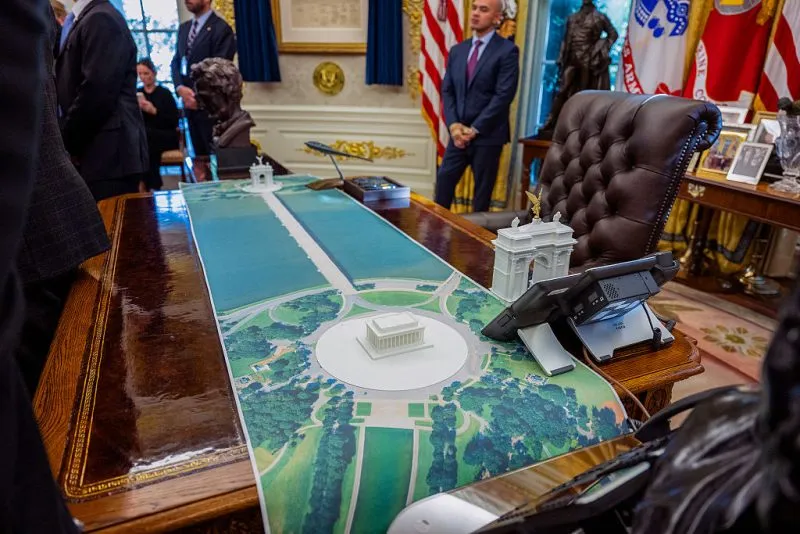
According to the fiscal 2027 White House budget document, the Presidential Capital Stewardship Program would be established within the National Park Service and backed by a $10 billion mandatory fund. The language in the document is unusually sweeping. It does not describe one project or even a narrow list of improvements. Instead, it envisions a broad power center for Washington-area renovation, one capable of coordinating high-priority construction and beautification work throughout the capital. The administration says that once completed, these projects would raise the city’s safety, improve accessibility, restore historic landscapes and buildings, drive economic development, attract more visitors from around the world, and lower future infrastructure lifecycle costs.
That scale is one reason the proposal has attracted such immediate attention. Ten billion dollars is an enormous amount for a city-focused program, especially one housed in an agency that is simultaneously facing sharp cuts elsewhere in the president’s budget. The Washington Post reported that Trump’s plan is framed as a centerpiece of his broader effort to reshape the capital ahead of the country’s 250th anniversary, while critics have noted that the fund would exceed the annual budget of the National Park Service itself. The National Parks Conservation Association said the broader budget proposes deep cuts to park operations even as it creates this huge new Washington-focused construction fund. That contrast has become one of the main points of attack against the program.
Trump is selling the proposal as restoration but critics see something more personal
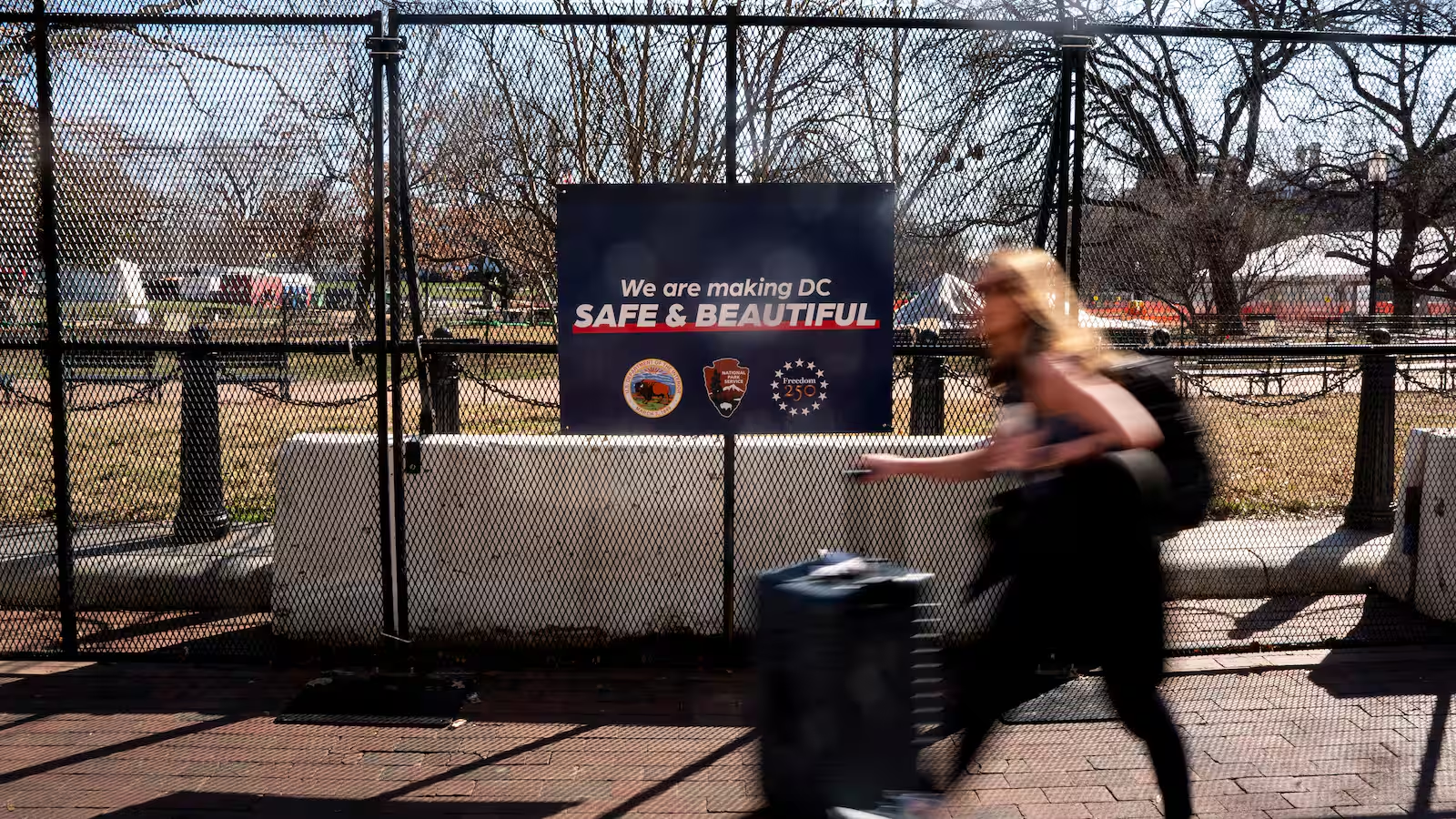
To Trump and his allies, this is an overdue effort to restore Washington’s dignity. He has long described the capital as dirty, crime-ridden, poorly maintained, and unworthy of its symbolic place in the country. The budget document reflects that rhetoric directly, saying the administration is committed to making Washington safe, clean, and beautiful again. That language is not accidental. It fits a broader second-term pattern in which Trump has tried to leave a visible physical mark on the capital through design, construction, and highly symbolic architecture.
But critics do not see a neutral beautification program. They see a president who has repeatedly shown fascination with large visual legacy projects and who now wants Congress to hand him a giant pool of money tied to an agency he can heavily influence. The Washington Post reported that some lawmakers and observers are worried the fund could become a vehicle for pet projects, vanity construction, and controversial designs that would be framed as congressional approval for Trump’s personal tastes. That suspicion did not arise in a vacuum. It has been shaped by the administration’s other high-profile design fights, including the now-famous White House ballroom and Trump’s broader effort to stamp his image onto Washington’s historic fabric.
The ballroom fight is why so many lawmakers are suddenly nervous
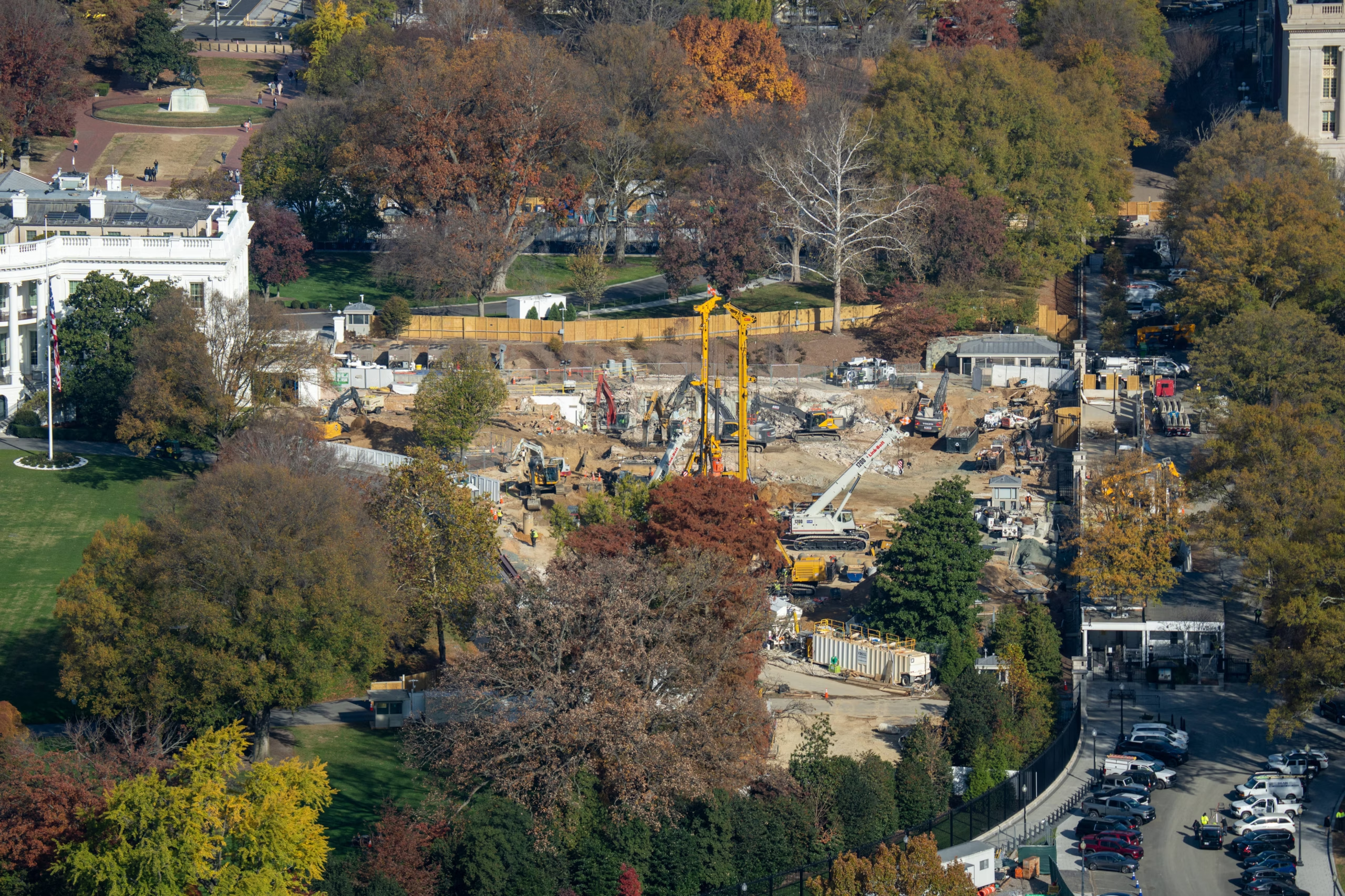
A major reason this new $10 billion proposal has set off alarm bells is timing. Just days before this budget plan drew attention, a federal judge halted Trump’s $400 million White House ballroom project, ruling that the president lacked authority to proceed with such a major alteration without congressional approval. Reuters, the Associated Press, and The Washington Post all reported that Judge Richard Leon temporarily stopped construction and emphasized that the president is a steward of the White House, not its owner. The project had already become controversial because it involved demolition of the historic East Wing and represented one of the most dramatic planned changes to the White House in decades.
That legal fight changed the politics of the new Washington fund immediately. Lawmakers who might otherwise support park restoration or capital improvements are now looking at the $10 billion proposal through the lens of the ballroom dispute. They are asking whether a broad stewardship fund could be used to claim Congress had effectively blessed a wider presidential building agenda. Even if the money is formally directed through the National Park Service, the fear is that a vague mandate around construction, restoration, and beautification could be stretched toward highly controversial priorities. It is not hard to understand that concern. Once a president openly pursues an enormous ballroom, and a judge says Congress must decide, any new giant fund for capital beautification will be viewed with suspicion.
Supporters say Washington really does need major investment
Still, the proposal is not attracting only criticism. There is a reason it has real political traction even among some people who do not share Trump’s aesthetics. Washington does have a long backlog of deferred maintenance, aging public-facing infrastructure, overused park features, and neglected landscapes. The White House budget cites exactly those issues, and even some of the proposal’s skeptics acknowledge that parts of the capital do need real investment. The National Park Service and other federal land agencies have been wrestling for years with mounting maintenance backlogs, and the White House budget notes that deferred maintenance on federal lands now exceeds $40 billion.
That is what makes the proposal politically clever. Trump is pairing a genuine problem with a highly personalized solution. It is easy to find support for restoring historic spaces, improving public access, modernizing infrastructure, or making heavily used federal landscapes more presentable. It is much harder to find support for what critics call vanity architecture. So the proposal wraps broad public needs around a much more expansive presidential vision. For supporters of classical architecture, city cleanup, tourism growth, and visible civic pride, that combination is appealing. They hear a promise to fix real neglect while also making Washington worthy of its ceremonial role.
The biggest political question is why one city gets so much while park operations get cut
The core political vulnerability of the plan is not that Washington needs investment. It is that the same budget asks for substantial cuts elsewhere. The White House fiscal 2027 budget requests $15.9 billion in discretionary budget authority for the Department of the Interior, a 12.9 percent decrease from the 2026 enacted level. It also proposes a huge new mandatory fund for the capital while the National Parks Conservation Association warns of catastrophic cuts to Park Service operations. That tension has become the heart of the criticism. If national parks and public lands across the country face staffing shortages, maintenance problems, and operational strain, why should Washington receive a special $10 billion fund at the same time.
That question is not just rhetorical. It goes directly to how this administration defines national priority. Is the symbolic face of the capital more important than the daily functioning of parks, monuments, and public lands in the rest of the country. Critics say the budget answers yes. The Washington Post reported that Senator Jeff Merkley, the top Democrat on the Senate panel overseeing National Park Service budgeting, flatly rejected the idea of giving Trump what he called a blank check for vanity projects. Park advocates have made a similar point, saying they support modernization and repair but not if it comes paired with major operational cuts and a vague giant fund centered on one city.
Tourism, architecture, and the politics of spectacle are all wrapped into this plan
The administration is also selling the proposal as an economic engine. The budget says the investment would increase visitation from across the world and drive economic development in Washington. That is a familiar argument in big-city planning: make public spaces more attractive, and visitors, spending, and civic momentum will follow. In theory, this is not unreasonable. Washington is both the seat of government and a tourism-heavy city whose monuments, parks, and ceremonial spaces shape how millions of visitors experience the country. A cleaner, more restored, more architecturally dramatic capital could indeed help tourism and boost local economic activity.
But spectacle is never far from the surface in this administration’s urban design politics. Trump has repeatedly shown interest in physically dramatic projects that promise not only utility but visual force. The ballroom dispute, the broader emphasis on architectural grandeur, and the repeated language about making Washington beautiful again all suggest a presidency intensely aware of the camera, the skyline, and the symbolic use of public space. This is not bureaucratic maintenance language. It is legacy language. That is one reason critics are treating the proposal as politically loaded even before any detailed project list has been released.
Congress may like parts of the plan and still distrust the president behind it
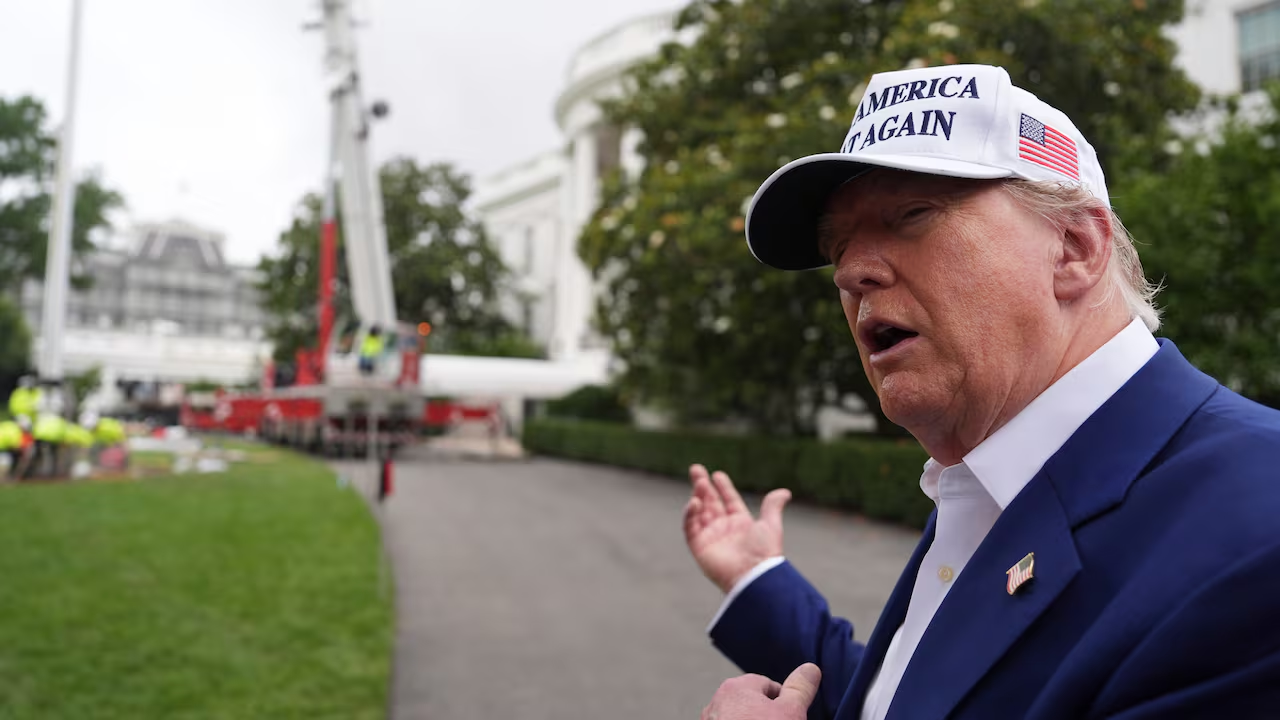
That leaves the proposal in an awkward place. Some of its basic goals are hard to oppose outright. Lawmakers from both parties can support safer parks, repaired infrastructure, restored landscapes, and better accessibility. Many may even agree that Washington should look better than it does. But support for those goals does not automatically translate into trust in Trump’s stewardship of a $10 billion capital fund. The ballroom court battle has made that trust deficit much worse. If Congress feels it is being maneuvered into retroactive approval of a broader presidential redesign agenda, the proposal could become a major spending fight rather than a bipartisan civic project.
In that sense, the administration’s problem is not just fiscal. It is institutional. Trump wants lawmakers to believe this is a capital restoration plan. Opponents believe it is a prestige vehicle wrapped in restoration language. Both views can coexist because the proposal genuinely contains elements of each. Washington may need major work, but it is equally true that this president has shown a highly personal interest in monumental, legacy-shaping architecture. Congress will have to decide whether the public need is real enough to outweigh the distrust.
The bigger fight is about who gets to define the nation’s capital
At bottom, this is a struggle over authorship. Who gets to decide what Washington should look like, what it should symbolize, and how much public money should be used to shape that vision. Trump’s budget gives one answer: the federal government, under his leadership, should be bold, aesthetic, and unapologetic about restoring grandeur. His critics answer differently: major national spaces belong to the public and to Congress, not to one president’s taste or legacy ambitions.
That is why this proposal matters far beyond landscaping, park benches, or decaying stonework. It is really about how power expresses itself in public space. If Congress approves the plan, Trump could gain the means to make Washington visibly more his. If Congress blocks or narrows it, that will be a statement too: that even a president obsessed with monumental design cannot simply refashion the capital through scale and symbolism. Either way, the fight over this $10 billion fund is about much more than beautification. It is about who gets to leave the most visible mark on the city that represents the nation itself.