
Table of Contents
- A Record Low for the US Fertility Rate
- The Global Context: A Worldwide Phenomenon
- Shifting Priorities Among Younger Generations
- Fertility Trends Among Different Age Groups
- Teenagers and Fertility: A Steep Decline
- The Economic Pressures of Parenthood
- The Role of Changing Social Norms
- The Long-Term Implications for the US
- Addressing the Fertility Crisis
- The Future of Fertility in the US
- Conclusion
A Record Low for the US Fertility Rate
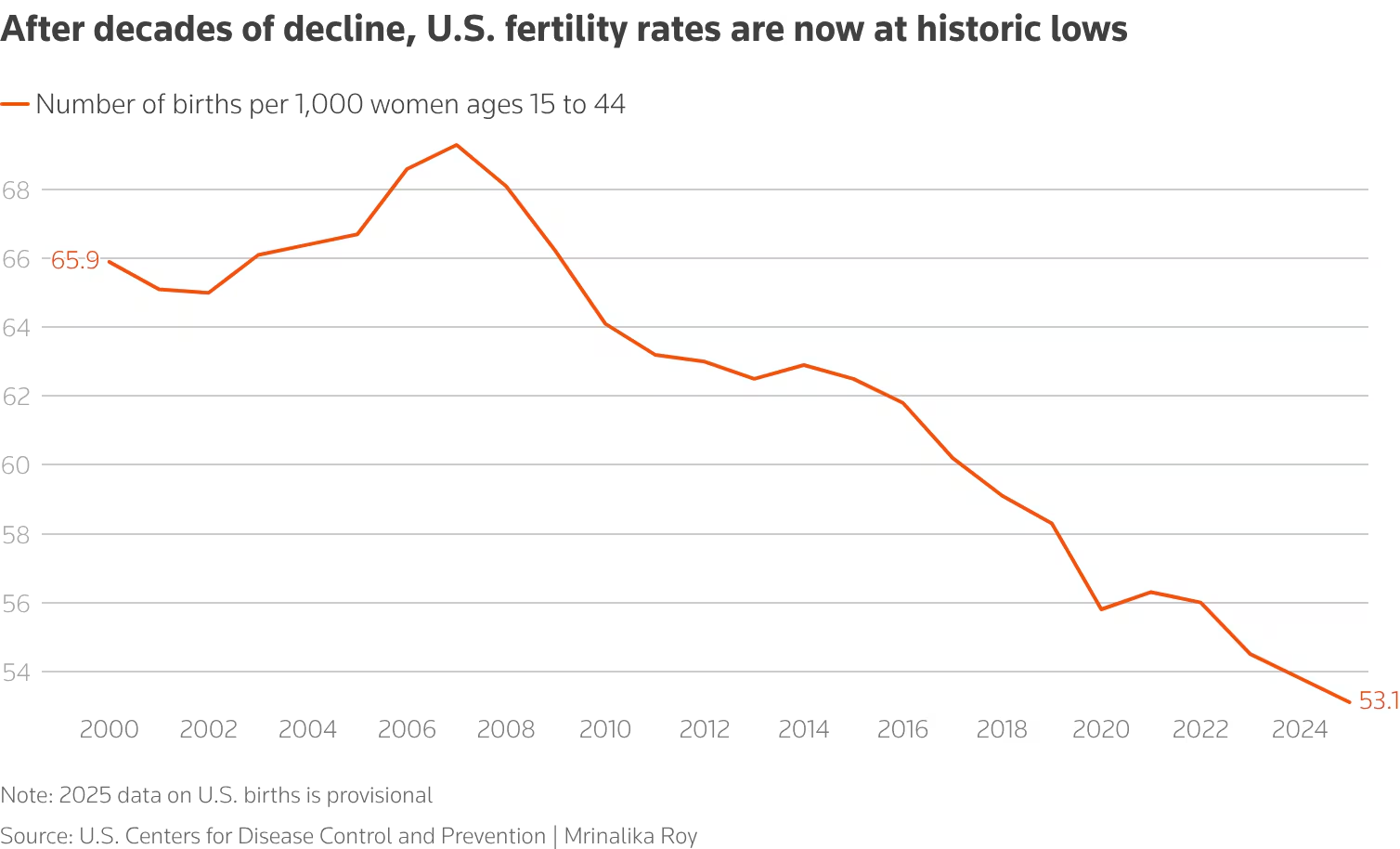
The US fertility rate, which measures the number of births per 1,000 women aged 15 to 44, fell to just 53.1 in 2025, a decrease of 1% from the previous year. This marks the lowest level ever recorded in the country’s history. With a continued decline since 2007, the general fertility rate has dropped by nearly 23%, according to the CDC. At the same time, the total number of births in the US fell to 3.6 million, down by 1% from 2024. This ongoing trend has raised concerns about the future demographic structure of the nation and its long-term social and economic impacts.
The Global Context: A Worldwide Phenomenon
The fertility rate decline in the US is not isolated but part of a broader global trend. Across developed countries, fewer women are choosing to have children. In Europe and parts of Asia, fertility rates have also reached historic lows, signaling a shift in global demographic patterns. According to the United Nations, more than half of the world’s countries are now facing declining birth rates. This phenomenon can be attributed to a combination of social, economic, and cultural factors that have made parenting less desirable for younger generations worldwide.
Shifting Priorities Among Younger Generations

A key factor behind the declining fertility rate is the shifting priorities among younger women. With a greater emphasis on career advancement, financial independence, and personal freedom, many are opting to delay or forgo having children altogether. “Greater and more demanding job market opportunities, expanded leisure options, and the increasing intensity of parenting… make the option to have children less desirable,” explains Phillip Levine, an economics professor at Wellesley College. In addition, the rising costs of living, housing, and childcare further discourage young adults from starting families.
Fertility Trends Among Different Age Groups
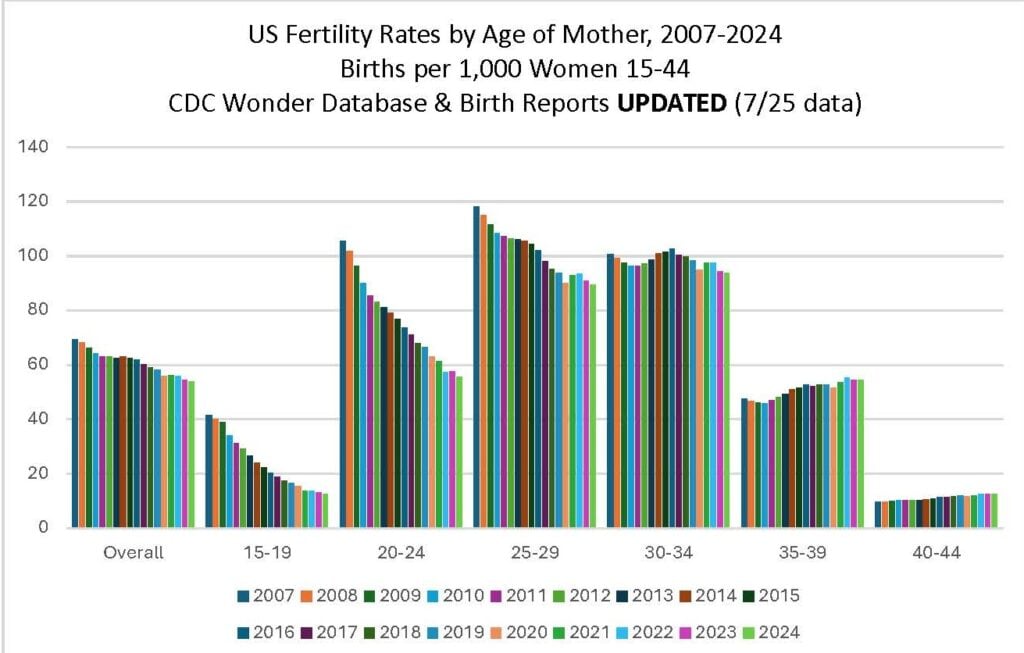
While fertility rates among women in their 30s and 40s have seen a modest increase in recent years, these gains have been insufficient to offset the sharp decline in fertility rates among younger women. In 2025, the fertility rate for women aged 25 to 29 dropped by 4.4%, a worrying trend that reflects the ongoing struggles faced by many women in balancing work, personal goals, and the desire for a family. Conversely, the fertility rate for women aged 30 to 34 increased by 2.7%, indicating that women are opting for children later in life, but the overall trend is one of delayed or deferred parenthood.
Teenagers and Fertility: A Steep Decline

The decline in fertility is particularly pronounced among teenagers. The fertility rate for women aged 18 to 19 fell by 7% in 2025, while the rate for younger teens aged 15 to 17 dropped by a staggering 11%. These figures represent a continuation of the long-term trend of fewer teenagers becoming mothers, a positive development in terms of teenage health and well-being. However, it also underscores the challenges faced by the next generation in terms of the pressures of education, career-building, and economic stability.
The Economic Pressures of Parenthood

One of the most significant factors contributing to the declining fertility rate is the financial pressure that comes with raising children. The cost of living in the US has risen dramatically in recent years, particularly with rising housing and childcare costs. Many young people find it difficult to afford starting a family, with average costs for raising a child up to age 18 in the US reaching over $230,000. Additionally, the challenges of achieving work-life balance and the availability of affordable healthcare further add to the burden, pushing many women to delay childbearing or choose not to have children at all.
The Role of Changing Social Norms

In addition to economic pressures, social and cultural factors are also contributing to the decline in fertility rates. Changing attitudes toward marriage and family have led to a redefinition of what it means to lead a fulfilling life. For many young people today, personal fulfillment, career success, and travel experiences are prioritized over starting a family. The traditional expectation of marriage and children as markers of adulthood no longer holds the same societal weight as it once did, and more people are embracing a life without children.
The Long-Term Implications for the US

As the US fertility rate continues to decline, the implications for the nation’s future become more pronounced. A shrinking birth rate could lead to an aging population, placing increased pressure on healthcare systems and social security programs. Fewer working-age individuals could mean a reduction in the labor force, which in turn could hinder economic growth and productivity. Additionally, the demographic shift could create challenges for the workforce, with fewer young people entering the job market to replace the older generations.
Addressing the Fertility Crisis
Policymakers have begun to recognize the potential consequences of the declining fertility rate, and some are calling for interventions to encourage childbearing. Proposals include offering financial incentives for families, such as child tax credits, paid parental leave, and subsidies for childcare. Some countries, like France and Sweden, have introduced policies that have helped boost fertility rates, and there is growing pressure for the US to adopt similar measures to support families and encourage the next generation to have children.
The Future of Fertility in the US

As the US continues to grapple with its fertility decline, it remains to be seen how the country will adapt to these demographic changes. Will the rising costs of child-rearing and shifting social norms continue to discourage young people from having children? Or will new policies, cultural shifts, and economic incentives help reverse the trend? Whatever the outcome, the future of the US depends on finding a balance between supporting families, ensuring economic growth, and adapting to an increasingly aging population.
Conclusion
The record low fertility rate in the US signals a critical moment for the nation’s demographic future. With economic pressures, shifting societal priorities, and changing cultural norms at play, fewer Americans are choosing to have children. While the decline in fertility is part of a broader global trend, the implications for the country’s workforce, healthcare system, and economy cannot be ignored. Addressing the fertility crisis will require comprehensive strategies that address both the economic and social factors that are influencing people’s choices about family life.