
Table of Contents
A New Visitor from the Stars
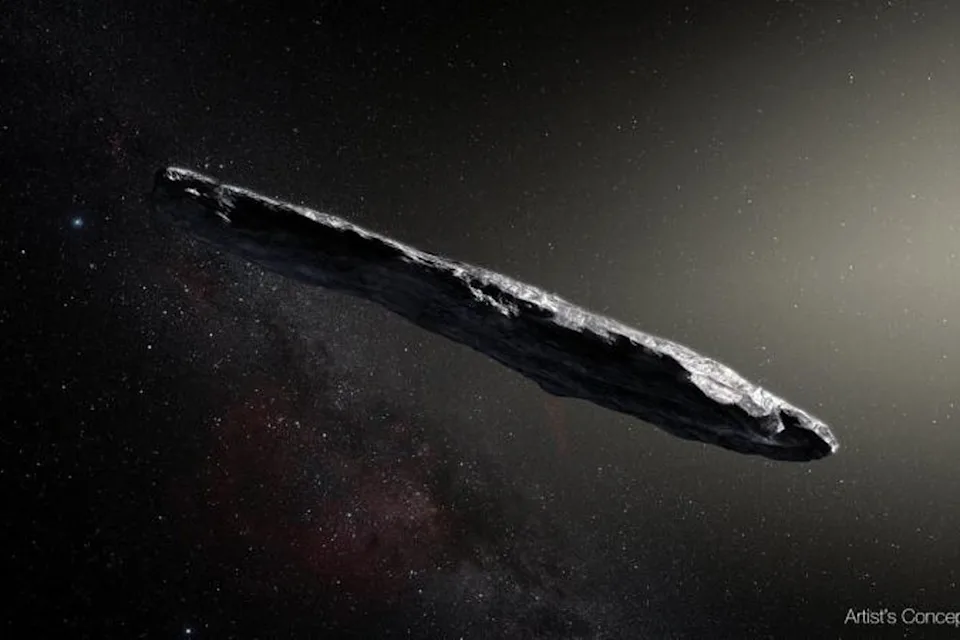
In July 2025, astronomers first noticed an interstellar object entering our solar system. Named 3I/ATLAS, this colossal body was traveling at an astonishing speed of over 130,000 miles per hour, making its approach one of the fastest recorded. At 20 kilometers across, it is significantly larger than other objects previously observed in the solar system, such as ʻOumuamua in 2017 and Comet Borisov in 2019. Unlike these objects, however, 3I/ATLAS is not expected to stay in our solar system. Its trajectory is hyperbolic, meaning it will pass through once before disappearing back into deep space.
Though comets are not uncommon visitors to our solar system, 3I/ATLAS’ size, speed, and trajectory make it unique. This object is moving too fast for any force in the solar system to capture it, meaning it will leave as abruptly as it arrived. It offers scientists a rare opportunity to study an object from outside our solar system, potentially providing valuable insights into the composition and properties of interstellar materials.
However, what makes 3I/ATLAS truly remarkable are the anomalies that have left scientists scratching their heads. While comets usually leave a trail of gas and dust as they approach the Sun, no such evidence has been observed in the case of 3I/ATLAS. Its lack of a visible tail and the absence of any discernible gas emissions have sparked debates about its true nature.
What Makes 3I/ATLAS Different?
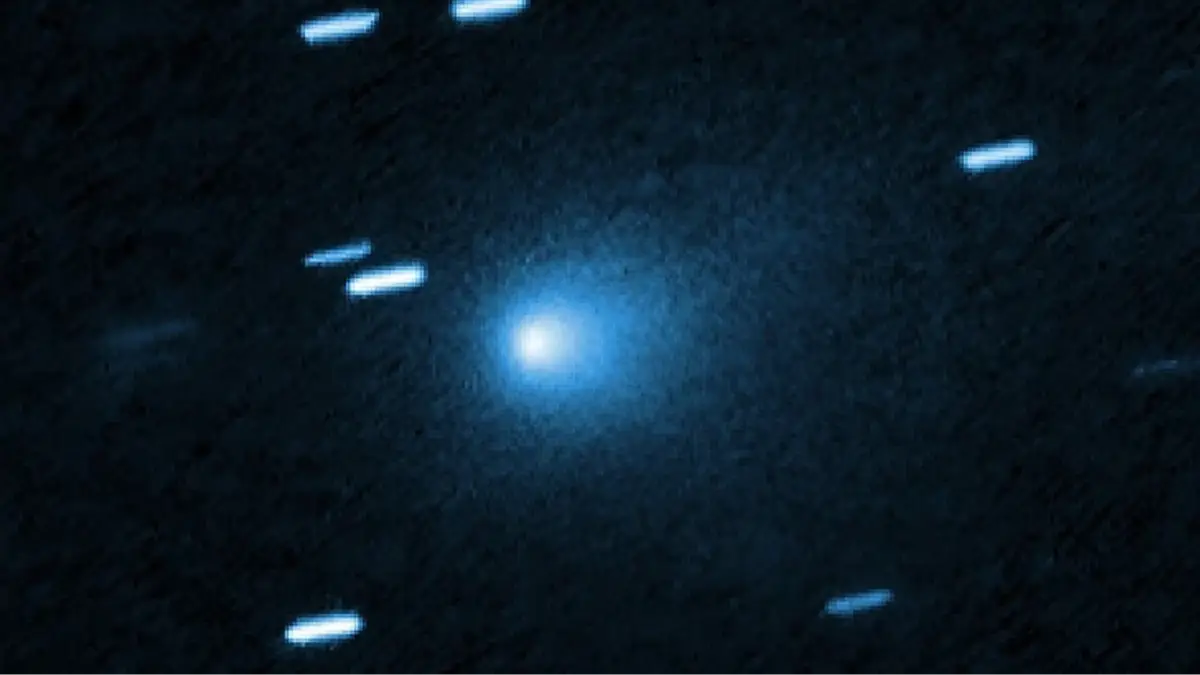
Astronomers have long understood the behavior of comets: as they get closer to the Sun, the heat causes their icy surfaces to vaporize, producing the iconic glowing tail. But 3I/ATLAS defies this natural order. Despite weeks of observations, no sustained tail has been visible, and spectroscopic data has failed to reveal any typical cometary gases like water vapor or carbon dioxide. The object’s lack of expected cometary behavior has raised suspicions about its origin.
Additionally, 3I/ATLAS is unusually bright for its size. Astronomers expect a 20-kilometer object to be relatively dark, but this object’s surface reflects more light than expected, suggesting a highly unusual composition. Its reddened surface, which has become more apparent over time, also hints at the presence of organic compounds or other unfamiliar materials.
But it is not just the object’s appearance that has raised alarms—it is its trajectory. Unlike a random pass through the solar system, 3I/ATLAS is set to pass by Mars, Venus, and Jupiter, before looping behind the Sun in late October 2025. According to Loeb, such an unlikely sequence of planetary flybys would occur only once in about 500 interstellar objects. While many scientists consider this a coincidence, Loeb argues that this pattern may not be random at all, hinting at a potential deliberate path.
A Divided Scientific Community
While some astronomers insist that 3I/ATLAS is simply a natural comet, others, including Loeb, have raised the possibility that it may be artificial. Loeb’s controversial stance has divided the scientific community. In his “Loeb Scale,” a system for rating the likelihood that an interstellar object is artificial, he gives 3I/ATLAS a score of 6, leaning toward an engineered origin. His argument is based on three main anomalies: the absence of a tail, the lack of volatile gases, and the unlikely planetary flybys.
Loeb’s hypothesis that 3I/ATLAS could be a “mothership”—a vehicle designed to release probes during its flyby—has drawn both skepticism and intrigue. While critics, including Oxford’s Chris Lintott, dismiss these ideas as speculative, Loeb maintains that even low-probability scenarios deserve consideration when the stakes could be high. The object’s potential as an interstellar probe, he suggests, cannot be ruled out.
The Anomalies Fueling the Speculation
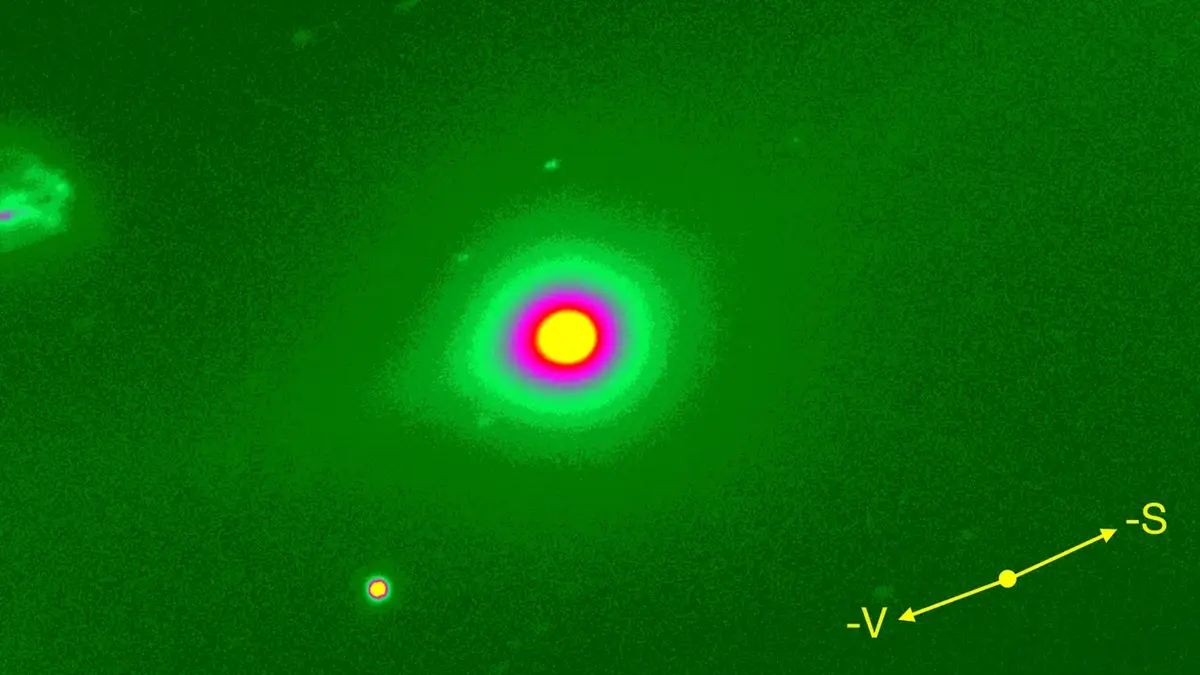
The absence of the expected cometary features has fueled much of the speculation surrounding 3I/ATLAS. The object’s lack of a tail, despite its proximity to the Sun, is a striking deviation from typical comet behavior. Spectroscopic data has failed to detect the usual gases that should be emitted as the object heats up. Hubble Space Telescope images also show an unusual forward glow ahead of the object, further complicating its classification.
Loeb and his team argue that this anomaly is indicative of something beyond the natural processes observed in other interstellar objects. They suggest that this could be evidence of an artificial structure, although they caution that further data is needed to confirm their hypothesis.
The object’s trajectory, which takes it close to multiple planets, also raises questions. Loeb calculates the odds of such a path occurring by chance as approximately one in 500. This is far from a definitive conclusion, but it adds to the intrigue. Could the object’s route be intentional? Is it gathering data from multiple planets as part of a larger mission?
The Race Against Time: Investigating 3I/ATLAS

As 3I/ATLAS hurtles toward the Sun, time is running out for scientists to study the object in detail. The most crucial period for observation will come in late October 2025 when the object reaches perihelion, its closest approach to the Sun. This is when its activity should be at its peak, offering the best opportunity to detect gases, changes in brightness, or other signs of cometary activity.
Global observatories, including the Vera C. Rubin Observatory in Chile, are preparing to track 3I/ATLAS. High-resolution, time-lapse images will be taken to monitor any subtle changes in the object’s surface. Other telescopes, both ground-based and space-based, will conduct spectroscopic analysis to detect any chemical signatures that could provide clues about its composition.
Loeb has also proposed using NASA’s Juno spacecraft, which is currently orbiting Jupiter, to intercept 3I/ATLAS as it passes near the gas giant in 2026. This would allow for close-up images and direct measurements of the object’s composition, providing critical data that could help settle the debate about its origins. However, such a mission would require quick reprogramming of the spacecraft’s trajectory and approval from funding agencies.
Preparing for the Unknown

Beyond the scientific investigation of 3I/ATLAS, the object raises broader questions about humanity’s preparedness for rare cosmic events. Loeb has called for the creation of multidisciplinary task forces to plan for how humanity would respond if evidence of artificial origin were ever discovered. This preparation, he argues, is not about stoking fear but about ensuring that humanity is ready for the unexpected.
Loeb’s comments underscore the importance of preparedness. The possibility that 3I/ATLAS could be artificial is speculative, but the implications of such a discovery would be profound. How would humanity respond to the confirmation that extraterrestrial intelligence has visited our solar system? While the idea may seem far-fetched, Loeb suggests that it is better to be prepared for the unknown than to be caught off guard.
The Legacy of 3I/ATLAS
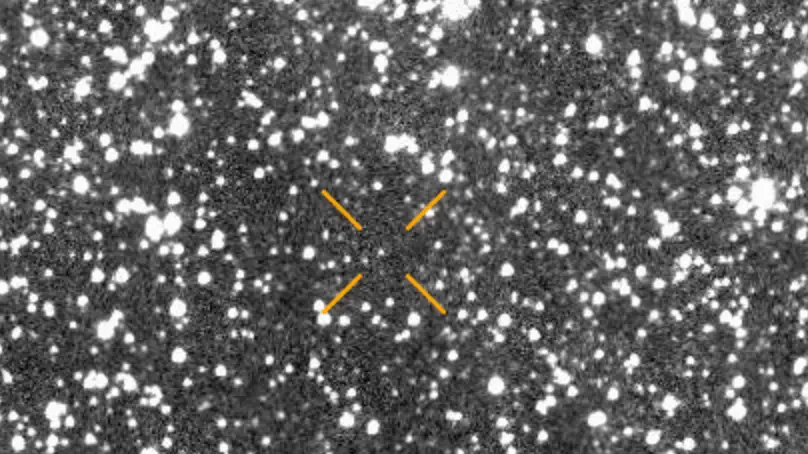
The story of 3I/ATLAS is more than just the tale of a distant object passing through our solar system; it is a test of humanity’s curiosity, skepticism, and readiness. As scientists work to unravel its mysteries, the object has already had a profound impact on the scientific community, sparking debates, collaborations, and new ideas.
Regardless of whether 3I/ATLAS is ultimately classified as a natural object, a relic from another star system, or something entirely new, its brief visit has expanded our understanding of the universe and our place within it. In the grand timeline of cosmic events, this visitor will leave a lasting impression, reminding us that the universe is vast, full of mysteries, and that we are just beginning to scratch the surface of what lies beyond.