
Table of Contents
- Florida’s Legislative Session and Controversial Law
- Why Legal Challenges Are Likely
- A Delicate Balance Between Justice and Morality
- How the Death Penalty Would Be Applied
- Debates on Its Effectiveness
- Victims, Families, and Society
- What’s Next for Florida?
- What the Law Says About the U.S. Justice System
- The Future of Capital Punishment in America
Florida’s Legislative Session and Controversial Law
The Florida legislature’s 2023 session wrapped up on May 5, 2023, with a number of new laws passed, including the highly controversial HB 1297, which specifically targets those who commit sexual battery on minors. The law allows the death penalty for individuals convicted of such crimes, making Florida the first state to introduce such a law. The legislation received strong support from law enforcement and some political groups but has faced backlash from civil rights organizations, legal experts, and individuals who oppose capital punishment.
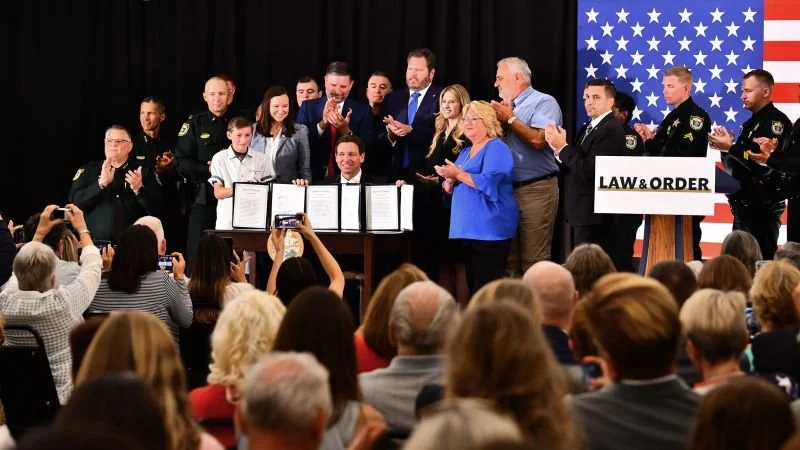
Governor Ron DeSantis, in a bill-signing ceremony held in Brevard County, emphasized the need for tough action against those who commit heinous crimes against children. He referred to child rapists as “the worst of the worst” and highlighted the law as a necessary step in protecting vulnerable children.
Why Legal Challenges Are Likely

Despite the law’s approval in the Florida legislature, legal challenges are almost certain. Both the U.S. Supreme Court and the Florida Supreme Court have ruled that the death penalty is unconstitutional for crimes other than murder. In a landmark case in 2008, the U.S. Supreme Court ruled in Kennedy v. Louisiana that the death penalty could not be applied to individuals convicted of raping a child, stating that such a penalty violated the Eighth Amendment’s prohibition against cruel and unusual punishment.
The Florida Supreme Court has similarly ruled in the past that the death penalty should only apply to cases of murder. These precedents form the basis for the legal challenges expected to arise against the new Florida law. Legal experts have already voiced concerns that the law may be struck down as unconstitutional, particularly if it is challenged in higher courts.
A Delicate Balance Between Justice and Morality
The new law has created a deep divide between those who believe it is a necessary measure to protect children and those who argue that it crosses a moral line. Supporters of the law point to the increasing severity of child sex crimes and the need for a punishment that matches the crime. They argue that those who commit such heinous acts should face the harshest penalties to deter future offenses.
However, opponents argue that the death penalty, especially for crimes that do not involve murder, is a step too far. Many legal and human rights organizations, including the American Civil Liberties Union (ACLU), have expressed their concerns, calling the law “cruel and inhumane.” They argue that the death penalty is not an effective deterrent for crime and that it disproportionately affects marginalized communities.
How the Death Penalty Would Be Applied
Under the new law, judges will have the discretion to impose either the death penalty or a life sentence without the possibility of parole for those convicted of raping a child under the age of 12. However, the death penalty will only be imposed if at least eight out of 12 jurors recommend it. This means that if fewer than eight jurors agree on the death penalty, the judge must impose a life sentence.
This provision is meant to ensure that the decision to impose the death penalty is not taken lightly and that there is sufficient consensus among jurors before such an irreversible sentence is carried out. Nevertheless, the law raises questions about the fairness and consistency of the sentencing process, especially given the severity of the punishment involved.
Debates on Its Effectiveness
While some argue that the death penalty for child rapists will serve as a powerful deterrent, there is little evidence to suggest that the death penalty is effective in preventing such crimes. Studies have shown that the death penalty does not reduce crime rates, and many criminologists argue that the focus should be on prevention rather than punishment. Furthermore, there is concern that the law may disproportionately affect people of color and those from low-income backgrounds, who are more likely to receive the death penalty in the criminal justice system.
In addition to concerns about fairness, the law’s proponents argue that it sends a strong message about the severity of child sexual abuse. For those who support the law, the death penalty represents a form of justice for victims and their families. However, the ongoing legal challenges are likely to delay any definitive outcome, and the debate over the death penalty’s role in the justice system will continue.
Victims, Families, and Society

The law has sparked an emotional response from both supporters and detractors. For many families of victims, the law offers a sense of justice and retribution for the trauma inflicted on their loved ones. They argue that child sexual abuse is one of the most horrific crimes and that the perpetrators should face the harshest possible punishment.
However, for those who oppose the death penalty, the law is a stark reminder of the deep ethical questions surrounding state-sanctioned executions. The emotional toll of such crimes on families is immense, and many argue that the justice system should focus on rehabilitation and support for victims rather than on retribution. The emotional divide over the law highlights the broader societal debates about justice, punishment, and the role of the state in administering justice.
What’s Next for Florida?
As the legal challenges to the death penalty law continue, Florida faces a crucial moment in its history. If the law survives the court challenges, it will set a new precedent for how the state deals with child sexual abuse cases. The law could also inspire other states to follow suit, leading to a patchwork of laws across the country that vary widely in their approach to punishing child rapists.
However, if the law is struck down by the courts, it will be a significant defeat for those who support the death penalty as a tool for fighting crime. The case will likely become a key point of legal and moral contention, with implications for future criminal justice policy across the U.S.
What the Law Says About the U.S. Justice System

The passage of the death penalty law for child rapists raises important questions about the U.S. justice system. It reflects the growing divide in the country over issues of crime and punishment, with some advocating for more severe penalties, while others call for a more rehabilitative and restorative approach. The law also highlights the difficulty in balancing justice with human rights and the ethical concerns that come with state-sanctioned executions.
Regardless of where one stands on the issue, the debate over this law is a critical moment in the ongoing conversation about the role of the justice system in addressing some of society’s most heinous crimes.
The Future of Capital Punishment in America

The controversy surrounding Florida’s new law is far from over. As legal challenges unfold, it is clear that the issue of the death penalty will remain a point of division in American society. The law’s impact on both the criminal justice system and society as a whole will continue to be debated, with far-reaching implications for how the U.S. addresses the punishment of serious crimes.
While some believe the law represents justice for victims, others view it as an overreach that undermines fundamental rights. The coming months will reveal how the courts handle this challenge and whether the death penalty will continue to play a role in the U.S. criminal justice system.