
Table of Contents
- A Teenager From Namibia Suddenly Captured Global Attention
- Why The Invention Sparked Immediate Skepticism
- What Makes The Story Important Beyond The Technology
- How Social Media Turned The Story Into A Global Debate
- The Difference Between Phones And Radio Devices
- Why Innovation In Africa Often Faces Different Scrutiny
- Why Accessibility Innovation Matters More Than Ever
- The Fine Line Between Viral Headlines And Scientific Accuracy
- Why Young Inventors Capture Public Imagination
- What This Debate Says About The Modern Internet
A Teenager From Namibia Suddenly Captured Global Attention
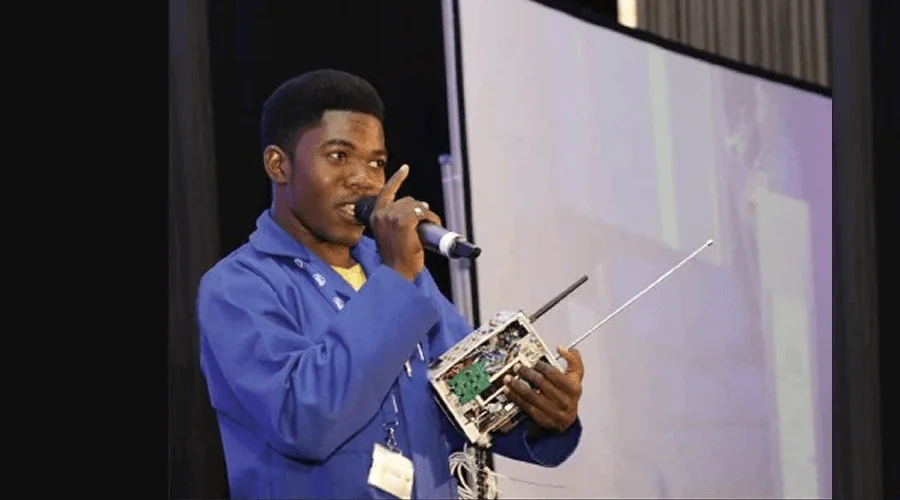
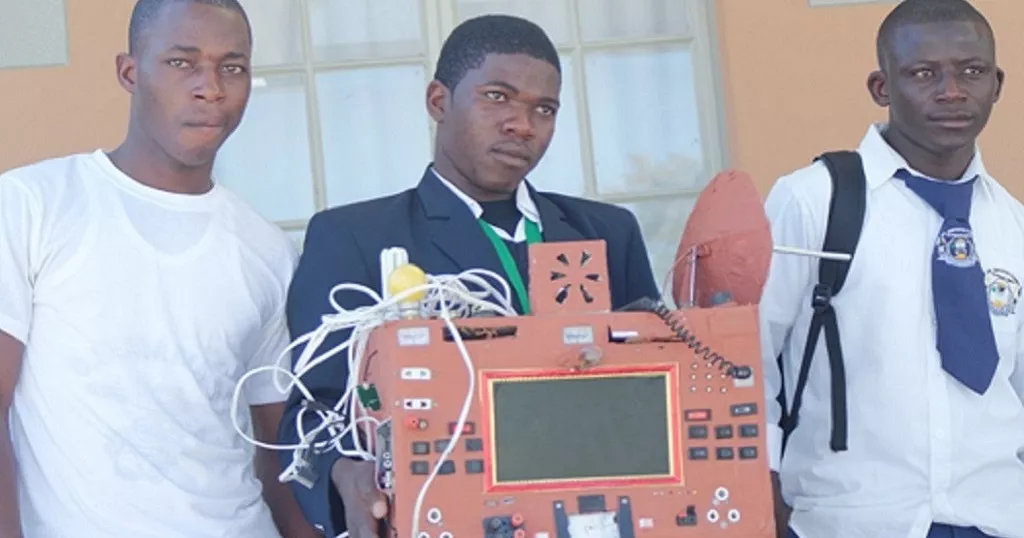
Simon Petrus was largely unknown outside his local community before headlines about his prototype phone began circulating online. At just 19 years old, the student suddenly found himself at the center of international conversations about technology and innovation.
Reports described his device as a “SIM free phone,” a phrase that immediately attracted attention because modern smartphones are deeply dependent on telecommunications networks. Most people associate mobile communication with SIM cards, carriers, towers, and internet infrastructure. The idea of bypassing those systems instantly sounded futuristic to many readers.
According to descriptions of the prototype, the device uses radio frequencies to allow communication between users. Supporters suggested this could help people living in remote regions where cellular infrastructure is weak or completely unavailable.
In countries where connectivity gaps remain a serious issue, the concept resonated emotionally. Many communities across Africa and other developing regions still face limited network access, unstable internet, or expensive communication services.
For many people, Petrus symbolized something larger than a student project. He became a symbol of possibility.
Why The Invention Sparked Immediate Skepticism
Despite the excitement, skepticism spread just as quickly as praise.
On social media, many users questioned whether the invention was actually new technology at all. Critics pointed out that radio based communication systems have existed for decades through devices like walkie talkies, CB radios, ham radios, and shortwave communication equipment.
Some users mocked headlines calling the device revolutionary. Others accused media outlets of oversimplifying the technology in order to create a viral feel good story.
The criticism mainly centered around one key point: transmitting voice through radio frequencies without a SIM card is not a new scientific breakthrough in itself.
From a technical perspective, radio communication predates cellular networks by many decades. Walkie talkies, military communication devices, and emergency radios already operate without SIM cards or traditional phone networks.
This led some commentators to argue that the public was misunderstanding what Petrus had actually built.
Still, many others pushed back against the criticism, arguing that innovation is not always about inventing something completely from scratch. Sometimes it involves adapting existing technologies into more accessible, affordable, or locally useful forms.
What Makes The Story Important Beyond The Technology
One reason this story gained so much traction is because it touches on deeper issues surrounding technology access and global inequality.
In highly connected cities, people often assume mobile communication is universally available. But in many rural regions around the world, reliable cellular coverage remains inconsistent or expensive. Entire communities may struggle with weak signals, poor infrastructure, or limited access to digital tools.
That context changes how inventions like Petrus’ prototype are viewed.
Even if the underlying technology resembles older radio systems, creating a portable communication device designed around local challenges still matters. In communities where commercial infrastructure is limited, practical adaptations can have enormous value.
Many supporters emphasized that innovation should not only be measured by whether an idea is completely unprecedented. It should also be judged by whether it solves real problems for real people.
For young inventors in developing countries, resourcefulness often becomes more important than expensive laboratories or billion dollar research budgets.
How Social Media Turned The Story Into A Global Debate
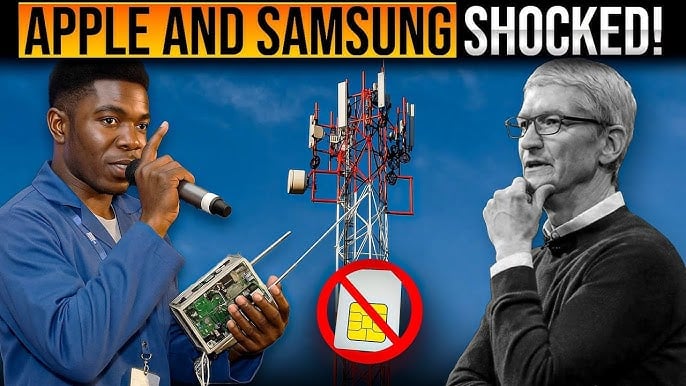
The internet amplified every side of the story almost instantly.
Some users shared the article with excitement, celebrating African innovation and praising Petrus for thinking creatively despite limited resources. Inspirational pages called him a future tech leader. Others framed the story as proof that genius exists everywhere, not only in Silicon Valley or wealthy universities.
At the same time, technology enthusiasts and engineers began dissecting the claims in detail. Threads appeared explaining how radio communication works, how traditional mobile networks function, and why some headlines were technically misleading.
The result was a classic modern internet phenomenon: a human interest story transformed into a global argument.
This type of online debate often reveals how difficult it is to communicate scientific or technical concepts accurately in viral media. Headlines designed to attract attention sometimes simplify ideas so much that experts feel compelled to correct them.
But the emotional appeal of the story also mattered. Many people wanted to believe in the idea of a young African inventor disrupting the telecommunications world. That emotional narrative became just as important as the technical discussion itself.
The Difference Between Phones And Radio Devices
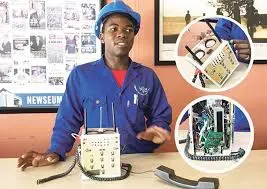
Part of the confusion surrounding the story comes from how people define a “phone.”
Modern smartphones do much more than transmit voice. They connect to massive telecommunications systems involving towers, switching networks, internet protocols, encryption systems, and global carrier infrastructure.
Traditional radio communication works differently. Radio devices can transmit signals directly between units within a certain range without requiring cellular towers or SIM cards.
That does not necessarily make one technology more advanced than the other. They simply serve different purposes.
A walkie talkie, for example, can work extremely well in remote environments where no phone signal exists. Emergency responders, military units, hikers, and rescue teams still rely heavily on radio communication today.
What may make Petrus’ project interesting is not that it magically bypasses physics or telecommunications science, but that he reportedly attempted to package radio based communication into a more phone like concept aimed at solving practical accessibility problems.
In that sense, the invention may represent adaptation and accessibility rather than scientific reinvention.
Why Innovation In Africa Often Faces Different Scrutiny
The reaction to the story also exposed how innovations from developing regions are sometimes treated differently online.
Some supporters argued that African inventors are often dismissed too quickly or judged more harshly than entrepreneurs from wealthier countries. They pointed out that young inventors in places with limited funding, infrastructure, or educational resources may still produce meaningful technological ideas even if those ideas are imperfect.
Others noted that media narratives about Africa frequently swing between extremes. Stories are either framed as miraculous breakthroughs or dismissed entirely as overhyped.
The truth is usually more nuanced.
Africa already has a strong history of technological adaptation and local innovation, especially in fields like mobile banking, renewable energy, agriculture, and communication tools designed for underserved communities.
Projects do not always need to become billion dollar global products to matter locally. Sometimes smaller innovations can still improve daily life in meaningful ways.
That broader context helped many people see Simon Petrus not just as an inventor but as part of a larger story about emerging talent from underrepresented regions.
Why Accessibility Innovation Matters More Than Ever

The global debate also highlighted a growing issue in technology: accessibility.
Modern smartphones are powerful, but they depend heavily on infrastructure. Without towers, electricity, internet access, or affordable data plans, many advanced devices lose much of their usefulness.
That creates opportunities for alternative communication tools.
In disaster zones, war regions, rural communities, and remote environments, decentralized communication systems can become extremely valuable. Technologies that reduce dependence on centralized infrastructure often attract attention because they offer resilience during emergencies.
This is why radio systems remain relevant even in the smartphone era. They can function independently of commercial networks.
If innovators can combine simplicity, affordability, portability, and accessibility, they may create useful tools for communities often overlooked by mainstream tech industries.
Whether Petrus’ prototype evolves further or not, the discussion it sparked reflects growing global interest in communication technologies that work outside traditional systems.
The Fine Line Between Viral Headlines And Scientific Accuracy
One reason the story became controversial is because viral media often compresses complicated technical ideas into short dramatic headlines.
The phrase “SIM free phone” sounds revolutionary, but without detailed technical explanations, readers may imagine something far more advanced than what actually exists.
This creates tension between inspiration and accuracy.
Media outlets want engaging stories that attract clicks and emotional reactions. But technical communities value precision and careful explanation. When those two priorities collide, internet debates usually follow.
Some critics argued that the headlines unintentionally misled audiences into believing Petrus had invented entirely new communication science. Others argued that dismissing the project entirely ignored the creativity and effort involved.
Both perspectives contain some truth.
The internet tends to force stories into extremes: genius breakthrough or complete fraud. Reality is often somewhere in the middle.
Why Young Inventors Capture Public Imagination
Stories about young inventors consistently spread online because they tap into powerful emotional themes: creativity, hope, determination, and unexpected talent.
People are naturally drawn to narratives where someone from a modest background creates something ambitious despite limited resources. These stories feel inspiring because they challenge assumptions about where innovation comes from.
Simon Petrus fits that narrative perfectly. A teenager from Namibia suddenly entering global headlines with a homemade communication prototype captures attention because it feels unexpected.
Even people skeptical of the technology often acknowledge the value of encouraging curiosity and experimentation among young innovators.
Innovation ecosystems rarely emerge overnight. They develop when societies encourage young people to explore engineering, science, and problem solving without fear of failure or ridicule.
Public attention, even controversial attention, can sometimes help inspire future generations of inventors.
What This Debate Says About The Modern Internet

The global reaction to Simon Petrus’ prototype says as much about the internet as it does about technology itself.
Online platforms reward emotionally charged stories, especially ones involving genius, controversy, national pride, or disruption. Once the story went viral, people quickly divided into opposing camps.
Some defended Petrus passionately because they saw criticism as dismissive elitism. Others attacked the reporting because they felt technical inaccuracies were spreading misinformation.
The internet often struggles with nuance. People want clear heroes, villains, breakthroughs, or failures. But technological innovation rarely develops in such simple ways.
What makes this story important is not necessarily whether the device transforms the mobile industry tomorrow. It is the conversation it triggered about access, creativity, infrastructure, and opportunity.
The prototype reminded the world that innovation does not only happen inside giant corporations or elite laboratories. Sometimes it begins with a teenager trying to solve a local problem using whatever tools and knowledge are available.
That alone makes the story significant.
Whether Simon Petrus ultimately becomes a major inventor or simply a symbol of youthful ambition, his project has already achieved something many technologies never do: it forced people around the world to stop, debate, question assumptions, and think differently about who gets to participate in shaping the future of communication.