
Table of Contents
- The Viral Video That Made Millions Dizzy
- Why The Light Bulb Had To Be Changed
- The Hidden Profession Most People Never Think About
- Why Humans React So Strongly To Extreme Heights
- How Drone Technology Changed The Experience
- The FAA And The Controversy Around Drone Rules
- Why Tower Climbing Is So Difficult
- The Strange Peacefulness Of Extreme Heights
- Why The Selfie Became Such A Powerful Moment
- What The Viral Video Revealed About Modern Internet Culture
- Why The Story Still Resonates Years Later
The Viral Video That Made Millions Dizzy
The footage itself looked almost unreal.
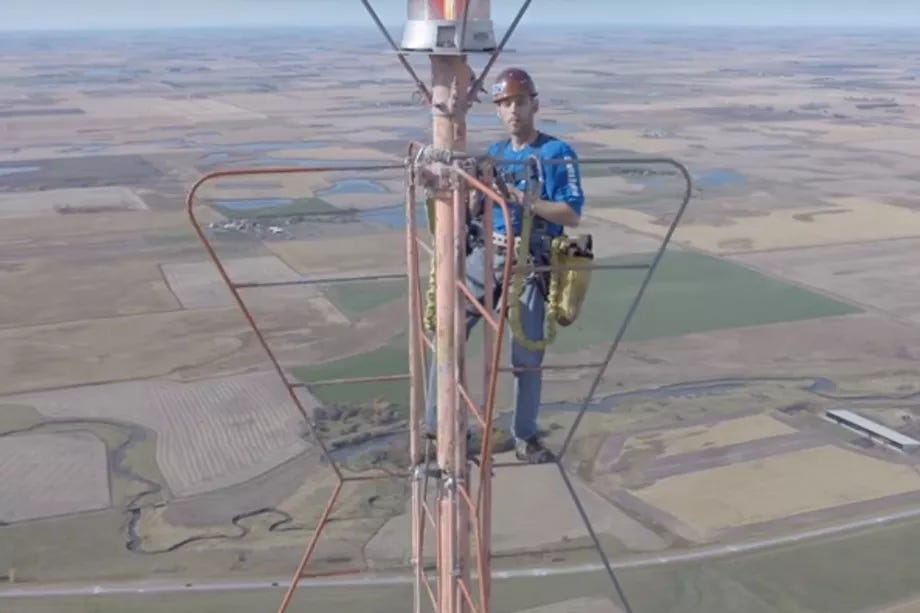
Captured by drone operator Todd Thorin and his team at Prairie Aerial, the video followed Kevin Schmidt as he climbed a towering television antenna near Salem. As the drone rose higher and higher into the air, the ground below gradually disappeared into a tiny patchwork of roads, fields, and buildings.
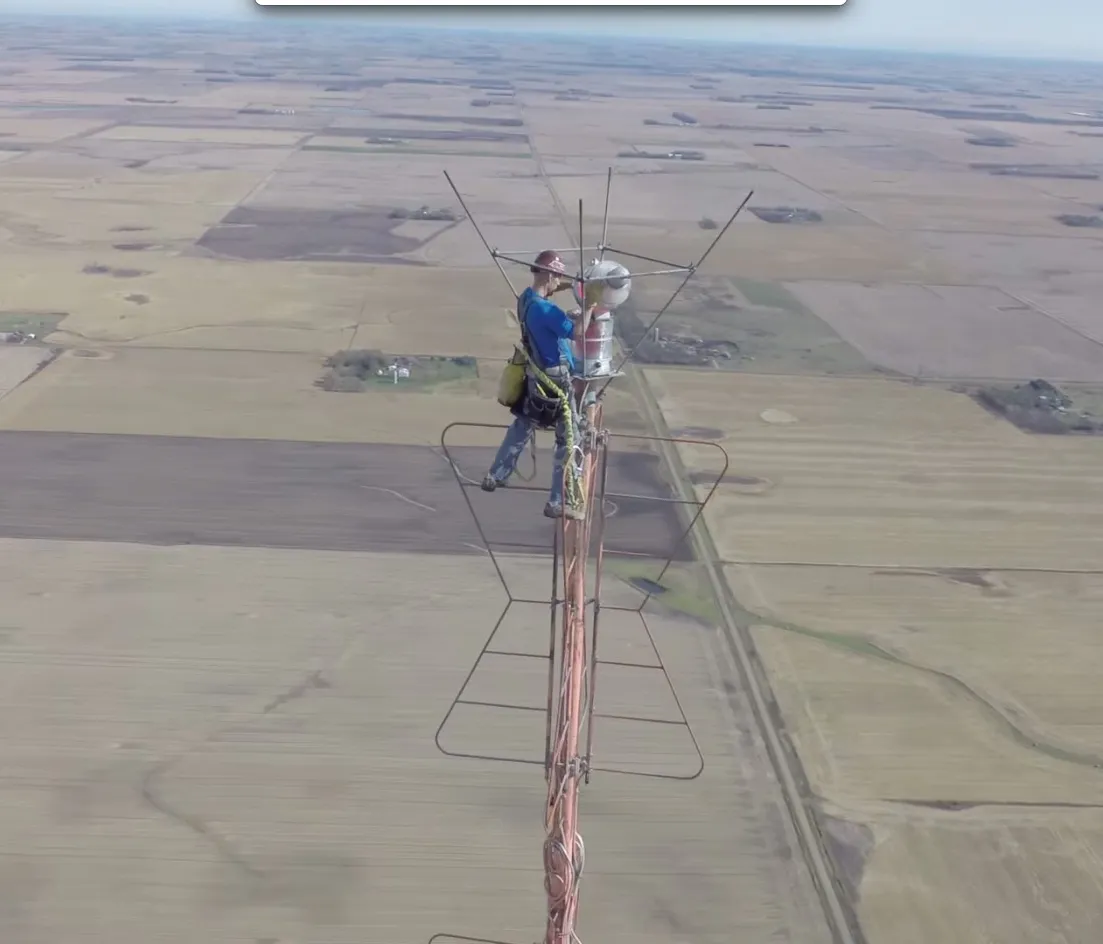
At the top of the structure sat a blinking red aviation warning light that needed replacement. Federal Aviation Administration regulations require these lights to help aircraft identify tall structures during nighttime and low visibility conditions.
The climb reportedly took Schmidt around two hours.
What made the footage especially intense was the clarity of the drone video. Every movement, gust of wind, and glance downward became painfully visible to viewers. There was nowhere to hide from the sheer scale of the height.
For millions watching online, the video transformed a routine maintenance task into something that looked closer to a survival movie scene.
Why The Light Bulb Had To Be Changed
Although the video seemed thrilling to internet audiences, the reason for the climb was entirely practical.
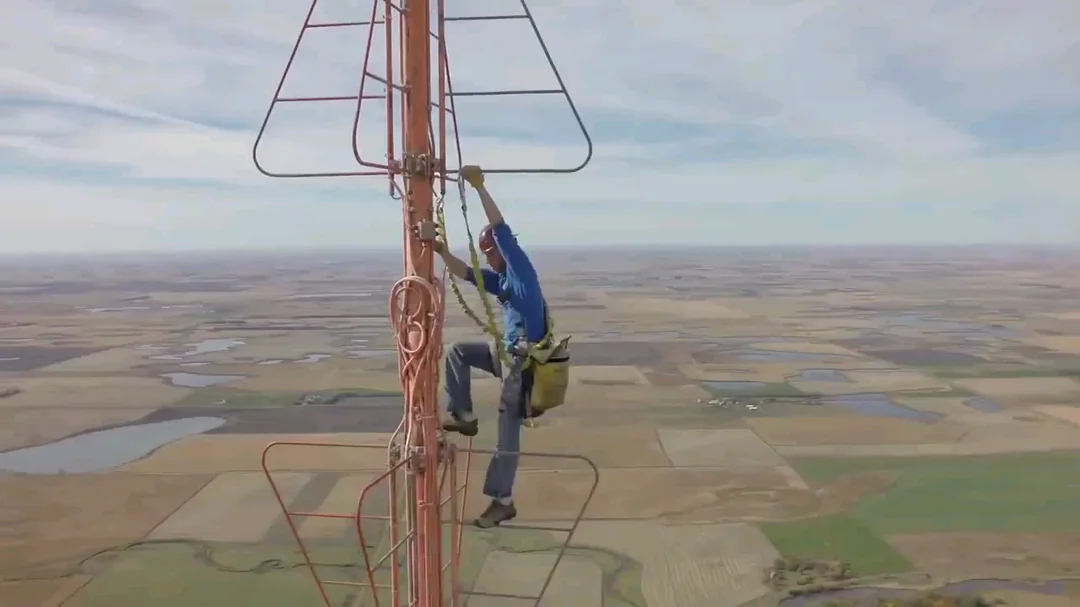
The giant antenna required functioning warning lights to comply with aviation safety regulations. Tall towers can pose serious risks to low flying aircraft, especially at night or during poor weather conditions. The flashing red bulb at the top acts as a warning beacon visible from miles away.
When the light stopped working, someone had to climb to the top and replace it manually.
That responsibility fell to Kevin Schmidt and his team at Sioux Falls Tower and Communications, a company specializing in tower construction and maintenance.
For the average viewer, changing a light bulb feels trivial. But when that bulb sits 1,500 feet in the air on a narrow steel structure exposed to wind, weather, and extreme heights, the task becomes one of the most intimidating maintenance jobs imaginable.
Yet for professional climbers like Schmidt, this type of work is part of everyday life.
The Hidden Profession Most People Never Think About
The viral attention surprised Schmidt because tower climbing is something he had spent years doing without much public recognition.
According to reports, Schmidt had climbed hundreds of towers across dozens of states over the course of eight years. He worked through every season, sometimes dealing with strong winds reaching dangerous speeds.
Tower climbers play a critical role in maintaining communication infrastructure. Television antennas, radio towers, wireless systems, emergency communication networks, and mobile infrastructure all depend on workers willing to climb extraordinary heights.
Without them, modern communication systems would not function reliably.
Yet most people never see these workers in action. Towers often stand in isolated locations, far from public attention. Maintenance happens quietly in the background until something dramatic, like the viral drone footage, suddenly reveals the reality of the job.
The internet became fascinated because the video exposed a profession many people barely knew existed.
Why Humans React So Strongly To Extreme Heights
Part of the video’s viral success comes from basic human psychology.
Fear of heights is extremely common. Even people comfortable with airplanes or tall buildings often react strongly when exposed visually to open heights without barriers or walls. Watching someone suspended on a narrow metal ladder thousands of feet above the ground triggers intense physical responses in viewers.
Many people reported sweaty palms, nausea, racing heartbeats, or dizziness while watching the climb.
The drone perspective intensified this effect dramatically. Unlike footage filmed from the tower itself, the drone pulled back far enough to reveal the enormous emptiness surrounding Schmidt as he climbed.
That visual isolation made the scale feel overwhelming.
Psychologists often explain that humans instinctively fear falls because our brains associate extreme heights with survival threats. The tower video activated that primal fear while allowing viewers to experience it safely from their screens.
This combination of terror and safety is one reason adrenaline based content performs so well online.
How Drone Technology Changed The Experience
The video became especially groundbreaking because of the drone technology used to film it.
Drone operator Todd Thorin explained that the footage represented the highest altitude his drone had ever reached. Equipped with a GoPro camera and custom lens, the drone captured angles that would have been nearly impossible with traditional filming methods.
At the time, drone technology was still relatively new in commercial video production. Audiences were not yet accustomed to seeing ultra smooth aerial footage from such extreme heights.
The result felt cinematic.
One of Thorin’s sons reportedly piloted the drone using goggles connected to the camera feed. The drone battery allowed only limited flight time, meaning the filming crew had just minutes to capture the footage before needing to descend.
The technical challenge added another layer to the story. It was not just Schmidt risking the climb. The crew was also pushing drone filming technology into unusual territory.
Together, the climb and the drone footage created a perfect viral combination.
The FAA And The Controversy Around Drone Rules
The viral video also unintentionally highlighted growing debates surrounding drone regulations in the United States.
At the time, commercial drone use existed in a legal gray area. Federal Aviation Administration guidelines generally limited drone operations to lower altitudes and imposed strict safety requirements.
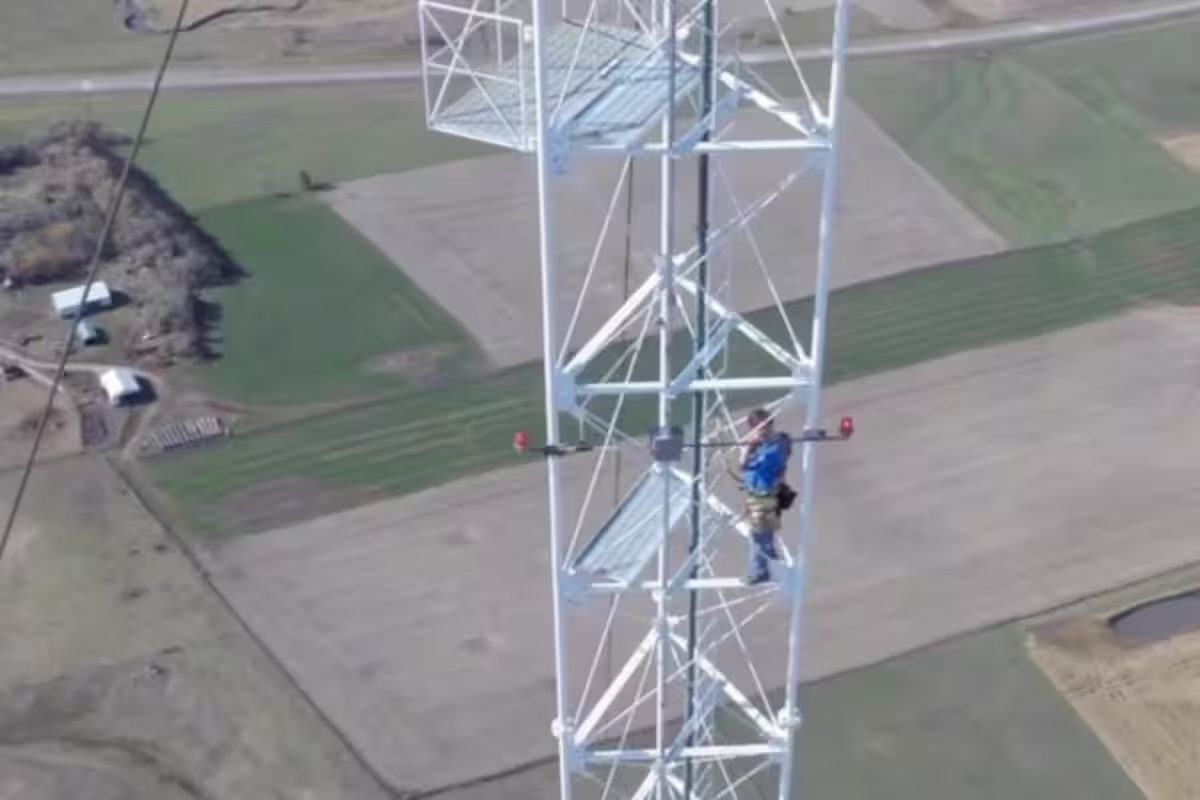
The drone filming Schmidt’s climb reportedly flew far higher than standard recommended limits. Thorin later acknowledged the technology occupied a controversial area of regulation.
The issue reflected broader tensions emerging during the early rise of drone technology. Businesses, filmmakers, and hobbyists were rapidly exploring new possibilities while regulators struggled to keep pace.
For the FAA, safety remained the primary concern. Drones operating near aircraft or communication structures could potentially create dangerous situations if mishandled.
Still, the tower video demonstrated the extraordinary visual possibilities drones could offer. The footage helped shape public fascination with aerial filming at a time when drones were becoming increasingly mainstream.
Why Tower Climbing Is So Difficult
To outsiders, tower climbing may look like pure adrenaline. In reality, the job requires intense focus, discipline, and physical endurance.
Climbers must carefully manage safety equipment, maintain concentration for hours, and stay calm in extreme conditions. Weather becomes a major factor. Wind, rain, ice, and temperature shifts can dramatically increase risk.
The physical demands are enormous. Climbers carry tools, equipment, and replacement components while ascending structures hundreds or thousands of feet tall. Fatigue becomes a serious concern.
Mental strength matters just as much as physical ability.
Panic at extreme heights can become deadly. Climbers must trust their training completely while remaining aware of every movement. Even small mistakes can have catastrophic consequences.
That is one reason companies often struggle to recruit tower climbers. Many people simply cannot tolerate the heights psychologically.
But for climbers like Schmidt, the experience creates a unique sense of freedom and perspective.
The Strange Peacefulness Of Extreme Heights
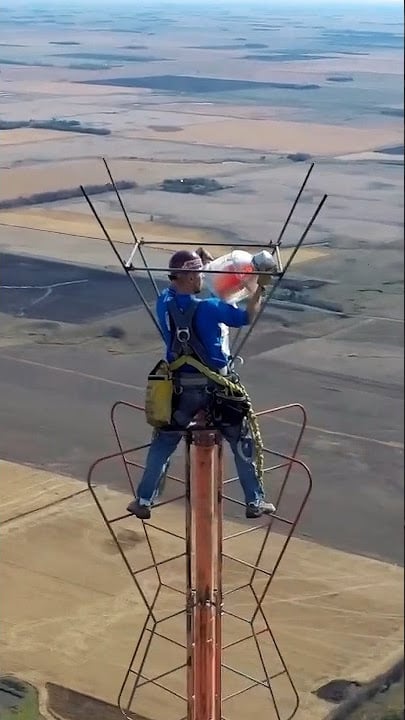
One of the most fascinating parts of Schmidt’s interviews was how calmly he described the experience.
Rather than fear, he spoke about peacefulness.
According to Schmidt, being alone 1,500 feet above the ground creates a feeling unlike anything else. High above cities, roads, and crowds, climbers experience a kind of isolation few people ever encounter.
That perspective may help explain why some climbers become deeply attached to the profession despite the risks.
Extreme occupations often involve unusual psychological rewards. Mountain climbers, deep sea divers, astronauts, and tower climbers frequently describe moments of silence, clarity, or peace in environments most people would find terrifying.
For Schmidt, the view itself was one of the job’s greatest rewards.
The viral audience focused on fear. Schmidt focused on beauty.
Why The Selfie Became Such A Powerful Moment
Near the end of the viral video, Schmidt pulled out his cellphone and took a selfie from the top of the tower.
For viewers, the moment felt surreal.
Here was a man standing nearly 1,500 feet in the air casually taking a photograph as though he were at a tourist attraction instead of one of the most dangerous workplaces imaginable.
But the reason behind the selfie made the moment unexpectedly emotional.
Schmidt later explained that every time he climbs a tower, he takes a selfie and sends it to his wife, Alla.
That detail humanized the entire story.
Suddenly, the viral footage was not just about danger or adrenaline. It became about routine, family, connection, and the small rituals people develop even inside extraordinary professions.
The selfie transformed Schmidt from an internet spectacle into a relatable human being doing a difficult job while staying connected to someone he loves.
What The Viral Video Revealed About Modern Internet Culture
The enormous popularity of the tower climb video reflects how modern audiences respond to authentic extreme experiences.
In an internet filled with scripted entertainment, artificial drama, and endless digital content, the footage felt undeniably real. There were no actors, no special effects, and no manufactured storyline.
It was simply a man climbing an impossibly tall structure to replace a light bulb.
That authenticity mattered.
Viewers became fascinated because the video offered a glimpse into a world most people never experience. It combined danger, beauty, technical skill, and human vulnerability all at once.
The footage also revealed how social media can suddenly shine massive attention onto overlooked professions. Before the video, few outside the industry thought much about tower climbers. Afterward, millions gained new appreciation for the people maintaining critical infrastructure behind the scenes.
Why The Story Still Resonates Years Later
Even years after the video first spread online, people continue discovering and sharing it because the core experience remains timeless.
The footage taps into universal human emotions: fear, curiosity, admiration, and awe.
It also captures a rare balance between modern technology and raw physical courage. Drone cameras made the footage possible, but the heart of the story remained deeply human.
Kevin Schmidt did not become famous for inventing something or performing a stunt. He became famous simply for doing his job in a way most people could hardly imagine enduring.
That is what made the story unforgettable.
The viral tower climb reminded millions that behind the invisible systems powering modern life are real people willing to work in extraordinary conditions. Communication networks, television signals, aviation safety systems, and wireless infrastructure depend on workers standing in places most humans would never dare to go.
And somewhere high above the clouds, while millions watched in disbelief, one tower climber calmly changed a light bulb, took a selfie for his wife, and climbed back down to earth as though it were just another ordinary day at work.