
Table of Contents
- Texas Ordered Cities to Remove Rainbow Crosswalks
- San Antonio Faced a Difficult Choice
- The Sidewalk Workaround Changed the Conversation
- Supporters Said the Sidewalks Represent Safety
- Critics Objected to Public Funding
- Lawsuits Turned the Situation More Complicated
- Pride Symbols Have Become National Flashpoints
- Mayor Gina Ortiz Jones Became a Symbol Herself
- Public Spaces Are Becoming Political Battlegrounds
- The Rainbow Sidewalks Became a Symbol of Persistence
Texas Ordered Cities to Remove Rainbow Crosswalks
The controversy began after Texas Governor Greg Abbott directed cities to remove what he described as political ideologies from public streets.
Rainbow painted crosswalks had existed in several Texas cities for years, especially in LGBTQ districts and nightlife neighborhoods. Many communities viewed them as symbols of inclusion, celebration, and cultural identity rather than political statements.
State officials, however, increasingly framed them differently.
Transportation officials argued brightly painted roadways could distract drivers and interfere with standardized traffic safety practices. Federal pressure reportedly intensified after Transportation Secretary Sean Duffy threatened to reconsider funding for cities that continued displaying what he described as political roadway banners.
As a result, cities including Dallas, Houston, Austin, and San Antonio faced pressure to remove rainbow crosswalks entirely.
The issue quickly became national because similar disputes were unfolding elsewhere in America. Cities in Florida and even Washington, D.C., also faced political battles over murals and symbolic public artwork.
San Antonio Faced a Difficult Choice
Among the cities caught in the controversy, San Antonio became one of the most closely watched.
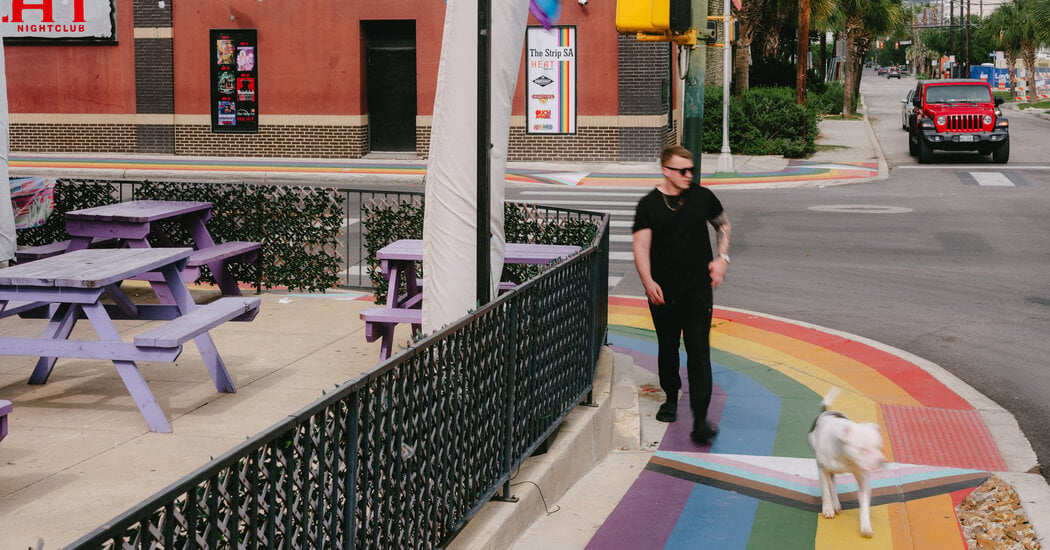
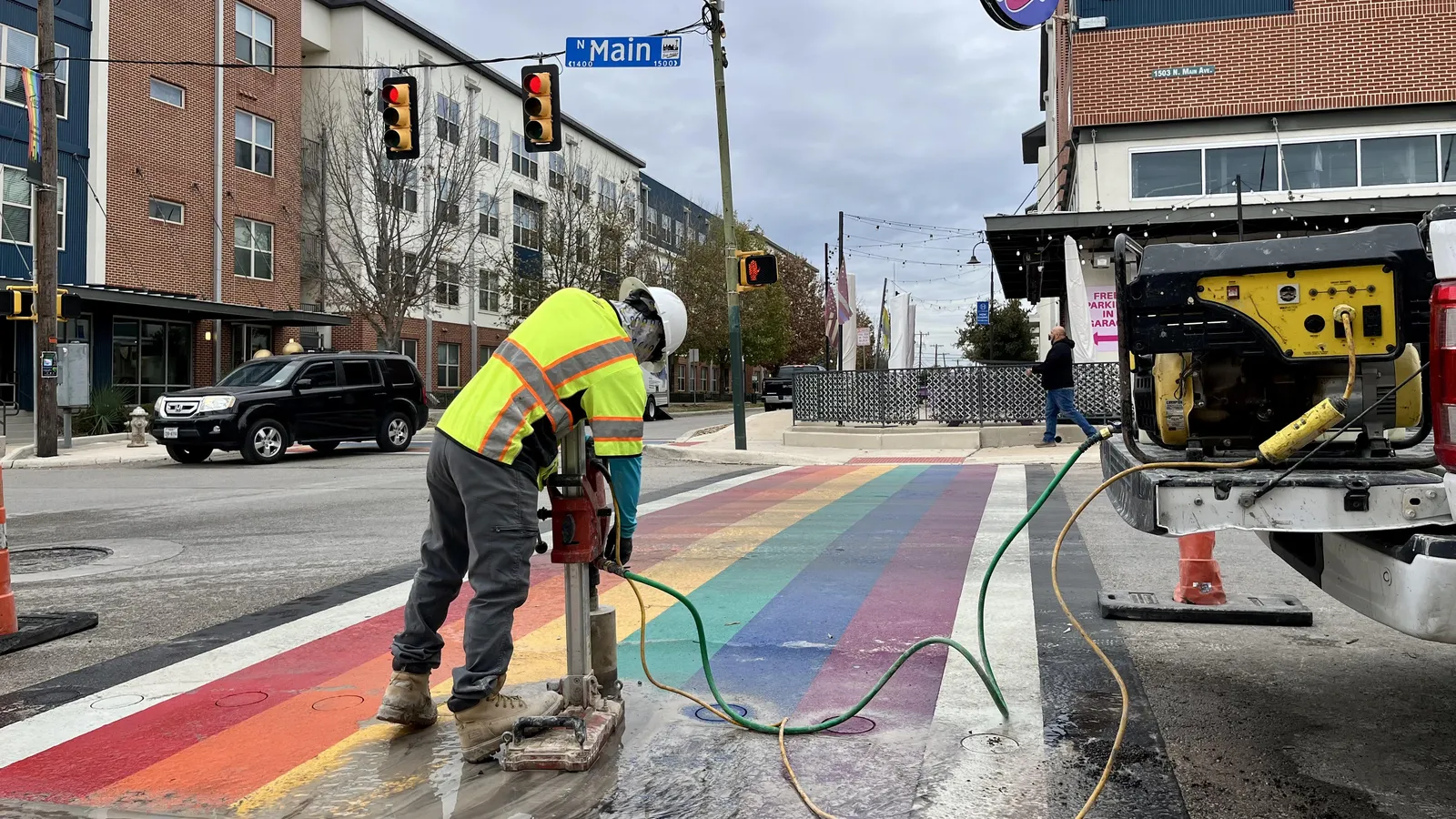
The city’s rainbow crosswalk had existed since 2018 inside the Pride Cultural Heritage District, a neighborhood known for LGBTQ businesses, nightlife, and community spaces. For many residents, the crossing had become more than street paint. It represented visibility and safety in a state where many LGBTQ people still feel politically vulnerable.
But city leaders faced a difficult reality.
San Antonio Mayor Gina Ortiz Jones reportedly acknowledged that refusing state demands could risk important federal or state funding tied to transportation and infrastructure.
As mayor of a major Texas city, she argued she had to consider the broader consequences for residents beyond the symbolic value of the crosswalk itself.
Her comments reflected the difficult balancing act many local governments now face: protecting symbolic expressions of identity while avoiding financial retaliation from higher levels of government.
For some residents, removing the rainbow crossing felt like surrender. For city officials, however, the situation involved complicated practical realities tied to funding and political pressure.
The Sidewalk Workaround Changed the Conversation
Rather than fully abandoning Pride colors, San Antonio leaders searched for an alternative solution.
That solution came through sidewalks.
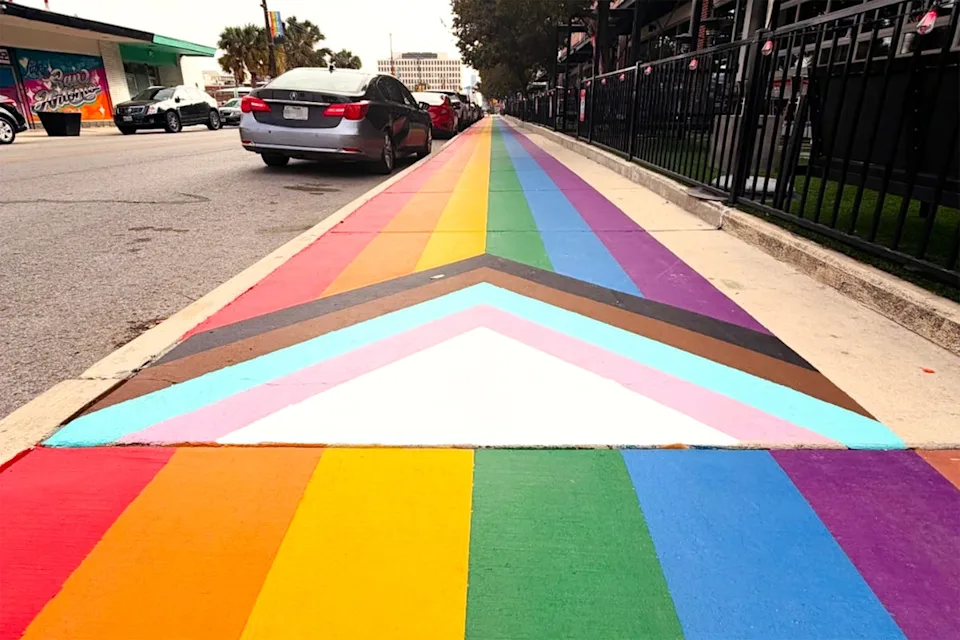
City council members and the LGBTQ advisory board proposed painting nearby sidewalks in rainbow colors instead of the roadway itself. Because the directive primarily targeted painted streets and intersections, the sidewalk plan offered a technical workaround.
The idea reportedly originated with Councilman Jalen McKee-Rodriguez.
The result allowed the Pride district to maintain visible LGBTQ symbolism without directly violating the state order targeting crosswalks.
For supporters, the move represented creativity and resilience.
The colors remained. The neighborhood identity remained. And the community still had a visible public symbol representing inclusion and belonging.
The workaround quickly gained national attention because it showed how local communities were adapting politically while refusing to disappear culturally.
Supporters Said the Sidewalks Represent Safety
Community members repeatedly emphasized that the rainbow sidewalks were not simply decorative.
For many LGBTQ residents, visible Pride symbols help communicate safety, acceptance, and belonging in public spaces. In areas where discrimination or hostility still exists, those symbols can carry emotional importance beyond aesthetics.
Members of San Antonio’s LGBTQ advisory board described the district as a place where people should feel free to gather openly and safely.
Supporters argued the sidewalks signal that LGBTQ residents and visitors are welcome in the neighborhood. They viewed the rainbow colors as community markers rather than partisan political statements.
That distinction became central to the debate.
Critics often framed the sidewalks as ideological activism funded by taxpayers. Supporters framed them as cultural identity and public inclusion similar to heritage districts honoring ethnic or historical communities.
The disagreement reflected a larger national divide over how identity and representation should appear in shared public spaces.
Critics Objected to Public Funding
Not everyone supported the project.
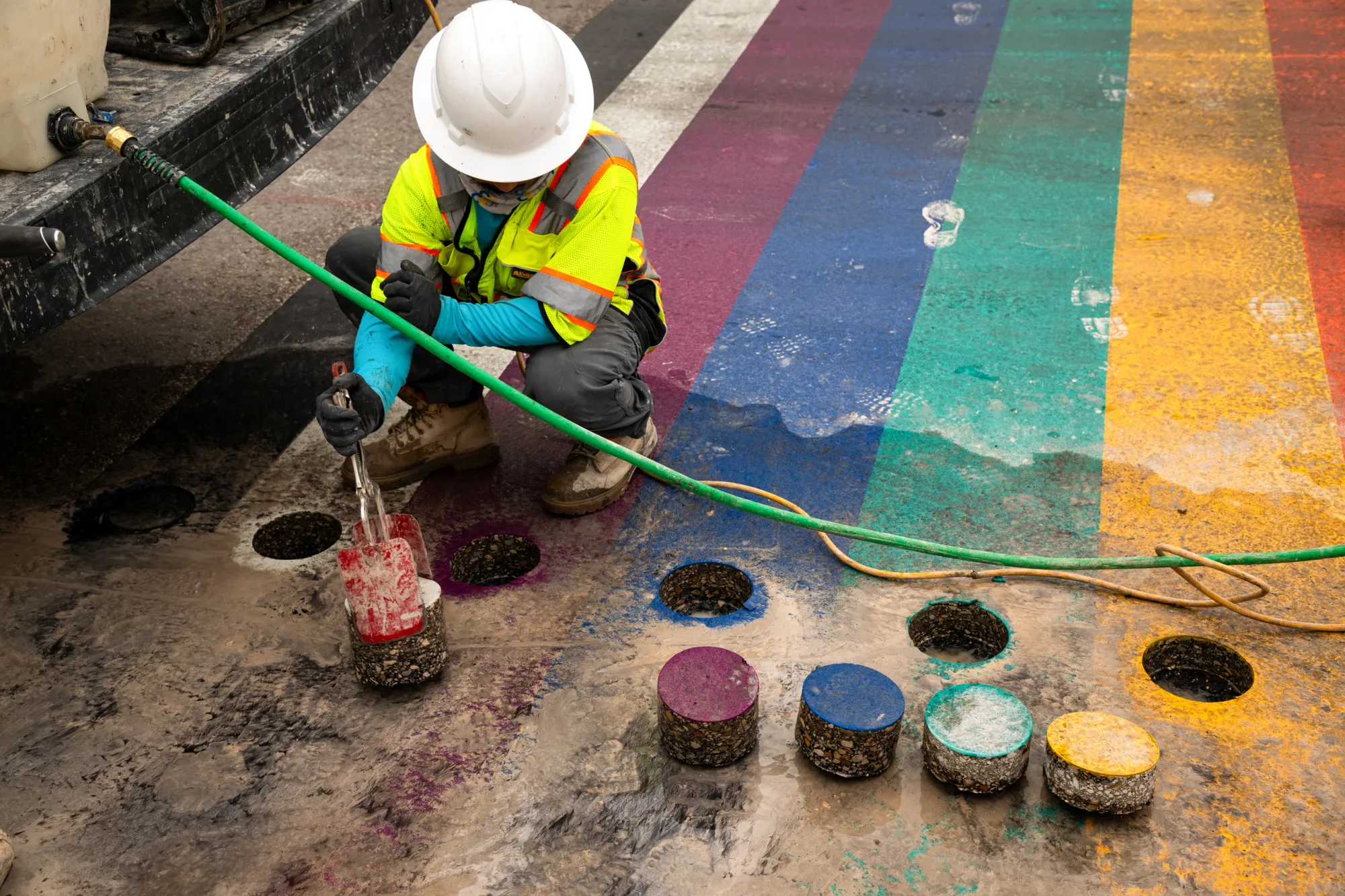
Some conservative groups strongly opposed using public money for the rainbow sidewalk installation, especially because funding reportedly came from public works budgets connected to both removing the old crosswalk and creating the new sidewalk displays.
The Texas Conservative Liberty Forum filed legal objections arguing taxpayer funds should not support what they viewed as political messaging.
Critics argued public infrastructure should remain neutral rather than reflecting specific social or ideological causes. Some residents questioned whether city funds should prioritize symbolic projects while other infrastructure needs remained unresolved.
The legal challenges highlighted how even relatively small cultural symbols can become major political battlegrounds.
What might once have been viewed as local public art increasingly became entangled in national political identity conflicts.
Lawsuits Turned the Situation More Complicated
The legal battle surrounding the sidewalks became increasingly confusing.
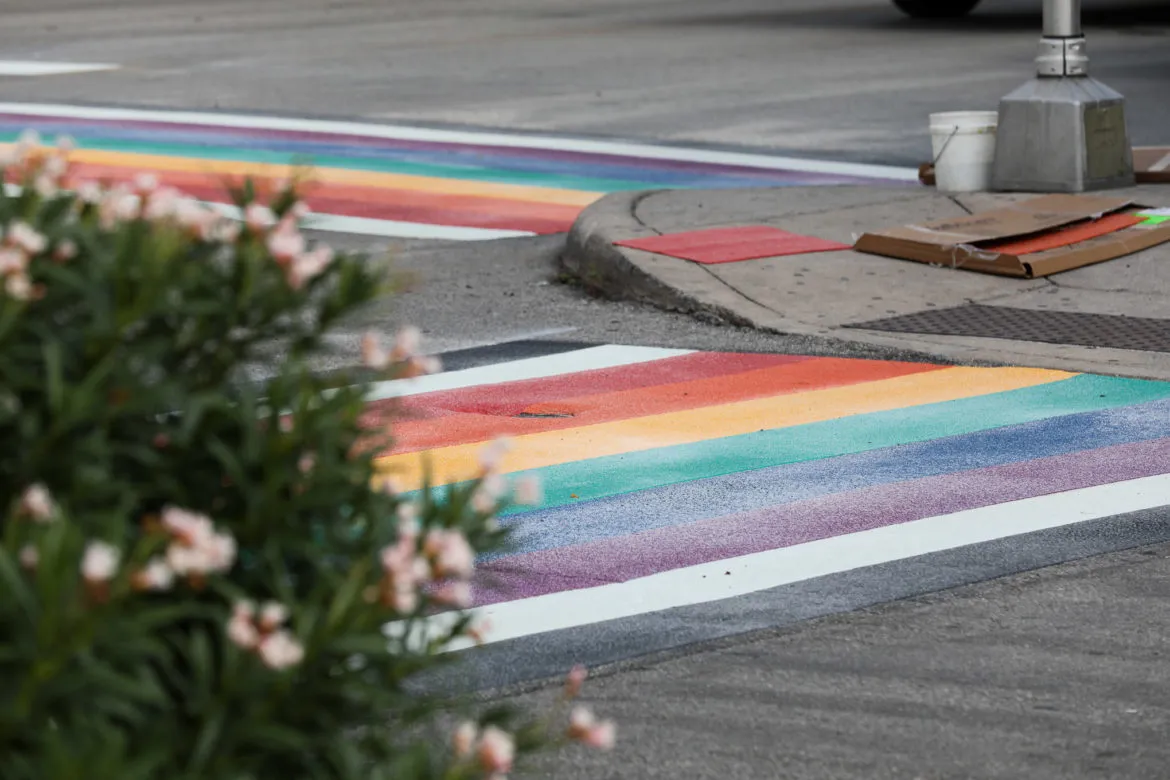
While conservative groups challenged the use of public funds for rainbow sidewalks, another organization connected to LGBTQ advocacy reportedly sued to prevent removal of the original rainbow crosswalk.
Eventually, some lawsuits became merged in court proceedings, creating tension even within parts of the LGBTQ community itself.
Different activist groups disagreed over strategy, symbolism, and whether compromise solutions were sufficient.
Some felt preserving any visible Pride symbol mattered most. Others believed accepting the crosswalk removal represented a dangerous concession.
This internal disagreement reflected the broader emotional weight attached to the issue. The conflict was never really only about paint. It was about visibility, recognition, and whether LGBTQ communities were being gradually pushed out of public space.
Ultimately, a judge reportedly declined to stop either the crosswalk removal or sidewalk installation.
Pride Symbols Have Become National Flashpoints
The San Antonio situation reflects a much larger national trend.
Across the United States, Pride symbols increasingly sit at the center of political and cultural conflict. Rainbow crosswalks, school Pride flags, LGBTQ themed books, drag performances, and diversity initiatives have all become major points of debate.
Supporters argue these symbols help marginalized communities feel recognized and safe. Opponents often frame them as political activism entering public institutions.
This broader cultural conflict intensified significantly in recent years as state governments across America introduced laws connected to LGBTQ education, gender identity, public expression, and diversity programs.
As a result, seemingly small local decisions now carry national significance.
A painted sidewalk in one Texas neighborhood can quickly become symbolic of a much larger ideological battle happening throughout the country.
Mayor Gina Ortiz Jones Became a Symbol Herself
The situation also drew attention because of San Antonio’s mayor herself.
Gina Ortiz Jones became the city’s first openly gay woman mayor, making her leadership during the controversy especially visible. Her personal history added emotional complexity to the debate.
Jones reportedly referenced serving during the military’s “don’t ask, don’t tell” era, a policy that prohibited openly gay individuals from serving openly in the armed forces for many years.
Her comments suggested that Pride identity cannot simply be erased by removing paint from streets. She reportedly emphasized that Pride exists in people themselves, not only in symbols.
That perspective shaped how many supporters viewed the compromise.
Even if the original crosswalk disappeared, the community itself remained.
Public Spaces Are Becoming Political Battlegrounds
The rainbow sidewalk controversy reveals how public spaces are increasingly becoming arenas for national political conflict.
Roads, schools, libraries, parks, murals, and community symbols now carry enormous cultural significance because they shape what people visibly encounter in everyday life.
Political groups increasingly understand the emotional power of public imagery.
For supporters of Pride symbols, visibility itself matters because it communicates belonging and recognition. For opponents, limiting political or ideological displays in public spaces feels equally important.
As a result, even seemingly minor visual decisions can escalate into lawsuits, protests, and national media coverage.
The San Antonio sidewalks became part of this broader struggle over who gets represented publicly and how communities define themselves.
The Rainbow Sidewalks Became a Symbol of Persistence
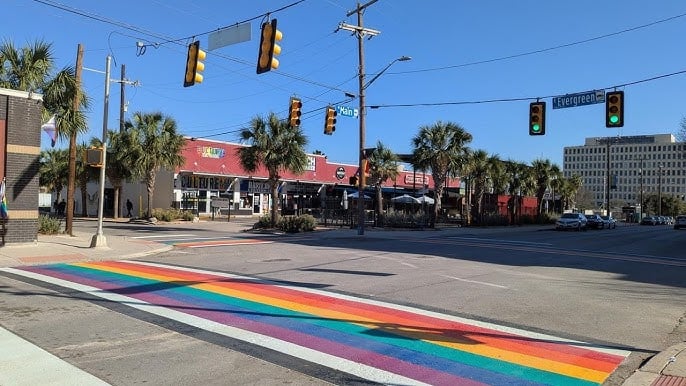
In the end, the rainbow colors returned to San Antonio, just in a different form.
For many residents, the sidewalks became symbolic not only because of what they represent visually, but because of how they survived politically. The project showed that communities often adapt creatively when facing restrictions or pressure.
Supporters celebrated the sidewalks as proof that visibility and identity can persist even under political opposition.
Critics continued arguing public infrastructure should remain free from ideological symbolism.
But regardless of perspective, the controversy demonstrated how emotionally powerful public symbols have become in modern America.
The rainbow sidewalks now stand as more than colorful pavement. They represent compromise, resistance, visibility, and the ongoing cultural negotiations happening across the country.
And in a state where many LGBTQ residents still worry about acceptance and belonging, that visibility continues to matter deeply for the people who walk those streets every day.