

Table of Contents
- When London Authorities Announced a Terrorist Investigation After a Stabbing in a Jewish Neighbourhood
- The Deadly Walk Through Golders Green
- Why Police Declared a Terrorist Incident
- A Surge in Antisemitic Violence Across North London
- Political Leaders Condemn Violence and Call for Action
- Voices from the Jewish Community
- Wider Context of Antisemitism in the UK
- The Immediate and Long‑Term Impacts
- Conclusion
When London Authorities Announced a Terrorist Investigation After a Stabbing in a Jewish Neighbourhood
When news broke that London counter‑terrorism police had declared the stabbing of two Jewish men in the Golders Green area a terrorist incident, the city’s residents and leaders alike were shaken by an event that underscored rising tensions and safety fears for minority communities. The attack, which took place in late April in this north London suburb long known for its vibrant and historic Jewish population, was swiftly classified by law enforcement as an act potentially motivated by ideology and hate, prompting a broad and urgent investigation into motives, wider safety concerns and the state of antisemitism in the United Kingdom’s capital. The incident, which left the victims critically hurt but later in stable condition in hospital, has since become a focal point of political, community and security discourse across London and beyond.
At its core, the move by police to treat the stabbing as a terrorist incident reflects both specific evidence gathered at the scene and a broader pattern of violent attacks against Jewish residents in recent months, including arson attempts and assaults. What follows is an in‑depth examination of the stabbing itself, how authorities responded, reactions from political leaders and Jewish communities, and what this incident may signal about the challenges facing multicultural cities grappling with hate‑driven violence and extremist acts.
The Deadly Walk Through Golders Green

On the morning of April 29, 2026, chaos erupted on a busy street in Golders Green when a man armed with a knife began moving through the neighbourhood, targeting people believed to be Jewish. The incident began suddenly and violently, with eyewitnesses later describing a man sprinting down Golders Green Road and approaching individuals with apparent intent to stab them. Police, assisted by community volunteers and rapid emergency response teams, were able to detain the suspect after deploying a taser and taking him into custody near the scene.
Two Jewish men, later identified in local reporting as a 34‑year‑old and a 76‑year‑old, were stabbed during the attack and taken to nearby hospitals. Though seriously wounded, they were subsequently described as in stable condition by authorities. Local groups and bystanders also played a key role in restraining the attacker, with volunteers from neighbourhood watch and security organisations stepping in to assist police until law enforcement could fully secure the scene.
This was not an isolated incident. Indeed, it emerged that the suspect, a 45‑year‑old British national, had earlier attacked another individual in a separate part of the city, prompting police to investigate potential patterns in his behaviour.
Why Police Declared a Terrorist Incident
Shortly after the attack, the Metropolitan Police’s Counter Terrorism Command made a decisive announcement: the stabbing was being investigated as a terrorist incident. The declaration came after early evidence suggested that the attacker may have been targeting individuals specifically because of their Jewish identity — a grievous act falling under UK counter‑terrorism laws given its possible ideological motive.
Assistant Commissioner Laurence Taylor, the head of the unit overseeing the inquiry, explained that specialised teams were digging into the suspect’s motives, background and potential links to extremist influences or networks. They were also collaborating with national security services to build a comprehensive intelligence picture.
Importantly, declaring an attack a “terrorist incident” signals heightened investigative powers for police, including the ability to coordinate cross‑jurisdictional evidence gathering, pursue international leads, and deploy specialised forensic capabilities not typical of standard criminal inquiries. It also elevates public awareness of the ideological dimensions that may underpin violent crimes.
Soon after the incident, prosecutors authorised charges against the suspect: he was charged with two counts of attempted murder and one count of possessing a bladed article in a public place. The case was scheduled to advance to a full trial in early 2027, illustrating the legal seriousness with which authorities were treating the matter.
A Surge in Antisemitic Violence Across North London

The stabbing did not occur in a vacuum. Golders Green and surrounding areas have witnessed a marked increase in antisemitic violence and hate‑related incidents over recent months. In late March, four ambulances operated by a Jewish volunteer ambulance service were deliberately set on fire in what police treated as an antisemitic arson attack.
Another distressing episode involved suspected arson at a local memorial wall, prompting community outrage and police investigations into targeted hate crimes. These incidents, among others, contributed to a broader atmosphere of unease and insecurity for London’s Jewish residents, many of whom rely on volunteer patrols and security networks to safeguard synagogues, schools and public spaces.
Local law enforcement has acknowledged these patterns and responded by bolstering patrols, establishing specialist units, and liaising closely with community groups to enhance protective measures. Police logged significant increases in hate crime reports in the months surrounding these events, prompting the deployment of hundreds of officers specifically trained to counter antisemitic threats.
Political Leaders Condemn Violence and Call for Action
The incident and the surrounding spike in antisemitic attacks drew quick responses from political leaders across the United Kingdom. During a session of the House of Commons held shortly after the stabbing, Prime Minister Keir Starmer described the attack as “deeply concerning” and pledged government support for the ongoing investigation. He underscored the need to support law enforcement and do everything possible to prevent similar crimes in the future.
Starmer’s remarks echoed a broader commitment from UK leadership to confront hate‑driven violence against religious and ethnic minorities. Opposition figures and members of parliament representing London communities also called for strengthened security measures, improved community outreach and enhanced attention to rising extremist threats.
King Charles III, speaking during a state visit abroad, expressed his own deep concern about the stabbing and its implications for societal cohesion and tolerance. While far from the epicentre of UK politics, the monarch’s comments highlighted the gravity with which the incident was being viewed in official circles.
London’s mayor also weighed in, emphasising that “there must be absolutely no place for antisemitism in society” and reaffirming the city’s commitment to protecting all communities. Given the historical complexity of London as a multicultural hub, local leaders stressed that ensuring safety and dignity for minorities is both a moral imperative and a public priority.
Voices from the Jewish Community
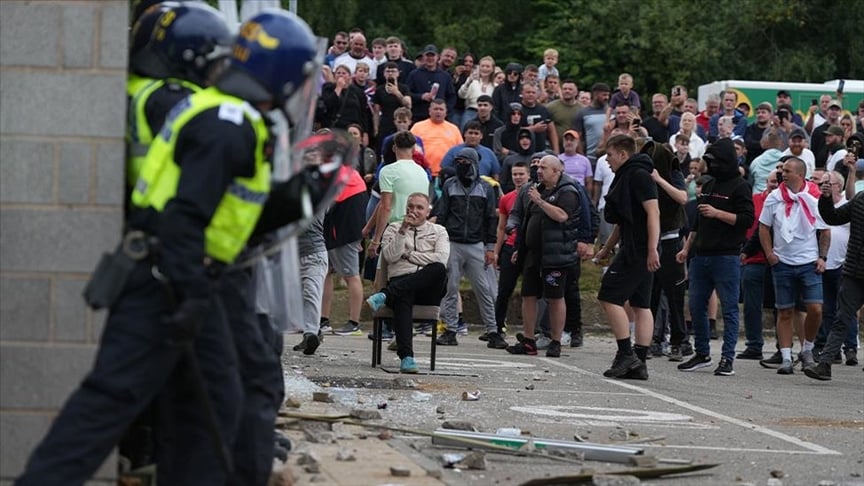
Within Golders Green itself, the stabbing ignited fear, anger and calls for increased protection. Long‑time residents, many of whom have deep roots in the area, expressed distress at the violence unfolding in what has for decades been a centre of Jewish life in London. Synagogues, kosher shops, schools and community centres that once felt secure suddenly came under an emotionally charged spotlight.
Some locals described the stabbing as a direct assault on their identity and way of life, noting that visible markers of Jewish faith or culture may have made certain individuals targets. Advocacy groups and community leaders urged authorities to accelerate protective measures, increase CCTV coverage, and work with neighbourhood patrols to reassure residents.
Jewish advocacy organisations also amplified their calls for broader societal action, emphasising that hate crimes do not merely affect isolated individuals but threaten the fabric of communal coexistence. They sought solidarity from other faith and civil rights groups, urging a united stance against antisemitism and all forms of prejudice.
Wider Context of Antisemitism in the UK
The stabbing and related incidents reflect a wider, troubling trend of antisemitic violence across the United Kingdom. Data from law enforcement agencies show spikes in reported antisemitic hate crimes, particularly in urban centres like London, where diverse communities live in close proximity.
Many observers link these increases to global events, including heightened geopolitical tensions in the Middle East, which have reverberated through diaspora communities and inflamed social fault lines. While the motivations behind individual attacks are complex and varied, the cumulative effect is a palpable sense of vulnerability among Jewish residents, particularly in neighbourhoods where community life has traditionally thrived.
In response, law enforcement and advocacy groups have stepped up efforts to educate the public, train officers to recognise hate‑motivated violence, and strengthen community policing initiatives. These efforts aim not only to prevent violence but also to build resilience and mutual understanding among London’s many cultural and religious communities.
The Immediate and Long‑Term Impacts
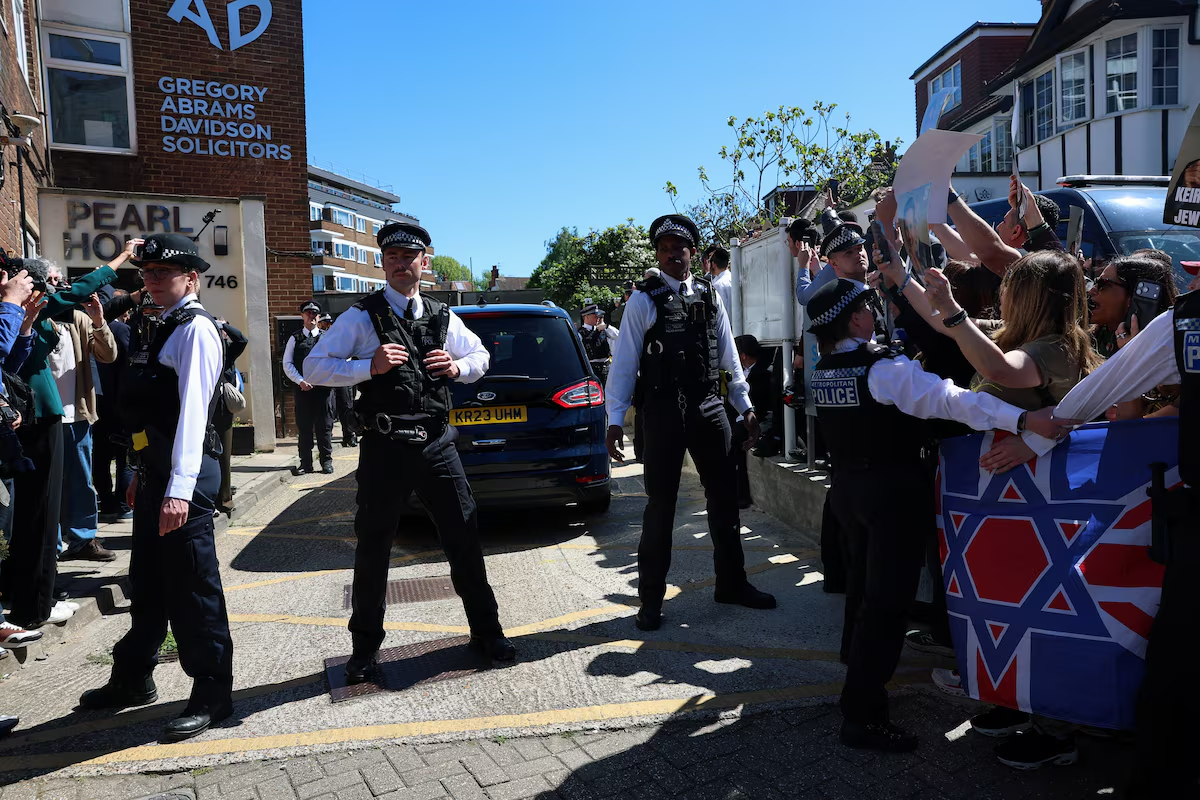
In the immediate aftermath of the Golders Green stabbing, security in neighbourhoods with sizeable Jewish populations was visibly increased, with police patrols and community security patrols working in tandem to reassure residents and deter further violence. Public officials also coordinated crisis support services, counselling and outreach efforts to those impacted directly or indirectly by the attack.
Beyond the city’s borders, the incident quickly became part of national and international conversations about safety, minority rights, and the responsibilities of governments to protect all citizens. Human rights advocates highlighted how targeted violence against specific religious groups affects broader societal harmony and can erode trust between communities and authorities if not addressed swiftly and transparently.
There is also concern about the psychological impact on children, families and students who live in affected neighbourhoods or attend Jewish schools nearby. Universities and community organisations have mobilised support networks to help students and young people cope with anxiety and fear triggered by such high‑profile acts of violence.
Yet there is resilience, too. Interfaith groups and civil society organisations have organised rallies and solidarity vigils, sending a strong message that hatred has no home in Britain’s capital and that communities will stand together against violence and intimidation.
Conclusion
London’s decision to treat the Golders Green stabbing as a terrorist incident reflects both the gravity of the specific attack and a growing recognition by authorities that violence motivated by hate and ideological bias must be confronted head‑on. From the swift arrest and charging of a suspect to political condemnations and heightened safety measures, the response underscores the urgency of addressing rising antisemitic violence and ensuring that all residents can live without fear.
While the two men who were stabbed are now stable and recovering, the broader implications of the attack continue to ripple through London’s diverse communities, prompting reflection on how best to balance security, freedom and communal harmony in a city that prides itself on tolerance and multiculturalism. The coming months, including legal proceedings and community initiatives, will undoubtedly shape how Londoners — Jewish and non‑Jewish alike — chart a path forward from this deeply troubling moment in their shared urban life.