

Table of Contents
- Bible Sales In Britain Have Reached Remarkable New Heights
- Gen Z Is Approaching Faith Differently Than Older Generations
- The Pandemic Changed How Young People Think About Life
- Mental Health Struggles Are Fueling Spiritual Curiosity
- Social Media Has Made Christianity More Visible Again
- Modern Bible Designs Are Attracting New Readers
- The Trend Is Not Limited To Britain Alone
- Publishers Are Expanding To Meet Growing Demand
- Churches Are Seeing New Interest From Younger Audiences
- A New Spiritual Era May Be Emerging
Bible Sales In Britain Have Reached Remarkable New Heights
According to recent publishing data, Bible sales in the UK increased dramatically between 2019 and 2024. Revenue reportedly climbed from £2.69 million to more than £5 million during that period, representing one of the most significant increases in modern British publishing history.
What makes the numbers even more striking is the comparison with previous decades. Between 2008 and 2019, annual Bible sales grew only modestly. Yet within just four years, growth accelerated at a pace rarely seen in religious publishing.
Publishers say the trend cannot simply be explained by older religious communities continuing traditional practices. Instead, much of the momentum is reportedly coming from younger buyers, especially members of Generation Z.
For many industry observers, the data challenges long-standing assumptions that younger generations were permanently abandoning Christianity. Instead, it suggests a growing appetite for spiritual exploration among people who grew up during an era dominated by social media, political division, global crises, and rapid technological change.
Gen Z Is Approaching Faith Differently Than Older Generations
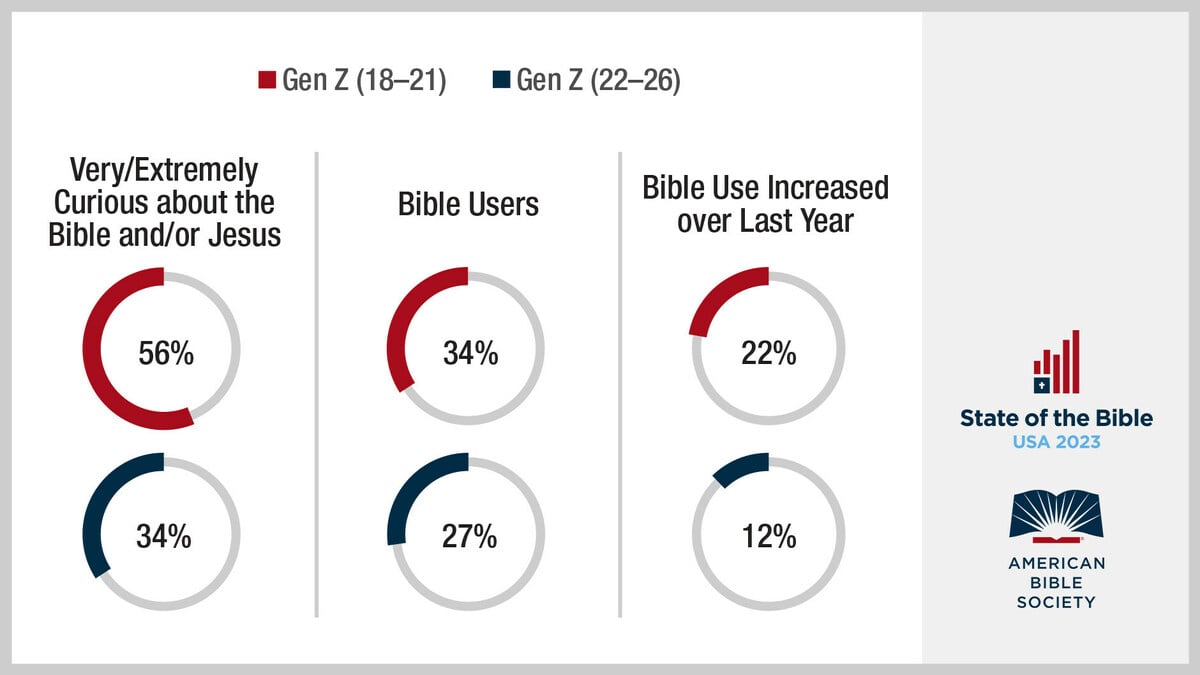
One of the most fascinating aspects of the Bible sales boom is the way younger people are engaging with religion. Many members of Gen Z are not necessarily returning to traditional church structures in the same way older generations once did. Instead, they are exploring spirituality through personal discovery, online communities, podcasts, videos, and independent reading.
Research has shown that a surprisingly high percentage of young adults describe themselves as spiritual. At the same time, fewer Gen Z individuals identify as atheists compared to some older generations such as Millennials and Generation X.
This shift reflects a broader cultural change. Younger people today often approach belief systems less through institutional loyalty and more through personal meaning. They are more likely to ask questions, investigate ideas independently, and build their worldview through multiple sources rather than simply inheriting traditions from family or society.
For many Gen Z readers, buying a Bible does not always begin with full religious commitment. Sometimes it starts with curiosity. Sometimes it begins after seeing faith-related content online. In other cases, people are searching for emotional comfort, wisdom, or deeper answers about identity and purpose.
The Pandemic Changed How Young People Think About Life
The Covid-19 pandemic played a major role in reshaping how many young people think about spirituality and mental wellbeing. Isolation, uncertainty, fear, and grief forced millions to confront difficult questions about life and meaning.
For Generation Z, the pandemic arrived during crucial years of emotional and social development. Many experienced interrupted education, loneliness, career uncertainty, and increased mental health struggles. During that period, online searches related to anxiety, depression, purpose, and spirituality rose dramatically.
In that environment, faith began to look different to many young adults. Rather than viewing religion as merely tradition or obligation, some started seeing it as a source of emotional grounding and personal reflection.
Publishers and church leaders have repeatedly noted that many first-time Bible buyers during recent years were younger readers looking for reassurance during difficult times. Messages about hope, peace, forgiveness, and resilience resonated deeply during periods of instability.
The pandemic may not have created spiritual curiosity entirely, but it appears to have accelerated existing questions that were already growing beneath the surface.
Mental Health Struggles Are Fueling Spiritual Curiosity

Mental health challenges among young people have become one of the defining issues of the modern era. Rising anxiety, depression, burnout, loneliness, and social pressure have affected millions worldwide, especially younger generations constantly connected through digital platforms.
Many experts believe this emotional climate is closely connected to the renewed interest in spirituality.
Young people today face enormous pressure to succeed academically, socially, and financially while also managing constant exposure to online comparison culture. Social media often creates unrealistic expectations surrounding beauty, success, relationships, and identity.
Against that backdrop, faith offers something radically different. The Bible presents ideas about rest, purpose, forgiveness, love, and belonging that contrast sharply with the nonstop performance culture many young people experience online.
For some readers, Scripture provides emotional comfort. For others, it creates a sense of structure and stability in a chaotic world. Even individuals who are not deeply religious may still find value in biblical teachings about resilience, compassion, and inner peace.
This does not mean faith instantly solves mental health struggles. However, many young adults appear increasingly open to exploring spirituality as part of a broader search for emotional wellbeing and meaning.
Social Media Has Made Christianity More Visible Again
One of the biggest reasons behind the Bible sales surge may be social media itself. Platforms like TikTok, Instagram, and YouTube have transformed how faith is discussed and shared among younger audiences.
Christian creators are now producing content that feels modern, relatable, and emotionally honest. Instead of formal sermons alone, audiences encounter short videos discussing anxiety, relationships, healing, forgiveness, motivation, and daily struggles through a faith-based lens.
Hashtags related to the Bible and Christianity have generated billions of views across platforms like TikTok. Young creators openly share testimonies, Bible study routines, worship music, and personal reflections about faith journeys.
For many Gen Z users, these videos feel more accessible than traditional religious environments. The barrier to entry is lower. People can explore spiritual content privately, ask questions anonymously, and engage with discussions without immediately committing to a church community.
Social media has also normalized conversations about spirituality among younger audiences. In previous years, openly discussing religion online may have felt unusual or socially unpopular in some circles. Today, faith-based content can trend alongside entertainment, lifestyle, and mental health topics.
Ironically, the same digital platforms often criticized for increasing anxiety are also becoming spaces where many young people encounter Christianity for the first time.
Modern Bible Designs Are Attracting New Readers
Publishers have also adapted to changing tastes by creating Bibles specifically designed for modern readers. This new generation of editions often emphasizes readability, aesthetics, personalization, and accessibility.
Study Bibles, journaling Bibles, illustrated editions, and beautifully designed covers have helped transform how younger audiences perceive Scripture. Many modern editions now feel less intimidating and more approachable.
Some publishers have introduced colorful compact editions, interactive layouts, devotional notes, and creative reading guides aimed specifically at younger demographics. These products appeal not only as religious texts but also as personal lifestyle items.
This visual and practical redesign matters more than many people realize. Generation Z grew up in a highly visual digital culture where presentation strongly influences engagement. A Bible that feels aesthetically modern may encourage someone to explore it who otherwise never would have picked one up.
Publishers also increasingly focus on accessibility through clearer language translations and digital editions that integrate easily into modern life.
The goal is not to change Scripture itself but to remove barriers that may discourage first-time readers.
The Trend Is Not Limited To Britain Alone
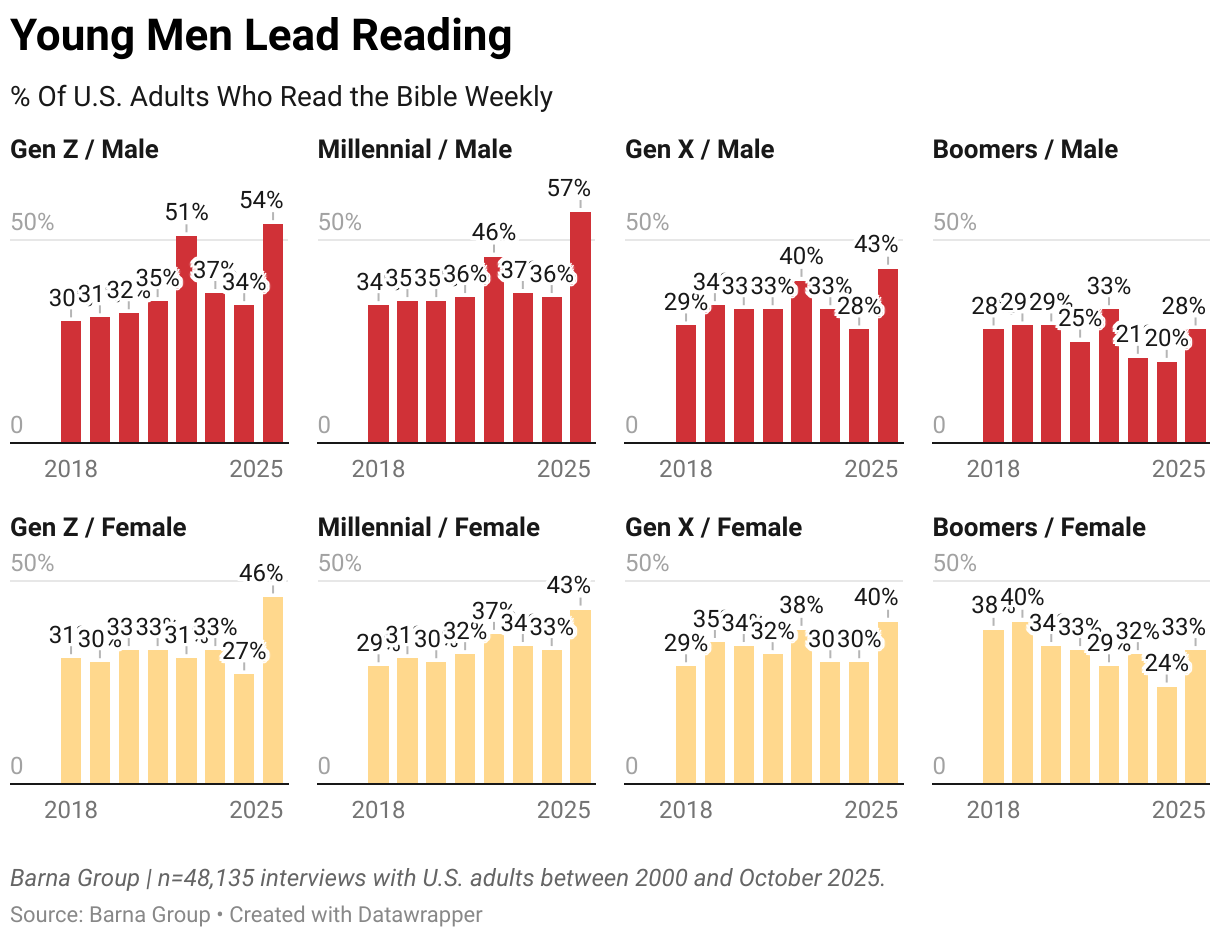
Although the UK has seen remarkable growth in Bible sales, the movement is not isolated to Britain. Similar patterns have emerged in other countries, especially the United States.
Reports from American publishing markets have shown strong increases in Bible purchases in recent years. Churches in various regions have also reported growing attendance among younger demographics, particularly young adults and university students.
Some observers believe society may be entering a broader spiritual re-evaluation period. After years dominated by hyper-individualism, political division, economic stress, and digital overload, many people appear increasingly interested in questions about morality, meaning, identity, and belonging.
This does not necessarily mean society is becoming traditionally religious again in the same way it once was. Instead, spirituality may be evolving into something more personal, exploratory, and community-driven for younger generations.
The current revival of Bible interest appears less rooted in obligation and more connected to emotional and existential searching.
Publishers Are Expanding To Meet Growing Demand

Religious publishers are responding quickly to the growing interest in Scripture. Many companies are expanding product lines, introducing digital editions, and developing study materials designed for younger audiences.
Publishers with long histories in Bible production now find themselves operating within a completely different cultural environment than even a decade ago. Demand is no longer coming primarily from older churchgoers. Increasingly, first-time buyers are young adults exploring spirituality independently.
Some publishers are also investing heavily in children’s Bibles, devotional content, educational resources, and study tools that make Scripture easier to understand for modern readers.
Digital accessibility has become especially important. eBooks, apps, audiobooks, and online reading plans allow users to engage with Scripture in ways that fit naturally into modern lifestyles.
This shift reflects a larger transformation in publishing itself. Religious content is no longer confined to physical churches or bookstores. It now exists within podcasts, social feeds, YouTube channels, online communities, and mobile devices used daily by millions of young people.
Churches Are Seeing New Interest From Younger Audiences
Alongside Bible sales, many churches are reporting increased attendance from younger visitors. Some congregations that once struggled to attract Gen Z audiences are now seeing renewed engagement through community-focused events, worship nights, and open discussions about mental health and identity.
Importantly, many younger attendees are not necessarily looking for rigid institutional experiences. Instead, they often seek authenticity, emotional honesty, supportive community, and meaningful conversation.
Churches that successfully connect with younger generations frequently focus on openness, transparency, and practical discussions about real-life struggles.
Faith leaders also note that younger audiences are often highly curious and willing to ask difficult questions about theology, suffering, ethics, and spirituality. Rather than rejecting faith entirely, many Gen Z individuals appear interested in exploring Christianity deeply and thoughtfully.
This curiosity may partly explain why Bible sales are rising alongside broader discussions about spirituality online.
A New Spiritual Era May Be Emerging
The growing popularity of the Bible among Generation Z represents more than a publishing trend. It reflects a wider cultural moment shaped by uncertainty, emotional exhaustion, digital overload, and a deep search for meaning.
For years, many assumed younger generations were moving steadily away from religion. Yet current trends suggest the story may be far more complicated. Instead of abandoning spirituality altogether, many Gen Z individuals appear to be redefining how faith fits into modern life.
Social media, mental health struggles, global crises, and cultural instability have all contributed to a generation increasingly willing to explore deeper existential questions. In that search, the Bible has unexpectedly re-emerged as a source of comfort, wisdom, identity, and hope.
Whether this movement continues long-term remains uncertain. Cultural trends can shift quickly, especially in the digital age. However, the scale of recent growth suggests something meaningful is happening beneath the surface.
For publishers, churches, and cultural observers alike, the message is becoming difficult to ignore. A generation once described as spiritually disconnected may actually be searching for faith more intensely than many realized.