
Table of Contents
- JD Vance Turns Attention Toward His Home State
- Vivek Ramaswamy Quickly Makes Fraud Fight Central Campaign Theme
- Questions Emerge About Ohio Republican Oversight
- Governor Mike DeWine Defends Ohio’s Record
- The Political Stakes Continue Growing
- National Republicans Push Broader Anti Fraud Agenda
- Healthcare System Faces Growing Pressure
- Ohio Republicans Face Internal Divisions
- Why This Story Could Reshape Ohio Politics
JD Vance Turns Attention Toward His Home State
The controversy intensified after an investigation published by the conservative media outlet The Daily Wire alleged widespread abuse inside Ohio’s Medicaid funded home healthcare system. The report claimed that weak oversight and loopholes had allowed major financial abuse to flourish for years.
Just one day before Vivek Ramaswamy secured victory in Ohio’s Republican gubernatorial primary, JD Vance publicly announced on social media that the federal anti fraud task force he leads under President Donald Trump would begin investigating Ohio’s Medicaid system.
The announcement marked a significant shift in strategy.
Until now, many of Vance’s highest profile anti fraud actions had targeted Democratic states. Critics accused the administration of weaponizing fraud investigations for political purposes, while supporters argued that taxpayers were being exploited by weak state oversight systems.
By targeting Ohio, Vance appeared eager to prove that his campaign was not simply partisan theater.
At the same time, the decision immediately created political complications for Ohio Republicans who have controlled the state government for well over a decade.
Vivek Ramaswamy Quickly Makes Fraud Fight Central Campaign Theme
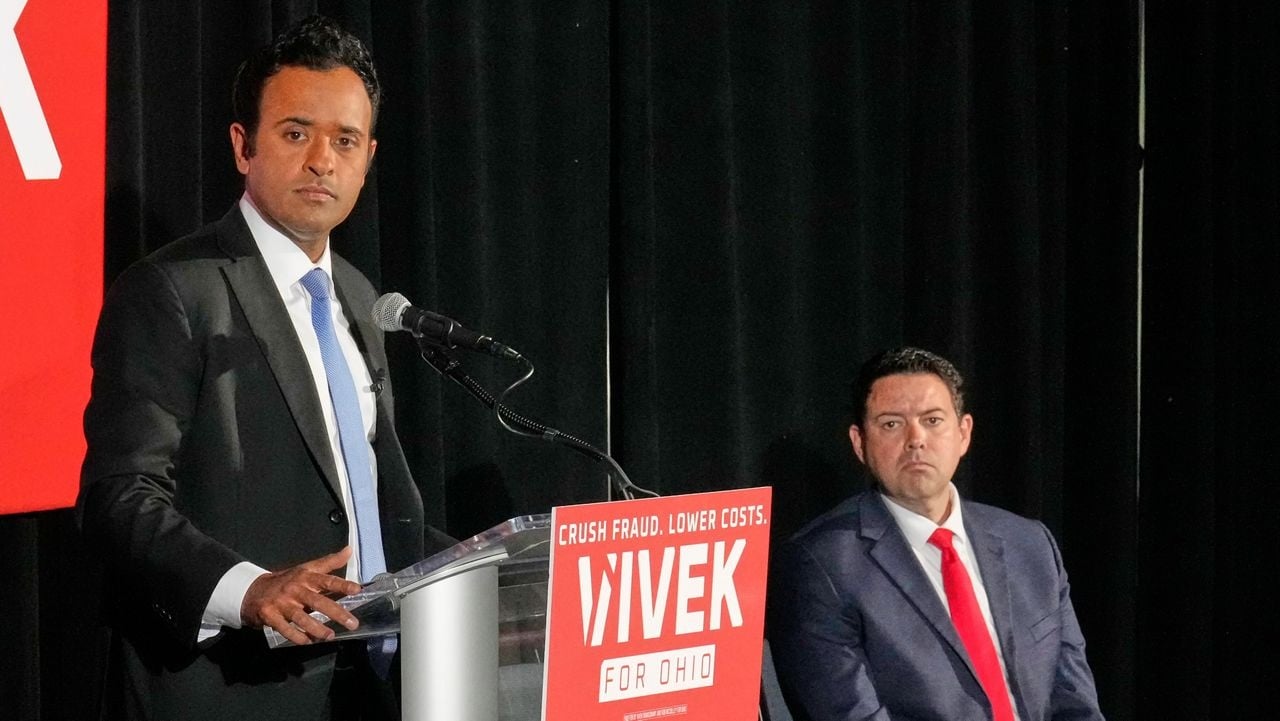
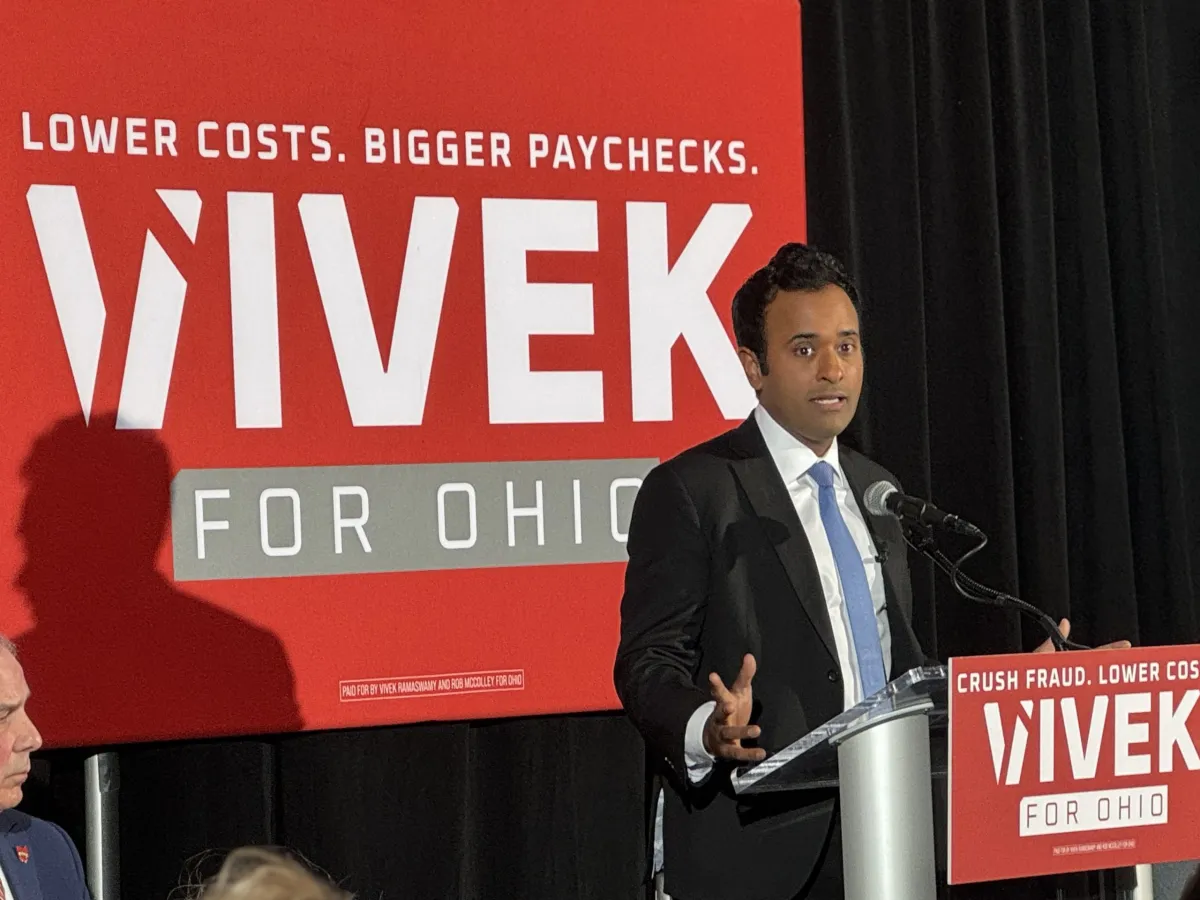
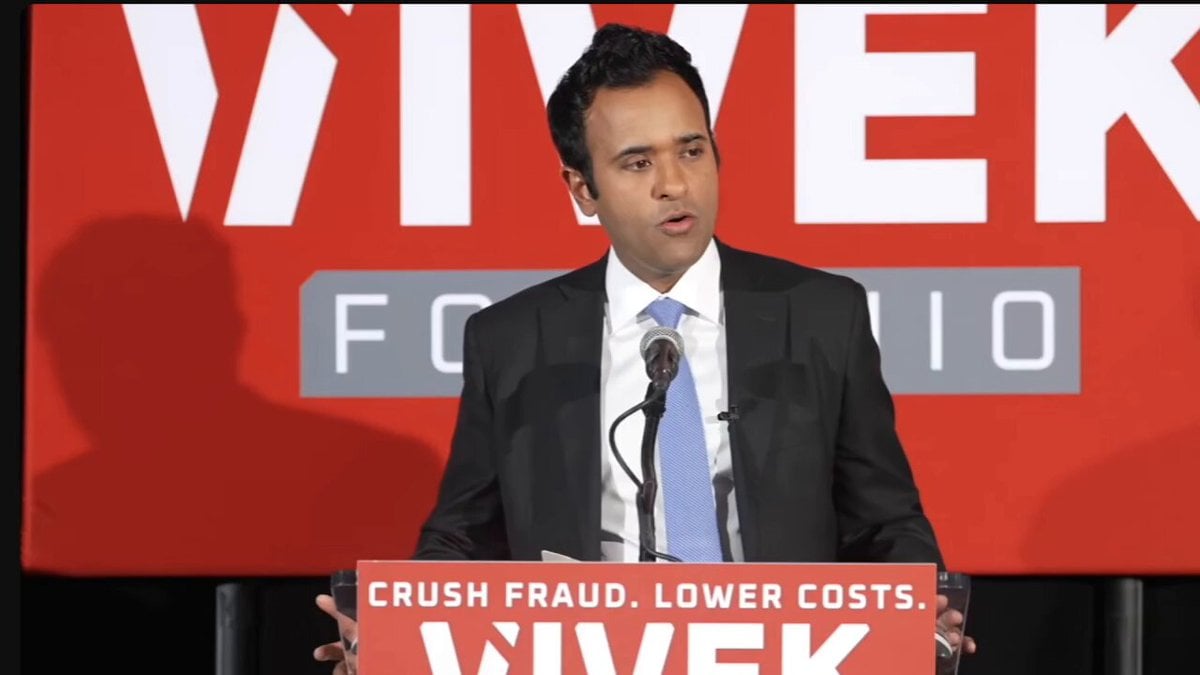
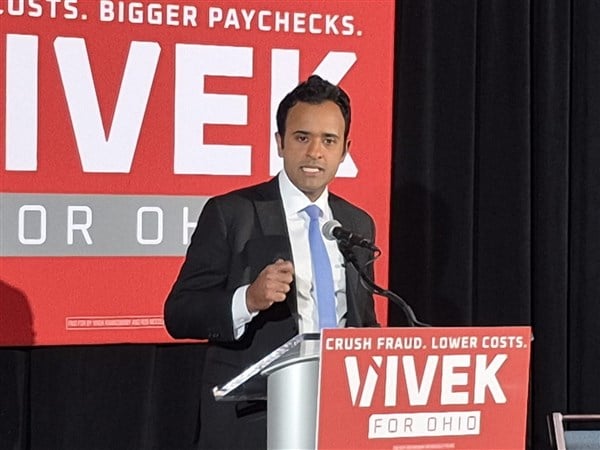
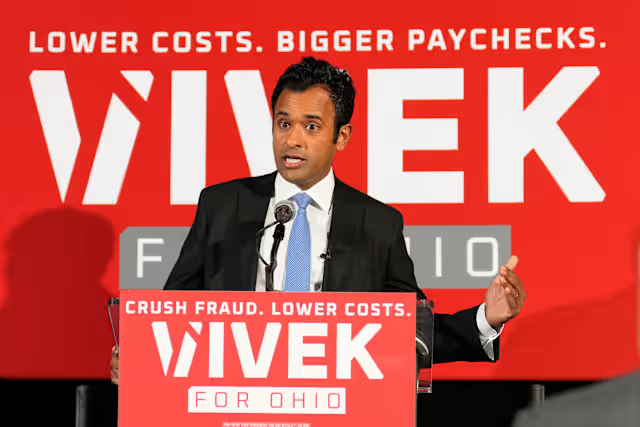
Rather than distancing himself from the controversy, Vivek Ramaswamy leaned directly into it.
During a major news conference, Ramaswamy announced an aggressive anti fraud agenda that he claimed could save Ohio billions of dollars while reducing healthcare costs for residents.
His proposal centers on renegotiating Ohio’s agreement with the federal Centers for Medicare and Medicaid Services. According to his campaign, the restructuring would allow Ohio to secure stronger financial incentives for identifying fraud while simplifying the state’s healthcare bureaucracy.
Ramaswamy’s team estimates that the proposed reforms could generate approximately $3.1 billion in savings.
The candidate repeatedly framed the issue as evidence that Ohio’s political system had grown complacent and inefficient.
He carefully avoided directly blaming Republican leaders for the current situation, despite the GOP having controlled Ohio’s government for more than fifteen years.
“I think we need a fresh approach,” Ramaswamy told reporters. “What my candidacy represents is a bottom up movement and a demand for positive change in the state.”
His messaging focused heavily on portraying himself as an outsider capable of disrupting the existing political establishment, even though many of the officials surrounding him have long been part of that establishment themselves.
Questions Emerge About Ohio Republican Oversight
As the scandal gained momentum, attention quickly shifted toward the state agencies and Republican leaders responsible for overseeing Medicaid operations over the past several years.
One of the most controversial developments involved the elimination of Ohio’s Joint Medicaid Oversight Committee, commonly known as JMOC.
The committee had previously served as an important oversight body tasked with monitoring the state’s Medicaid system, reviewing contracts, and investigating financial irregularities.
Ironically, the committee was dissolved during budget negotiations led by Republican lawmakers.
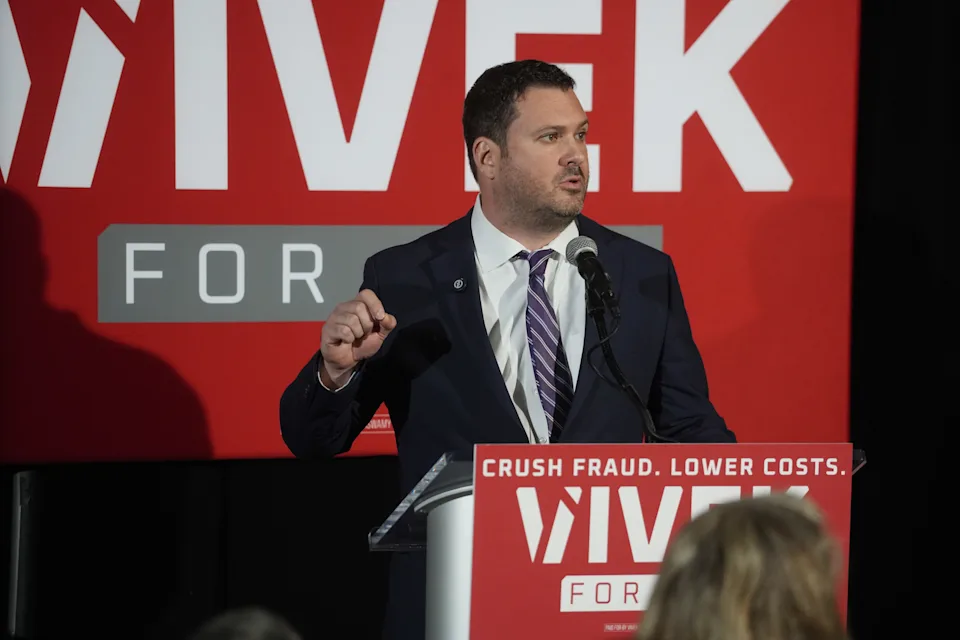
Among those involved was Ohio Senate President Rob McColley, who now serves as Ramaswamy’s running mate.
Critics argue that removing the oversight committee weakened Ohio’s ability to identify and prevent fraud before it escalated into a larger crisis.
Republican State Representative Jennifer Gross openly criticized the decision, suggesting the committee could have evolved into a specialized watchdog organization similar to the Department of Government Efficiency initiatives championed by conservatives nationwide.
Gross argued that eliminating JMOC removed one of the few independent accountability mechanisms overseeing Ohio’s massive Medicaid program.
The timing of the committee’s dissolution has now become a major source of scrutiny.
Governor Mike DeWine Defends Ohio’s Record
Ohio Governor Mike DeWine has strongly rejected suggestions that his administration ignored Medicaid fraud concerns.
Facing growing criticism from both Democrats and Republicans, DeWine recently unveiled a new package of anti fraud initiatives designed to strengthen oversight within Ohio’s Medicaid system.
One of the most notable actions involved temporarily pausing new enrollments into the home healthcare program highlighted by The Daily Wire investigation.
However, DeWine also pushed back against claims that Ohio had failed to address fraud prior to the recent media attention.
According to the governor’s office, Ohio already ranks among the top states in the nation for prosecuting Medicaid fraud.
State officials say Ohio has secured approximately 2,300 indictments, more than 2,200 convictions, and recovered roughly $644 million through Medicaid fraud enforcement efforts since 2011.
DeWine’s spokesperson Dan Tierney defended the administration’s record by emphasizing that Ohio officials had been actively pursuing fraud investigations for years.
“A general sentiment that Ohio was not working to combat or prosecute Medicaid fraud prior to the publication of the Daily Wire stories is simply not true,” Tierney stated.
The governor’s allies argue that while fraud certainly exists within the system, portraying Ohio as negligent ignores years of successful prosecutions and financial recoveries.
The Political Stakes Continue Growing
The controversy has quickly become one of the defining political issues heading into Ohio’s next gubernatorial election.
For Vivek Ramaswamy, the Medicaid fraud debate offers both opportunity and risk.
On one hand, it allows him to position himself as a reform candidate willing to challenge entrenched government systems. The issue also aligns closely with national Republican messaging around government waste, taxpayer frustration, and public distrust of large bureaucracies.
On the other hand, the scandal raises difficult questions about the Republican Party’s own governance record inside Ohio.
Because Republicans have dominated Ohio politics for so long, Democrats argue that the current problems reflect years of failed oversight under GOP leadership.
Democratic gubernatorial candidate Amy Acton has already begun attacking Ramaswamy’s proposals as politically motivated “scam policies.”
Acton’s campaign insists that Ohio must simultaneously fight fraud while protecting healthcare access for vulnerable residents.
Her campaign spokeswoman Addie Bullock stated that Acton supports rooting out fraud and abuse but opposes policies that could reduce healthcare access for working families.
The debate has therefore evolved beyond simple fraud investigations and into a larger ideological battle over healthcare policy itself.
National Republicans Push Broader Anti Fraud Agenda
The Ohio controversy also reflects a much larger national political strategy being advanced by the Trump administration and Republican lawmakers.
Federal officials increasingly frame Medicaid fraud as part of a broader argument that government programs have become bloated, inefficient, and vulnerable to abuse.
The administration argues that aggressive enforcement is necessary to protect taxpayers already struggling with inflation, housing costs, and economic uncertainty.
Within days of Vance’s announcement, House Republicans launched a new federal task force dedicated to investigating institutional abuses and constitutional concerns.
Ohio’s Medicaid allegations immediately became one of the task force’s first major targets.
Supporters of the crackdown say ordinary taxpayers deserve accountability and transparency regarding how billions of public healthcare dollars are spent.
Critics, however, warn that aggressive fraud narratives can sometimes become justification for reducing healthcare coverage or adding barriers for vulnerable populations.
Those concerns have intensified following recent congressional debates surrounding Medicaid work requirements, which analysts believe could result in millions of Americans losing health coverage nationwide.
Healthcare System Faces Growing Pressure
Ohio’s Medicaid program currently serves more than a quarter of the state’s population, making it one of the largest and most financially significant government programs in the state.
That scale means even relatively small levels of fraud can potentially involve enormous sums of taxpayer money.
But healthcare experts caution that balancing fraud prevention with healthcare access remains extremely delicate.
Programs involving home healthcare services are particularly difficult to monitor because care often occurs inside private residences, creating oversight challenges not found in traditional hospital settings.
The complexity of Medicaid billing systems, subcontractors, private vendors, and administrative processing also creates opportunities for loopholes and abuse.
Some experts believe the Ohio controversy could accelerate nationwide efforts to modernize Medicaid oversight systems using artificial intelligence, data analytics, and stronger auditing technology.
Others worry that intense political pressure could create unintended consequences for legitimate healthcare providers who rely heavily on Medicaid reimbursements.
Ohio Republicans Face Internal Divisions
One of the most striking aspects of the unfolding controversy is the growing tension inside Ohio’s Republican Party itself.
JD Vance, Vivek Ramaswamy, Mike DeWine, Keith Faber, and other Republican leaders all broadly support fighting Medicaid fraud. Yet they increasingly disagree over who bears responsibility for the current situation and how aggressively the system should be restructured.
Ohio Auditor Keith Faber stated that many state officials were already aware of fraud concerns long before recent headlines emerged.
According to Faber, his office repeatedly raised concerns with Ohio Medicaid leadership in previous years.
Public records obtained by reporters reportedly show disputes between former Medicaid Director Maureen Corcoran and oversight officials before the oversight committee was eventually eliminated.
Those revelations have fueled accusations that political infighting and bureaucratic conflicts may have weakened accountability systems at critical moments.
The situation has become particularly awkward because many Republican leaders are now criticizing systems they themselves previously supervised.
Why This Story Could Reshape Ohio Politics
The Medicaid fraud battle unfolding in Ohio is no longer just about healthcare administration.
It has become a symbolic fight over trust in government, fiscal accountability, political leadership, and the future direction of conservative governance.
For JD Vance, the decision to investigate Ohio may strengthen his claim that the administration’s anti fraud efforts are not purely partisan. But it also risks exposing deep structural problems inside a Republican governed state.
For Vivek Ramaswamy, the controversy presents an opportunity to define himself as a disruptive reformer capable of transforming state government. Yet it simultaneously forces him to navigate complicated relationships with long standing Republican power structures.
And for Ohio voters, the debate touches directly on issues that affect millions of residents, including healthcare access, taxpayer spending, and confidence in public institutions.
As investigations continue and campaigns intensify, the political consequences could extend far beyond Ohio itself.
What started as allegations of Medicaid abuse may ultimately become one of the defining political battles shaping healthcare reform and conservative politics in America’s next election cycle.