
Table of Contents
- Desperation Grows After Venezuela’s Deadly Quakes
- A Race Against The First 72 Hours
- Families Dig With Bare Hands
- Anger Builds Over Government Response
- Tension Erupts At Collapse Sites
- Survivors Pulled From The Rubble
- International Teams Bring Hope
- Caracas And Millions More At Risk
- A Disaster Hits A Fragile Nation
- Airport Damage Complicates Aid
- The Human Weight Of The Numbers
- What This Crisis Means For Venezuela
Desperation Grows After Venezuela’s Deadly Quakes
When twin earthquakes struck Venezuela, the disaster did not end with the shaking. Three days later, families in La Guaira were still climbing over broken concrete, calling out the names of missing loved ones, and begging rescue teams to move faster as the official death toll rose to 1,430.
The devastation followed a powerful one-two punch of 7.2 and 7.5 magnitude earthquakes that tore through parts of the South American nation, leaving neighborhoods crushed, hospitals overwhelmed, and thousands of families waiting for answers. Officials said at least 68,900 people had been reported missing by Saturday, a staggering number that deepened the sense of fear across the hardest-hit communities.
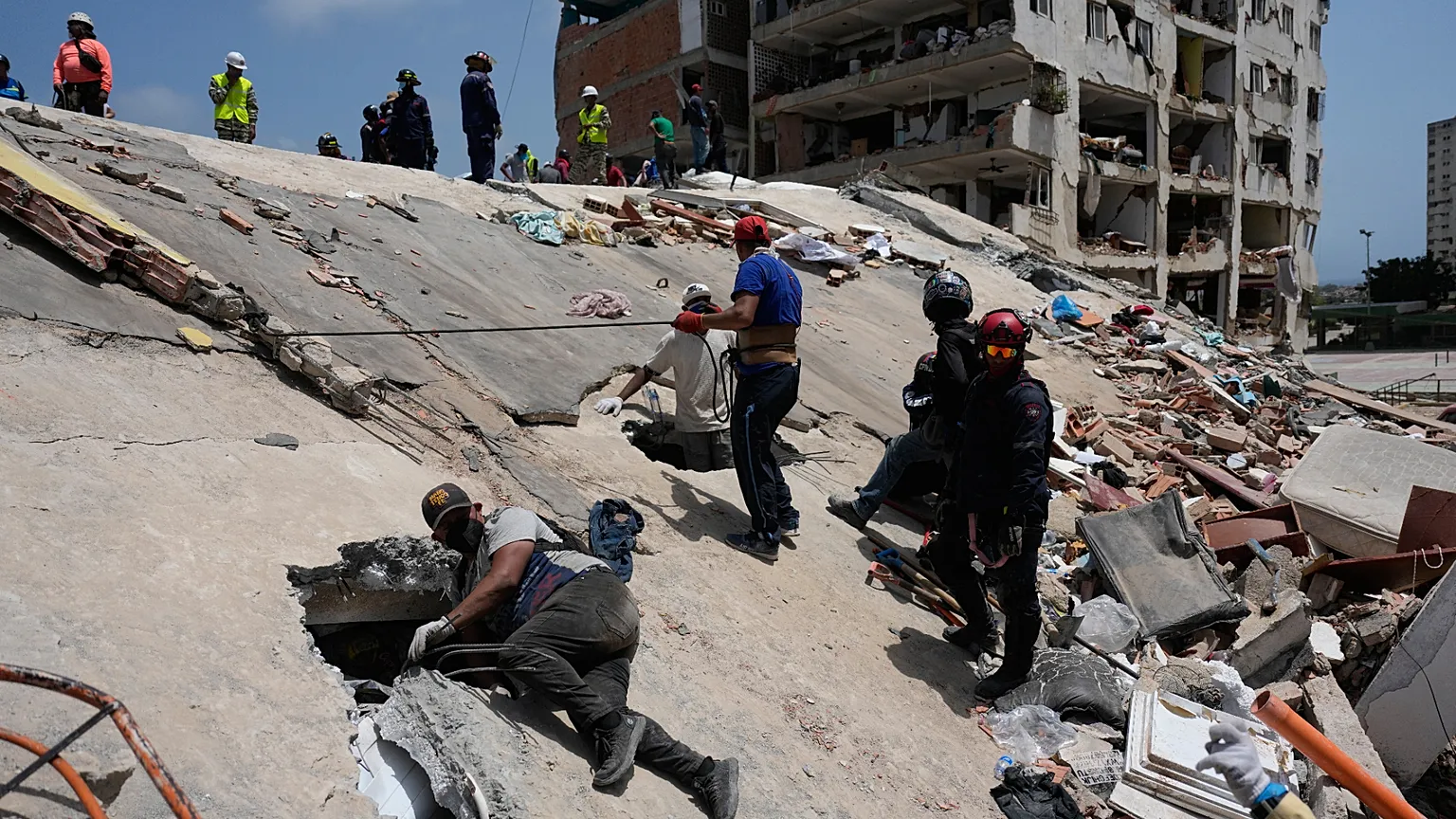
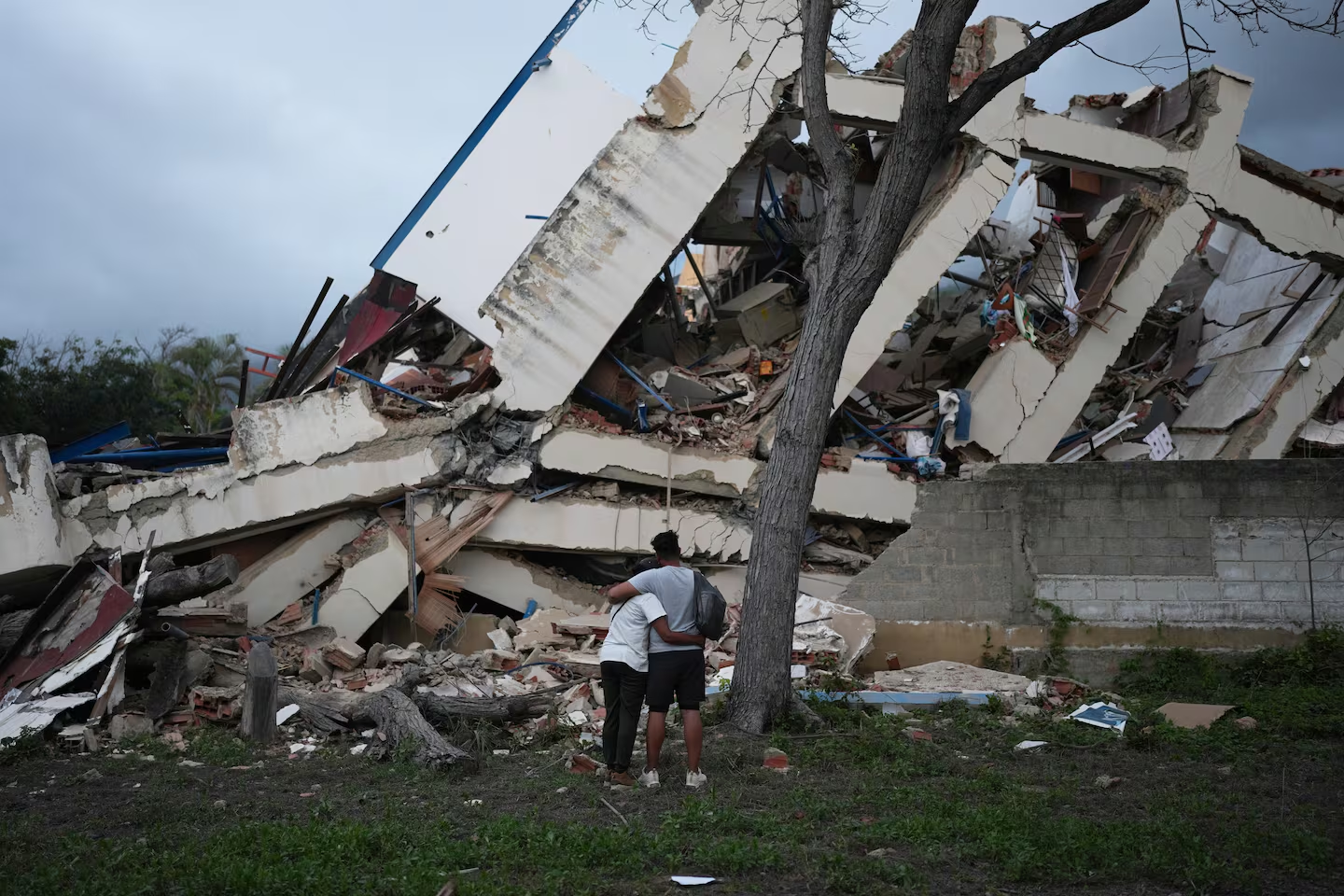
In La Guaira, one of the areas most heavily damaged, rescue workers, civilians, and international teams searched through collapsed buildings with shovels, ropes, heavy equipment, and sometimes bare hands. Every sound beneath the rubble became a reason to stop, listen, and hope. Every passing hour made that hope more fragile.
For many Venezuelans, the disaster has become not only a humanitarian emergency, but also a test of government response, public trust, and survival in a country already weakened by years of economic and political turmoil.
A Race Against The First 72 Hours
Disaster response experts often describe the first 48 to 72 hours after an earthquake as the most critical window for finding survivors alive. People trapped under debris may survive longer in rare cases, especially if they have access to air, water, or protected spaces. But as time passes, dehydration, injuries, heat, and lack of oxygen make each rescue more urgent.
By Saturday, that crucial window was closing fast.
Across La Guaira, families understood what those hours meant. Many had not slept. Some had been digging since the first night. Others moved from one collapsed building to another, listening for voices, tapping concrete, and pleading with officials to send more help.
Venezuelan officials said 17 flights carrying more than 1,600 rescue personnel had arrived by Saturday. International teams from Mexico, the United States, Brazil, El Salvador, France, and other countries joined local responders at disaster sites. Their arrival gave families a small but powerful sense of hope, especially in places where survivors believed help had come too slowly.
Still, for those waiting beside the rubble, official numbers and announcements felt distant. What mattered most was whether someone would reach their mother, child, sibling, or neighbor before it was too late.
Families Dig With Bare Hands
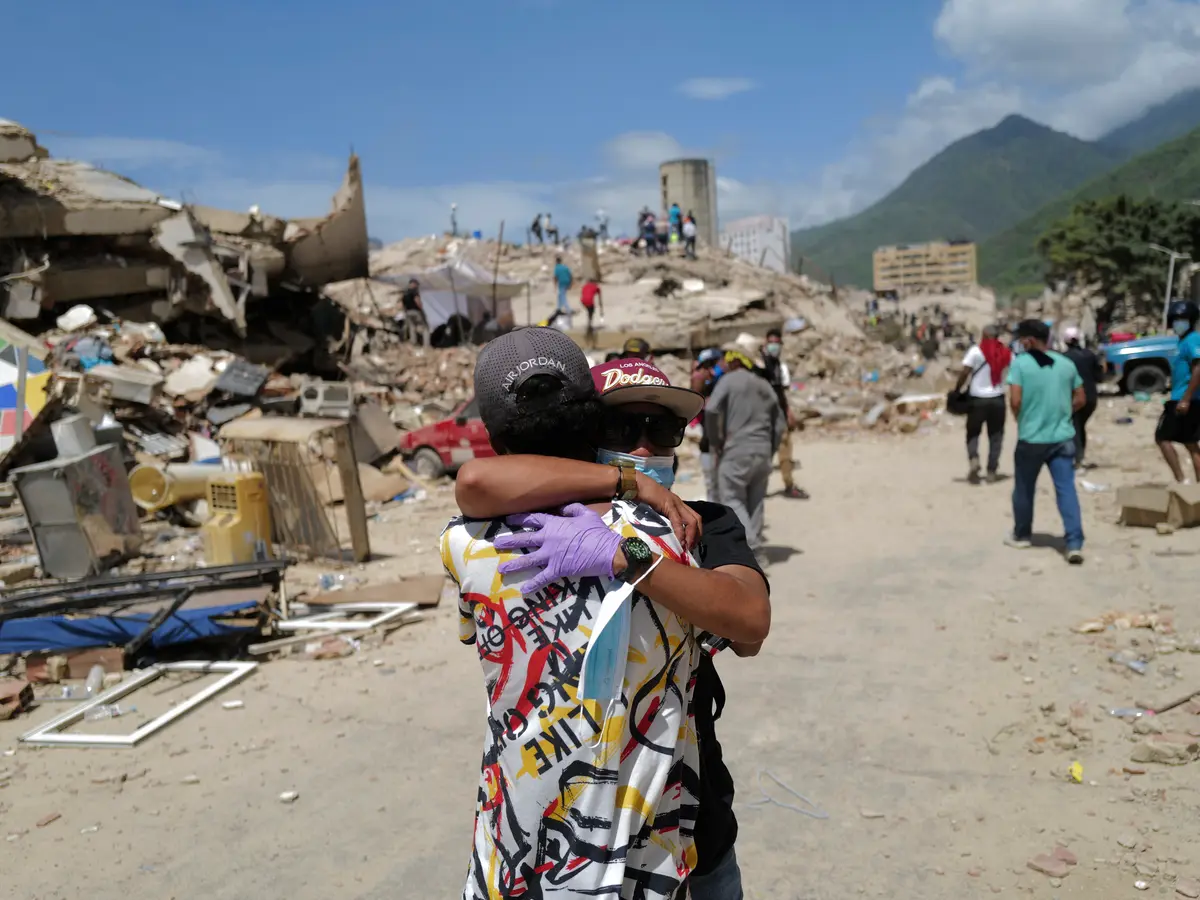
In the seaside communities of La Guaira, residents searched through piles of broken homes and flattened buildings. Some used shovels. Others carried ropes, buckets, flashlights, and whatever tools they could find. Many had no protective gear. Some wore motorcycle helmets instead of hard hats as they climbed unstable debris.
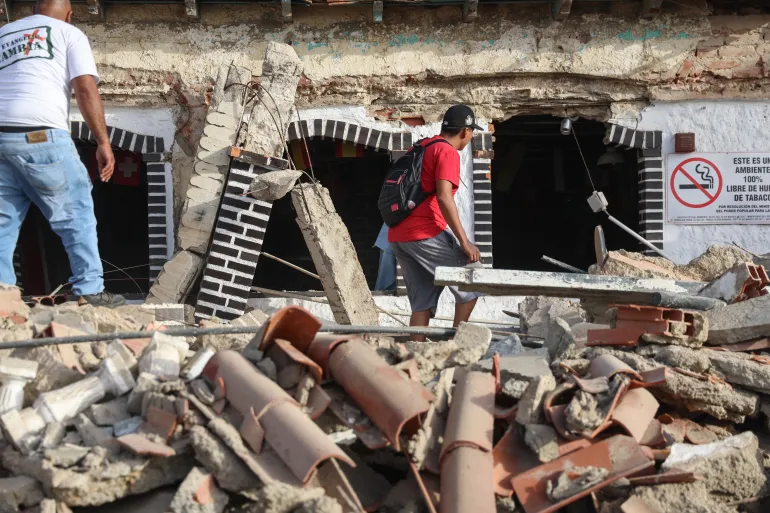
The rubble was not just concrete. It was the remains of ordinary life. Searchers found mattresses, shoes, kitchen fixtures, DVDs, clothing, and children’s belongings mixed with dust and metal. What had been apartments, bedrooms, kitchens, and small family spaces had become dangerous piles of wreckage.
The heat made the work even harder. Dust covered the area, and the smell of decomposition spread through parts of the disaster zone. More people began wearing masks as rescue efforts continued.
In some places, bodies were gathered near hospitals and loaded onto trucks for identification. The scenes added to the anguish of families who were still hoping their loved ones might be found alive.
Anger Builds Over Government Response
As the death toll climbed, anger also grew. Many residents said the government response did not match the scale of the catastrophe. They accused authorities of being slow, disorganized, and more focused on appearances than rescue work.
Acting President Delcy Rodríguez said on state television that more than 14,000 members of the military and police were patrolling the affected area. Access to some zones was blocked, and special permits were reportedly required to enter. But in neighborhoods covered by debris, many residents said they had seen little meaningful help.
That gap between official statements and what people said they were experiencing became one of the most painful parts of the crisis. For families waiting beside collapsed homes, every delay felt personal. They were not thinking about press conferences. They were thinking about voices they had heard under the rubble, bodies they could not reach, and survivors who might still be alive.
Some residents became furious after state workers reportedly took selfies near flattened buildings and then left without helping. In one tense moment, frustrated people blocked an excavator from leaving the site of a collapse and pulled the operator from its cabin.
The frustration was simple and raw: people wanted rescue work, not images of rescue work.
Tension Erupts At Collapse Sites
At several sites, grief and exhaustion pushed emotions to the edge. People shouted at officials, argued with responders, and demanded that machinery stay in place. In one chaotic moment, a man reportedly tried to grab a firefighter while others called for silence so rescuers could listen for possible survivors.
That scene captured the terrifying balance of earthquake rescue work. On one side are families desperate for action. On the other are rescuers trying to keep order in unstable, dangerous conditions where one wrong movement can trigger further collapse.
When search crews believe someone may still be alive beneath the debris, silence becomes crucial. A faint knock, cry, or movement can guide rescuers toward a trapped person. But in a crowd filled with panic and grief, silence can be almost impossible to maintain.
Nearby, bodies wrapped in blankets lay close to the search area. For residents, the line between hope and mourning was painfully thin. One moment, they were listening for survivors. The next, they were passing by the dead.
Survivors Pulled From The Rubble
Amid the despair, there were still moments of survival that kept rescuers and families going.
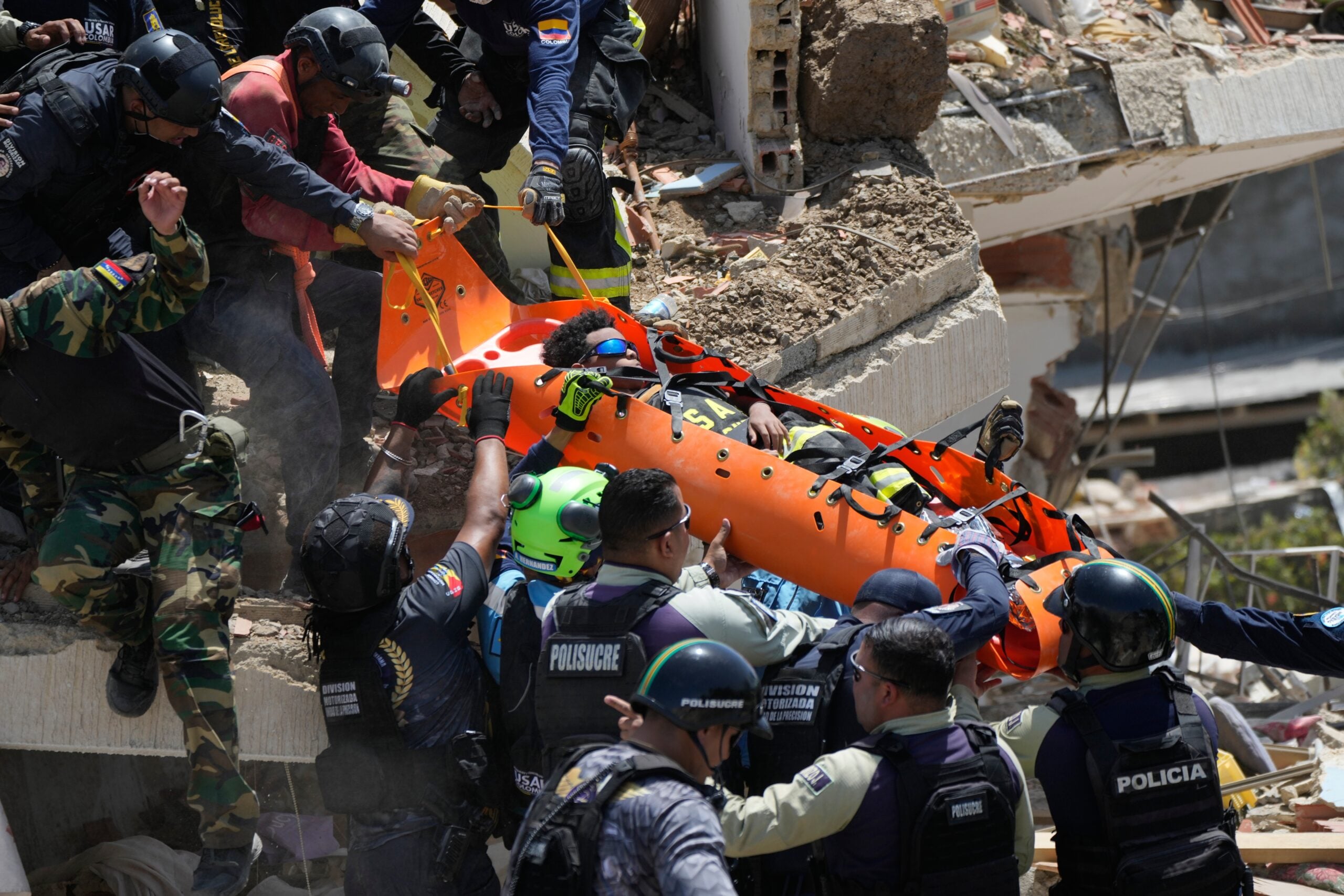
In La Guaira, rescue workers pulled 11-year-old Moises Calzadilla from the rubble three days after the earthquakes struck. His rescue became one of the rare moments of visible hope in a disaster increasingly defined by death, delay, and uncertainty.
In another case, an older man was pulled alive from the remains of a public housing building. Disoriented and desperate, he reportedly begged for water and cried out for his family as medical personnel tried to move him to safety.
Other rescues brought brief flashes of relief. A newborn baby wrapped in pink blankets was reportedly carried out after hours of searching. A 69-year-old woman rescued by Salvadoran teams asked for a Coca-Cola after being pulled from the wreckage, according to authorities.
These moments were small compared with the scale of destruction, but they mattered. Each survivor reminded exhausted teams that someone could still be alive beneath the concrete. Each rescue gave families another reason not to give up.
International Teams Bring Hope
Foreign rescue teams became a growing presence in the disaster zone as Venezuela struggled to respond to the massive emergency. Mexican military rescuers climbed over collapsed buildings, pushed their heads into openings in pancaked concrete, and called out to anyone who might still be trapped.
Their message was urgent: if anyone was alive below, they needed to make noise.
For families like Yonahí Regalado, the arrival of international teams brought a measure of comfort. She had been calling out for her sister and 1-year-old nephew since the early hours after the earthquakes. Her hope was not limited to her own family. She said anyone alive under the rubble needed to be rescued, whether they were relatives or strangers.
That sense of shared grief spread across the disaster zone. People who had never met were suddenly bound together by the same fear. They waited beside the same ruins. They listened for the same sounds. They prayed for the same outcome.
Helicopters circled overhead as international and local crews worked below, turning neighborhoods into urgent search zones.
Caracas And Millions More At Risk
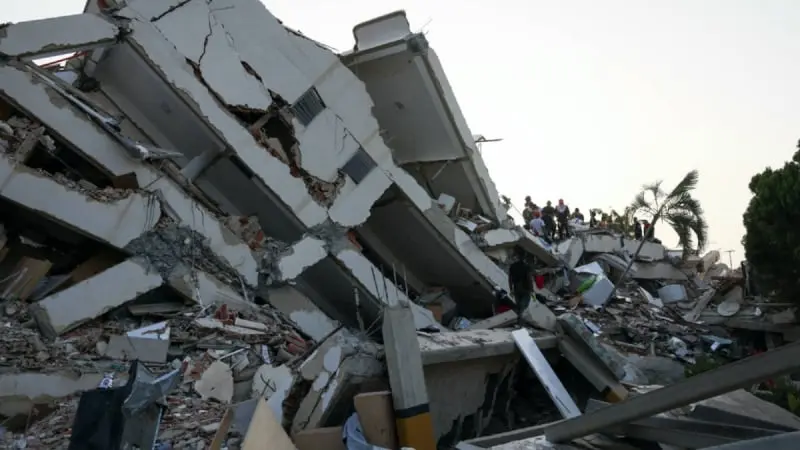
The disaster was not limited to La Guaira. The International Organization for Migration said more than 6 million people could be affected by the earthquakes, including around 2 million in the capital, Caracas.
Experts said the destruction was worsened by the quick succession of shallow quakes. Shallow earthquakes can cause severe damage because their energy is released closer to the surface. When two major earthquakes strike close together, buildings already weakened by the first shock may collapse during the second.
Aftershocks continued to rattle affected areas for days. One measured 4.8 on Saturday, adding more fear for residents who were already sleeping outside or avoiding damaged buildings. Aftershocks can be dangerous because structures that appear partially intact may still be unstable.
For people in Caracas and surrounding regions, each tremor brought back the terror of the main quakes. Many did not know whether their homes were safe. Others had already lost everything.
A Disaster Hits A Fragile Nation
The earthquakes struck a country already under enormous strain. Venezuela has faced years of economic disarray, political division, mass migration, and weakened public services. That background made the disaster response even more difficult.
Acting President Delcy Rodríguez, who took office in January after the U.S. capture and removal of former President Nicolás Maduro, now faces one of the largest humanitarian tests of her leadership. Many Venezuelans already reject the legitimacy of the political movement she represents, and the earthquake response has intensified public criticism.
In disasters, trust matters. People need to believe that officials are telling the truth, sending help where it is needed, and prioritizing lives over image. In La Guaira, many residents said that trust was missing.
The anger on the streets was not only about collapsed buildings. It was about years of frustration colliding with one unbearable emergency.
Airport Damage Complicates Aid
The damage also affected critical infrastructure. Simón Bolívar International Airport, which serves Caracas, was reportedly badly damaged, although one runway remained operational. U.S. teams were working to repair the airport because it had become a crucial pathway for rescue personnel, supplies, and medical evacuations.
A senior U.S. official involved in foreign assistance described the effort as a race against the clock. A U.S. Navy transport ship was positioned off the coast, prepared to receive survivors who needed medical care.
That logistical work may not look as dramatic as pulling survivors from rubble, but it is essential. In a disaster of this scale, rescue is only one part of the response. Survivors need hospitals, transportation, clean water, shelter, food, medicine, and safe places to sleep.
When airports, roads, hospitals, and communication networks are damaged, every part of the response becomes harder.
The Human Weight Of The Numbers
The number 1,430 is devastating, but it still cannot fully capture the human cost. Each death represents a person with a family, a home, a history, and a future that ended suddenly. Each missing person represents a family trapped between hope and grief.
The reported 68,900 missing people shows how much uncertainty remains. Some may be found alive. Some may be located in shelters or hospitals. Others may still be under collapsed structures. Until families receive answers, the emotional toll will continue to grow.
In La Guaira, people are not just mourning. They are waiting. Waiting for rescuers. Waiting for names. Waiting for confirmation. Waiting for one more sound from beneath the rubble.
What This Crisis Means For Venezuela
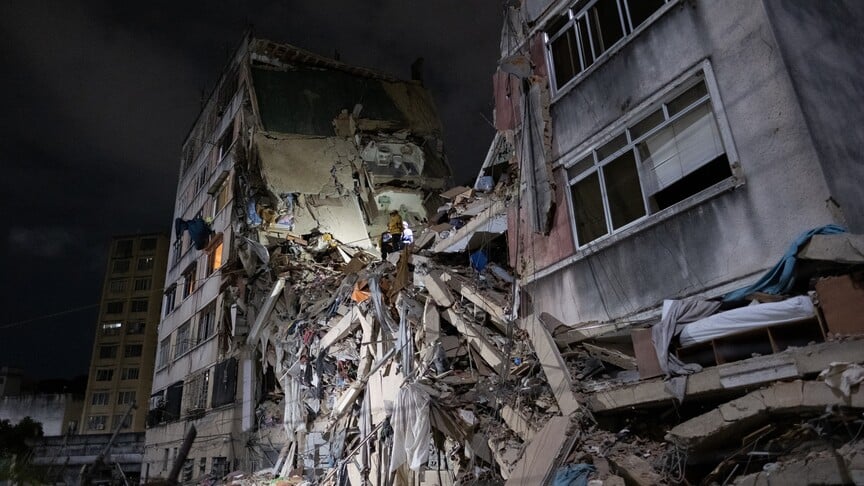
The Venezuela earthquakes have become more than a natural disaster. They are a national trauma, a humanitarian emergency, and a political test all at once.
For rescuers, the mission is immediate: find the living, recover the dead, and prevent more loss. For families, the mission is personal: bring loved ones home, no matter the outcome. For the government, the crisis will likely shape public trust for years to come.
As international aid teams continue to arrive and search crews keep working through shattered buildings, the country faces a painful reality. The first days after the quakes may determine how many more people survive. But the recovery will take far longer.
Homes must be rebuilt. Hospitals must be repaired. Families must bury the dead. Children must process the trauma. Communities must decide whether to return to damaged neighborhoods or begin again somewhere else.
The death toll may rise. The list of missing may change. The anger may deepen. But inside the dust and grief, the search continues.
For now, Venezuela is living hour by hour, sound by sound, rescue by rescue. Every voice heard beneath the rubble is a reason to keep digging. Every survivor pulled out is a reminder that hope still exists. And every delay raises the same heartbreaking question families have been asking since the ground stopped shaking: who can still be saved?