
Table of Contents
- A New Mississippi Law Raises National Attention
- What The Law Allows Mississippi To Do
- Supporters Call It Common Sense
- Advocates Fear A Dangerous Precedent
- Immigration Law Is Not Always Simple
- Part Of A Bigger National Trend
- Similarities To Florida’s Order
- Mississippi Has A Small Undocumented Population
- Concerns Over Profiling
- Trust Between Police And Communities
- What Happens Next
- A Law With National Implications
A New Mississippi Law Raises National Attention
When Mississippi approved a new law allowing the state’s top law enforcement agency to compile a list of immigrants illegally living in the state, the move immediately triggered alarm among immigrant advocates and drew national attention to a growing battle over immigration enforcement.
The law, set to take effect Wednesday, authorizes the Mississippi Department of Public Safety to use what it calls “all reasonable lawful investigative means available” to determine the number and identities of immigrants living in the state without legal authorization. That could include collecting names, addresses, countries of origin, whether someone is an adult or a minor, criminal history, and details about any deportation proceedings.
Supporters say the measure is a practical tool for understanding the scope of illegal immigration in Mississippi. Critics say it could become something much more troubling: a state-run database that places immigrant families under new scrutiny at a time when immigration enforcement has become one of the country’s most heated political issues.
At the center of the debate is one question that has unsettled advocates, lawmakers, and immigrant communities alike: what happens when a state begins formally tracking people based on immigration status?
What The Law Allows Mississippi To Do
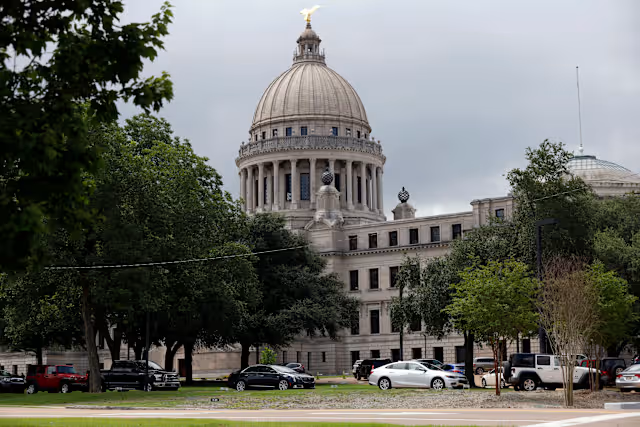
The new Mississippi law gives the Department of Public Safety broad authority to identify immigrants who are believed to be living in the state illegally. It does not simply ask for a rough estimate. It allows officials to gather personal information that could identify specific individuals and families.
The information listed in the law includes names, addresses, country of origin, age category, criminal history, and the date, location, and status of deportation proceedings. The agency is also directed to share information about people suspected of violating laws with state and local authorities.
One major point of uncertainty is whether the information will be shared with U.S. Immigration and Customs Enforcement. The measure does not require the database to be shared with ICE, but it also does not prohibit such sharing. That open-ended language is one of the reasons advocates are worried.
For immigrant families, the difference matters. A state database that remains internal could still raise concerns. But a database that feeds into federal immigration enforcement could become a direct pathway to detention or deportation.
Supporters Call It Common Sense
Republican state Sen. Angela Hill, who sponsored the measure, defended the law as a common-sense step. She said states have a right and obligation to help the federal government discourage illegal immigration. She also connected illegal immigration to crimes such as human trafficking and drug trafficking.
Hill argued that Mississippi cannot address the problems connected to illegal immigration without first understanding the size and identity of the population involved. In her view, identifying the number and identity of undocumented immigrants in the state is a concrete way to understand the issue more clearly.
That argument reflects a broader position among many Republican-led states. Supporters of stricter immigration laws often say that state governments should not wait for Washington to act. They argue that illegal immigration affects schools, hospitals, law enforcement, public benefits, labor markets, and public safety. From that perspective, gathering data is presented as a necessary first step toward enforcement and policy planning.
But critics say the law is not just about data. They say it creates fear, encourages profiling, and turns immigrant communities into targets.
Advocates Fear A Dangerous Precedent
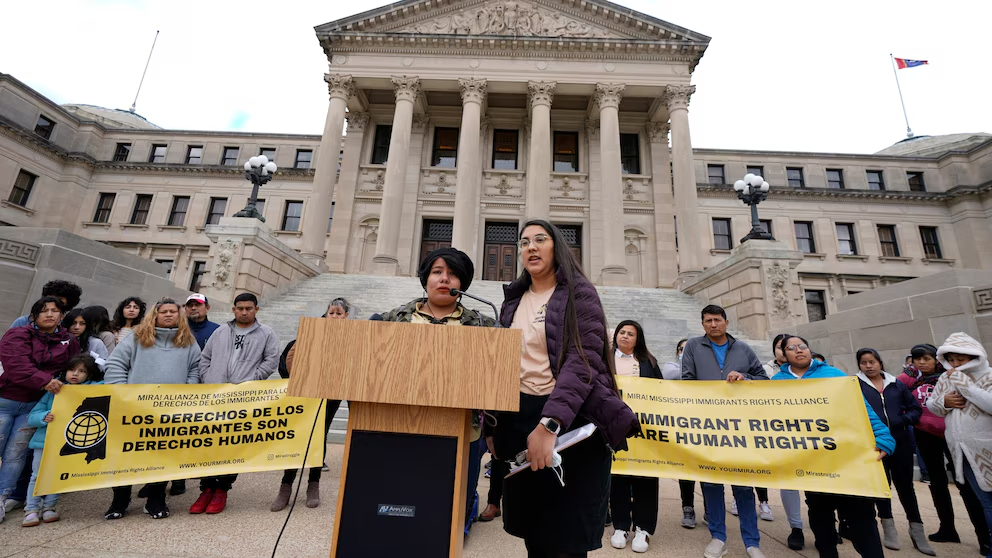
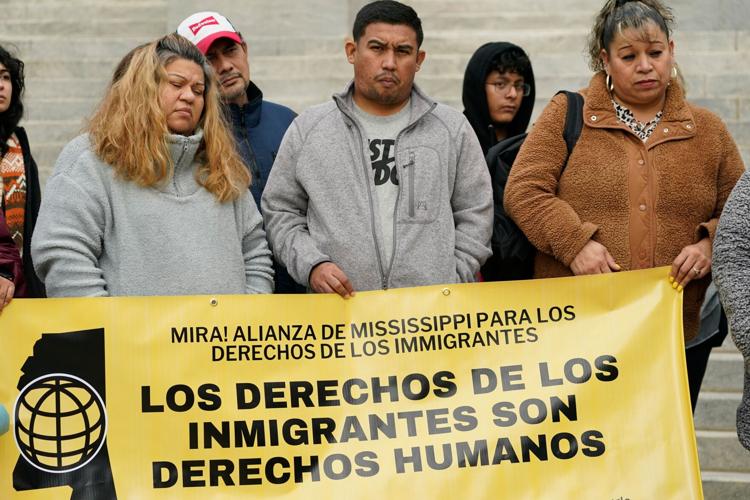
Immigrant advocates have responded with sharp concern. They worry that the law could become a new tool to support mass deportation efforts, especially under a national political climate where immigration enforcement is already intensifying.
Efrén Olivares, vice president of litigation and legal strategy at the National Immigration Law Center, called the law practically unworkable and deeply concerning. He noted that immigration status is not always fixed. A person can be undocumented one day, gain legal status later, lose it again, or regain it through another process.
That reality makes immigration status much more complicated than a simple list might suggest. People overstay visas, apply for asylum, receive temporary protections, marry U.S. citizens, file appeals, obtain work authorization, or move between states. A database meant to track undocumented immigrants over a two-year period could quickly become outdated or inaccurate.
Olivares also warned that the idea of creating lists of certain groups of people carries disturbing historical echoes. For advocates, the fear is not only administrative error. It is the possibility that a government list could normalize suspicion toward entire communities.
Immigration Law Is Not Always Simple
One of the biggest challenges facing the Mississippi law is accuracy. Determining someone’s immigration status can be complex. Even experts can need access to federal databases, court records, immigration filings, visa histories, and legal documents to understand a person’s situation.
Jessica Vaughan, director of policy studies at the Center for Immigration Studies, which supports immigration restrictions, said state officials would need a credible and fairly foolproof way to correctly determine someone’s status. At the same time, she said the law makes sense and could increase the likelihood that someone’s illegal presence comes to the attention of federal authorities.
Her comments highlight a central divide. Supporters see the law as a way to improve enforcement. Critics see it as a risk because mistakes could have severe consequences.
An incorrect entry in such a database could affect real people. A legal resident, visa holder, asylum seeker, or person with pending status could be wrongly flagged. Even if the error is later corrected, the damage could include fear, investigation, detention, job loss, or separation from family.
That is why advocates argue that the law could create harm even before it leads to any formal enforcement action.
Part Of A Bigger National Trend

Mississippi’s law does not exist in a vacuum. Across the United States, immigration-related laws have surged this year. According to the Associated Press tally cited in the report, states have already enacted more than 100 immigration-related laws in 2026.
In Republican-led states, many of these measures align with President Donald Trump’s immigration agenda. Some require local sheriffs to sign cooperative agreements with ICE. Others reinforce restrictions on public benefits or direct election officials to check voter rolls against federal databases in an effort to flag noncitizens.
In Democratic-led states, the trend is moving in the opposite direction. Some new laws ban cooperative agreements with ICE, restrict immigration enforcement in schools and hospitals, and limit tactics such as officers wearing masks during enforcement operations.
The result is a growing national split. Immigration policy is no longer only a federal issue debated in Washington. It is increasingly being shaped state by state, creating a patchwork of rules that can dramatically change depending on where a person lives.
Mississippi’s new law stands out because it focuses on compiling names and identities, not just changing enforcement cooperation or benefit eligibility.
Similarities To Florida’s Order
The Mississippi measure appears to resemble a 2021 executive order by Florida Gov. Ron DeSantis. That order directed Florida’s Department of Law Enforcement to use lawful investigative means to determine the number and identities of immigrants who had been transported from the southwest border to Florida.
The comparison is important because it shows that states have been experimenting with different ways to involve themselves in immigration enforcement. But Mississippi’s new law goes further by envisioning an ongoing effort, not merely a one-time count.
The law creates a two-year process for tracking immigrants living illegally in the state. That means officials could be expected to continually update information as people move, change legal status, face deportation proceedings, or appear in state and local systems.
That ongoing nature is one reason critics say the law could become administratively difficult and socially damaging.
Mississippi Has A Small Undocumented Population

One striking detail is that Mississippi has one of the smallest percentages of undocumented immigrants in the country. According to a report from the American Immigration Council cited in the article, fewer than 28,000 undocumented immigrants live in the state. That amounts to less than 1% of Mississippi’s population.
For supporters, even a small population can still justify tracking and enforcement if the goal is to uphold immigration law. They argue that numbers do not need to be large for a state to act.
For critics, the small number raises a different question: why create such a broad investigative system for a population that represents such a small share of the state?
Victoria Francis, deputy director of state and local initiatives for the American Immigration Council, said the law is concerning for several reasons. She warned that it could redirect law enforcement resources away from public safety and toward investigating people from foreign countries who may be contributing to the state’s economy.
Her concern is that the law could shift police attention away from violent crime, emergency response, and community safety. Instead, agencies may spend time trying to identify workers, parents, students, and neighbors based on immigration status.
Concerns Over Profiling
One of the most serious concerns raised by advocates is profiling. If officials are tasked with identifying undocumented immigrants, critics ask how they will decide whom to investigate.
Will officers rely on traffic stops? Workplace checks? Reports from neighbors? Accents? Appearance? Language? Country of origin? Community rumors?
Those questions are at the heart of the fear surrounding the law. Advocates say a mandate like this could invite racial profiling and make entire communities feel watched. Even people with legal status could become anxious if they believe they may be questioned because of how they look, speak, or live.
Francis said the law could turn whole communities into targets. That warning reflects a long-standing concern in immigration enforcement: when local police become involved in immigration matters, immigrant communities may become less willing to report crimes, serve as witnesses, or ask for help.
That concern is not limited to undocumented immigrants. Families often have mixed immigration statuses. One household may include U.S. citizen children, lawful residents, visa holders, and undocumented relatives. Fear can spread through the entire family, even if only one person is at risk.
Trust Between Police And Communities

Lydia Grizzell, policy and advocacy manager for the American Civil Liberties Union of Mississippi, warned that the law could undermine trust between police and residents. She said people may become less likely to reach out to law enforcement when they need help, which works against the mission of public safety.
That concern is central to the debate. Police often rely on community cooperation to solve crimes, prevent violence, respond to domestic abuse, and protect vulnerable people. If residents fear that calling police could expose them or their relatives to immigration consequences, they may stay silent.
That silence can make everyone less safe. Victims may avoid reporting crimes. Witnesses may refuse to speak. Abusers and traffickers may become harder to prosecute if victims fear deportation more than they fear the people harming them.
Supporters of the law argue that enforcing immigration law can also be part of public safety. Critics respond that making immigrants afraid of police can weaken the very safety the law claims to protect.
What Happens Next
The law’s impact will depend heavily on how Mississippi implements it. The Department of Public Safety will need to decide what investigative methods to use, what records to collect, how to verify information, how to update the database, and when to share information with other agencies.
Those decisions could determine whether the law becomes a limited internal data effort or a powerful enforcement tool with real consequences for immigrant families.
Legal challenges may also be possible, especially if advocates believe the law violates constitutional protections, encourages unlawful profiling, or interferes with federal immigration authority. Even without a court challenge, the law is likely to remain politically controversial.
For now, immigrant communities and advocacy groups are watching closely. Supporters see a state taking action where they believe federal enforcement needs help. Opponents see a chilling new step toward state surveillance of vulnerable people.
A Law With National Implications
Mississippi’s new immigrant database law may involve fewer than 28,000 people in one state, but its implications reach much further. It reflects a larger national struggle over who controls immigration enforcement, how far states should go, and whether public safety is helped or harmed when local authorities collect immigration-status information.
The debate is not only about policy. It is about fear, trust, identity, and the power of government to track people.
For supporters, the law is a practical response to an immigration system they believe is failing. For critics, it is a dangerous step that could encourage profiling, spread fear, and push immigrant communities further into the shadows.
What happens in Mississippi could influence other states watching for new ways to expand immigration enforcement. If the law survives and is actively used, similar measures may follow elsewhere. If it sparks lawsuits, backlash, or implementation problems, it could become a warning about the limits of state-level immigration crackdowns.
Either way, the law has already done one thing: it has placed Mississippi at the center of a national immigration fight. And for the families who may find themselves listed, investigated, or questioned, the debate is not abstract. It is personal, immediate, and deeply uncertain.