
Table of Contents
Crows Gather After a Death
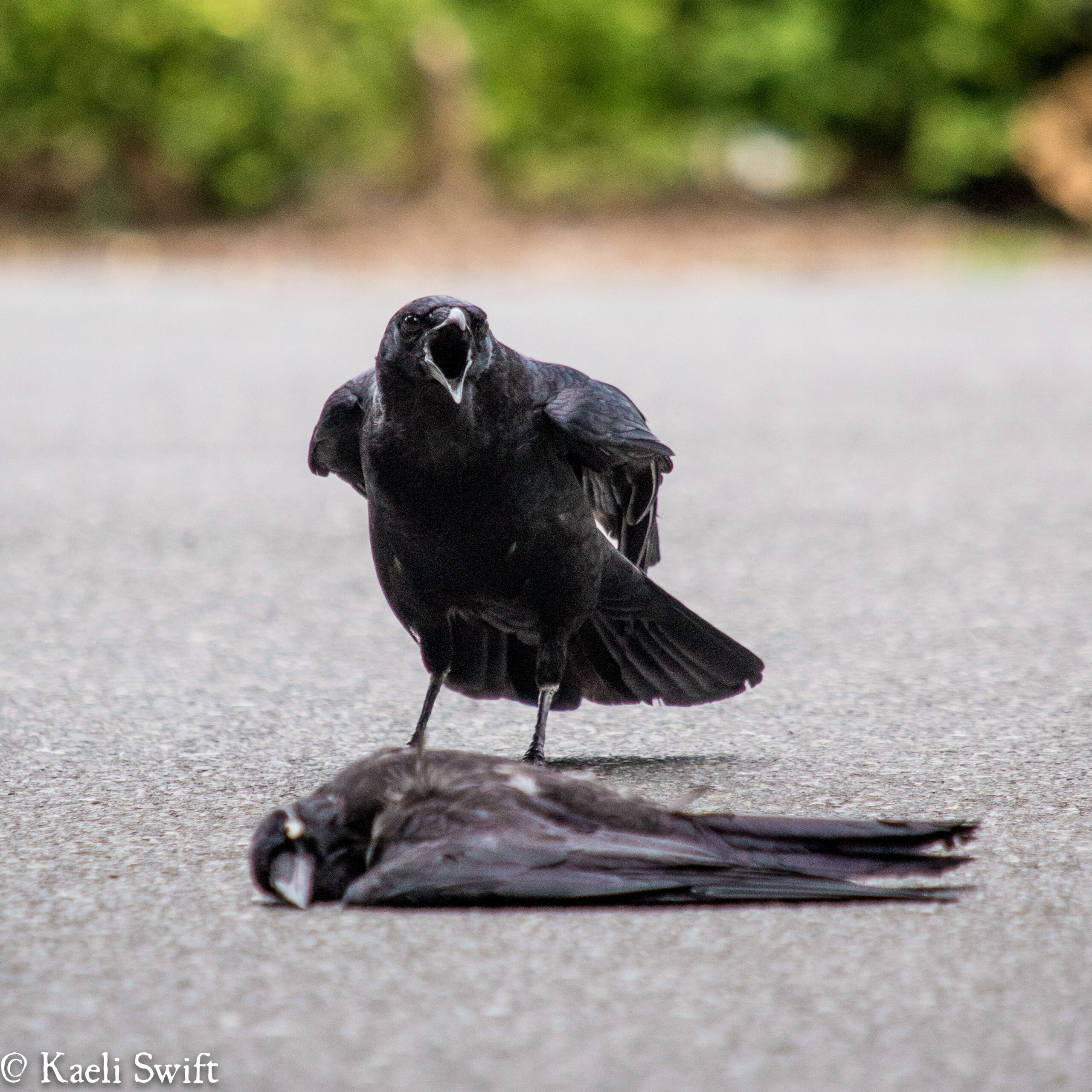
The behavior was first noticed by researchers who were studying crows in urban environments. In one instance, a crow was seen lying lifeless on a road. Moments after its death, a group of crows landed nearby, seemingly drawn to the body. The crows did not simply ignore the fallen bird. Instead, they circled around it, closely inspecting the body, calling out, and even appearing to engage in some form of social interaction with it.
This behavior was not isolated. Similar gatherings have been observed after other crows have died, whether by natural causes, accidents, or predator attacks. The crows do not simply take the body back to their nests or move on quickly—they spend time around the deceased bird, seemingly trying to understand what happened.
Research suggests that this behavior is not just a reaction to the death of a fellow crow, but rather a learned response. Crows appear to be assessing potential dangers, gathering information that could help them avoid similar threats in the future. This is social learning in action, where crows use the experiences of one individual to improve the survival chances of the entire group.
Crows’ Cognitive Abilities
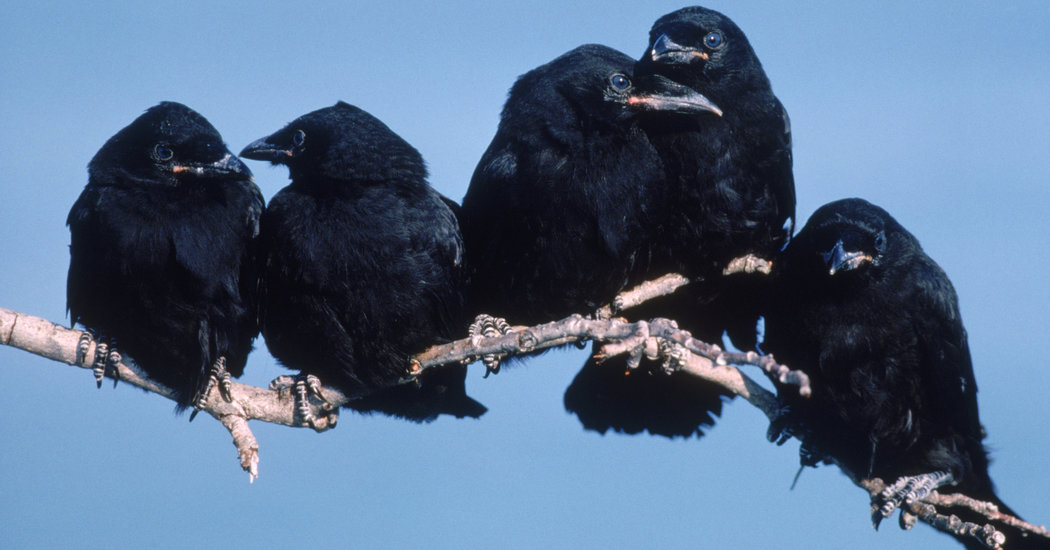
The behavior of crows in the face of death may seem strange, but it is rooted in their remarkable cognitive abilities. Crows belong to a family of birds known as corvids, which includes species like ravens, magpies, and jays. These birds are widely considered to be among the most intelligent animals on the planet, capable of complex problem-solving, advanced communication, and even planning for the future.
Crows have been observed using tools, understanding cause and effect, and exhibiting behaviors that suggest a level of self-awareness. They are known to hold funerals of sorts for their deceased companions, a behavior that suggests they may not only understand death but also exhibit emotional responses to it.
This recognition of death and the subsequent examination of a fallen member indicates that crows are not simply reacting instinctively to danger. Instead, they are processing information, making decisions based on what they learn, and adapting their behaviors accordingly.
Why Do Crows Study the Dead? A Survival Mechanism
The most plausible explanation for this behavior is that it serves a survival function. By studying the death of one of their own, crows may be learning about potential threats and adjusting their behavior accordingly. For example, if a crow dies due to a predator or a dangerous environmental hazard, the others may avoid that area or become more vigilant to avoid similar fates.
This behavior could also play a role in the crows’ highly social structure. Crows are known to live in complex social groups, and understanding the dynamics of these groups is key to their survival. By gathering after a death, they are reinforcing the social bonds that help them thrive in their environments. They may be communicating the need to be cautious, to change their routine, or to learn from the past.
Furthermore, the fact that crows show interest in a deceased bird may also reflect an element of grief or mourning. Although we can’t say for certain what emotions crows feel, the time and attention they spend around the body suggest that they may understand loss on some level and that their social bonds are strong enough to prompt them to react in a way that benefits the group.
Animal Intelligence and Grief
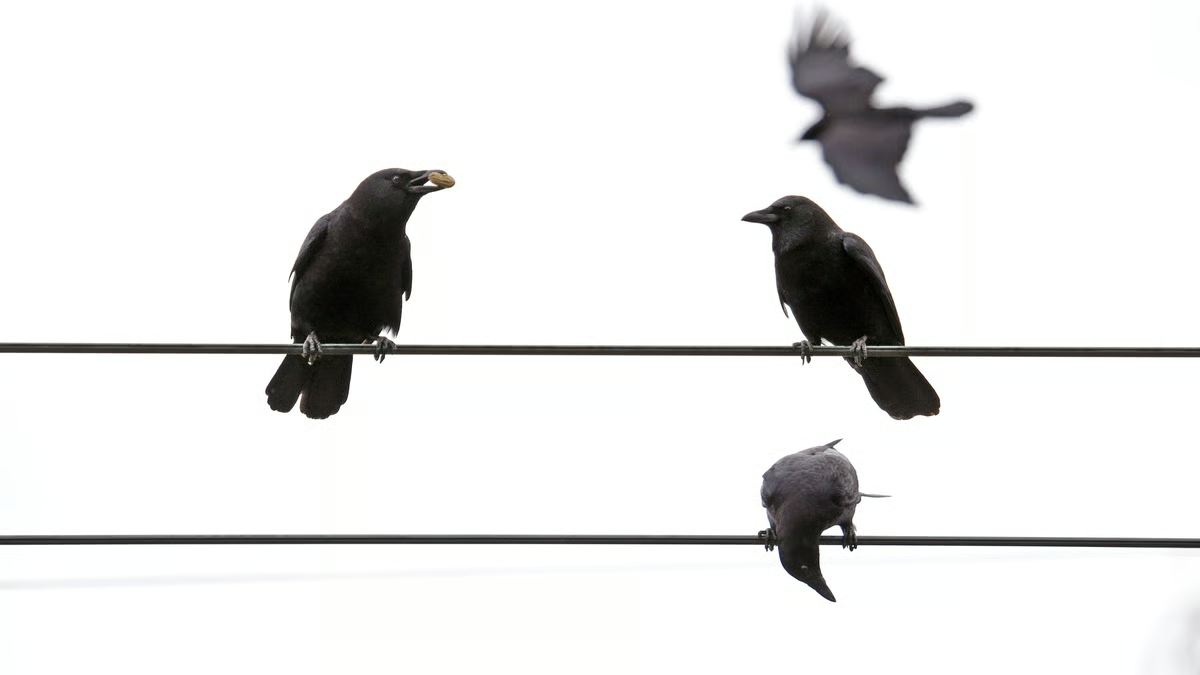
The idea that animals might grieve or experience emotional responses to death is not new. Many species, from elephants to dolphins, have shown signs of mourning their deceased companions. Crows, however, are unique in how they appear to treat death as a learning experience. The fact that crows not only gather around the body but also assess the circumstances surrounding the death opens up new possibilities for understanding animal emotions and intelligence.
Studies on animal grief and mourning are still in their early stages, and much remains unknown about how non-human animals process death. However, crows’ behavior suggests that they may experience something akin to grief, albeit in a way that is tailored to their survival needs. Rather than simply mourning the loss, they seem to view it as an opportunity for education—learning from the death to avoid future danger.
The Role of Social Learning in Crow Behavior
Social learning, or learning from others’ experiences, is a vital part of how crows adapt to their environment. This ability to learn from the death of another crow suggests that crows are not only aware of their environment but can also adapt based on the knowledge they gain from their social interactions. Social learning is key to the success of many animal species, particularly those that live in groups, as it allows individuals to pass on important information about danger, food sources, and survival strategies.
For crows, this means that the actions of one individual can influence the entire group. If one crow survives a dangerous encounter, other crows can learn from that experience and adjust their behavior. The same principle applies to death. By studying what caused a crow’s demise, the group can adapt, avoid similar hazards, and improve its chances of survival.
Crows and Their Unique Form of Communication
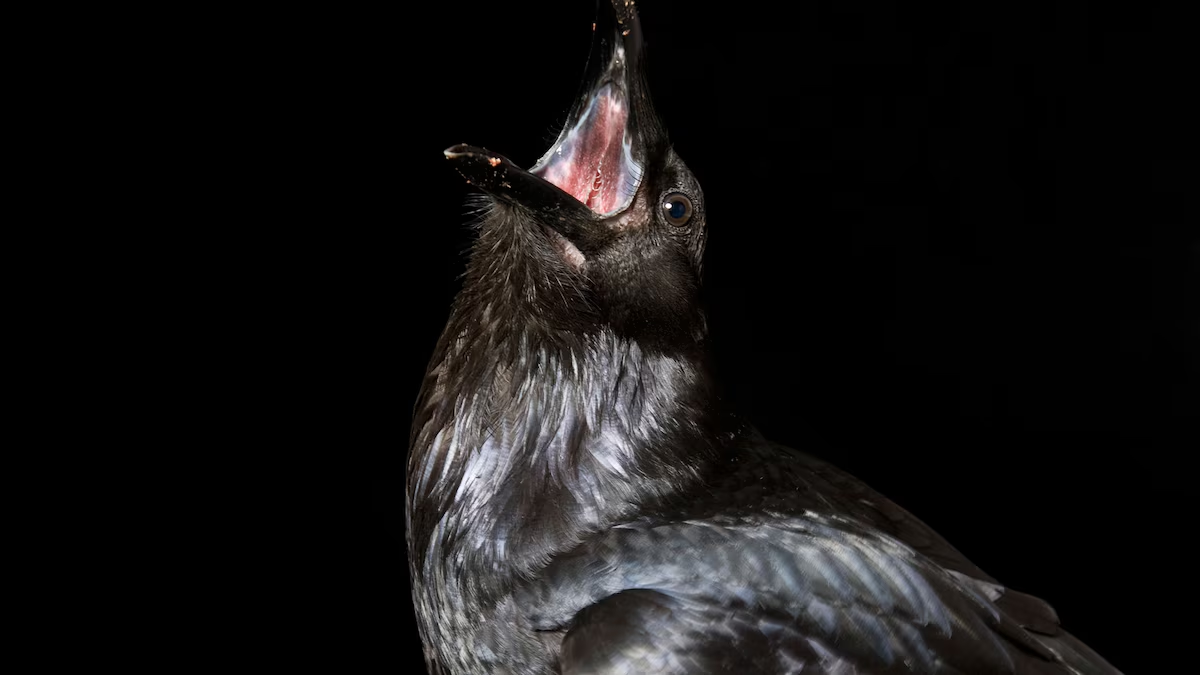
Crows are highly communicative animals, using a variety of vocalizations and physical gestures to communicate with each other. These communication skills are likely enhanced during situations like the study of a death. By gathering around the body and vocalizing, crows may be transmitting information to each other about the danger, the cause of death, or the need to take precautions.
In some cases, researchers have observed crows making specific calls after the death of one of their own, which seem to signal alarm or a call for help. These calls are often accompanied by more cautious behavior, such as flying higher, staying in groups, or avoiding areas where the danger occurred.
The Implications for Understanding Animal Cognition
The discovery that crows engage with the death of one of their own in this way challenges the conventional wisdom about animal cognition. While many animals react instinctively to threats, crows appear to process death as a learning experience. This suggests a level of cognitive sophistication that goes beyond simple survival mechanisms.
Understanding how crows perceive death and how they use that information to adapt to their environment opens up new avenues for studying animal cognition, emotions, and social behavior. It also forces us to reconsider the intelligence of animals in general, challenging the notion that only humans have the capacity for such complex thought processes.
Conclusion
The behavior of crows surrounding the death of one of their own is a remarkable testament to their intelligence and social structure. By studying the circumstances of death, crows not only protect themselves from danger but also communicate vital survival information to the group. This behavior highlights the complexity of their cognitive abilities and offers a glimpse into the rich emotional lives of these fascinating birds.
As we continue to study crows and other animals, it’s clear that they possess intelligence and emotional depth far beyond what we have previously understood. The next time we encounter a crow, we may do well to remember that this seemingly simple bird may be far more insightful than we ever imagined, learning not only from its own experiences but from the lives—and deaths—of those around it.