
Table of Contents
- When the US Air Force Quietly Shifted Its Focus North
- Understanding Dynamic Operational Deployments
- Why Greenland Holds Outsized Strategic Importance
- The Arctic’s Rapid Transformation Into a Strategic Arena
- What the Deployment Tested Beyond Firepower
- Sending a Message Without Saying a Word
- How Dynamic Deployments Change Deterrence
- The Role of Allies and Partnerships in the Arctic
- Why the Arctic Is No Longer Peripheral to Global Security
- Balancing Military Readiness With Environmental Sensitivity
- What This Means for US Military Doctrine
- Why Greenland Was the Ideal Test Case
- Global Reactions and Strategic Interpretation
- What Comes Next for Arctic Military Presence
- Why This Deployment Matters Beyond the Military
- A Quiet Operation With Long-Term Implications
- The Arctic as a Measure of Modern Military Readiness
When the US Air Force Quietly Shifted Its Focus North
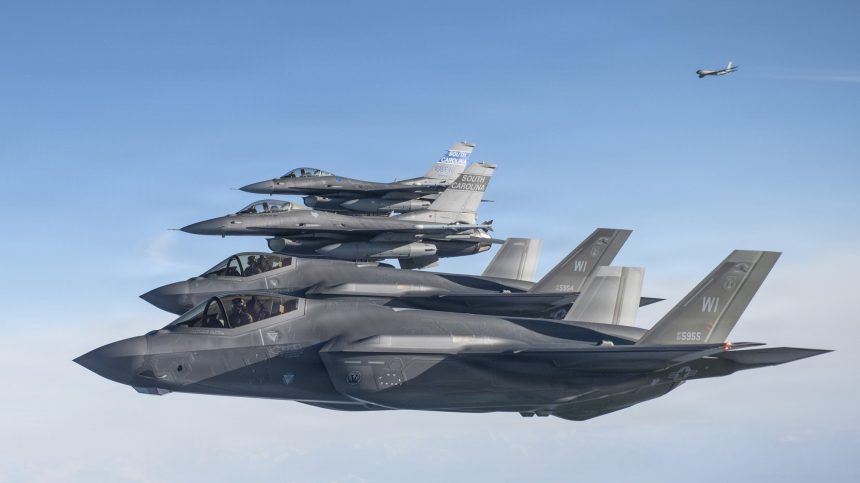
When news emerged that the US Air Force had carried out a dynamic operational deployment to Greenland, the announcement did not arrive with dramatic fanfare or public ceremony. There were no grand speeches or sweeping declarations of intent. Instead, the deployment unfolded with deliberate subtlety, reflecting a broader shift in how the United States approaches military readiness, deterrence, and global presence. The Arctic, long viewed as remote and peripheral, was quietly moving to the center of strategic planning.
What made the operation notable was not its size or duration, but what it represented. The deployment underscored how rapidly the Arctic is transforming from a frozen buffer zone into a contested and strategically vital region. What follows is an exploration of why this deployment matters, how it fits into evolving US military doctrine, and what it reveals about the future of security in the High North.
Understanding Dynamic Operational Deployments
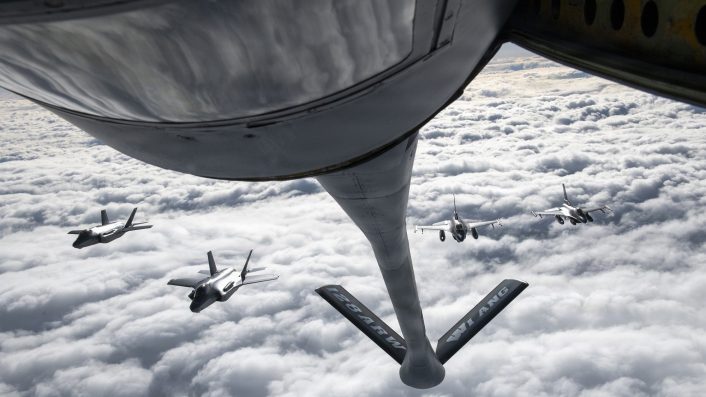
Dynamic operational deployment is part of a broader concept known as Dynamic Force Employment, a strategy designed to make US military movements less predictable and more responsive. Rather than relying on permanent forward bases or long-term deployments, forces are rotated quickly and flexibly, appearing where needed and departing before patterns can be established.
In Greenland, this approach sent a clear message without escalating tensions. Aircraft, personnel, and support elements operated from austere locations, testing logistics, coordination, and readiness in extreme conditions. The goal was not occupation, but demonstration—showing that the US can project power and sustain operations even in some of the planet’s harshest environments.
Why Greenland Holds Outsized Strategic Importance
Greenland’s geographic position gives it strategic weight far beyond its population size. Sitting between North America and Europe, the island occupies a crucial position along transatlantic air and sea routes. It also lies near potential polar flight paths and emerging Arctic shipping lanes.
For decades, Greenland has hosted critical infrastructure supporting early warning systems and missile defense. As global competition intensifies, control and access to such locations become increasingly significant. The US Air Force’s deployment reinforced the idea that Greenland is not merely a logistical outpost, but a key node in Arctic and transatlantic security architecture.
The Arctic’s Rapid Transformation Into a Strategic Arena
Climate change is reshaping the Arctic at an unprecedented pace. Melting ice is opening waters that were once impassable, reducing transit times between major global markets. These changes have drawn attention from major powers seeking influence, access, and advantage.
The Arctic is no longer defined solely by geography, but by opportunity and competition. Military planners recognize that environmental shifts are altering strategic calculations. The US Air Force’s presence in Greenland reflects an understanding that future conflicts and crises may involve regions once considered inaccessible.
What the Deployment Tested Beyond Firepower
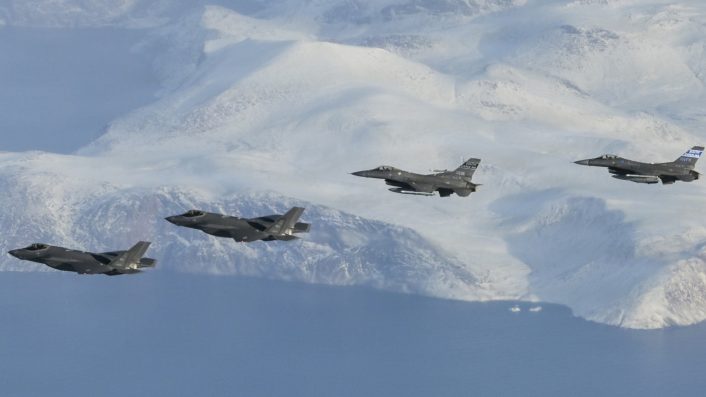
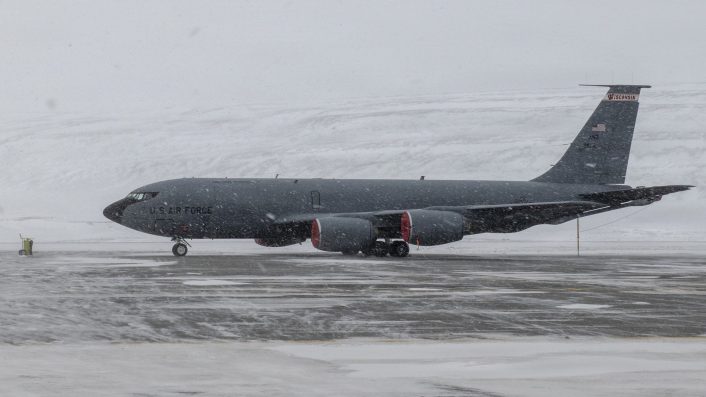
The Greenland operation was as much about logistics and coordination as it was about aircraft. Operating in extreme cold tests equipment, personnel endurance, and supply chains. Fuel handling, maintenance, communications, and medical support all become more complex in Arctic conditions.
By deploying forces dynamically, the US Air Force evaluated its ability to sustain operations without relying on established infrastructure. This capability is central to modern deterrence, where flexibility and resilience matter as much as sheer strength.
Sending a Message Without Saying a Word
Military deployments often communicate as much through presence as through action. In this case, the message was subtle but unmistakable. The US demonstrated its ability to operate in the Arctic on short notice, reinforcing commitments to allies while reminding competitors that the region is not unguarded.
Importantly, the deployment avoided provocation. It did not involve permanent basing or aggressive posturing. Instead, it aligned with a broader effort to maintain stability by ensuring readiness and visibility without escalation.
How Dynamic Deployments Change Deterrence
Traditional deterrence relied on predictable force posture, with troops and assets stationed in known locations. Dynamic deployments disrupt that predictability. Potential adversaries must assume that US forces could appear quickly in unexpected places.
In Greenland, this approach complicates strategic calculations for any power seeking to dominate the Arctic. It reinforces uncertainty while avoiding the political sensitivities associated with permanent expansion of military presence.
The Role of Allies and Partnerships in the Arctic
Although the deployment was a US Air Force operation, it took place within a broader network of alliances. Greenland’s political status within the Kingdom of Denmark and NATO adds layers of diplomatic context to any military activity.
The operation highlighted how Arctic security depends on cooperation rather than unilateral action. Shared interests in stability, navigation safety, and environmental protection intersect with defense considerations, requiring careful coordination among partners.
Why the Arctic Is No Longer Peripheral to Global Security
For much of modern history, the Arctic was seen as a buffer zone, valuable primarily for its isolation. That perception is fading. Advances in technology, shifting climate patterns, and geopolitical competition have brought the region into sharper focus.
The US Air Force’s deployment reflects a recognition that future challenges may emerge from unexpected directions. Preparing for those scenarios requires presence, practice, and adaptability in regions once considered secondary.
Balancing Military Readiness With Environmental Sensitivity
Operating in the Arctic raises unique environmental concerns. Fragile ecosystems can be easily damaged by human activity, including military operations. The US Air Force has emphasized minimizing environmental impact during deployments, aligning operational goals with stewardship responsibilities.
This balance is increasingly important as military presence in the Arctic grows. Long-term security depends not only on deterrence, but on preserving the region’s environmental integrity.
What This Means for US Military Doctrine
The Greenland deployment fits into a broader shift toward agility and adaptability in US military doctrine. Rather than relying solely on large, fixed bases, the emphasis is on rapid movement, interoperability, and resilience.
This approach reflects lessons learned from recent conflicts and emerging threats. In a world where crises can escalate quickly, the ability to deploy forces dynamically provides strategic advantage.
Why Greenland Was the Ideal Test Case
Greenland’s harsh climate, remote location, and strategic importance make it an ideal environment for testing dynamic deployment concepts. Success there suggests readiness for operations in similarly challenging regions around the globe.
The deployment demonstrated that even in extreme conditions, coordination among aircrews, support staff, and command elements can be maintained. This confidence extends beyond the Arctic, informing broader readiness planning.
Global Reactions and Strategic Interpretation
While the deployment did not trigger immediate diplomatic responses, it was closely watched by analysts and policymakers. In an era of heightened sensitivity to military movements, even limited operations can carry symbolic weight.
Observers noted that the operation reinforced US commitment to Arctic security without altering the regional balance. This restraint is key to maintaining stability while signaling capability.
What Comes Next for Arctic Military Presence
The Greenland deployment is unlikely to be a one-off event. As the Arctic continues to open, similar operations are expected to become more frequent. These deployments will likely focus on readiness, cooperation, and adaptability rather than permanent expansion.
For the US Air Force, the Arctic represents both a challenge and an opportunity—a region where preparation today can prevent crises tomorrow.
Why This Deployment Matters Beyond the Military
The significance of the operation extends beyond defense circles. Arctic security intersects with global trade, climate science, and international governance. Military readiness is one element of a broader effort to manage a rapidly changing region responsibly.
By operating visibly but cautiously, the US Air Force contributes to a framework where security supports stability rather than undermining it.
A Quiet Operation With Long-Term Implications
The dynamic operational deployment to Greenland may not dominate headlines, but its implications are far-reaching. It reflects a world in transition, where geography, climate, and power dynamics are reshaping strategic priorities.
As the Arctic moves from the margins to the center of global attention, operations like this offer a glimpse into how future security challenges will be met—not through permanent presence alone, but through agility, cooperation, and readiness to adapt.
The Arctic as a Measure of Modern Military Readiness
In many ways, the Arctic has become a testing ground for modern military capability. Success there requires more than advanced aircraft; it demands coordination, resilience, and respect for complex political and environmental realities.
The US Air Force’s deployment to Greenland demonstrated these qualities in practice. Quietly and deliberately, it signaled that the High North is no longer an afterthought—but a defining arena for the next era of global security.