

When NASA released the first images from the Artemis II mission, the world paused for a moment, not just to admire the beauty of Earth from space, but to recognize what these images truly represent. This is not just another set of space photographs. It is the first time in more than half a century that humans are traveling this far from Earth with the intention of circling the Moon. The images, captured from inside the Orion spacecraft, show a vivid portrait of Earth suspended in darkness, covered in swirling clouds and deep blue oceans, reminding humanity how small and fragile the planet appears from afar. But beyond the beauty lies a deeper story about ambition, risk, and a new era of space exploration that is only just beginning.
Table of Contents
- A Historic Return to Deep Space After Five Decades
- Inside Orion As Astronauts Capture Earth From Space
- The Crew Experiencing Space Like Never Before
- The Science and Systems Being Tested in Deep Space
- Entering the Moon’s Gravitational Influence
- Why These Images Matter More Than Ever
- The Road Toward a Permanent Lunar Presence
- A Mission That Redefines Human Possibility
- Conclusion: A New Chapter in Space Exploration Begins
A Historic Return to Deep Space After Five Decades
The Artemis II mission marks a turning point in human spaceflight. Not since the Apollo era have astronauts ventured this far from Earth. For over 50 years, human space missions have largely remained in low Earth orbit, focusing on the International Space Station and near-Earth operations. Artemis II changes that narrative completely. This mission sends four astronauts on a ten-day journey that will take them around the Moon and back, pushing the boundaries of what modern space technology can achieve.
The significance of this mission cannot be overstated. It is not simply about revisiting the Moon. It is about proving that humanity is ready to move beyond it. NASA’s Artemis program is designed as a stepping stone, with the long-term goal of establishing a sustainable human presence on the Moon and eventually using it as a launchpad for missions to Mars. The images released from Orion are the first visual confirmation that this vision is becoming reality.
Inside Orion As Astronauts Capture Earth From Space
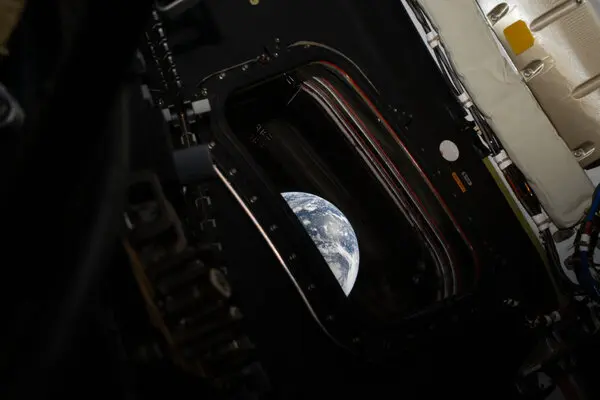
The Orion spacecraft serves as the centerpiece of this mission. Designed to carry astronauts farther than any human-rated spacecraft since Apollo, Orion is equipped with advanced life support systems, navigation technology, and safety features that allow it to operate in deep space conditions. From inside this spacecraft, astronauts have been documenting their journey, capturing images that are both scientifically valuable and emotionally powerful.
One of the most striking images released shows Earth in full view through the spacecraft window. The planet appears vibrant yet distant, with continents partially visible beneath layers of clouds. Another image frames Earth through the edges of Orion’s window, offering a perspective that feels both intimate and surreal. These are not images taken by satellites or robotic probes. These are human perspectives, captured by astronauts who are physically experiencing the vastness of space.
Commander Reid Wiseman, who took several of the photographs, described the experience as extraordinary. His words reflect a sense of awe that has been echoed by astronauts across generations. Seeing Earth from this distance is not just visually stunning, it is deeply emotional, often described as a moment that changes how astronauts view humanity and their place in the universe.
The Crew Experiencing Space Like Never Before
The Artemis II crew consists of four astronauts, each bringing unique experience and perspective to the mission. Commander Reid Wiseman leads the team, joined by pilot Victor Glover and mission specialist Christina Koch from the United States, along with Canadian astronaut Jeremy Hansen. For Hansen, this mission marks his first journey into space, making his reactions particularly powerful and relatable.
Hansen openly shared his amazement, describing the experience as almost unbelievable. Floating in microgravity, observing Earth from a distance of thousands of miles, and participating in a mission of this magnitude has given him a childlike sense of wonder. His words highlight an important aspect of space exploration that often gets overlooked. Beyond the science and engineering, there is a human element that connects people on Earth to those traveling beyond it.
The crew has reported being in excellent spirits, maintaining communication with their families while carrying out a demanding schedule of tasks. These include equipment checks, medical demonstrations such as CPR in microgravity, and preparations for scientific observations as they approach the Moon. Every moment aboard Orion is carefully planned, yet the astronauts still find time to reflect on the significance of their journey.
The Science and Systems Being Tested in Deep Space
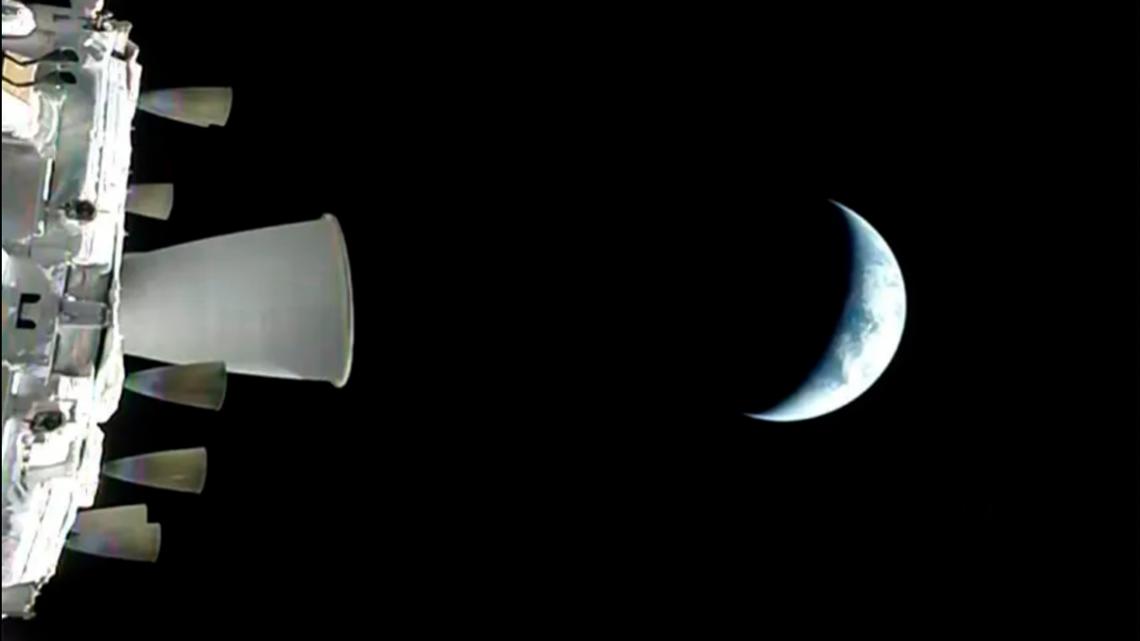
Artemis II is not just a symbolic mission. It is a critical test of systems that will be used in future missions. Operating a spacecraft in deep space presents challenges that cannot be fully replicated on Earth or in low orbit. Radiation exposure, communication delays, and navigation precision all become more complex as distance increases.
NASA officials have emphasized that this mission is an opportunity to learn in real time. Lakiesha Hawkins, a NASA official, noted that operating Orion with a crew in deep space for the first time is providing valuable data. Every system, from life support to propulsion, is being monitored and evaluated. The success of Artemis II will directly influence the design and planning of future missions, including those that aim to land astronauts on the lunar surface again.
The spacecraft’s propulsion system, which played a crucial role in setting Orion on its trajectory toward the Moon, has already demonstrated its capability. After a powerful engine burn following launch, the spacecraft was propelled onto a path that will allow it to loop around the Moon and return safely to Earth. This maneuver is one of the most critical phases of the mission, requiring precise calculations and flawless execution.
Entering the Moon’s Gravitational Influence
One of the most anticipated milestones of the mission is the moment Orion enters the Moon’s gravitational sphere of influence. This occurs when the Moon’s gravity begins to exert a stronger pull on the spacecraft than Earth’s gravity. It is a subtle but significant transition, marking the point at which the spacecraft is truly operating in lunar space.
This phase is expected to occur several days into the mission, leading up to the spacecraft’s closest approach to the Moon. During this time, astronauts will conduct observations and collect data that will help scientists better understand the lunar environment. These observations are not only important for scientific discovery but also for ensuring the safety and success of future missions that will involve landing on the Moon.
If all goes according to plan, the Artemis II crew may set a new record for the farthest distance traveled from Earth by humans. This achievement would surpass records set during the Apollo missions, further emphasizing the historic nature of this journey.
Why These Images Matter More Than Ever
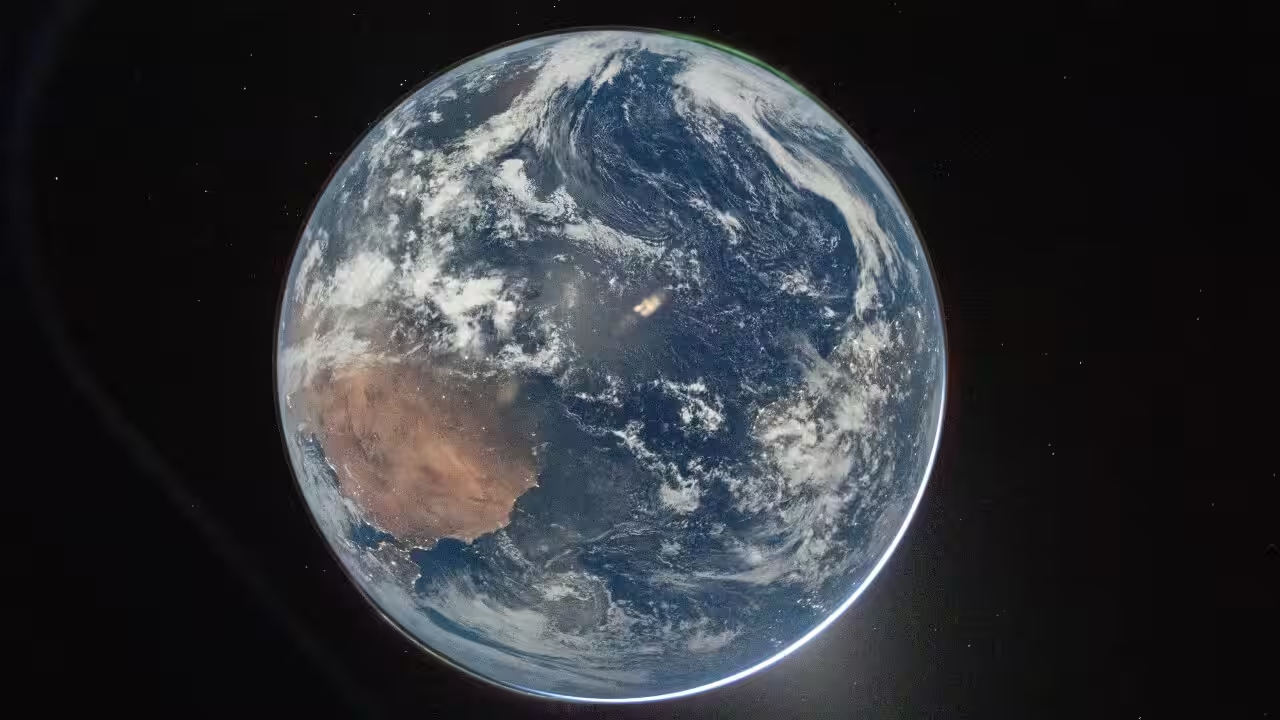
The release of the Artemis II images has captured global attention, not just because of their beauty but because of their timing. In an era where space exploration is becoming increasingly competitive, with multiple nations and private companies racing to achieve new milestones, these images serve as a reminder of what is possible through collaboration and innovation.
They also rekindle a sense of wonder that defined the early days of space exploration. For many people, especially younger generations, the Apollo missions are distant history. Artemis II brings that sense of excitement back into the present, offering a glimpse of what the future could look like if humanity continues to invest in exploration.
The images also carry a deeper message about Earth itself. Seeing the planet from space highlights its isolation and vulnerability. The thin layer of atmosphere that sustains life becomes visibly apparent, reinforcing the importance of protecting the environment and addressing global challenges.
The Road Toward a Permanent Lunar Presence
Artemis II is only one step in a much larger plan. NASA’s Artemis program aims to establish a sustainable human presence on the Moon, including the construction of a lunar base that can support long-term missions. This base would serve as a platform for scientific research and as a staging point for missions to Mars.
Future missions in the Artemis program will build on the success of Artemis II. Artemis III, for example, is expected to include a lunar landing, returning humans to the Moon’s surface for the first time since the Apollo era. Subsequent missions will focus on expanding infrastructure, developing new technologies, and exploring the Moon’s resources.
The ultimate goal is to create a continuous human presence beyond Earth, transforming space exploration from a series of isolated missions into a sustained effort. The images from Artemis II are an early glimpse of that future, showing what it looks like when humans venture beyond familiar boundaries.
A Mission That Redefines Human Possibility
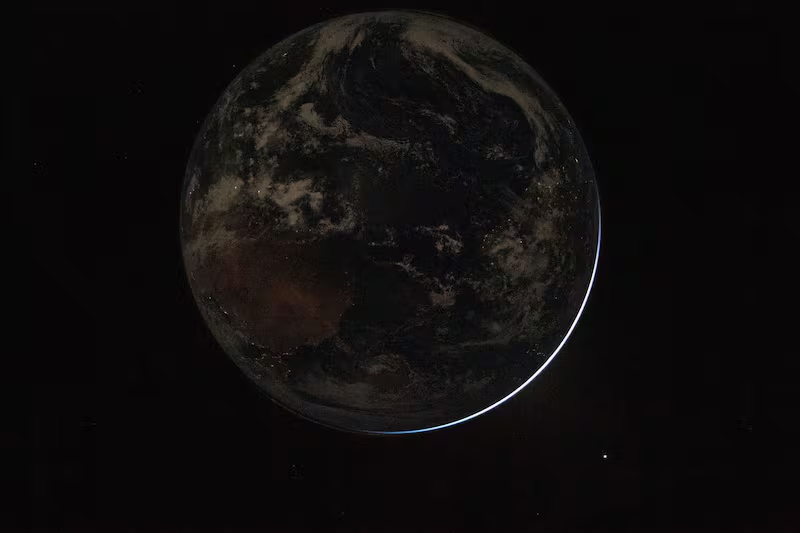
For the astronauts aboard Orion, this mission is more than a professional achievement. It is a moment that redefines what is possible for humanity. Traveling 250,000 miles away from Earth is not just a technical challenge, it is a statement about human ambition and resilience.
Commander Wiseman described the mission as a Herculean effort, emphasizing the scale and complexity of what is being attempted. His words capture the essence of Artemis II. This is not a routine mission. It is a bold step into the unknown, driven by a desire to explore and understand.
As the spacecraft continues its journey, the world watches closely, aware that each milestone brings humanity closer to a new era of exploration. The images of Earth, taken from a distance that few have ever experienced, serve as both a reminder of where we come from and a glimpse of where we are going.
Conclusion: A New Chapter in Space Exploration Begins
The Artemis II mission represents the beginning of a new chapter in human space exploration. The images released from the Orion spacecraft are more than just photographs. They are symbols of progress, curiosity, and the enduring human spirit to explore beyond our limits.
As astronauts continue their journey around the Moon and back, their experiences will shape the future of space travel. The lessons learned, the data collected, and the inspiration generated by this mission will influence generations to come.
In the end, Artemis II is not just about reaching the Moon again. It is about preparing for what comes next. It is about building a future where humanity is no longer confined to a single planet. And as those first images of Earth remind us, that future begins with a single, extraordinary step into the vast unknown.