
Table of Contents
- When a New Era of Spaceflight Begins
- Meet the Crew Preparing for History
- A Rocket Built for Deep Space
- Delays, Challenges, and Engineering Precision
- The Countdown to Launch
- A Mission Beyond the Moon
- Breaking Distance Records in Space
- Preparing for Future Moon Landings
- The Human Side of Space Exploration
- What This Mission Means for the Future
When a New Era of Spaceflight Begins
When news emerged that NASA’s Artemis II astronauts were officially “ready to go” for their long-anticipated mission around the moon, it signaled more than just another launch countdown. It marked a defining moment in human space exploration, one that reconnects the present generation with a legacy last seen during the Apollo era. For the first time in more than five decades, humans are preparing to journey beyond low Earth orbit, venturing into deep space with modern technology, renewed ambition, and a vision for the future.
As the launch window approaches, anticipation is building not only among scientists and engineers but also across the global public. The Artemis II mission is not just a technical milestone. It represents a turning point in how humanity approaches space travel, exploration, and long-term presence beyond Earth. With a carefully selected crew, a powerful new rocket system, and years of preparation behind them, the mission carries both excitement and uncertainty. What lies ahead is not just a journey around the moon, but the beginning of a new chapter in space history.
Meet the Crew Preparing for History

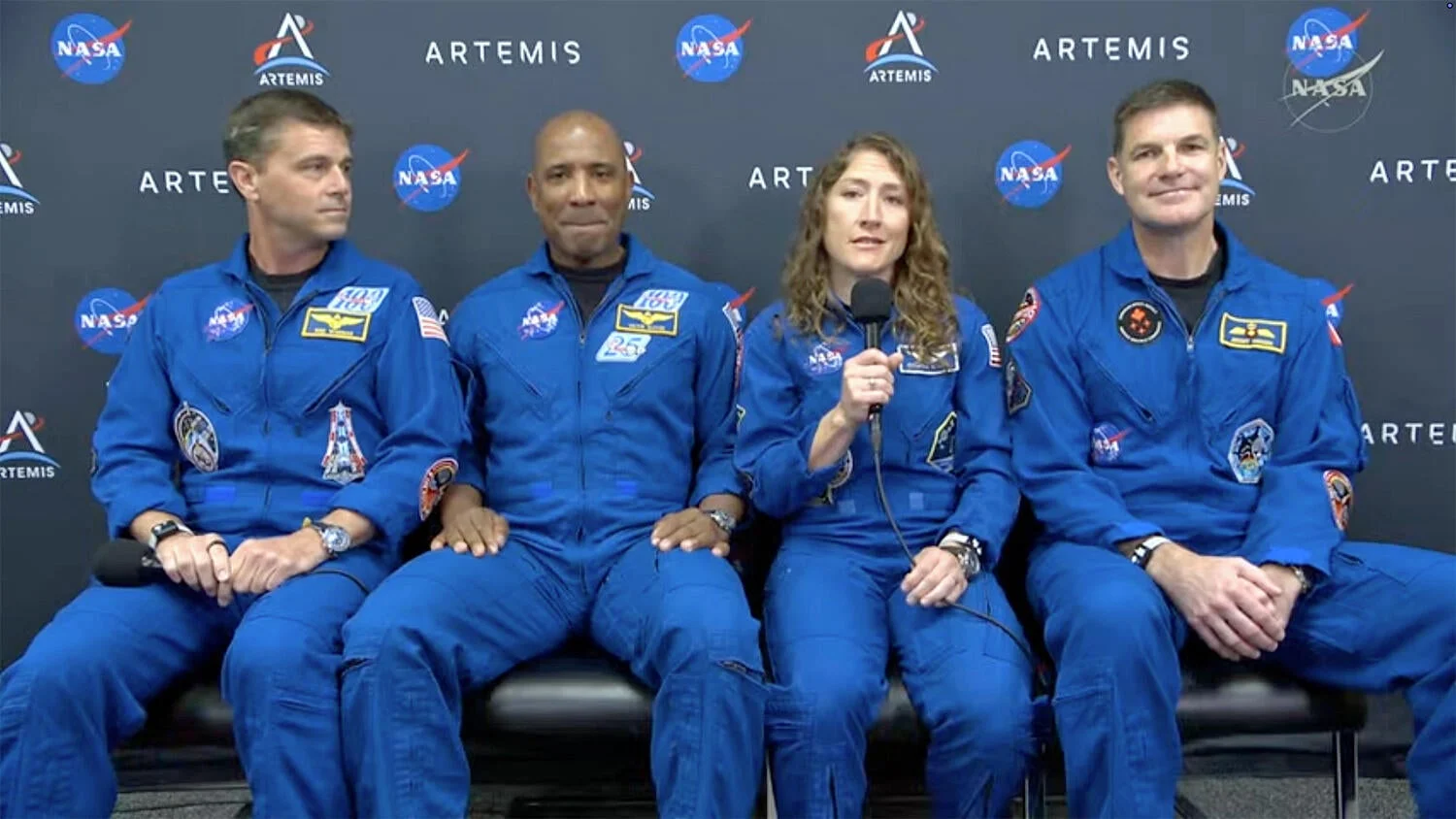
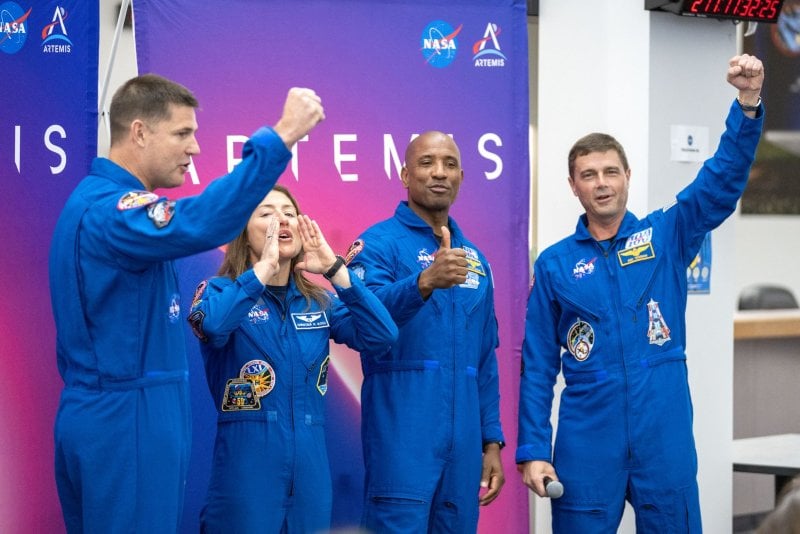
At the heart of the Artemis II mission are four astronauts who have spent years training for this moment. Commander Reid Wiseman, pilot Victor Glover, mission specialist Christina Koch, and Canadian astronaut Jeremy Hansen form a diverse and highly experienced team. Each brings unique expertise, but together they share a common goal: to safely execute humanity’s return to deep space.
Christina Koch, known for her record-setting long-duration stay aboard the International Space Station, reflected on the emotional weight of the mission. After completing six spacewalks during her previous mission, she now stands on the verge of another historic achievement. The crew has undergone intense preparation, from simulations to technical briefings, ensuring they are ready for every possible scenario.
Their arrival at Kennedy Space Center marked the beginning of the final phase before launch. Isolated in medical quarantine, they continue to refine procedures, participate in briefings, and mentally prepare for the journey ahead. Despite the magnitude of the mission, the astronauts maintain a calm and focused mindset, emphasizing readiness without overconfidence.
A Rocket Built for Deep Space
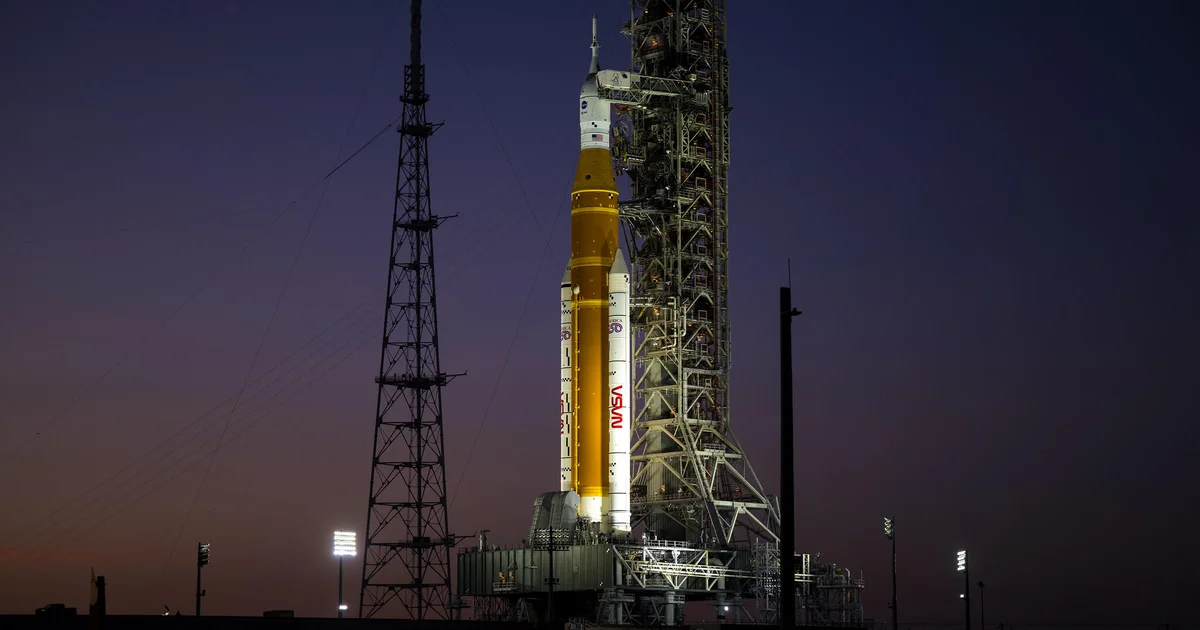
Central to the Artemis II mission is NASA’s Space Launch System, a towering rocket designed to carry humans farther than ever before. Standing over 300 feet tall, it is one of the most powerful rockets ever built. Combined with the Orion spacecraft, it forms the backbone of NASA’s new lunar exploration program.
The Orion capsule, which will carry the astronauts, has been engineered to support human life beyond Earth’s orbit. It includes advanced navigation systems, communication technology, and life support capabilities that will be tested extensively during this mission. Unlike previous missions that remained closer to Earth, Artemis II pushes these systems into the challenging environment of deep space.
The scale of the rocket itself adds to the sense of awe surrounding the mission. As Commander Wiseman described, seeing the vehicle on the launch pad makes the reality of the journey undeniable. This is not just another flight. It is a leap into a domain where few humans have ever ventured.
Delays, Challenges, and Engineering Precision
While the mission is filled with excitement, it has not been without challenges. Originally planned for an earlier launch, Artemis II faced delays due to technical issues, including hydrogen fuel leaks and complications with pressurizing the rocket’s upper stage propulsion system.
These setbacks highlight the complexity of modern spaceflight. Every component must function flawlessly, and even minor issues can lead to significant delays. Engineers and ground teams have worked tirelessly to address these problems, ensuring that safety remains the top priority.
Despite these challenges, recent pre-launch briefings have been described as exceptionally smooth. Ground systems teams reported minimal outstanding issues, suggesting that the mission is now on solid footing. Still, the crew remains realistic. They understand that test flights often require multiple attempts, and they are fully prepared for that possibility.
The Countdown to Launch

The launch countdown for Artemis II is a carefully choreographed process lasting nearly 50 hours. Every step is meticulously planned, from fueling the rocket to final system checks. If all conditions are met, the mission will proceed within a designated launch window.
Weather remains one of the key variables. Forecasts indicate favorable conditions, though factors such as high winds or cloud cover could still impact the launch. This uncertainty is a reminder that space missions depend not only on technology but also on nature.
For the astronauts, the countdown represents the culmination of years of preparation. It is a moment where training meets reality, where anticipation turns into action. Yet, even as the clock ticks down, the team remains flexible, ready to adapt if conditions require a delay.
A Mission Beyond the Moon
Unlike the Apollo missions that landed astronauts on the lunar surface, Artemis II is designed as a test flight. The crew will not land on the moon or enter lunar orbit. Instead, they will travel around the far side of the moon, using its gravity to propel them back toward Earth.
This trajectory, known as a free-return orbit, ensures that the spacecraft can return safely even in the event of system issues. It is both a practical and symbolic path, demonstrating the capabilities of the Orion spacecraft while retracing the steps of earlier missions.
During the journey, the astronauts will conduct a series of tests to evaluate the spacecraft’s performance. These include assessing life support systems, navigation accuracy, and communication reliability. Every aspect of the mission is designed to gather data that will inform future flights.
Breaking Distance Records in Space
One of the most remarkable aspects of the Artemis II mission is the distance it will cover. The crew is expected to travel farther from Earth than any humans before them, surpassing the record set during the Apollo 13 mission in 1970.
Reaching a distance of over 250,000 miles from Earth, the mission pushes the boundaries of human exploration. At this range, the Earth appears as a distant blue sphere, emphasizing both the vastness of space and the fragility of our home planet.
This achievement is not just about setting records. It demonstrates the capability of modern spacecraft to operate in deep space, paving the way for more ambitious missions in the future.
Preparing for Future Moon Landings

Artemis II is only the beginning of a broader strategy to return humans to the moon. NASA’s Artemis program aims to establish a sustainable presence on and around the lunar surface, serving as a stepping stone for future missions to Mars.
Following Artemis II, future missions will focus on testing docking procedures, lunar landers, and extended operations in lunar orbit. Companies such as SpaceX and Blue Origin are developing technologies that will play a key role in these efforts.
The ultimate goal is to enable regular missions to the moon, including scientific research, resource utilization, and long-term habitation. Artemis II provides the critical foundation for these ambitions, ensuring that systems and procedures are ready for more complex operations.
The Human Side of Space Exploration
Beyond the technical achievements, Artemis II highlights the human element of space exploration. For the astronauts, this mission represents years of dedication, sacrifice, and perseverance. It is a deeply personal journey as much as it is a scientific endeavor.
The presence of their families at the launch site underscores the emotional dimension of the mission. These moments of connection serve as a reminder that space exploration is not just about machines and data. It is about people, relationships, and the shared desire to explore the unknown.
As the crew prepares for launch, they carry not only their own aspirations but also the hopes of millions around the world. Their journey reflects a collective curiosity that has driven humanity forward for centuries.
What This Mission Means for the Future
The Artemis II mission represents more than a single flight. It signals a renewed commitment to exploring beyond Earth, with implications that extend far into the future. By testing new technologies and expanding human presence in space, it lays the groundwork for the next generation of exploration.
This mission also raises important questions about the future of space travel. How will humanity balance exploration with sustainability? What role will international collaboration play? And how will these efforts shape our understanding of life beyond Earth?
As the countdown continues, one thing is clear: Artemis II is not just a return to the moon. It is a step toward a future where space becomes an integral part of human existence. The journey ahead is filled with challenges, but also with possibilities that could redefine what it means to explore, discover, and dream beyond our planet.