
Table of Contents
- A Nobel Announcement That Spotlighted an Invisible Process
- What Autophagy Means in Simple Terms
- Why This Discovery Took So Long to Understand
- Yeast Cells and an Unexpected Breakthrough
- How Autophagy Changed Modern Biology
- Links to Disease and Medical Research
- A Discovery Rooted in Curiosity Rather Than Application
- Japan’s Scientific Legacy and Global Impact
- What This Discovery Means for the Future
- Why the Nobel Committee Took Notice
A Nobel Announcement That Spotlighted an Invisible Process
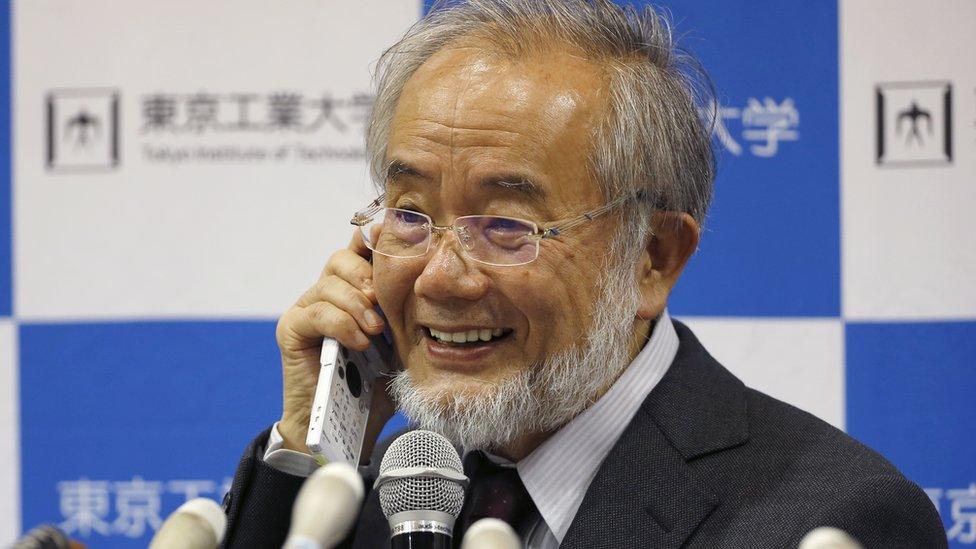
When news broke that Yoshinori Ohsumi had been awarded the Nobel Prize in Physiology or Medicine, the global scientific community took notice. The honor recognized work that explores something fundamental yet unseen inside every living cell.
Ohsumi’s discovery did not involve a new drug, a surgical technique, or a medical device. Instead, it illuminated a basic cellular process that quietly sustains life itself. His research revealed how cells break down and recycle their own components, a mechanism known as autophagy.
At first glance, the concept may sound abstract. Yet its implications stretch across diseases, aging, immunity, and the very survival of organisms under stress.
What Autophagy Means in Simple Terms
Autophagy, derived from Greek words meaning self eating, is a natural process in which cells dismantle and reuse damaged or unnecessary parts. Rather than allowing waste to accumulate, cells package old components and break them down into reusable building blocks.
This internal recycling system allows cells to adapt to starvation, repair damage, and maintain balance. Without it, cells would quickly become dysfunctional.
Before Ohsumi’s work, scientists suspected that such a process existed. What they lacked was a clear understanding of how it worked, which genes controlled it, and why it mattered so profoundly to health.
Why This Discovery Took So Long to Understand
One reason autophagy remained mysterious for decades is that it occurs at a microscopic level, invisible without specialized tools. Unlike organs or tissues, cellular recycling does not produce dramatic symptoms when it functions normally.
Another challenge was that autophagy accelerates under conditions such as starvation, making it difficult to observe in stable laboratory environments. Many researchers overlooked it in favor of more immediately observable processes.
Ohsumi approached the problem differently. He studied simple organisms to uncover universal biological principles.
Yeast Cells and an Unexpected Breakthrough
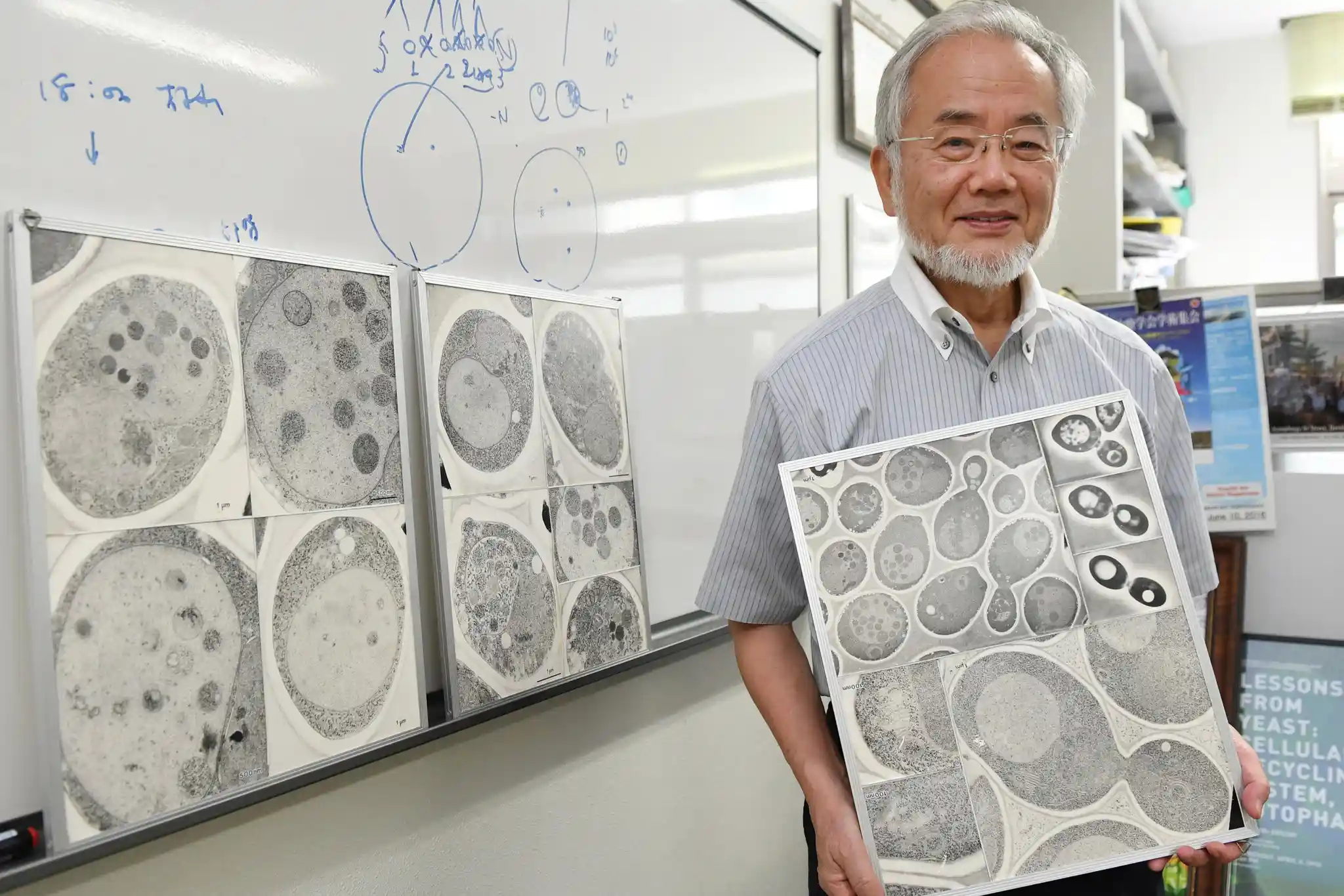
Rather than working with complex human cells, Ohsumi focused on yeast, a single celled organism commonly used in laboratories. Yeast cells share many fundamental processes with human cells, making them ideal for basic biological research.
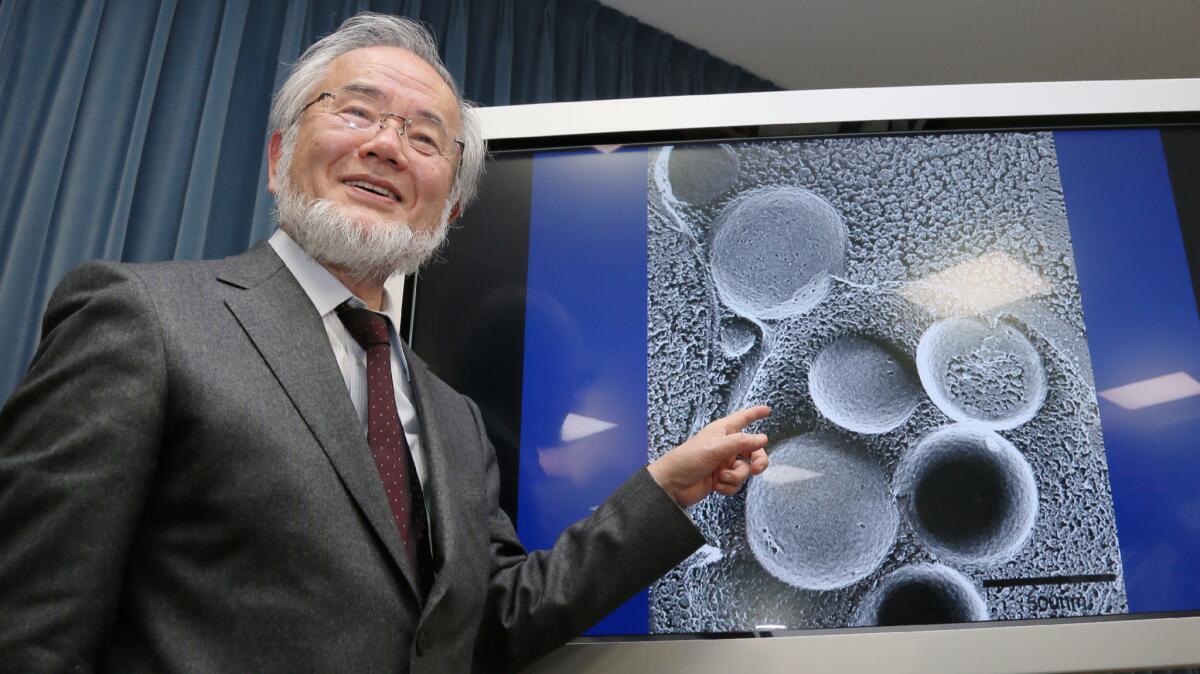
By inducing starvation in yeast and disabling certain digestive functions, Ohsumi was able to observe the accumulation of cellular waste inside compartments. This allowed him to identify key genes responsible for autophagy.
These experiments revealed the molecular machinery behind cellular recycling for the first time.
How Autophagy Changed Modern Biology
Once Ohsumi identified the genes that control autophagy, researchers around the world began exploring how this process operates in humans. They discovered that autophagy plays a role in preventing neurodegenerative diseases, fighting infections, and regulating inflammation.
Autophagy also helps cells survive during stress, such as nutrient deprivation or injury. It is deeply involved in aging and the body’s response to disease.
What was once considered a niche cellular function suddenly became central to understanding life and death at the cellular level.
Links to Disease and Medical Research
Scientists soon found that disruptions in autophagy are linked to serious illnesses. Inadequate autophagy has been associated with conditions such as Parkinson’s disease, Alzheimer’s disease, and certain cancers.
At the same time, excessive autophagy can also contribute to disease by allowing damaged cells to survive longer than they should. This delicate balance makes autophagy both a protective and potentially harmful process.
Medical researchers are now exploring therapies that adjust autophagy levels to treat a wide range of conditions.
A Discovery Rooted in Curiosity Rather Than Application
One of the most striking aspects of Ohsumi’s work is that it was driven by curiosity rather than immediate medical goals. When he began studying autophagy, few scientists considered it a promising or fashionable field.
His persistence illustrates the value of basic research, which often lays the foundation for breakthroughs years or decades later. Without understanding how cells clean themselves, many modern medical advances would not be possible.
The Nobel committee highlighted this point, emphasizing that transformative discoveries often emerge from fundamental science.
Japan’s Scientific Legacy and Global Impact
Ohsumi’s Nobel Prize also underscored Japan’s long standing contribution to basic scientific research. Japan has produced numerous Nobel laureates whose work spans physics, chemistry, and medicine.
This recognition reinforced the idea that scientific breakthroughs are global efforts, built upon shared knowledge and international collaboration.
Ohsumi himself has emphasized humility, noting that science progresses through collective inquiry rather than individual achievement.
What This Discovery Means for the Future
As research into autophagy continues, scientists hope to develop treatments that can fine tune this process. Potential applications include slowing age related decline, enhancing immune responses, and improving cancer therapies.
However, researchers caution that manipulating autophagy is complex. Because it affects so many cellular systems, unintended consequences are possible.
The discovery opened doors, but it also raised new questions that will shape biomedical research for decades.
Why the Nobel Committee Took Notice
The Nobel Prize recognized Ohsumi not just for identifying autophagy, but for changing how scientists think about cellular life. His work revealed that cells are not passive structures, but dynamic systems constantly renewing themselves.
This insight reshaped biology at its core. It reminded the world that even the smallest processes can have enormous consequences.
In honoring Ohsumi, the Nobel committee celebrated a discovery that began quietly in yeast cells and ended by transforming our understanding of health, disease, and survival itself.