

Table of Contents
- What Is the B-21 Raider? A Leap in Bomber Technology
- Why Is the U.S. Air Force Accelerating the B-21 Raider’s Production?
- The B-21 Raider’s Role in U.S. Defense Strategy
- Key Features and Technological Advancements
- Speeding Up Production: What It Means for the U.S. Military
- Global Reactions to the U.S. B-21 Raider Program
- The Future of the B-21 Raider and U.S. Air Power
- The B-21 Raider and the Changing Landscape of Global Defense
What Is the B-21 Raider? A Leap in Bomber Technology
The B-21 Raider is the U.S. Air Force’s next-generation stealth bomber, designed to replace the aging B-1B and B-2 bombers in service. Developed by Northrop Grumman, the B-21 is expected to feature advanced stealth technology, allowing it to penetrate enemy defenses undetected. Unlike previous bombers, the B-21 is designed to be more versatile, able to carry a wide range of conventional and nuclear weapons.
One of the key features of the B-21 Raider is its ability to operate in contested environments. Its low observability and high survivability make it ideal for future high-intensity conflicts where advanced adversaries have developed sophisticated anti-aircraft systems. This capability will allow the U.S. to project power globally, whether in strategic deterrence or conventional warfare.
The aircraft’s design incorporates cutting-edge materials and systems that enhance its range, survivability, and flexibility. With a focus on affordability and maintainability, the B-21 is also expected to be easier to integrate with the U.S. military’s broader defense infrastructure, offering a more cost-effective solution for long-term security.
Why Is the U.S. Air Force Accelerating the B-21 Raider’s Production?
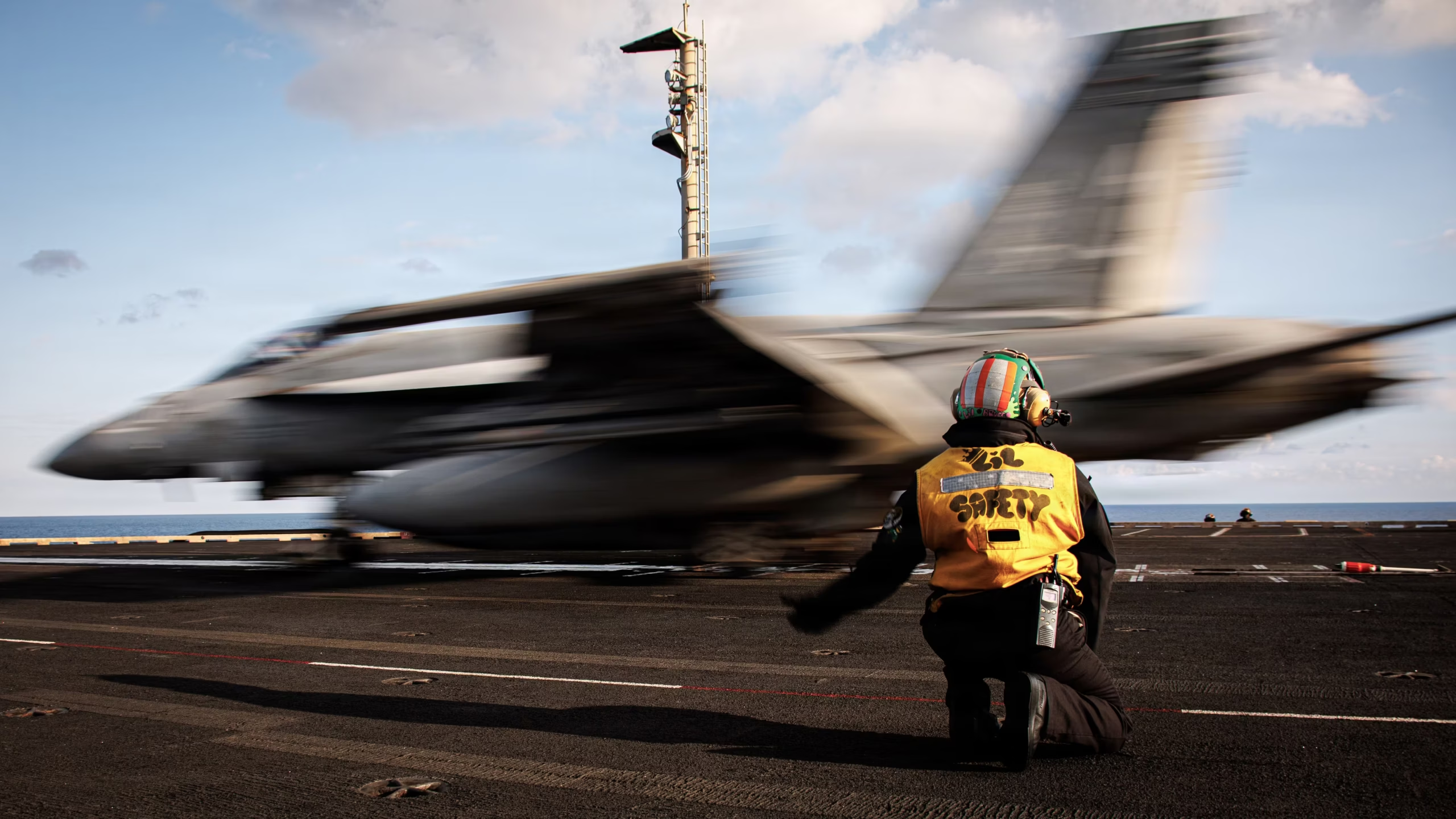
The decision to speed up the B-21 Raider’s production is driven by several factors, most notably the rapidly changing geopolitical environment. As potential adversaries develop increasingly sophisticated air defense systems, the U.S. military needs to ensure that its bomber fleet remains capable of conducting strategic operations in contested regions.
The Air Force has identified the need for a more advanced bomber to meet these emerging threats, and the B-21 Raider is seen as a critical component in maintaining air superiority. With tensions rising in the Indo-Pacific region, particularly with China’s growing military power, and with increasing threats from Russia, the U.S. is prioritizing the rapid deployment of next-generation bombers to ensure its readiness for future conflicts.
The acceleration of the B-21 program is also part of the broader effort to modernize the U.S. military’s strategic forces. The U.S. has long relied on its bomber fleet as a key element of its nuclear deterrence strategy, and the B-21 will play a central role in maintaining this deterrence in the 21st century.
The B-21 Raider’s Role in U.S. Defense Strategy
The B-21 Raider is not just another bomber; it is a cornerstone of the U.S. military’s defense strategy for the next several decades. Its advanced stealth capabilities and long-range strike ability will provide the U.S. with unmatched flexibility in deterring aggression, conducting precision strikes, and maintaining the strategic balance of power.
The bomber’s nuclear capability ensures that the U.S. retains a credible second-strike deterrent, a key component of nuclear strategy that ensures the nation can respond to any adversary in the event of a nuclear attack. This makes the B-21 Raider a vital part of the U.S. nuclear triad, alongside submarines and land-based missiles.
Furthermore, the B-21 will be designed to operate alongside other U.S. military assets, such as unmanned aerial vehicles (UAVs) and advanced surveillance systems, allowing for highly integrated, multi-domain operations. This will enable the U.S. to respond more effectively to threats in regions where air defenses are increasingly robust.
Key Features and Technological Advancements

The B-21 Raider boasts several key features that set it apart from previous bomber generations. One of the most significant advancements is its stealth technology, which reduces the aircraft’s radar signature and increases its survivability in highly defended airspace. The B-21 is also designed with a focus on affordability, aiming to reduce costs over its lifecycle through maintainability and ease of operations.
Another important feature is the B-21’s ability to carry both conventional and nuclear payloads. This flexibility allows the U.S. Air Force to use the B-21 in a variety of scenarios, from precision strikes to nuclear deterrence. Its payload capacity is expected to be on par with current bombers, giving it the ability to carry large numbers of bombs, missiles, or even hypersonic weapons.
In addition to its payload capacity, the B-21 will be equipped with advanced avionics, communication systems, and sensors, enabling it to operate in complex, multi-domain environments. Its ability to operate in both manned and unmanned configurations adds another layer of versatility, making it adaptable to a wide range of operational needs.
Speeding Up Production: What It Means for the U.S. Military
The accelerated production of the B-21 Raider signifies the Air Force’s commitment to ensuring that the U.S. maintains its technological edge in strategic bombing capabilities. With production ramping up, the U.S. will be able to field the B-21 sooner than originally planned, allowing it to replace older bombers and integrate new technology into the force.
This rapid production timeline also reflects the growing urgency surrounding global defense priorities. As adversaries like China and Russia develop increasingly advanced air defense systems, the U.S. must act quickly to ensure that its bomber fleet remains effective in a rapidly changing environment. The faster deployment of the B-21 is a response to these rising threats and a recognition of the need for modern, adaptable defense capabilities.
Global Reactions to the U.S. B-21 Raider Program

The U.S. Air Force’s decision to accelerate the B-21 Raider’s production has garnered significant attention from both allies and adversaries alike. Countries with close ties to the U.S. have expressed support for the program, recognizing the bomber’s strategic importance in maintaining global security. Allies in NATO and the Indo-Pacific region, in particular, have praised the B-21’s advanced capabilities, which are expected to enhance the U.S.’s ability to respond to regional threats.
On the other hand, adversaries such as China and Russia have closely monitored the development of the B-21, viewing it as a significant challenge to their own air defense capabilities. These nations are expected to increase their investment in countermeasures, including advanced surface-to-air missiles and air defense systems designed to counter the B-21’s stealth features.
The Future of the B-21 Raider and U.S. Air Power

As the B-21 Raider moves closer to deployment, the U.S. Air Force is looking ahead to how it will integrate the bomber into its broader defense strategy. The B-21 will not only replace older bombers like the B-1B and B-2 but will also serve as the backbone of the U.S. Air Force’s long-range strike capabilities for the foreseeable future.
The rapid pace of B-21 production will help ensure that the U.S. remains prepared for any potential conflicts, particularly those involving high-tech adversaries with advanced air defense systems. By 2027, the B-21 Raider will be operational, ready to support a variety of missions from conventional strikes to nuclear deterrence, and it will continue to evolve as new technologies emerge.
The B-21 Raider and the Changing Landscape of Global Defense
The U.S. Air Force’s acceleration of the B-21 Raider production represents a major leap forward in the country’s strategic capabilities. With its advanced stealth technology, nuclear capabilities, and long-range strike ability, the B-21 is poised to play a central role in the future of U.S. defense strategy.
As the global security landscape continues to evolve, the B-21 Raider will be an essential asset for maintaining the U.S.’s edge in air power. The Air Force’s commitment to the rapid deployment of this next-generation bomber reflects the urgency of adapting to new threats and ensuring that the U.S. remains prepared for any challenges that may arise on the world stage.