
Table of Contents
Who is Mojtaba Khamenei? The Legacy of a Leader
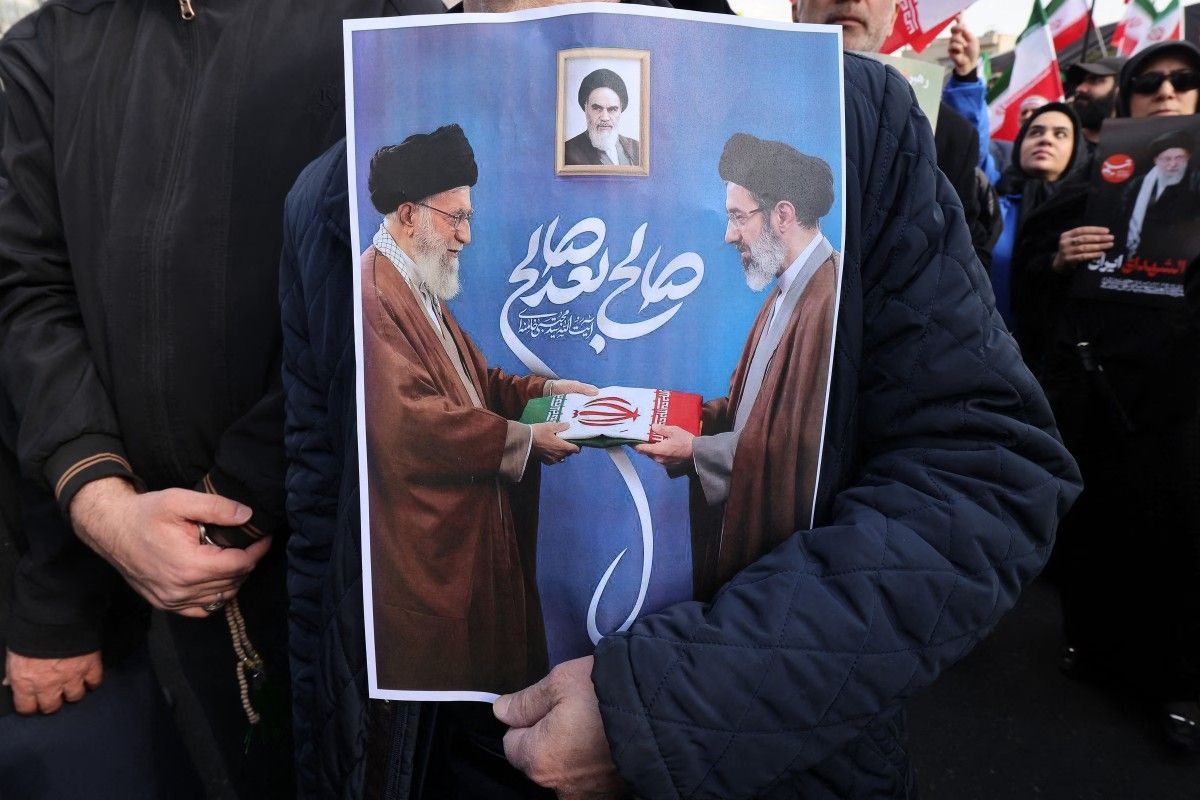
Mojtaba Khamenei was born into a family already deeply entrenched in Iran’s political scene. His father, Ayatollah Ali Khamenei, served as Iran’s Supreme Leader for over three decades, shaping the country’s policies both domestically and internationally. Growing up in the shadows of one of the most influential figures in modern Iranian history, Mojtaba Khamenei had big shoes to fill.
Unlike his father, who was known for his ideological commitment and calculated diplomacy, Mojtaba Khamenei’s political style has been more aggressive and direct. His rise through the ranks of the Iranian political and religious establishment was marked by strategic alliances, deft maneuvering within the complex system of power, and, importantly, a willingness to challenge both external and internal adversaries.
Personal and Public Sacrifices

Becoming Iran’s Supreme Leader required Mojtaba Khamenei to navigate a web of political intrigue, power struggles, and ideological battles. His path was not always straightforward, and it required both personal sacrifices and calculated decisions that affected not only his personal life but also the future of Iran.
One of the most significant sacrifices Mojtaba made was his relationship with his father’s legacy. While Ayatollah Ali Khamenei had a nuanced approach to power, balancing between pragmatism and religious ideology, Mojtaba sought to position himself as a more hardline leader, appealing to the younger generation of Iranians who were disillusioned with the status quo. His decision to take a more aggressive stance against internal reformists and external critics of the regime has caused rifts within the political elite and within his own family.
The Battle for Supreme Leadership
Mojtaba Khamenei’s rise to the position of Supreme Leader was not without significant challenges. One of the biggest hurdles was overcoming fierce opposition from other factions within the Iranian political system. Iran’s political structure is notoriously complex, with various power centers vying for influence, including the military, the clerical establishment, and the revolutionary guards.
Mojtaba’s political rivalries have shaped his leadership style. His ability to outmaneuver rivals like former President Mahmoud Ahmadinejad and other influential clerics has solidified his position, but at a high cost. The maneuvering often required the alienation of potential allies and the consolidation of power in a way that led to political fragmentation within the leadership ranks.
This battle for leadership came at a personal cost, as Khamenei’s political decisions often led to strained relationships with former mentors and colleagues. These decisions, while strengthening his power, also shaped the future of Iran’s political landscape, with potential consequences for the nation’s unity and stability.
The Burden of an Ailing Economy

As Supreme Leader, Mojtaba Khamenei faces the daunting task of managing Iran’s economic crisis. The country’s economy has been plagued by sanctions, mismanagement, and corruption, leaving millions of Iranians struggling with poverty, unemployment, and inflation. Khamenei’s leadership has been closely scrutinized for how it has handled these challenges.
Under his leadership, Iran has continued to face economic isolation due to its nuclear ambitions and regional involvement in conflicts like those in Syria and Yemen. Despite efforts to strengthen domestic production and reduce reliance on foreign goods, the economic burden remains a pressing issue for Khamenei. His decision to continue pursuing policies that many see as aggressive has come with consequences, including the suffering of the Iranian people and a further deterioration of Iran’s global standing.
Mojtaba’s rise to power also coincided with increased youth dissatisfaction, as the younger generation, struggling to find jobs and a stable future, looks to the leadership for solutions. Khamenei’s policies, particularly in the face of economic hardship, have been a source of frustration for many who feel that the political elite is out of touch with the realities faced by ordinary Iranians.
Iran’s Growing Isolation
As Supreme Leader, Mojtaba Khamenei faces the daunting challenge of navigating Iran’s international relations, especially in the context of its tense relationship with the West and regional powers. Under his rule, Iran has become increasingly isolated on the global stage due to its nuclear program, support for militant groups, and regional interventions.
Khamenei’s hardline approach to foreign policy, including his rejection of Western diplomacy and his support for groups like Hezbollah and Hamas, has strained relations with countries like the United States, Israel, and several Arab nations. His refusal to make concessions on Iran’s nuclear program has led to harsh economic sanctions, further isolating the country.
The rise of Mojtaba Khamenei to power coincided with a moment of opportunity for dialogue with the West, particularly during the Obama administration. However, his steadfast adherence to Iran’s ideological stance on issues like nuclear enrichment and regional control has limited diplomatic efforts. As a result, the country faces increasing tensions both regionally and internationally.
The Youth and the Future of Iran’s Leadership
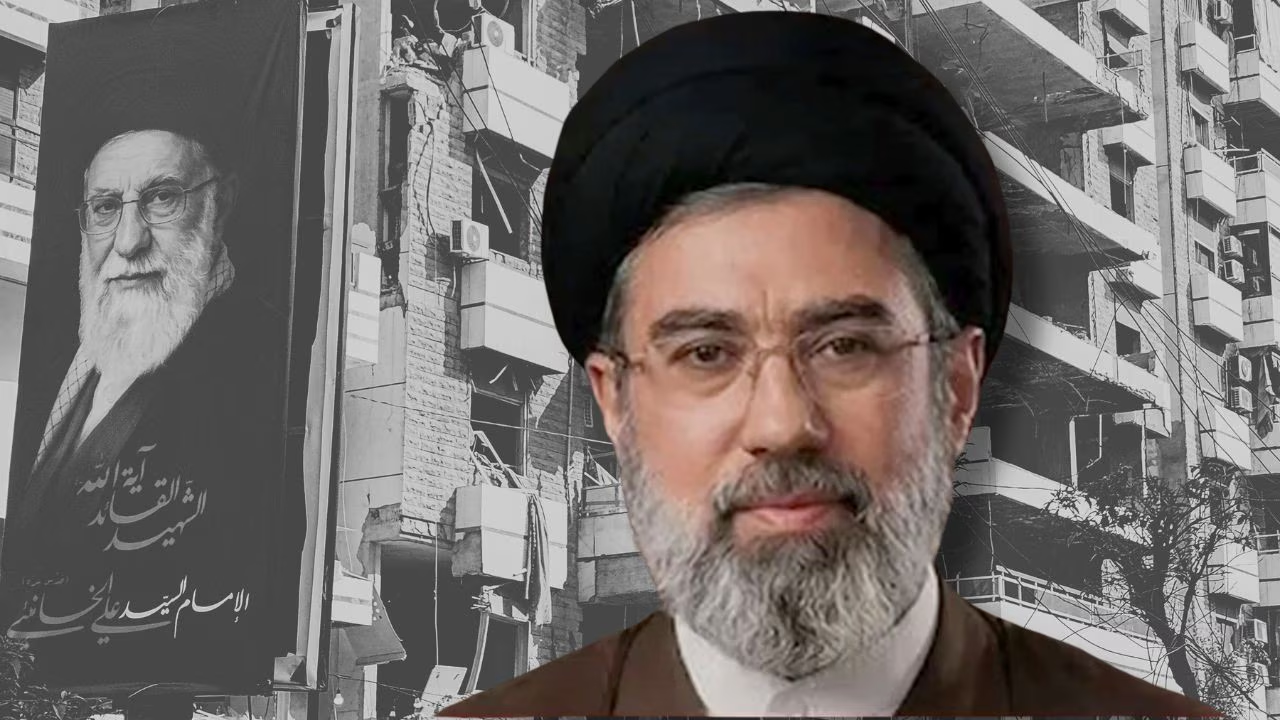
Mojtaba Khamenei’s rise has not been entirely smooth. One of the key challenges he faces is the growing disillusionment among Iran’s youth. The younger generation, who grew up under the shadow of political repression and economic hardship, has been increasingly vocal in demanding political reform. This demographic has become a critical factor in shaping the direction of Iran’s future.
Khamenei’s hardline policies, including crackdowns on protests and efforts to suppress dissent, have alienated many young Iranians. This has led to widespread unrest and protests, especially in urban centers like Tehran. The disconnect between the leadership and the youth could prove to be a significant challenge to Mojtaba’s authority in the coming years, particularly as younger Iranians continue to push for greater freedoms and a more open society.
The Price of Power and the Future of Iran
Mojtaba Khamenei’s journey to becoming Iran’s Supreme Leader has been one marked by personal and political sacrifices. His rise to power has come at the cost of family relationships, political rivalries, and the health of the country’s economy. Despite these challenges, Khamenei has solidified his position through calculated maneuvering and a hardline stance that has shaped Iran’s domestic and foreign policies.
As Iran moves forward under his leadership, the nation faces a difficult road ahead. The economic struggles, political tensions, and growing disillusionment among the younger generation are all significant hurdles that Khamenei must navigate. His leadership will ultimately be defined by how he handles these challenges and whether he can bring about the necessary changes to ensure the country’s stability and future.