

Picture a microscopic creature that lives in metal-laden soil—so toxic that most life would perish—yet it thrives by turning deadly compounds into pure, gleaming gold.
No, this isn’t alchemy. It’s real biology. And it could completely change how we think about mining, recycling, and even future biotech.
Let’s dive into the science, the surprises, and what it means for our planet—and your curiosity.
Table of Contents
- A Bacterium That Poops Gold? Seriously?
- How Does It Do It? Meet CupA and CopA
- A Geologist’s Dream—and a Mine Manager’s Fantasy
- Could This Be the Future of Green Gold Recovery?
- What Would You Do If You Discovered a Microbe That ‘Minced’ Gold?
- Art, Alchemy & the Microbial Golden Touch
- Why the Gold-Making Bug Is More Than a Curiosity
- Final Loop: What Other “Alchemies” Is Nature Hiding?
A Bacterium That Poops Gold? Seriously?
Meet Cupriavidus metallidurans—a tiny soil-dweller with a golden secret.
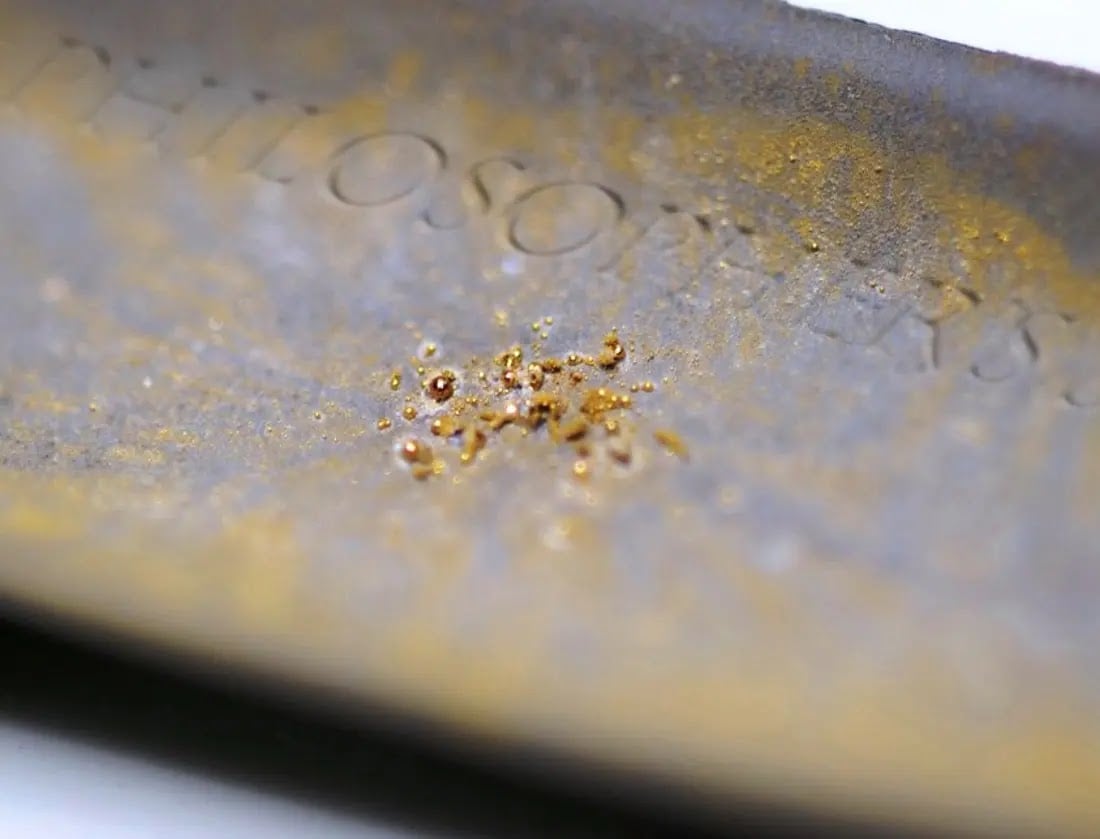
When exposed to toxic mixes of copper and gold, this absurdly resilient bacteria dissolves gold compounds and deposits them as harmless metallic nuggets—some mere nanometers in size. It’s like nature’s own gold-mining factory, but cuter (and way less greedy).
This isn’t science fiction. It’s molecular biology—harnessed by evolution to detoxify environments while leaving behind real, touchable gold.
How Does It Do It? Meet CupA and CopA

In its harsh metal-rich habitat, the bacterium must battle toxic overload.
- It pumps out excess copper using an enzyme called CupA—a kind of internal turret defense.
- But when gold enters the picture, everything changes.
Gold compounds suppress CupA, letting dangerous gold-copper complexes build up. To survive, the bacterium switches on a backup enzyme—CopA.
CopA transforms these toxic compounds back into forms that can’t enter the cell—but with a twist: right outside the bacterial wall, gold precipitates into tiny, inert nuggets. Ta-da: biology making gold.
A Geologist’s Dream—and a Mine Manager’s Fantasy
This is more than a microbial miracle—it’s a glimpse into gold’s biogeochemical lifecycle.
C. metallidurans helps create “secondary gold” by converting weathered ancient ores into new, mobile particles. Understanding this cycle could reshape how mining and recycling happen.
In fact, experts are now experimenting with biosensors—microbial tools that help prospectors identify gold hotspots without blasting the earth apart.
Could This Be the Future of Green Gold Recovery?
Traditional gold extraction often uses mercury or cyanide—deadly chemicals with long-term environmental damage.
In contrast, this bacterium works at ambient temperatures, using hydrogen and metal processing that’s inherently clean. That’s a sustainability win for recycling e-waste or low-grade ore.
Imagine mining expert systems that use living cells instead of toxic chemicals—a biotech breakthrough for clean extraction and circular economy.
What Would You Do If You Discovered a Microbe That ‘Minced’ Gold?
Drop your thoughts:
“If you found naturally gold-making bacteria in your backyard, would you tell the world—or patent the process?”
Would you be a hero, a scholar, or quietly build your biotech fortune?
Art, Alchemy & the Microbial Golden Touch

Scientists and artists alike have been enchanted by this “microbial alchemy.”
At Michigan State University, a collaboration produced real 24-karat gold in front of an audience—blurring the lines between art and science. The installation was titled The Great Work of the Metal Lover, and it wasn’t just spectacle—it raises questions about our desire for precious metals and the ethics of engineered nature.
It’s proof: even the most advanced tech can feel magical when microbes make the glitter.
Why the Gold-Making Bug Is More Than a Curiosity
- Environmental Science: It suggests how life adapts to extreme toxins—and how to harness that adaptation for cleaner mining.
- Biotech & Engineering: Enzymes like CupA and CopA could inspire bioremediation tools for polluted sites.
- Investor & Clean-Tech Strategy: If scalable, this natural method could disrupt commodity markets—and corporate strategies in mining and recycling.
Final Loop: What Other “Alchemies” Is Nature Hiding?

Gold is just one trick. Microbes can also process rare earth elements, platinum, even environmental pollutants.
If nature’s toolkit includes these surprises, where else might answers for climate, health, or clean industries be lurking?
Stick around—there’s a whole microbial universe redefining what’s possible.