

Imagine tending a nest—surrounded by cold, clear river water, making sure your offspring stay safe. Now imagine turning around and eating them. That’s the shocking reality for some male hellbender salamanders—and it’s not nature’s fault alone.
This isn’t gross-out clickbait—it’s a biological crisis unfolding in streams across the eastern U.S. Let’s go deeper, with 8 years of data, a dash of human-caused deforestation, and an ecosystem asking for help.
Table of Contents
- Who Are Hellbenders and Why Should We Care?
- From Doting Dad to Cannibal: What Changed?
- Why Are They Eating Their Babies? Blame Deforestation
- A Living Lesson: Evolution vs. Human Impacts
- What This Means for Ecosystems—and Us
- If You Were a Hellbender Dad…
- The Final Loop: Could Hellbenders Become Local Extinct?
Who Are Hellbenders and Why Should We Care?
Known by names like “snot otter” or “devil dog,” the hellbender (Cryptobranchus alleganiensis) is the largest salamander in North America—growing up to two feet long and weighing around five pounds. It’s specialized for river-bottom life, breathing through skin folds and gripping rocks with webbed toes.
These creatures have existed for millions of years, surviving dinosaurs and climatic shifts. Today, though, their numbers are plunging. Threats like pollution, habitat destruction, and disease (like chytrid fungus) have played a brutal symphony of decline.
From Doting Dad to Cannibal: What Changed?

Researchers from Virginia Tech conducted an eight-year study using concrete nest boxes placed in streams across southwestern Virginia. They observed 182 nests during breeding seasons.
Normally, male hellbenders guard eggs zealously and consume only about 14%—mostly eggs unlikely to survive. But in deforested areas, cannibalism tripled. Nearly half of nests failed due to males eating their entire brood, compared to just 14% in healthy, forested areas.
Infanticide has become tragically common—and may be a key reason for the species’ sharp decline.
Why Are They Eating Their Babies? Blame Deforestation
Odds stacked against these dads include changes in the water environment—not starvation or preference. Clear-cutting forests along streams causes erosion, siltation, and altered chemical conditions. These shifts likely harm both nests and the parents’ ability to care.
In shaded, forested streams, water stays cooler and oxygen-rich—perfect for sensitive salamander eggs. But when forests are removed, water warms, sediment clogs nesting spaces, and oxygen drops. That harsh environment may be pushing fathers to give up and feed themselves instead.
A Living Lesson: Evolution vs. Human Impacts
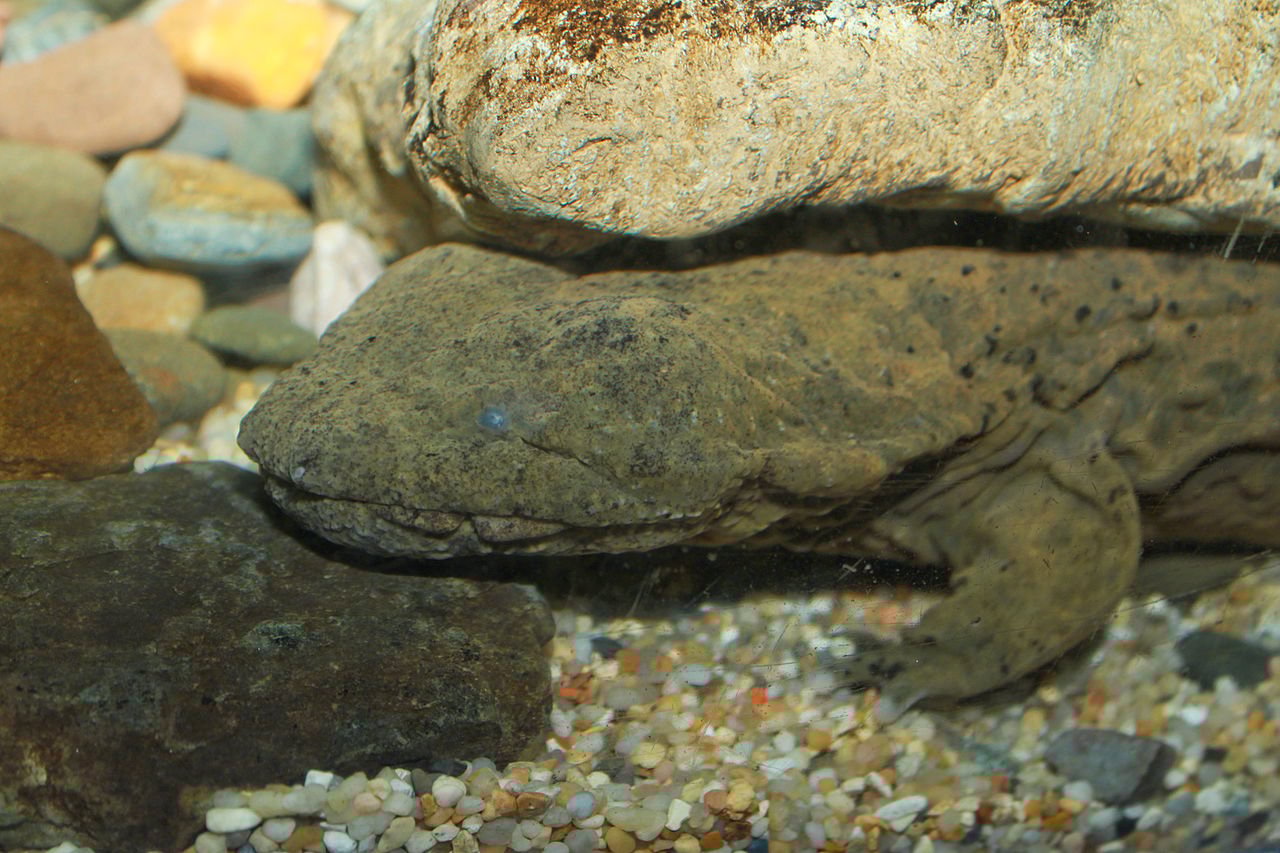
Cannibalism is an adaptation seen in many species—sometimes a tough-love strategy under dire conditions. But now, it’s becoming an evolutionary trap. Because this behavior is happening too often, it’s sabotaging the species’ ability to replenish itself.
The hellbender has survived mass extinctions—but maybe not unchecked modern degradation.
What This Means for Ecosystems—and Us
Hellbenders act like the canary in a coal mine—an indicator of stream health for biodiversity. Restoring their habitat isn’t just about saving antifreeze-drinking salamanders—it’s about cleaner water, healthier fish and mussels, and stronger ecosystems overall.
Forested riparian zones protect not just salamanders, but birds, humans downstream, and groundwater quality. Their decline is screaming: we’re disrupting the very stream life that sustains us.
If You Were a Hellbender Dad…

Imagine being a hellbender father—or a hillside next to your stream. Would you stand by, helpless as your home gets destroyed?
And if you could reverse the damage with one action—plant trees, restrict logging, or hatch and release larvae to give hellbenders a fighting chance—what would you choose?
The Final Loop: Could Hellbenders Become Local Extinct?
Without swift restoration, entire populations could vanish. Their slow reproductive rate and longevity mask how fast recruitment failures can collapse populations.
But deeper investigations—like those now tracking oxygen levels and stream chemistry—may uncover the key to saving dwindling numbers while forests regrow.