
Table of Contents
- Imagine Working Just Two Days a Week… Thanks to AI
- Why Gates Thinks AI Could Shrink the Workweek to Two Days
- The New Work‑Life Balance: More Leisure or More Inequality?
- AI, Jobs, and Your Career: Who Wins and Who Loses
- Financial Freedom or Financial Fear? What a Short Week Could Mean
- Health, Happiness, and the Two‑Day Workweek Experiment
- AI Isn’t Just Automation — It’s a Productivity Revolution
- Living in an AI‑Enhanced World: Travel, Home, Health, and Wealth
- Is a Two‑Day Workweek Realistic — Or Just an Idea?
- Open Loop: What Happens After Work Isn’t Necessary?
Imagine Working Just Two Days a Week… Thanks to AI
Picture this:
It’s Monday morning, you roll out of bed… head to work… and by Tuesday afternoon, you’re already off for the weekend.
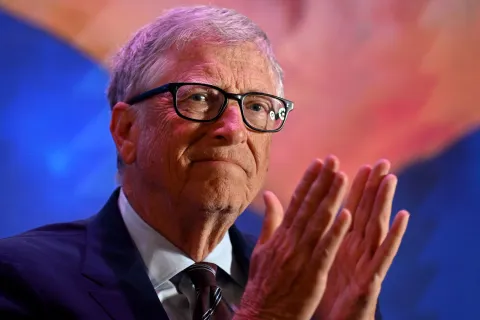
Sounds futuristic? Bill Gates thinks it could be reality in just a decade.
The billionaire tech visionary predicts that artificial intelligence will automate so many tasks that most humans might only need to work two days a week — with the rest of their time free for creativity, rest, and personal pursuits.
That’s a radical shift from the centuries‑old five‑day, 40‑hour workweek.
But before you ask:
“Would I even know what to do with all that free time?”
Let’s unpack what this prediction truly means for your career, finances, health, lifestyle, and even home life.
Why Gates Thinks AI Could Shrink the Workweek to Two Days
Bill Gates’ forecast doesn’t come from a random tweet.
It’s rooted in what’s happening now:
- AI can already handle many routine tasks
- Generative tools are improving faster than experts expected
- Machine learning systems can outperform humans in specialized knowledge areas
- Tech leaders have publicly discussed reducing workweeks as automation grows
In a recent interview, Gates said that within about 10 years, machines could perform “most things” currently done by humans — not just in factories, but in areas like diagnosis, tutoring, and office work.
This isn’t fantasy — it’s a potential endgame scenario where:
💡 Efficiency skyrockets
💡 Human labor is redefined
💡 Work becomes optional for many jobs
But here’s the twist:
If your work disappears, does that mean your income disappears too?
That’s the big question everyone’s asking next — and it’s one you should consider right now.
The New Work‑Life Balance: More Leisure or More Inequality?
A 2‑day workweek sounds like the dream:
✨ More time for family
✨ More time for hobbies
✨ More travel
✨ More focus on health
✨ Less burnout
But without paychecks, that dream becomes complicated.
AI replacing jobs could change the financial landscape in several ways:
1. Productivity vs. Income
AI can boost productivity — but productivity doesn’t automatically mean workers get paid more.
If machines do most tasks, who gets the money?
That leads to tough questions:
- Will salaries rise or stagnate?
- Will fewer work hours mean less pay?
- Will AI owners capture most of the economic gains?
These are the conversations economists and policymakers are just beginning to have.
AI, Jobs, and Your Career: Who Wins and Who Loses
Not everyone benefits equally from an AI shift.
Sectors most at risk:
👉 Routine office work
👉 Data entry
👉 Some manufacturing jobs
👉 Entry‑level customer service
Sectors more resilient or complementary to AI:
👉 Health care professions
👉 Creative industries
👉 Strategy, leadership, innovation
👉 Education and training
👉 Skilled trades
And here’s the key:
Workers who learn to work alongside AI — not compete with it — may thrive even if traditional roles vanish.
So the question becomes:
Do we prepare humans to adapt… or let them be replaced?
And that’s where the future of education and job training comes in.
Financial Freedom or Financial Fear? What a Short Week Could Mean
If humans work two days a week, people could:
💼 Pursue multiple careers
💼 Freelance or consult
💼 Create businesses
💼 Learn new skills
💼 Spend more time with family
Sounds great, right?
But without income stability, reduced work might mean financial stress.
Economists worry about:
- Wage stagnation
- Income inequality
- Benefits tied to employment (health, retirement)
- Job displacement without safety nets
Could AI create universal basic income or new social welfare systems?
Countries like Finland and pilot projects in Kenya are exploring forms of income support — but universal solutions aren’t here yet.
If AI isn’t managed with purpose, the new workweek could become a luxury for the few — not a benefit for all.
That’s the next frontier of policy negotiations and economic reform.
Health, Happiness, and the Two‑Day Workweek Experiment
Working less isn’t just about money — it’s about well‑being.
Multiple studies show that reduced hours can:
🌿 Improve mental health
🍎 Reduce stress
💪 Boost immune function
🏡 Improve work‑life balance
⏳ Increase time for exercise and family
But it can also:
⚠ Reduce motivation
⚠ Create social isolation
⚠ Erode identity tied to work
⚠ Stress finances if pay drops
It turns out humans aren’t just biological machines — we’re psychological beings who need purpose.
So even if AI gives us more free time, humanity’s challenge becomes:
How do we find meaning without traditional work?
Keep reading — because this question may define the next generation.
AI Isn’t Just Automation — It’s a Productivity Revolution
Behind Gates’ prediction is a larger idea:
AI doesn’t just replace tasks — it amplifies capacity.
Here’s what that means:
📈 More output from fewer hours
📊 Faster decision‑making
⚙ Reduced time for repetitive chores
🔍 Enhanced problem solving
🤖 AI handling the predictable
🧠 Humans focusing on creativity and strategy
This shift could reshape business models, too.
Companies might stop valuing:
⏱ Time at the desk
And start valuing:
💡 Innovative ideas
🎯 Strategic thinking
📣 Emotional intelligence
🤝 People skills
In a world where AI optimizes everything, humans will be judged by uniquely human traits — not grunt work.
But that also creates a new challenge:
Do schools and training programs prepare people for this new reality?
And how do families adapt to careers that morph every few years?
Living in an AI‑Enhanced World: Travel, Home, Health, and Wealth
Let’s step away from theory for a moment and think about everyday life.
If you work two days a week:
🌍 You might work remotely from anywhere
🍽 You might spend more on experiences, less on commuting
🏡 Your home might become both office and sanctuary
📈 You could invest in your health and wellness long‑term
That’s where the travel and health markets intersect with this trend.
Travel could become:
✈ Extended stays
🛋 Work‑cation lifestyles
⛱ Seasonal homes around the globe
And health could become a central priority — because people finally have time for fitness, sleep, and preventive care.
But there’s a flip side:
If jobs shrink faster than wages grow, people might cut back on spending instead of expanding lifestyles.
Suddenly, AI isn’t just a workplace trend — it becomes a force in personal finance, housing markets, and consumer behavior.
Is a Two‑Day Workweek Realistic — Or Just an Idea?
Despite the buzz, critics say this vision might be more hypothetical than imminent.
Here’s why:
🔹 Not every job can be automated
🔹 AI adoption varies by industry
🔹 Wealth concentration might centralize gains
🔹 Social safety nets aren’t universally guaranteed
In fact, some experts warn AI could also lead to:
❌ Job displacement
❌ Increased inequality
❌ Psychological stress from rapid change
❌ Resistance from traditional industries
And that’s not just rumor — AI leaders themselves acknowledge uncertainty about timelines and effects.
So the big question isn’t:
Will workweeks shrink?
But:
How will society adapt — and who benefits?
That’s the next challenge for governments, businesses, and individuals alike.
Open Loop: What Happens After Work Isn’t Necessary?
If machines can do most things better than humans, then:
👉 What becomes of school?
👉 What becomes of identity tied to career?
👉 What becomes of purpose and productivity?
👉 What becomes of income and social security?
👉 What becomes of you?
Bill Gates’ two‑day workweek isn’t just a prediction.
It’s a challenge to redefine human life in an AI world.
And the answer — whether utopian or dystopian — depends on how we shape the transition.