

Table of Contents
- A New Era for African Aviation
- The Scale of the Project: Africa’s Biggest Aviation Hub
- Connecting Africa to the World
- The Role of Ethiopian Airlines
- Designing the Future: Zaha Hadid Architects’ Vision
- The Displacement Controversy
- Regional Competition and Future Partnerships
- The Role of Infrastructure: Roads, Rail, and Power
- What’s Next: The Future of African Aviation
- The Final Take: Transforming Africa’s Aviation Landscape
A New Era for African Aviation
When news broke about the $12.5 billion Bishoftu International Airport under construction in Ethiopia, it quickly became one of the most talked-about infrastructure projects in Africa. This massive endeavor, led by Ethiopian Airlines, is set to redefine aviation on the continent, with a vision to connect Africa more efficiently to the world. Scheduled to open in 2030, this airport promises to be Africa’s largest aviation hub, surpassing the capacity of many of the world’s busiest airports. What does this mean for the future of air travel across Africa and globally?
The Scale of the Project: Africa’s Biggest Aviation Hub

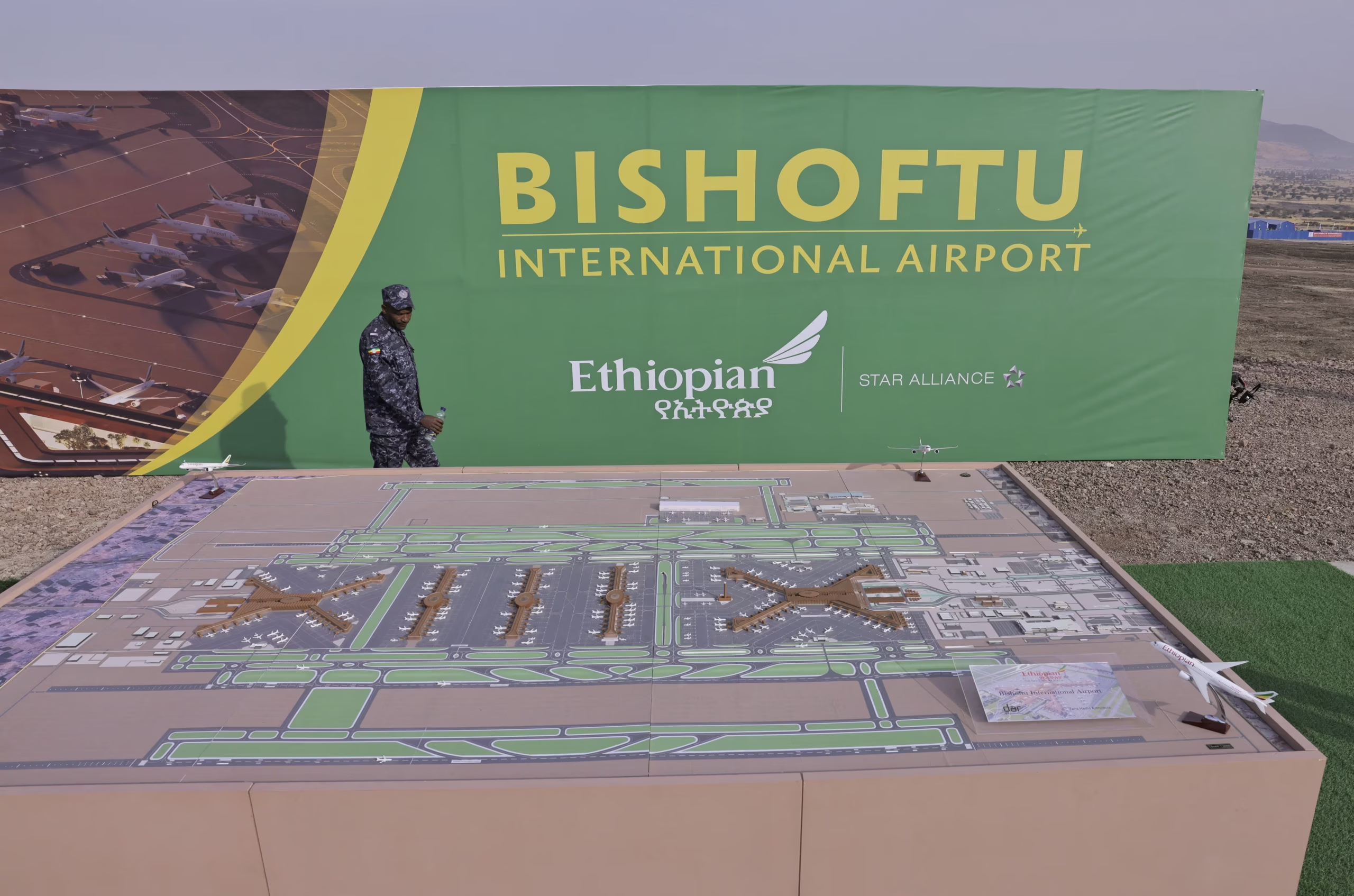
Bishoftu International Airport is located approximately 30 miles southeast of Ethiopia’s capital, Addis Ababa, in the town of Bishoftu. The construction of the airport officially began in January 2026, with the goal of creating an aviation infrastructure that supports the continent’s rapid air traffic growth. The first phase is expected to open in 2030, with two runways and a capacity to handle 60 million passengers annually. But this is just the beginning. The long-term plan is to expand the airport’s capacity to 110 million passengers, making it a contender to rival the world’s busiest airports, including Hartsfield-Jackson Atlanta, which saw 106 million passengers in 2025.
The project is expected to transform the Ethiopian capital into a global aviation hub, promoting seamless connectivity between African cities and the rest of the world. Ethiopian Airlines, already the largest airline in Africa by fleet size, revenue, and passengers, is spearheading the project, making a significant equity investment to ensure its completion. However, securing the remaining $8 billion for the project remains a challenge, with international stakeholders such as the US, China, and Italy involved in the financing negotiations.
Connecting Africa to the World
Africa’s aviation landscape is currently underdeveloped, with many travelers forced to transit through European or Middle Eastern airports to connect between African cities. The launch of Bishoftu International Airport is poised to change this by offering a direct hub for flights across the continent. Ethiopian Airlines, with its extensive route network, aims to lead this shift by providing more direct routes that will allow African passengers to travel within the continent and internationally without unnecessary layovers in foreign airports.
As Africa’s fastest-growing aviation market, this shift is crucial for boosting regional connectivity, which has been lagging behind other parts of the world. The new airport also supports the African Continental Free Trade Area (AfCFTA), which aims to eliminate barriers to trade and promote economic integration among African nations. With the airport’s capacity for handling both passengers and cargo, it could become a significant player in Africa’s economic transformation.
The Role of Ethiopian Airlines

Ethiopian Airlines’ involvement in the Bishoftu International Airport project is not just about expansion for the airline itself, but also about positioning Ethiopia as a leading aviation powerhouse. As the largest and most profitable airline in Africa, Ethiopian Airlines has ambitious plans to connect more African cities directly, cutting down on the need for intercontinental connections.
CEO Mesfin Tasew has stated that the airline will invest 30% of its equity into the airport project, highlighting the company’s commitment to shaping Africa’s aviation future. The state-owned airline’s plans don’t stop at creating a world-class airport. It also aims to make Ethiopia a key player in global air trade by tapping into the underutilized cargo capacity of African airports.
Designing the Future: Zaha Hadid Architects’ Vision
Bishoftu International Airport’s design is a remarkable example of architectural innovation. Renowned design firm Zaha Hadid Architects (ZHA), known for creating iconic structures like Beijing Daxing Airport, is behind the design of the airport’s terminal. Inspired by Ethiopia’s natural landscapes, the airport will feature a striking “X-shaped” terminal that reflects the country’s cultural diversity.
The design also incorporates sustainable features, such as locally sourced materials, solar energy, and a stormwater management system that will create new wetlands on the site. With Ethiopia’s temperate climate in mind, the terminal will include semi-enclosed spaces and courtyards that allow passengers to experience the outdoors, creating a unique atmosphere rarely seen in other airports around the world.
The Displacement Controversy
While the development of Bishoftu International Airport is exciting for Ethiopia and the broader African aviation sector, it has not been without controversy. The construction of the airport has led to the displacement of over 15,000 people, with thousands of acres of agricultural land being repurposed for the project. Although Ethiopian Airlines has committed $350 million to resettle those displaced, providing them with new homes, schools, and healthcare facilities, some residents have raised concerns about inadequate compensation and replacement housing.
Experts such as Landry Signé, executive director at Arizona State University’s Thunderbird School of Global Management, warn that unresolved grievances and the handling of displacement could jeopardize the project’s timeline and future success. The controversy underscores the importance of addressing social and governance challenges alongside large-scale infrastructure projects.
Regional Competition and Future Partnerships
Bishoftu International Airport is just one of several major airport developments happening across Africa. Rwanda’s $2 billion Bugesera Airport, Burkina Faso’s Ouagadougou-Donsin Airport, and significant upgrades in Casablanca, Cairo, and Nairobi are all part of a broader wave of investment in African aviation infrastructure. Ethiopian Airlines’ CEO Mesfin Tasew has acknowledged the growing regional competition but remains confident that Bishoftu will become a key hub in Africa, much like Dubai and Doha have become for the Middle East.
Tasew’s vision for Bishoftu International Airport is to establish it as a gateway to Africa, connecting the continent more efficiently with the rest of the world. However, he also recognizes the importance of collaboration. Air connectivity in Africa is still lacking, and to truly unlock the potential of the continent’s aviation sector, Ethiopian Airlines will need to partner with other African airlines. The introduction of the Single African Air Transport Market (SAATM) will be crucial in this effort, as it allows airlines to fly freely between member states, creating new opportunities for seamless travel across Africa.
The Role of Infrastructure: Roads, Rail, and Power

Despite the enormous potential of Bishoftu International Airport, the success of the project depends not just on the airport’s capacity but on the surrounding infrastructure. Reliable roads, rail links, and a steady power supply are essential for connecting the airport to the rest of Ethiopia and the wider region. Without these critical components, the airport could struggle to operate at full capacity.
The Ethiopian government and Ethiopian Airlines will need to ensure that these infrastructure components are developed alongside the airport to guarantee smooth operations. As Landry Signé points out, “African airlines are currently experiencing the strongest freight demand growth worldwide,” but logistics challenges like these need to be addressed for the full potential of Bishoftu International Airport to be realized.
What’s Next: The Future of African Aviation
Looking ahead, the Bishoftu International Airport project represents a significant turning point for African aviation. The infrastructure is set to increase passenger numbers, improve air cargo capacity, and transform Ethiopia into a regional aviation hub. The opening of the airport will mark the beginning of a new chapter for African aviation, with the potential to accelerate economic growth, tourism, and trade across the continent.
However, the success of Bishoftu International Airport will depend on the timely completion of the project, the resolution of community grievances, and the ability to foster partnerships within the African aviation sector. Ethiopian Airlines and the Ethiopian government will need to work collaboratively with other airlines and stakeholders to make this vision a reality.
The Final Take: Transforming Africa’s Aviation Landscape

The development of Bishoftu International Airport marks a monumental step forward for Africa’s aviation sector. With a design by Zaha Hadid Architects, an investment of $12.5 billion, and the backing of Ethiopian Airlines, the airport promises to redefine how African cities connect with one another and the rest of the world. If completed as planned, it could pave the way for a more interconnected Africa and lay the groundwork for a thriving, sustainable aviation industry on the continent.