
Table of Contents
- Why Cigarette Butts Have Become Such a Big Urban Problem
- The Startup Behind the Idea
- Why Crows Were Chosen Instead of Machines or Other Animals
- How the Training System Actually Works
- Södertälje’s Interest Shows Why Cities Are Paying Attention
- The Ethical Questions Are Impossible to Ignore
- Why the Story Feels So Fascinating to the Public
- What This Could Mean for the Future of Urban Cleanup
Why Cigarette Butts Have Become Such a Big Urban Problem
Cigarette butts are small, easy to ignore, and everywhere. That is exactly what makes them such an expensive and frustrating form of litter. According to reporting that cites the Keep Sweden Tidy Foundation, cigarette butts account for about 62 percent of Sweden’s street litter, and more than 1 billion are discarded on the country’s streets each year. In Södertälje, the cost of cleaning public spaces has been substantial enough to push local officials to consider new ideas that might lower the burden on city budgets.
That matters because cigarette butts are not just visual clutter. They contain toxic residue, break down slowly, and can spread chemicals into the environment. Unlike larger pieces of trash, they are harder to collect one by one using ordinary street cleaning methods. They fall into cracks, gather around benches, bus stops, and curbs, and accumulate at a scale that feels almost invisible until the bill for removing them arrives. In that context, a city looking for a new answer can start paying attention to even the most unexpected solutions.
The Startup Behind the Idea
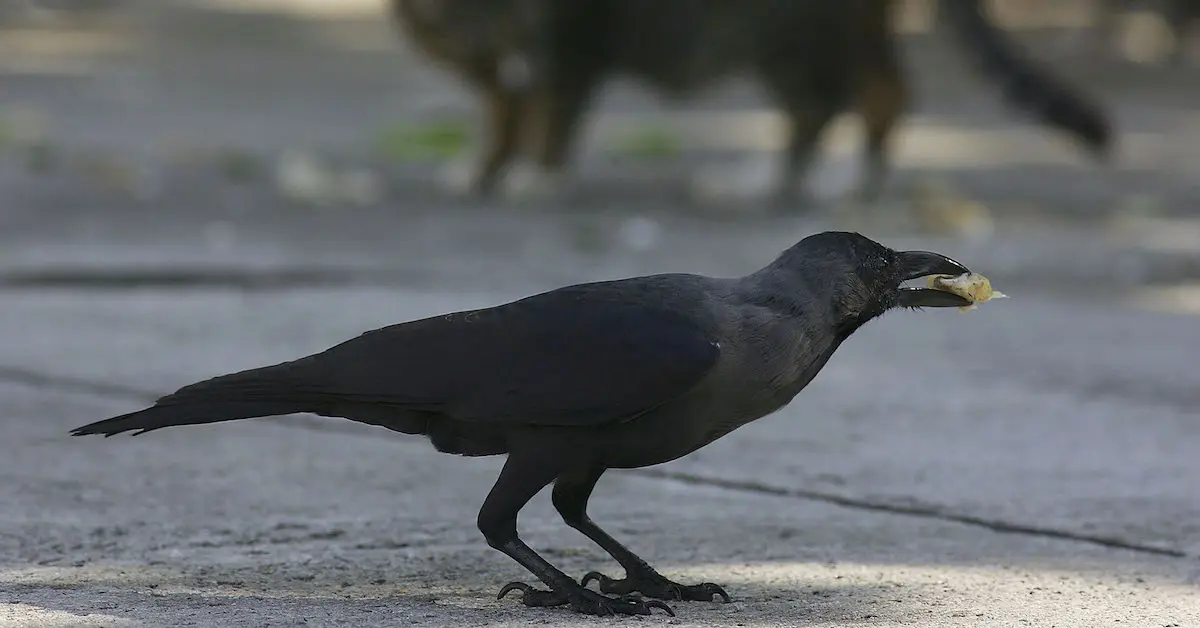
The company at the center of the story is Corvid Cleaning, a Swedish startup associated with Södertälje and founded by Christian Günther-Hanssen. The basic premise is surprisingly simple. A crow picks up a discarded cigarette butt, drops it into a specially designed machine, and receives a small food reward in return. The process relies on conditioning rather than force, and the birds remain wild rather than domesticated. Reporting on the project has repeatedly emphasized that the crows are voluntary participants, not caged workers or trained pets.
That detail matters because it shapes the public image of the project. If the birds are free to come and go, the system looks less like exploitation and more like behavioral design applied to an urban problem. Corvid Cleaning’s argument is that the crows’ natural intelligence, curiosity, and ability to learn socially make them unusually well suited for this kind of task. The startup has promoted the idea not as a novelty stunt, but as a potentially scalable municipal service that could cut the cost of cigarette butt collection by at least 75 percent if the pilot proves effective.
Why Crows Were Chosen Instead of Machines or Other Animals
At first glance, crows may seem like a bizarre choice for sanitation work. Yet they are not random birds picked for dramatic effect. Corvids are widely known for their cognitive abilities, including problem solving, memory, tool use, and observational learning. Reporting on Corvid Cleaning has repeatedly highlighted that crows learn quickly and can also transmit learned behavior across a group, making them more promising for this type of system than many other animals.
That social learning element is one of the most interesting parts of the story. A single smart bird can solve a problem, but a flock that watches and imitates can turn one lesson into a wider behavior. This is part of what makes the idea so compelling from a city management perspective. The startup is not trying to train thousands of animals one by one with intensive human supervision. Instead, it is attempting to build a reward system that crows themselves can learn and spread. If that works reliably, the cleanup effort becomes less about constant retraining and more about maintaining a system that the birds already understand.
There is another reason crows attracted attention. Founder statements quoted in coverage have suggested that crows present a lower risk of accidentally swallowing the waste they collect than some other birds might. That does not eliminate concern, but it helps explain why the startup believed corvids were the best place to start. When a project deals with toxic litter, choosing an animal thought to be more cautious around dangerous items becomes part of the risk calculation.
How the Training System Actually Works
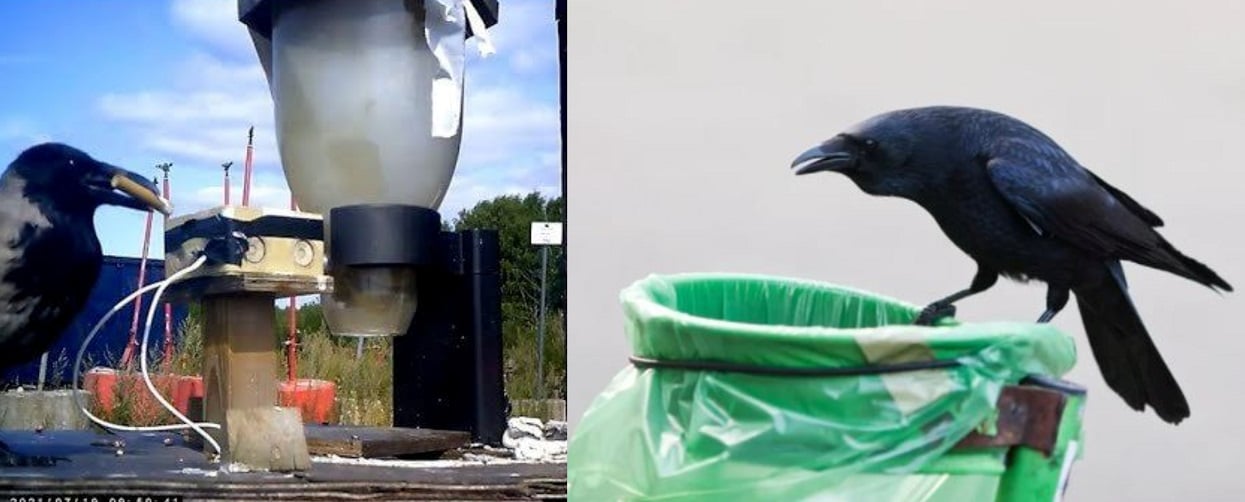
The training method follows a step by step conditioning process. First, the birds learn to associate cigarette butts with a food reward. Then they are introduced to a feeder or machine that provides food when approached. Once that pattern is familiar, the easy reward is removed, encouraging exploration. Eventually the bird interacts with the mechanism in a way that produces food, and later learns that placing a cigarette butt into the proper slot triggers the same result. That sequence is at the core of the system Corvid Cleaning is trying to build into a real-world cleanup model.
The idea itself is not entirely without precedent. Coverage and case discussion have referred to earlier “Crow Box” style experiments that used similar behavioral logic. What Corvid Cleaning is trying to do differently is bring that concept out of the experimental realm and into city operations. That shift from laboratory style demonstration to municipal use is where things become far more complicated. A bird mastering a box is one thing. A flock reliably removing large amounts of street litter over time, across changing weather and urban conditions, is something else entirely.
Södertälje’s Interest Shows Why Cities Are Paying Attention
Local officials have not embraced the idea with blind enthusiasm, but they have shown enough interest to allow it to move into pilot territory. Reporting has described Södertälje as curious yet cautious, with financing, placement, and practical implementation all playing a role in how far the concept can go. The attraction is obvious. If a relatively simple reward machine can reduce the labor and equipment costs associated with cigarette butt cleanup, that could be a major advantage for a municipality trying to stretch limited resources.
This is also why the story resonates beyond Sweden. Many cities struggle with the same type of repetitive, high-volume, low-visibility litter problem. Cigarette butts are costly to remove, easy to scatter, and difficult to monitor. An approach that promises major savings without requiring a complete redesign of public cleaning systems naturally draws attention. Even people who never expect their own city to employ crows can understand why urban planners might at least want to examine the numbers.
The Ethical Questions Are Impossible to Ignore
Still, the cleverness of the concept does not erase the ethical questions around it. Cigarette butts contain toxic chemicals, and that fact sits at the center of nearly every serious criticism of the project. Even if the birds are not swallowing the litter, people reasonably want to know what repeated contact might mean for their health over time. Reporting around the project has noted that bird welfare is a central concern and that the effects of the process continue to be examined.
There is also a moral discomfort built into the story that has nothing to do with biology. Some observers ask why humans should train animals to clean up after human carelessness in the first place. The idea of adults flicking cigarette butts onto the sidewalk while crows are rewarded for collecting them can feel less like innovation and more like an indictment of public behavior. That tension is one reason the story travels so well. It is not only about birds doing something remarkable. It is also about what their participation says about the people who created the mess.
Another concern is dependency. If food rewards become too regular, could wild birds begin relying on the machines as a significant food source? That question remains part of the ongoing debate around feasibility and ethics. A cleanup system that changes animal behavior too deeply or too aggressively may solve one civic problem while creating another ecological one.
Why the Story Feels So Fascinating to the Public
Part of the story’s viral power comes from contrast. Crows already carry a cultural reputation for being observant, eerie, intelligent, and somehow slightly humanlike in the way they assess situations. So when people hear that wild crows may be collecting litter for payment, the image immediately sticks. It feels futuristic and old-fashioned at the same time, like a science experiment meeting a folktale in the middle of a city square.
But there is also something genuinely revealing about how fast the public divides over it. One side sees proof that nature and technology can collaborate in ways that are low-cost, elegant, and surprising. Another sees a troubling workaround that treats symptoms rather than causes. If people stopped throwing cigarette butts on the ground, there would be no need to recruit crows in the first place. The fascination, then, comes not just from the birds, but from the values the story forces into the open.
What This Could Mean for the Future of Urban Cleanup
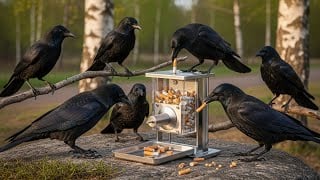
If Corvid Cleaning’s approach proves effective, it could influence how other cities think about environmental maintenance, especially for very specific forms of litter that are repetitive, expensive, and difficult to manage at scale. That does not mean birds will replace sanitation workers or that crows will become a standard municipal workforce. It does mean, however, that animal cognition may enter more serious conversations about environmental design and public space management than it has in the past.
At the same time, success would almost certainly bring tighter scrutiny. Health researchers, animal welfare specialists, and public officials would all want stronger evidence on long-term safety, effectiveness, and unintended consequences. A pilot can generate headlines. A broader rollout requires trust. That trust would depend on proving not just that the birds can do the task, but that the system is genuinely humane, economically worthwhile, and environmentally sound.
In the end, this story is about more than a startup and a flock of clever birds. It is about how cities respond when a persistent problem refuses to go away. It is about whether innovation should focus only on machines and software, or whether living intelligence in the natural world has a place in solving human problems. Most of all, it is about the uneasy truth hiding underneath the novelty: the crows are not the reason the streets are dirty. They are simply being asked to help where people have repeatedly failed. And that may be the most memorable part of the entire experiment.