
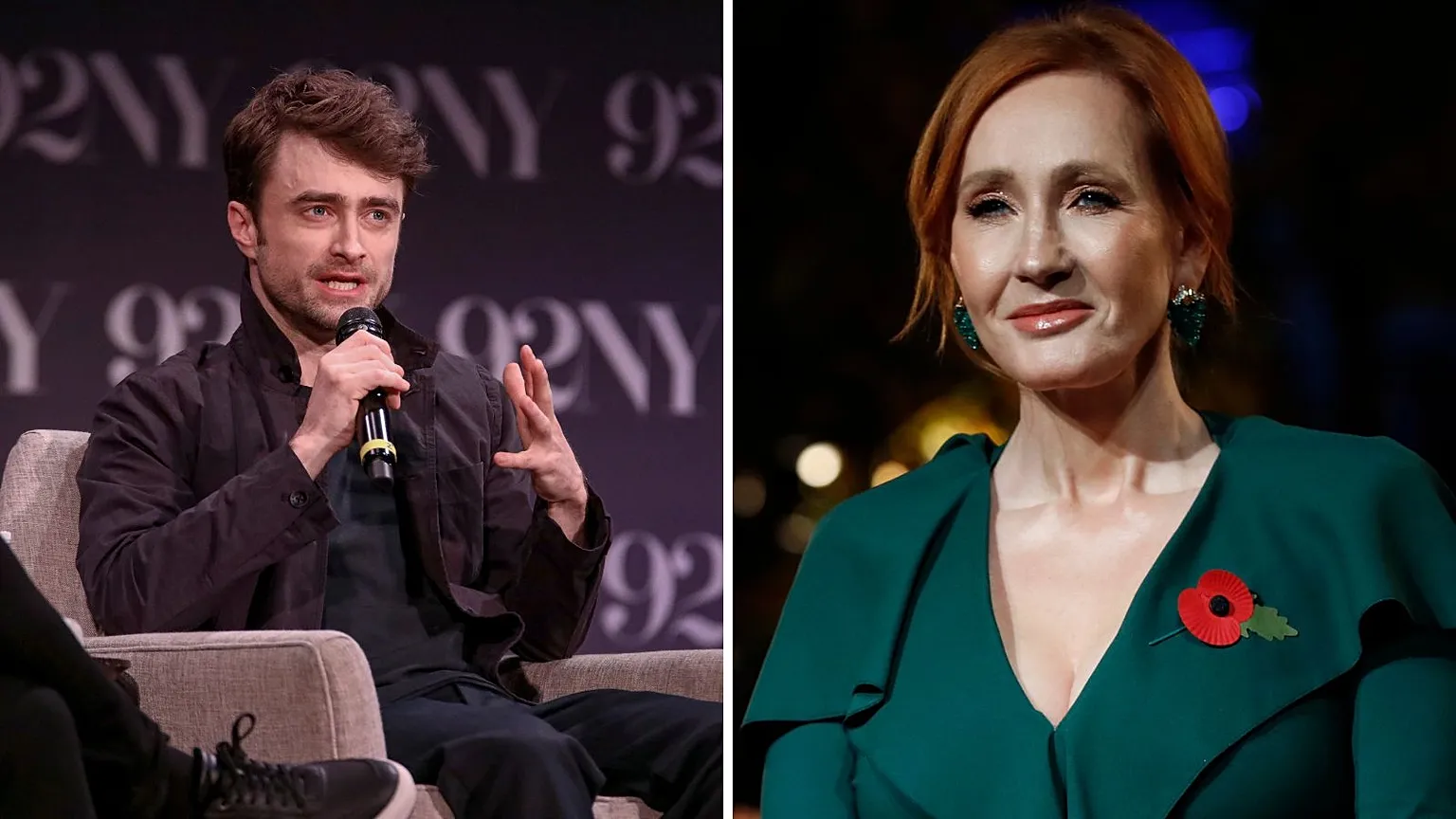
It’s one of the most famous friendships in entertainment history.
Daniel Radcliffe and JK Rowling, two names synonymous with the Harry Potter franchise, had a bond formed by the magical world of wizards. However, as the years passed, their relationship would hit a snag so deep it would leave lasting scars—both personally and publicly.
The conflict?
Transgender rights.
In May 2024, Radcliffe finally opened up about the rift with Rowling, describing it as “really sad.” He explained the emotional toll of cutting ties with someone who created the world he became famous for—and it wasn’t just about a difference in opinion. It was about core values, activism, and what happens when two people fundamentally disagree on an issue as important as human rights.
So, what happened?
And what does this split say about the intersection of celebrity, activism, and free speech in today’s polarized world?
Let’s unpack the tension that has overshadowed the Potterverse and what this growing divide means for the future of public figures supporting or opposing trans rights.
THE RUPTURE THAT SHATTERED A LEGENDARY RELATIONSHIP
Daniel Radcliffe has always been open about his views. As a passionate activist for LGBTQ+ rights, he made his stance clear back in 2020 after JK Rowling made controversial statements regarding transgender women.
Rowling had posted opinions that many in the LGBTQ+ community considered harmful, particularly regarding the rights of trans women. She expressed views that were considered gender-critical, meaning she questioned the inclusion of trans women in spaces reserved for biological women.
For Radcliffe, who had long been associated with the values of inclusion and acceptance, standing by these comments was simply unacceptable.
Why didn’t Radcliffe just stay silent?
The answer is simple: he was already working with the Trevor Project, a nonprofit organization focused on preventing LGBTQ+ youth suicide. Radcliffe had spent years helping an organization that actively supports trans youth, so staying silent on an issue that deeply affected them felt like an act of cowardice.
Instead, Radcliffe issued a statement through the Trevor Project, emphasizing that “trans women are women,” and making it clear that he was standing firmly in opposition to Rowling’s views. This bold stance, however, came at a price.
THE DIVERGING PATHS OF TWO HARRY POTTER STARS

Since that moment, Radcliffe’s relationship with Rowling has been nothing but strained. He had a direct clash with the creator of the Harry Potter universe—someone who had launched him into the global spotlight. For Radcliffe, it wasn’t just a disagreement. It was a fundamental conflict about what it means to be an ally and a voice for those who have been historically marginalized.
He was also joined in his opposition by fellow castmates, most notably Emma Watson and Rupert Grint, who also spoke out against Rowling’s views. All three actors had become symbols of the inclusive, progressive ideals that fans of the Harry Potter series had embraced.
This divide raised difficult questions:
- Can someone separate the creator from the creation?
- Should an actor remain loyal to a creator if their values no longer align?
- Do public figures have an obligation to stand up for human rights, even if it alienates them from their career’s foundation?
For Radcliffe, the answer was clear.
The human cost of standing up for what’s right
Radcliffe admitted that severing ties with Rowling made him feel “really sad.” He reflected on the deep connection he once had with the woman who gave him the role of a lifetime, but he also made it clear: his activism would never be compromised for the sake of preserving a relationship built on artistic collaboration.
The loss of that relationship—once so intertwined with his success—was a personal tragedy. But in his heart, Radcliffe knew it was the right decision for him and his beliefs.
THE IMPACT ON THE HARRY POTTER FRANCHISE
The rift has had a ripple effect on the Harry Potter legacy itself. While Rowling’s views on trans rights have alienated a segment of the fanbase, it has also led to the growing influence of voices like Radcliffe’s, Watson’s, and Grint’s, who have shaped their own brand of activism around social justice and LGBTQ+ advocacy.
The question remains: How does this fracture impact the future of the franchise?
For many Potter fans, the controversy surrounding Rowling’s statements is a blemish on an otherwise beloved franchise. But Radcliffe has always been adamant that he supports the values of inclusivity, and his statement in 2020 made it clear that the actor was proud of his role in the franchise, but would not stand by views that were harmful to marginalized groups.
As Harry Potter continues to be a cultural touchstone, the conflict between its creator and its stars has brought attention to the moral responsibility that celebrities, activists, and creators must carry, even when it means risking their professional relationships.
WHY IS THIS DISPUTE SO IMPORTANT IN TODAY’S CLIMATE?
Radcliffe’s rupture with Rowling is not just about personal disagreement; it is symbolic of a larger cultural divide. In an age where social issues intersect with entertainment, the role of public figures—especially those with massive followings—has never been more significant.
Transgender rights have become a defining issue in the global fight for human equality. And with the rapid rise of social media and online activism, public figures like Radcliffe have an even bigger platform to influence opinions. For many fans, celebrities become role models whose stances on gender, equality, and human rights guide their own understanding of these issues.
But for others, these same celebrities’ activism is seen as divisive or unnecessary, creating a culture war where the line between personal beliefs and public responsibility is constantly being tested.
In this case, Radcliffe chose to stand on the side of inclusivity and human dignity, even if it meant sacrificing his relationship with Rowling. For him, there was no turning back. His comments highlight the weight of celebrity activism in modern times, and how it shapes public discourse—especially when issues like transgender rights are involved.
THE FALLOUT AND WHAT COMES NEXT FOR BOTH RADCLIFFE AND ROWLING

Though Radcliffe has made it clear that his relationship with Rowling is irreparably damaged, he also acknowledged the important role she played in his life and career. The woman who created the Harry Potter world also shaped his journey from a child actor to a globally recognized star.
Radcliffe admits that despite their differences, he will always respect the impact that Rowling had on his professional life. However, his activism for LGBTQ+ rights and his desire to stand in solidarity with marginalized groups leaves no room for compromise on such a deeply personal issue.
As the debate around transgender rights continues to evolve, the relationship between public figures and their followers will only grow more complex. Celebrities like Radcliffe—who champion human rights—may find themselves increasingly caught between loyalty to their artistic roots and their moral obligations to speak out on controversial issues.
For Rowling, the fallout with her stars and fans will likely persist, as public opinion shifts on the importance of human rights in creative industries. Will she ever rebuild her relationships with Radcliffe, Watson, and others? Time will tell, but for now, the cultural rift is deep and growing.
THE LESSON FOR CELEBRITIES AND THEIR FANS
Radcliffe’s stance is a reminder that, at the end of the day, celebrity influence is about more than the roles they play or the shows they star in. It’s about the values they uphold—and the messages they send to their audience.
For fans of Harry Potter, the rift between Radcliffe and Rowling forces an uncomfortable question: Can you separate the art from the artist? For many, the answer is yes—because the legacy of the books, the films, and the characters they love still stand.
But for others, the fight for transgender rights and social justice is just as important as the magic that brought Harry, Hermione, and Ron to life.
THE END OF THE STORY? OR JUST THE BEGINNING?

While Radcliffe has moved forward, his public comments have sparked a larger discussion about the nature of celebrity activism and moral responsibility. As society becomes more polarized on issues like transgender rights, this conversation will only intensify.
Radcliffe’s decision to stand up for what he believes in may cost him a relationship with someone who gave him the role of a lifetime, but it also signals a new era where public figures are expected to take clear stances on issues that matter to their audiences.
What’s next for Radcliffe?
What’s next for Rowling?
As these two figures move on from their rift, one thing is clear: the battle for human rights—whether in the world of entertainment or everyday life—is far from over.
And in this battle, the real magic lies in standing up for what’s right.