
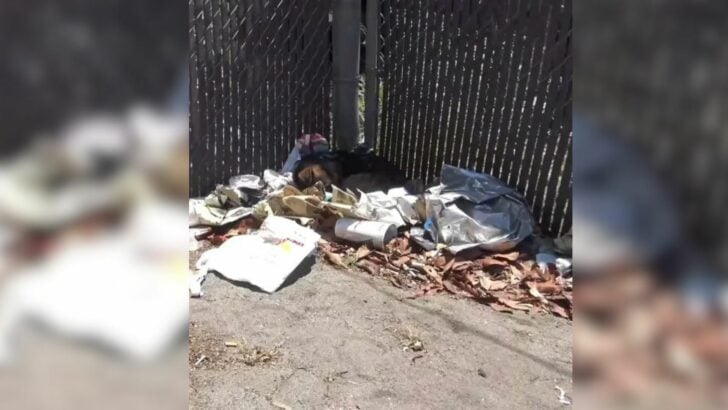
He didn’t bark.
He didn’t run.
He didn’t even lift his head.
The dog lay curled up in a pile of trash as if he were just another discarded object — a piece of waste no one wanted. But unlike the broken bottles and torn bags around him, he was still breathing.
Barely.
Most people passed by without noticing. Others looked and kept walking. But one person finally stopped — and everything changed.
This is the story of a dog who waited silently for help… and the human who refused to walk away.
Table of Contents
- A Body Curled Into a Ball — and a Silence That Said Everything
- When She Reached Out, He Didn’t Move — Not Even to Protect Himself
- The Rescue: A Battle Against Time, Temperature, and Trauma
- At the Vet Clinic: Hope Measured in Heartbeats
- A Flicker of Strength — And the First Sign He Wanted to Live
- The Road to Recovery: From Trash Pile to Soft Bed
- The Emotional Transformation: From Silent Suffering to Gentle Joy
- From Survivor to Symbol: Why Theo’s Story Matters
- The Practical Side: What You Should Know If You Find a Dog in Distress
- Where Theo Is Today: Safe, Loved, and Finally Home
- Final Thoughts: Would You Have Stopped for Him?
A Body Curled Into a Ball — and a Silence That Said Everything
Trash piles don’t surprise anyone anymore.
But something about this one was different.
Beneath a layer of broken plastic and old newspapers was a shape too round, too soft, too still. When the rescuer stepped closer, she froze.
It wasn’t trash.
It was a dog.
Skin and bone.
Too weak to lift his head.
Too exhausted to fight.
Too hopeless to try.
Animals in extreme distress often shut down completely. They conserve energy. They hide. They become quiet — heartbreakingly quiet.
This dog wasn’t sleeping.
He was waiting.
And the silence around him was louder than any cry for help.
When She Reached Out, He Didn’t Move — Not Even to Protect Himself
Healthy dogs react to touch.
Scared dogs react even more.
But this dog didn’t flinch.
He didn’t look up.
He didn’t resist.
That kind of stillness is a sign of severe trauma… or total surrender.
When she placed her hand gently on his side, she felt how cold his body was. How brittle his fur had become. How painfully each breath rattled in and out.
He had given up before anyone ever gave him a chance.
And she knew:
If she left him here for even one more hour… he wouldn’t survive.
What would you do in this moment — fight for him or assume it’s too late?
The Rescue: A Battle Against Time, Temperature, and Trauma
She called for help immediately.
But help was minutes away — and he didn’t have minutes to spare.
She wrapped him in the only thing she had: an old sweater from her car. As she lifted him gently, she realized he weighed almost nothing. His bones pressed through his skin. His heartbeat felt irregular. His eyes were dull and lifeless.
Dehydration. Starvation. Exposure. Infection.
He had them all.
When rescuers arrived, they feared the worst. Dogs in his condition often don’t make it past the first few hours.
But then something happened — something small, but powerful.
As they carried him toward the rescue vehicle, he lifted his head for the first time.
Not much.
Just enough to show that deep inside, a tiny spark was still burning.
At the Vet Clinic: Hope Measured in Heartbeats

The vet team worked fast:
IV fluids.
Warm blankets.
Nutritional support.
Blood tests.
Infection treatment.
His temperature was dangerously low — “end-stage” low. His stomach was empty. His body was shutting down to preserve energy.
But the dog — later named Theo — didn’t fight the treatment.
He didn’t panic.
He didn’t resist.
It was as if he understood that these humans were different.
That for the first time in his life… he was safe.
The next 24 hours would determine everything.
A Flicker of Strength — And the First Sign He Wanted to Live
During the night, Theo lifted his head again.
Then, slowly, he shifted his body toward the heat source.
By morning, he attempted to sit up.
It wasn’t graceful.
It wasn’t steady.
But it was intentional.
When dogs begin to fight for their lives, they do it quietly at first — a head movement, a tail twitch, a soft sigh.
The team cheered.
He wasn’t out of danger.
But he was choosing to survive.
Would you have believed in him at this stage — or assumed it was hopeless?
The Road to Recovery: From Trash Pile to Soft Bed
Theo’s recovery wasn’t overnight.
It wasn’t glamorous.
And it wasn’t easy.
Severely neglected dogs face:
- Muscle loss
- Digestive damage
- Emotional trauma
- Skin infections
- Fear conditioning
Every day was a step — some forward, some backward.
But slowly:
He gained weight.
He wagged his tail.
He sought eye contact.
He rested calmly in blankets instead of trash.
Theo wasn’t just healing physically.
He was learning — maybe for the first time ever — what it felt like to be loved.
The Emotional Transformation: From Silent Suffering to Gentle Joy
There is a moment in every rescue when the animal reveals who they truly are.
Theo’s moment came three weeks later.
His rescuer — the woman who first found him — came to visit. When he saw her, he froze. Then, slowly, he lifted his head… and walked toward her.
Not out of desperation.
Not out of fear.
But out of recognition.
He remembered her.
The way she touched him.
The way she spoke softly.
The way she chose him when no one else did.
He placed his head gently in her hands.
And for the first time, he wagged his tail with confidence.
That tail wag was worth more than every dollar spent, every hour given, every tear shed.
From Survivor to Symbol: Why Theo’s Story Matters
Rescue stories like Theo’s matter because they expose three truths:
1. Animals feel pain, fear, and hope just like we do.
Suffering doesn’t erase their desire to trust.
2. Compassion requires courage — and sometimes inconvenience.
One stop in a parking lot saved a life.
3. Every community needs people willing to look, stop, and help.
Because thousands of “Theos” are still waiting in silence.
Theo’s story isn’t just about rescue.
It’s about transformation — his and ours.
The Practical Side: What You Should Know If You Find a Dog in Distress
This story also carries real-world lessons for readers:
Finance:
Rescue costs can be high — but many shelters offer low-cost support, and donations help countless animals survive.
Travel:
Animals are often found near roads, rest stops, and parking lots. Keeping a small emergency kit in your car can save lives.
Health:
Helping animals improves mental well-being, reduces stress, and increases emotional resilience.
Home Improvement:
Creating a safe space for pets at home — warm bedding, secure fencing, clean floors — prevents abandonment and injury.
Stories like Theo’s aren’t just emotional.
They’re educational.
Where Theo Is Today: Safe, Loved, and Finally Home
Theo now lives in a foster home where he is:
- Gaining healthy weight
- Sleeping in warm beds
- Eating nutritious meals
- Learning to trust
- Discovering toys
- Bonding with humans
He is no longer the curled-up, silent dog in a trash pile.
He is a survivor — gentle, calm, grateful, and full of love.
And soon, he will be ready for adoption into a forever home.
Theo’s story proves something powerful:
Sometimes, the difference between life and death is one person who chooses to care.
Final Thoughts: Would You Have Stopped for Him?

Most people walk past suffering because they don’t know what to do — or because they assume someone else will handle it.
But compassion isn’t about convenience.
It’s about courage.
Theo survived because one woman refused to look away.
Because she stopped.
Because she cared.
And because of that, a life once buried in trash is now filled with hope.
The next time you see something unusual near a curb, parking lot, or roadside…
Look closer.
A life might be waiting.