

Table of Contents
- When one Senate hearing turned into a fight over trust in the next election
- Mullin’s answer sounded narrow, but it opened a much bigger door
- Slotkin made the issue about democracy, not just immigration
- Republicans see the issue very differently
- Yet DHS has already tried to cool the panic
- The fear is not only about law, but about atmosphere
- Mullin’s nomination gave Democrats a larger target
- This fight is really about the future of election trust
- The bigger warning is that Americans no longer agree on what reassurance sounds like
When one Senate hearing turned into a fight over trust in the next election
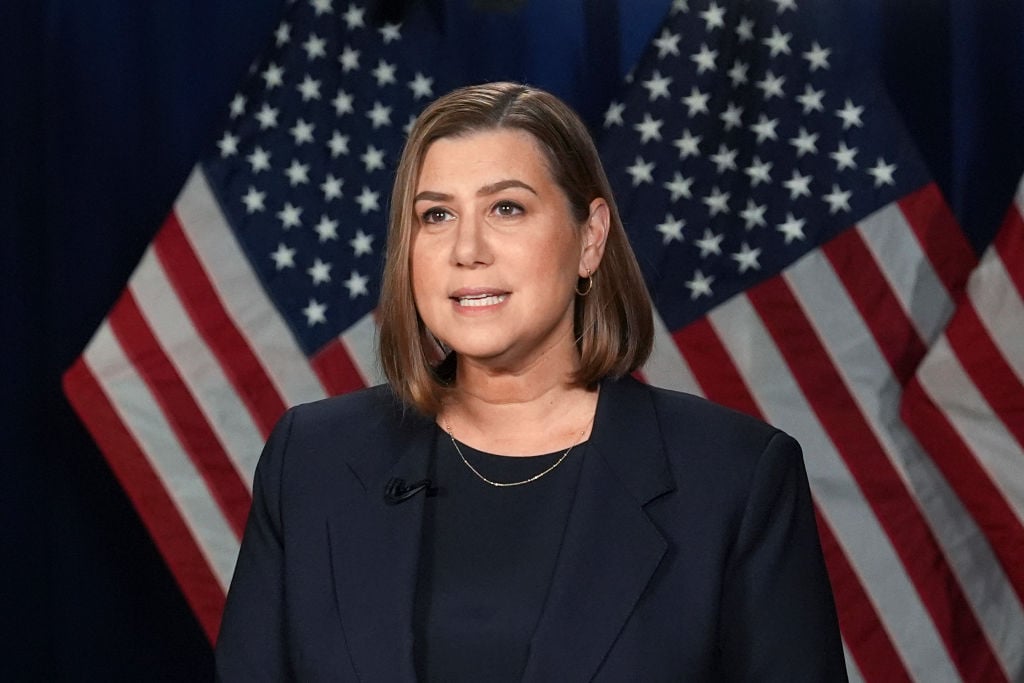
When Senator Elissa Slotkin confronted Homeland Security nominee Markwayne Mullin over whether ICE agents could be placed near polling places in the 2026 midterms, the exchange quickly became about much more than a single hypothetical deployment. It turned into a stark, emotional argument about power, fear, and the fragile question of whether Americans can still trust the federal government to stay out of the voting process. Slotkin did not speak in cautious bureaucratic terms. She said she had “zero trust” that President Donald Trump would allow a “free and fair” election, and she pressed Mullin on whether, as homeland security secretary, he believed he had the authority to station uniformed federal officers at polling places. Mullin answered that he would do so only in the case of a “specific threat” and “not for intimidation,” but that response did little to calm her concerns.
That is why the moment resonated so strongly. This was not just another tense confirmation hearing exchange. It was a preview of a much larger national argument that is already building before November. Democrats fear that even the possibility of immigration agents near polling sites could discourage turnout, chill participation, and create a climate of intimidation. Republicans and Trump allies, by contrast, have increasingly framed federal election enforcement, proof-of-citizenship measures, and aggressive immigration oversight as necessary defenses of ballot integrity. The result is a combustible political atmosphere in which a single question about ICE at polling places becomes a proxy for a deeper struggle over who controls elections, who gets trusted with enforcement power, and whether the country’s two major parties still share the same basic understanding of democratic legitimacy.
Mullin’s answer sounded narrow, but it opened a much bigger door

At the center of the controversy was Mullin’s answer itself. During his March 18 confirmation hearing, he said he would place federal law enforcement officers at polling stations only in response to a “specific threat,” not as a tool of intimidation. On its face, that sounded limited and conditional. It suggested that there would need to be an extraordinary circumstance, not merely a political desire to show force. But the problem for Democrats is that once a nominee says the authority exists in principle, the debate immediately shifts from whether such a thing can happen to who gets to define a threat and how broadly that definition could be stretched in a polarized political year.
That ambiguity is exactly what made Slotkin’s line of questioning so sharp. She was not really arguing about whether law enforcement ever has a role when there is a credible security emergency. She was questioning whether the Trump administration could be trusted to distinguish between an actual threat and a politically useful show of force. Mullin tried to contain the issue by refusing to indulge broad hypotheticals and by emphasizing that any deployment would not be meant to intimidate voters. But in an environment where Trump has repeatedly pushed election conspiracy narratives and where immigration enforcement has become one of the most visually aggressive features of his administration, a narrow answer was never likely to stay narrow for long.
Slotkin made the issue about democracy, not just immigration
What gave the exchange its force was Slotkin’s decision to connect the polling-place question directly to election legitimacy. She said that unless someone could tell her Trump would actually allow a free and fair election, there was “zero trust” on her side. That took the conversation out of the usual zone of administrative law and moved it into something much more politically explosive. She was no longer merely asking whether a secretary-designate would follow proper procedure. She was saying, in effect, that the broader administration could not be presumed to act in good faith around elections at all.
This is an important distinction because debates over ICE are often framed as immigration debates first and civil-liberties debates second. Slotkin flipped that order. For her, the presence of immigration officers near polling locations was dangerous not only because it might frighten immigrant communities, but because it could become part of a larger mechanism of democratic distortion. In her telling, the threat was not simply overenforcement. It was the possibility that federal power could be placed near the ballot box at a moment when public trust is already thin. That framing matters because it broadens the audience for the concern. It is no longer only a question for immigrant voters or election lawyers. It becomes a question for anyone who thinks the visual presence of armed federal agents near voting sites could poison the atmosphere of civic participation.
Republicans see the issue very differently

From the Republican perspective, however, the outcry over ICE near polling sites often sounds selective or politically convenient. Conservatives argue that noncitizens are barred from voting in federal elections and that measures aimed at verifying eligibility or responding to security threats should not be treated as inherently sinister. That broader argument has intensified around the SAVE America Act, a Republican-backed proposal requiring documentary proof of citizenship for federal voter registration. President Trump has now gone further by tying a DHS funding deal to Democratic acceptance of that bill, making election security and immigration enforcement even more tightly linked in the public debate.
This is the lens through which many Republicans interpret Slotkin’s exchange with Mullin. They hear Democrats objecting not to intimidation but to scrutiny. They see a party warning darkly about federal presence near polls while, in their view, resisting tougher verification standards. Whether or not that interpretation is fair, it helps explain why the issue is so politically useful to the right. It allows Republicans to cast Democrats as hysterical about enforcement while presenting themselves as defenders of lawful voting. That rhetorical contrast is powerful, especially when paired with a broader Trump message that elections need to be “nationalized” under stricter rules.
Yet DHS has already tried to cool the panic
One of the most important developments surrounding this controversy is that a Department of Homeland Security official told state election administrators in late February that ICE agents will not be stationed at polling places during the November midterms. The Associated Press reported that this assurance was intended to calm one of Democrats’ biggest fears about possible federal interference in the election. That statement complicates the political picture. On the one hand, it suggests the administration or at least parts of DHS understand how inflammatory the idea has become and want to tamp down alarm. On the other hand, the fact that such reassurance was necessary at all shows how much mistrust is already in circulation.
And that mistrust did not appear out of nowhere. People magazine reported that White House press secretary Karoline Leavitt had said in February that she could not guarantee an ICE agent would not be around a polling location in November. That remark widened the opening that Slotkin later walked into at Mullin’s hearing. So while DHS is now offering reassurances, the administration also helped create the anxiety in the first place by refusing, at key moments, to rule the possibility out cleanly. This contradiction explains why Democrats do not see the later statement as fully resolving the matter. When one part of the political system hints that ICE presence cannot be ruled out and another part later says it will not happen, suspicion fills the gap.
The fear is not only about law, but about atmosphere
Technically, much of the debate can be framed around legal authority. Elections are primarily run by states, and federal law places limits on military involvement at polling places. But the more powerful part of the issue is atmospheric rather than purely legal. A polling place does not need to be surrounded by officers for voters to feel intimidated. In deeply polarized times, even the idea that immigration agents could appear nearby may be enough to deter some people from approaching the polls, especially in communities that already associate federal enforcement with family separation, detention, or sudden workplace raids.
That is why several states and lawmakers have pushed for buffer zones or legal restrictions on enforcement activity near polling locations. The Fox report referenced proposals in places such as Connecticut, New Mexico, and Virginia aimed at limiting warrantless enforcement activity near election sites or courthouses. Even when those efforts are state-specific, they reflect a broader belief that the right to vote should be protected not only from direct coercion but from the appearance of coercion. In democratic systems, the atmosphere around voting matters almost as much as the legal rules on paper. A technically lawful presence can still undermine confidence if voters interpret it as a warning.
Mullin’s nomination gave Democrats a larger target
The controversy also unfolded within the charged context of Mullin’s nomination itself. Reuters and AP both reported that his hearing was contentious well beyond the polling-place question. Senator Rand Paul, the Republican chair of the relevant committee, opposed Mullin over what he described as “anger issues” and past inflammatory remarks, while Democrats challenged his judgment and the administration’s broader immigration enforcement posture. Mullin’s nomination still advanced, but the hearing reinforced that he is not entering the role as a calming technocrat. He is being viewed, by supporters and critics alike, as a combative political figure stepping into one of the most volatile departments in government.
That matters because the person answering Slotkin’s question was not an apolitical security manager. He was a Trump loyalist nominated after Kristi Noem’s ouster and arriving during a prolonged DHS funding fight. Every answer he gave was going to be filtered through that political identity. So when he said federal officers could go to polling places for a “specific threat,” Democrats did not hear a neutral standard. They heard an administration insider reserving a power they already fear could be abused. In polarized politics, institutional trust often depends on who is speaking as much as what is said. Mullin’s confirmation battle made it far less likely that his reassurance would be taken at face value.
This fight is really about the future of election trust

What happened in the hearing room is now important because it reflects a larger collapse in institutional faith. Slotkin effectively said she no longer assumes the federal executive branch will behave neutrally around elections. Republicans, meanwhile, increasingly argue that states, local officials, and looser voting practices cannot be trusted to protect ballot integrity without harder federal and legislative intervention. Both sides are talking about trust, but from opposite directions. Democrats fear authoritarian overreach. Republicans fear permissive weakness or fraud. The result is a political culture in which even discussing election administration begins with suspicion.
This is what makes the ICE-at-polls issue so potent. It condenses multiple anxieties into one vivid image. Federal force. Immigration politics. Election legitimacy. Voter intimidation. State versus federal authority. Trump’s continued shadow over every conversation about democratic procedure. In another era, a nominee’s vague answer about a hypothetical security threat might have generated a day of minor controversy and then faded. In 2026, it becomes a major flashpoint because the country has spent years accumulating reasons to interpret every election-related decision through a lens of existential distrust.
The bigger warning is that Americans no longer agree on what reassurance sounds like
Perhaps the most revealing part of the entire episode is that even direct reassurance is no longer enough. DHS says ICE agents will not be at polling places. Mullin says any federal presence would be tied only to a specific threat and not intended for intimidation. Yet Slotkin still says there is zero trust. That gap is the real story. It shows how little confidence remains between the parties and how quickly election fears now escalate from one statement to another.
In that sense, this was not just a dramatic Senate exchange. It was a warning about the climate heading into November. A democracy does not only need legal rules. It needs enough shared faith that people can recognize a good-faith assurance when they hear one. Right now, America appears to be running short on that kind of faith. Slotkin’s challenge to Mullin exposed that reality in unusually blunt language. The hearing may have been about one nominee, one department, and one hypothetical deployment, but the deeper issue was much larger: a country approaching another election while arguing not only about what the rules are, but about whether anyone in power can still be trusted to follow them.