
Table of Contents
- A Case That Reverberated Beyond Norway
- Who Thorbjørn Jagland Is and Why It Matters
- The Allegations at the Center of the Charges
- Jagland’s Response to the Charges
- Why the Epstein Network Continues to Unravel
- Norway’s Image of Transparency Put to the Test
- Political Reactions Inside Norway
- The Legal Process Ahead
- Public Opinion and Trust
- Why This Case Resonates Globally
- Accountability Versus Association
- Media Coverage and Its Consequences
- The Broader Political Impact
- Lessons for Democratic Institutions
- International Legal Cooperation
- The Human Dimension
- What Happens Next
- A Moment of National Reflection
- Conclusion
A Case That Reverberated Beyond Norway
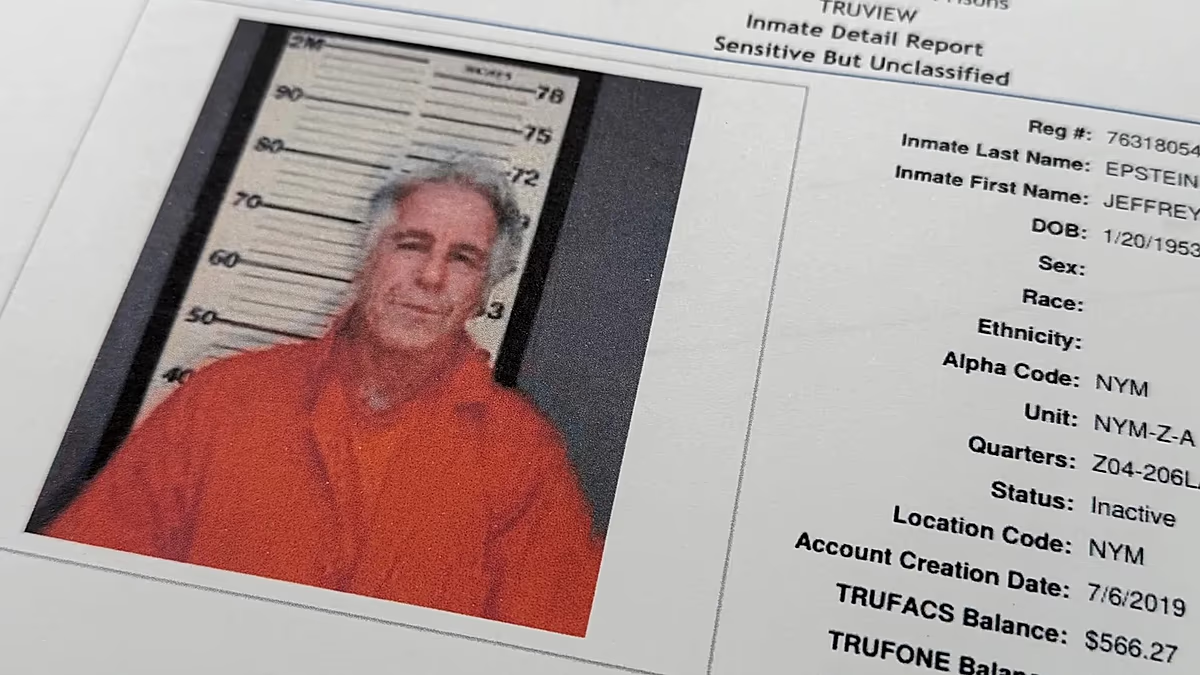
The announcement of the charges marked a dramatic escalation in a saga that has already ensnared politicians, financiers, and public figures around the world. Prosecutors allege that Jagland maintained inappropriate or undisclosed connections linked to Epstein during a period when Epstein’s activities were already under scrutiny internationally.
Authorities stressed that the charges do not constitute a conviction and that legal proceedings will determine the outcome. Nonetheless, the symbolic weight of the case has been impossible to ignore. In Norway, where political leaders are expected to adhere to high ethical standards, the development struck at the core of public confidence.
Who Thorbjørn Jagland Is and Why It Matters
Jagland is not a marginal figure in Norwegian public life. He served as prime minister in the 1990s and later held prominent international roles, including leadership positions within European institutions. For decades, he was regarded as a statesman shaped by democratic values and international cooperation.
That legacy now faces intense scrutiny. The case has forced Norwegians to confront the possibility that even respected figures can become entangled in morally compromised networks, intentionally or otherwise.
The Allegations at the Center of the Charges
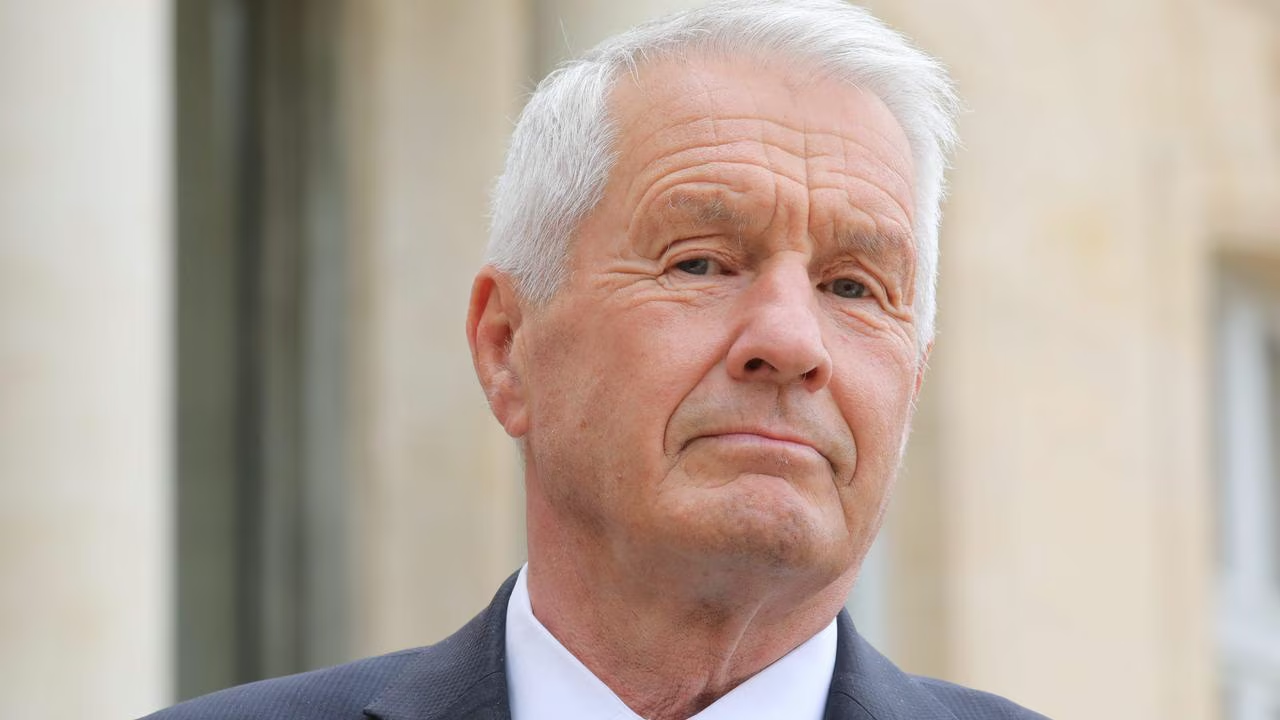
According to prosecutors, the charges relate to alleged interactions and associations with Epstein that were not adequately disclosed or explained. Investigators are examining travel records, communications, and meetings that may have occurred during Epstein’s years of influence.
Officials emphasized that the charges focus on accountability and transparency rather than sensationalism. The investigation seeks to establish whether laws or ethical obligations were breached, and whether any actions enabled or concealed misconduct.
Jagland’s Response to the Charges
Jagland has denied wrongdoing and stated through legal representatives that he intends to contest the charges vigorously. He has described the allegations as misleading and maintains that any contact was incidental and unrelated to Epstein’s criminal activities.
Supporters argue that association alone should not be equated with complicity, while critics counter that public figures bear heightened responsibility to avoid even the appearance of impropriety.
Why the Epstein Network Continues to Unravel
Years after Epstein’s death, investigations into his network continue to expand. Authorities in multiple countries are revisiting old connections, questioning how Epstein gained access to powerful circles and whether his influence was knowingly tolerated.
The Jagland case underscores how unresolved questions surrounding Epstein have become a global reckoning. Each new charge reopens wounds and renews demands for transparency.
Norway’s Image of Transparency Put to the Test
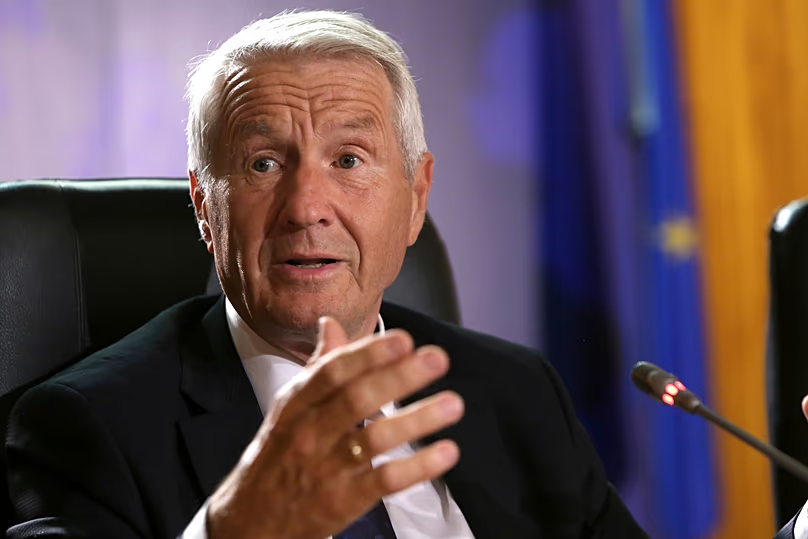
Norway consistently ranks among the world’s most trusted democracies. Political scandals are rare, and when they occur, they are often handled with swift accountability.
This case challenges that reputation. Public debate has intensified around whether institutions were too slow to examine international ties and whether deference to status delayed scrutiny.
Political Reactions Inside Norway
Norwegian political leaders across party lines responded cautiously. Many emphasized respect for the legal process while acknowledging the seriousness of the allegations.
Some lawmakers called for a broader review of how Norwegian officials engage internationally, particularly with wealthy or influential individuals whose reputations may later prove questionable.
The Legal Process Ahead
The case is expected to move slowly, with prosecutors assembling evidence and defense teams challenging its relevance and interpretation. Legal experts note that international cases involving alleged associations can be complex, particularly when activities occurred across jurisdictions.
The outcome will depend not only on factual findings, but on how courts interpret responsibility and intent.
Public Opinion and Trust
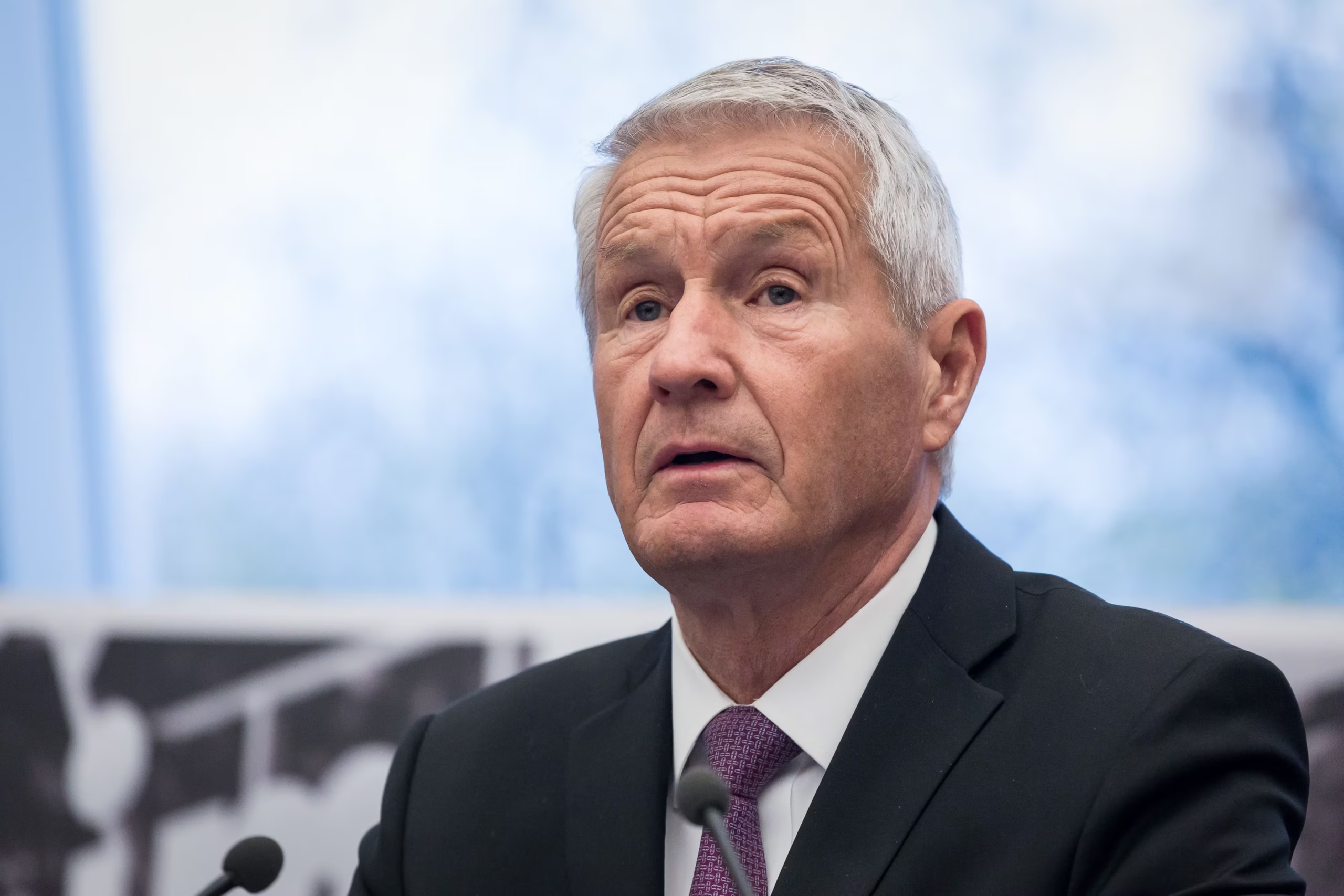
Public reaction in Norway has been divided. Some citizens expressed shock and disappointment, while others urged caution, reminding fellow voters that charges are not verdicts.
Still, the case has sparked broader conversations about trust. Even without a conviction, the mere existence of the charges has altered how some view political elites.
Why This Case Resonates Globally
The Jagland case resonates beyond Norway because it reflects a global pattern. Epstein’s reach exposed vulnerabilities in systems meant to safeguard ethics and accountability.
Each new development raises the same question. How did so many powerful institutions fail to see or act sooner.
Accountability Versus Association
One of the central tensions in the case lies in distinguishing association from culpability. Legal scholars warn against guilt by proximity, while ethicists argue that power carries an obligation to exercise extreme caution.
For public figures, the standard is often higher than for private citizens. The case forces societies to consider where that line should be drawn.
Media Coverage and Its Consequences
Media outlets across Europe have covered the charges extensively, often framing them within the broader Epstein narrative. While such coverage increases transparency, it also risks conflating allegations with proven facts.
Journalists and editors face the challenge of informing the public without prejudging legal outcomes.
The Broader Political Impact
Even before a verdict, the case has political consequences. It may influence how parties vet candidates, how governments manage international relationships, and how former leaders are remembered.
Some analysts suggest the scandal could lead to stricter disclosure requirements for officials engaged in international diplomacy.
Lessons for Democratic Institutions
The case highlights the need for robust oversight mechanisms that do not rely solely on reputation or seniority. Transparency systems must be resilient enough to scrutinize even the most respected figures.
Democracy, experts argue, depends not on the absence of scandal but on how institutions respond when allegations arise.
International Legal Cooperation
Because Epstein’s network spanned continents, investigations increasingly rely on cross border cooperation. The Jagland case reflects this trend, with information shared among multiple jurisdictions.
Such cooperation can strengthen accountability but also complicates legal proceedings.
The Human Dimension
Behind the political implications lies a human story. Reputations built over decades can be dismantled in moments. Families, colleagues, and communities are affected by the uncertainty and scrutiny.
This dimension underscores why careful, evidence based processes are essential.
What Happens Next
As the case proceeds, attention will turn to court filings, testimony, and judicial rulings. Observers will watch closely for how Norwegian institutions handle the pressure.
The outcome may set precedents for how similar cases are approached in the future.
A Moment of National Reflection
For Norway, the charges prompt reflection on power, privilege, and vigilance. Trust is not static. It must be continually earned and defended.
Whether the case ends in conviction or acquittal, it has already reshaped conversations about accountability.
Conclusion
The charging of former Norwegian prime minister Thorbjørn Jagland over alleged Epstein ties marks a pivotal moment in Norway’s political history. It is not only a legal case, but a test of institutional integrity and public trust.
As investigations into Epstein’s network continue to unfold worldwide, the Jagland case serves as a reminder that influence does not confer immunity from scrutiny. In democratic societies, even the most respected figures must answer questions when serious allegations arise.