
Table of Contents
- A Fort Worth Case Grabs National Attention
- What Police Say Happened
- The Family’s Version Of Events
- Why The Case Became So Emotional
- Police Have Not Confirmed The Family’s Claim
- The Charge Renfro Faces
- Defense Of Others And The Legal Debate
- The Neighborhood Fear Behind The Incident
- The Wounded Man Was Expected To Survive
- Why The Story Went Viral
- What Happens Next
- A Case That Raises A Difficult Question
A Fort Worth Case Grabs National Attention
When news broke that a Fort Worth man had been arrested after allegedly shooting another man in the groin, the story quickly spread far beyond one Texas neighborhood. The case was shocking on its own, but the family’s explanation made it even more explosive. Relatives claimed the shooting happened because the arrested man was trying to protect underage nieces from a man they believed had been making sexual advances toward children.
Police confirmed that officers had been called to the 3700 block of Century Place after receiving reports of a man who appeared to be under the influence and was allegedly soliciting children for sex. As officers arrived, they heard a gunshot. Moments later, they found a man matching the original suspect description suffering from a gunshot wound to the groin.
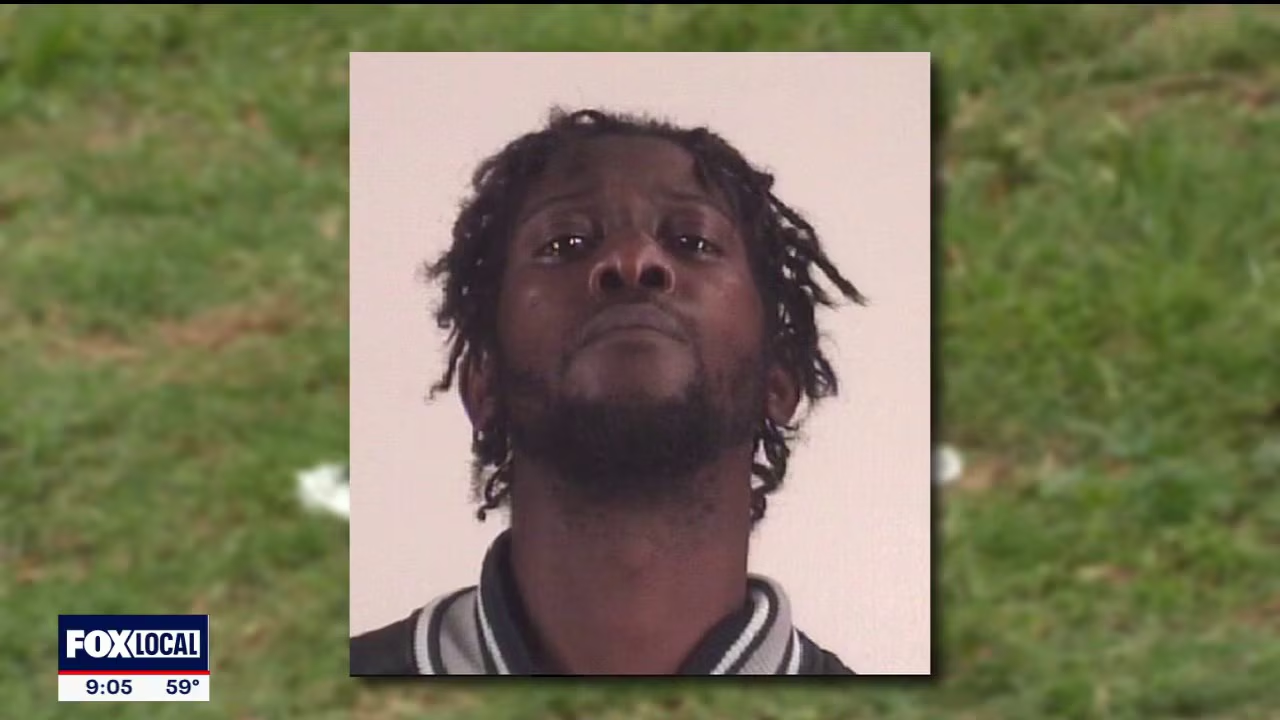
The man accused of firing the shot, identified in later reports as Marckus Renfro, was taken into custody. His family says he stepped in because children were in danger. Police, however, have not confirmed the full family account, and investigators have continued working to determine exactly what happened.
What Police Say Happened

According to Fort Worth police, officers were dispatched on Friday morning after reports came in about a man allegedly approaching children with sexual propositions. The call itself was already serious. Any report involving children, possible intoxication, and sexual solicitation creates an urgent public safety concern.
When officers reached the area, they heard a single gunshot. Police then located the man who matched the description from the original call. He had been shot in the groin and was transported to a hospital. Authorities said he was expected to survive.
Renfro was detained at the scene and later charged with aggravated assault with a deadly weapon, according to later reporting citing Tarrant County Jail records. The case immediately raised complicated questions because police were responding to one alleged crime when another violent incident happened in the same area.
That is why the case has become so controversial. Supporters of Renfro say he acted when children needed help. The criminal charge, however, shows that authorities are not treating the shooting as automatically justified.
The Family’s Version Of Events
Renfro’s relatives have strongly defended him. They claim he was not looking for violence, but was reacting to a man who had allegedly been targeting children in the area.
His brother-in-law, Dontavius Williams, told local media that a young relative said the man had offered drugs and made alarming comments. Family members said they had heard concerns before about the same man allegedly bothering children nearby.
Renfro’s wife, Jamie Ramirez Renfro, also described the encounter as one that escalated quickly. According to her account, Renfro exchanged words with the man and began walking away before the man allegedly approached him in a threatening way. She said Renfro then turned and fired.
This is the version that has shaped much of the public reaction. To the family, the shooting was not random aggression. They believe it was an act of protection in a moment of fear.
But it is important to be clear: police have not confirmed every part of that account. Investigators still have to determine what was said, who approached whom, whether anyone faced an immediate threat, and whether the use of deadly force was legally justified.
Why The Case Became So Emotional

Few topics provoke stronger emotion than the safety of children. When a family says a man acted to protect underage relatives from alleged sexual solicitation, many people immediately react with anger, sympathy, or approval.
That emotional response is understandable. Parents, relatives, and neighbors often imagine how they would respond if they believed children were being preyed upon. The instinct to protect children can be intense and immediate.
But the legal system does not decide cases only by emotion. It must separate what people believed in the moment from what the evidence can prove. It must examine whether there was an immediate threat, whether force was necessary, and whether the level of force used was lawful.
That is where this case becomes difficult. A person can believe they are protecting someone and still face criminal charges if police and prosecutors believe the response went too far. At the same time, a person accused of a violent act may later argue self-defense or defense of others in court.
Police Have Not Confirmed The Family’s Claim
One of the most important details in this story is that Fort Worth police have not publicly confirmed the family’s full explanation of the shooting. They confirmed the original call involved reports of a man allegedly soliciting minors. They also confirmed that a gunshot was heard as officers arrived and that the wounded man matched the original suspect description.
Those facts are significant. But they do not answer every legal question.
Police have not publicly said that Renfro was acting in legal self-defense. They have not publicly said that the wounded man attacked him. They have not publicly confirmed that Renfro had no other option. That is why the investigation matters.
In viral crime stories, public opinion often moves faster than the evidence. A headline can turn someone into a hero or villain within minutes. A courtroom moves differently. It asks for witness statements, physical evidence, timelines, body camera footage, surveillance video, and legal standards.
This case sits directly in that gap between public emotion and legal process.
The Charge Renfro Faces

Renfro was charged with aggravated assault with a deadly weapon. In Texas, that is a serious charge because it involves allegations of causing or threatening serious harm while using a weapon.
The charge does not mean Renfro has been convicted. It means prosecutors or authorities believe there is enough evidence to accuse him formally and move the case through the legal system.
Later reports said Renfro had a total bond listed at $50,000 and also faced several other charges from previous cases. Those prior matters may affect how the public views him, but they do not decide the facts of this shooting by themselves.
The key question remains what happened at Century Place that morning. Did Renfro fire because he reasonably believed someone was about to harm him or the children? Or did investigators believe the shooting crossed a legal line? That question will likely define the case moving forward.
Defense Of Others And The Legal Debate
The case has triggered a larger conversation about defense of others. Many people understand the idea of self-defense, but defense of another person can be more complicated.
In general terms, the law may allow someone to use force to protect another person if they reasonably believe that person faces an immediate threat. But the details matter. The threat must usually be imminent. The response must generally be proportionate. Deadly force is treated with much higher scrutiny.
That is why a suspected crime against children does not automatically make a shooting legal. If someone is actively attacking or threatening a child, the legal analysis may be different from a situation where the threat has passed or police are already arriving.
This is not a simple moral question. It is a legal question built around timing, danger, intent, and available evidence. That is why investigators are working to determine exactly what occurred in the moments before the gunshot.
The Neighborhood Fear Behind The Incident

The location of the incident also matters. Family members described concerns that children in the area had been approached before. If true, that would help explain why emotions were already high before the shooting.
Neighborhoods can become tense when residents believe someone is targeting children. Parents may warn each other. Relatives may become protective. People may begin watching streets, sidewalks, and apartment areas more closely.
But fear can also lead to dangerous confrontations. When people believe the justice system is moving too slowly or that children are at risk, some may feel pressure to step in themselves. That can create a situation where anger, panic, and weapons combine in seconds.
The Fort Worth case shows how quickly a community concern can turn into a criminal investigation. What began as a call about alleged child solicitation became a shooting scene before officers even finished arriving.
The Wounded Man Was Expected To Survive
The man who was shot was taken to the hospital and was expected to survive. Police did not immediately release his name in the early reports. They described him as matching the original suspect description from the child solicitation call.
That detail is important, but it must be handled carefully. Being the subject of a police call or allegation is not the same as being convicted of a crime. The investigation into the original report also matters.
The public may focus mostly on Renfro because he was arrested after the shooting, but investigators also need to examine the allegations that led police to the scene in the first place. If the wounded man was in fact soliciting children, that is a serious issue. If the report was incomplete or disputed, that would also matter.
For now, the case contains two layers: the allegation that brought police to Century Place and the shooting that happened as officers arrived.
Why The Story Went Viral

The story went viral because it contains nearly every element that drives public debate: children, alleged sexual misconduct, a family member stepping in, a gunshot, an arrest, and a legal system that may not match public emotion.
Some people online quickly framed Renfro as a protector. Others warned that private citizens cannot be allowed to shoot people based on allegations or confrontation. Both reactions show why the case is so divisive.
It also taps into a broader fear that many families feel. People want children protected. They want dangerous individuals stopped. They also want laws that prevent violence from spiraling out of control.
The hardest cases are the ones where those instincts collide. This is one of them.
What Happens Next
The next steps will likely depend on police reports, witness interviews, possible surveillance footage, body camera evidence, medical records, and decisions by prosecutors. Renfro’s defense may argue that he acted to protect others or himself. Prosecutors may argue that the shooting was not legally justified.
The wounded man’s conduct before the shooting may also become a central issue. If police can prove that he was soliciting minors, that could influence how the public and the court understand the confrontation. But even then, the law will still ask whether the shooting itself met the standard for lawful force.
This is why the case cannot be reduced to one emotional sentence. It is a story about alleged danger to children, but it is also a story about gun violence, legal limits, and the difficult line between protection and punishment.
A Case That Raises A Difficult Question
The Fort Worth shooting has left many people asking the same question: what is someone allowed to do when they believe children are in immediate danger?
For Renfro’s family, the answer is clear. They believe he stepped in when others needed protection. They argue that he should not be sitting in jail for responding to a threat they say was real.
For police and prosecutors, the issue is more complicated. A report of disturbing behavior does not automatically give anyone the right to shoot. The justice system must decide whether the facts support the family’s account or whether Renfro’s actions crossed into criminal assault.
That is why this case matters beyond Fort Worth. It forces the public to confront the emotional pull of vigilante justice and the legal need for restraint. It shows how quickly fear for children can become a violent confrontation. And it reminds everyone that the facts still matter, even when the emotions are overwhelming.
Until investigators and the courts finish their work, the case remains open in the most important sense. One man is wounded. Another is charged. A family says children were being protected. Police say the full story is still under investigation.
What is already clear is that this case has touched a nerve because it sits at the intersection of every parent’s fear and every legal system’s challenge: protecting the vulnerable without allowing anger and violence to replace the rule of law.