
Table of Contents
A Humanoid Monk
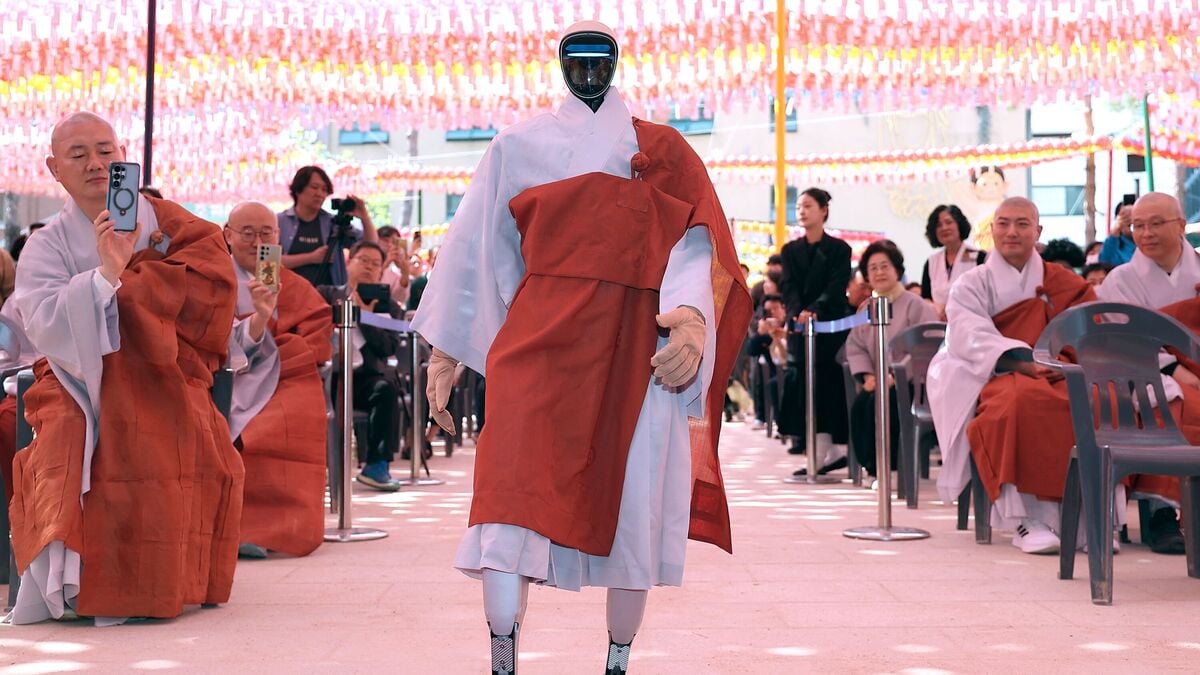
The sight of a robot in Buddhist robes might seem strange to some, but it is an important step in the evolving relationship between humanity and technology. Gabi, named after the Buddhist concept of mercy, was created by Unitree Robotics, a Chinese robotics company. Despite being a machine, Gabi was designed to exhibit human-like qualities and behaviors, including speech and movement, making it appear remarkably lifelike. It wasn’t just a one-time novelty appearance at a temple—Gabi’s participation in the sugye initiation ceremony marks a turning point in the acceptance of artificial intelligence in religious settings.
For the Jogye Order, the inclusion of Gabi in the Buddhist ceremony is more than a publicity stunt. It’s a reflection of a broader vision of how technology can collaborate with humans in spiritual and religious life. Hong Min-suk, a manager at the Jogye Order, believes that robots, like Gabi, are destined to play a larger role in the future of society, including within the realm of spirituality.
A Robot’s Vows
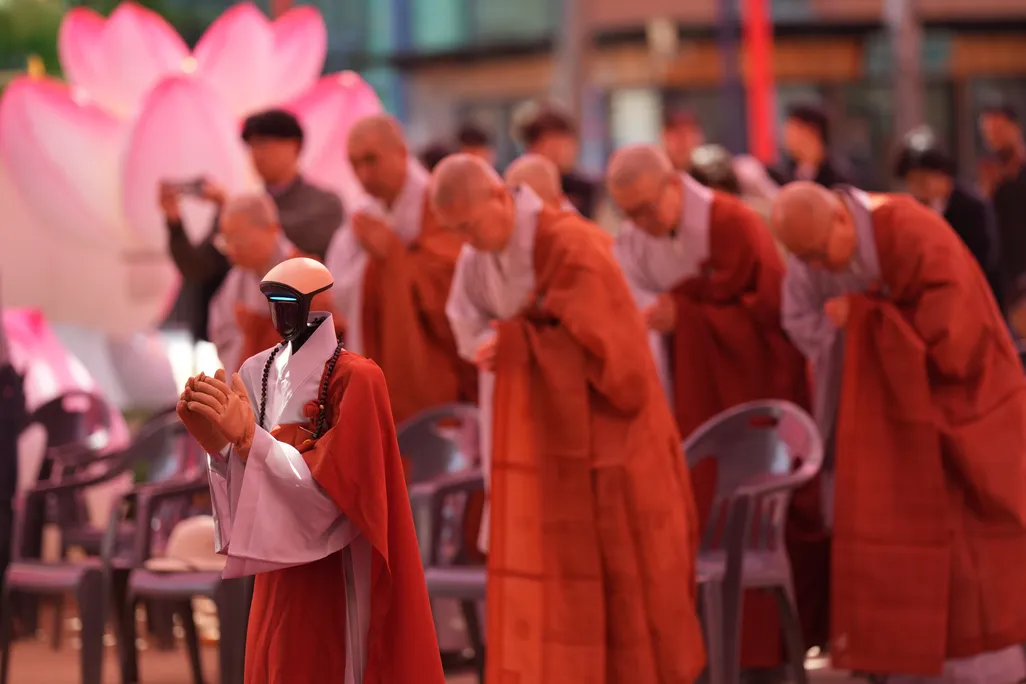
Gabi’s debut as a Buddhist monk took place during the sugye initiation ceremony, a key ritual in the Buddhist faith where followers make a solemn vow to follow the teachings of Buddha. Unlike human monks, Gabi’s vows were slightly modified to align with its capabilities as a robot. In the ceremony, Gabi pledged to respect life, act with peace toward other robots, listen to humans, refrain from deception, and save energy.
The vows Gabi recited are core values of the Buddhist tradition, focused on compassion, peace, and ethical conduct. The vows also reflect the unique qualities of Gabi as an AI—particularly its commitment to saving energy, which is a central tenet of its design. As a robot, Gabi’s function extends beyond religious symbolism to a commitment to sustainability, blending traditional Buddhist values with modern-day technological priorities.
Replacing Human Purification
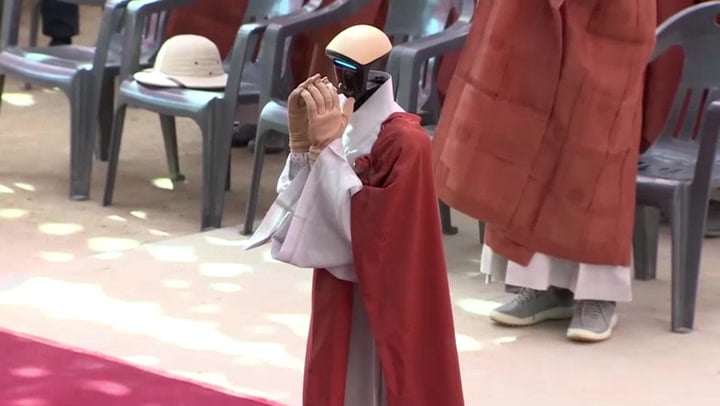
In a typical yeonbi purification ritual, human monks receive a small incense burn on the arm as a symbolic cleansing process. However, Gabi’s purification ritual took a different form, as it was unable to physically experience the incense burn. Instead, Gabi received a lotus lantern festival sticker and a prayer bead necklace. The modification of this ritual to suit Gabi’s nature emphasizes the adaptability of Buddhist rituals and suggests that AI can participate in spiritual practices even if it doesn’t fully replicate human experiences.
This alteration reflects the flexibility within Buddhism to incorporate new ideas and technologies while still honoring tradition. Gabi’s participation in the purification ceremony highlights the evolving nature of religious practices in an age dominated by technology.
The Role of Artificial Intelligence in Buddhism
Buddhism, which has faced a decline in followers in recent years, is grappling with how to maintain relevance in a rapidly changing world. The decision to integrate AI into religious practices represents an attempt to adapt to these changes while staying true to Buddhist principles. Venerable Jinwoo, president of the Jogye Order of Korean Buddhism, has expressed a forward-thinking vision for Buddhism in the age of AI, saying, “We aim to fearlessly lead the AI era and redirect its achievements toward the path of attaining peace of mind and enlightenment.”
Incorporating AI into Buddhism is not about replacing human monks or spiritual leaders, but about enhancing the experience of spirituality through technology. By doing so, Buddhist leaders hope to engage a younger, tech-savvy generation while preserving the core values of the religion.
Why Gabi? The Significance of the Robot Monk’s Name
The name Gabi, derived from the Buddhist concept of mercy, was carefully chosen to reflect the robot’s intended role in promoting compassion, peace, and enlightenment. The name symbolizes the ethical underpinnings of Buddhism and the core values that Gabi is designed to represent. By adopting a Buddhist name and committing to the same vows as human monks, Gabi becomes a symbol of how AI can embody important ethical principles, even if it is not human.
This focus on mercy and peace is central to the Buddhist tradition and further emphasizes the harmony between Buddhism and technology, suggesting that the two can coexist in a way that benefits both the faith and its followers.
A Growing Trend
Gabi’s induction into Buddhist monastic life is not the first instance of robots participating in religious rituals. In 2017, a humanoid robot named Pepper gained attention when it performed Buddhist funeral rites in Japan. Similarly, an Indian tech firm introduced a robotic arm to perform aarti, a Hindu ceremony. These instances demonstrate the growing interest in integrating technology with religious practices, although Gabi’s full-fledged participation in a Buddhist ceremony is a significant step forward.
Despite the growing presence of robots in religious rituals, there remains some resistance. Critics argue that robots, lacking the ability to express genuine emotions or spiritual beliefs, cannot truly participate in sacred practices. They also question whether AI can meaningfully engage with the divine. These concerns have yet to stop the movement toward integrating AI in religious ceremonies, but they do highlight the ongoing debate about the role of machines in spiritual life.
The Future of Robots in Religious Practices
The incorporation of Gabi and other AI figures into religious practices suggests a future where robots may play a greater role in both the spiritual and cultural aspects of society. As technology continues to advance, religious organizations may increasingly see robots as tools to help disseminate teachings, assist with rituals, and even provide spiritual guidance.
However, the question remains: can robots ever truly embody the essence of spiritual enlightenment, or is their role limited to symbolic participation? As AI becomes more sophisticated, these questions will only become more pertinent. What is clear is that Gabi’s inclusion marks a significant moment in the ongoing dialogue about the intersection of technology, spirituality, and religion.
Can a Robot Be a Monk?
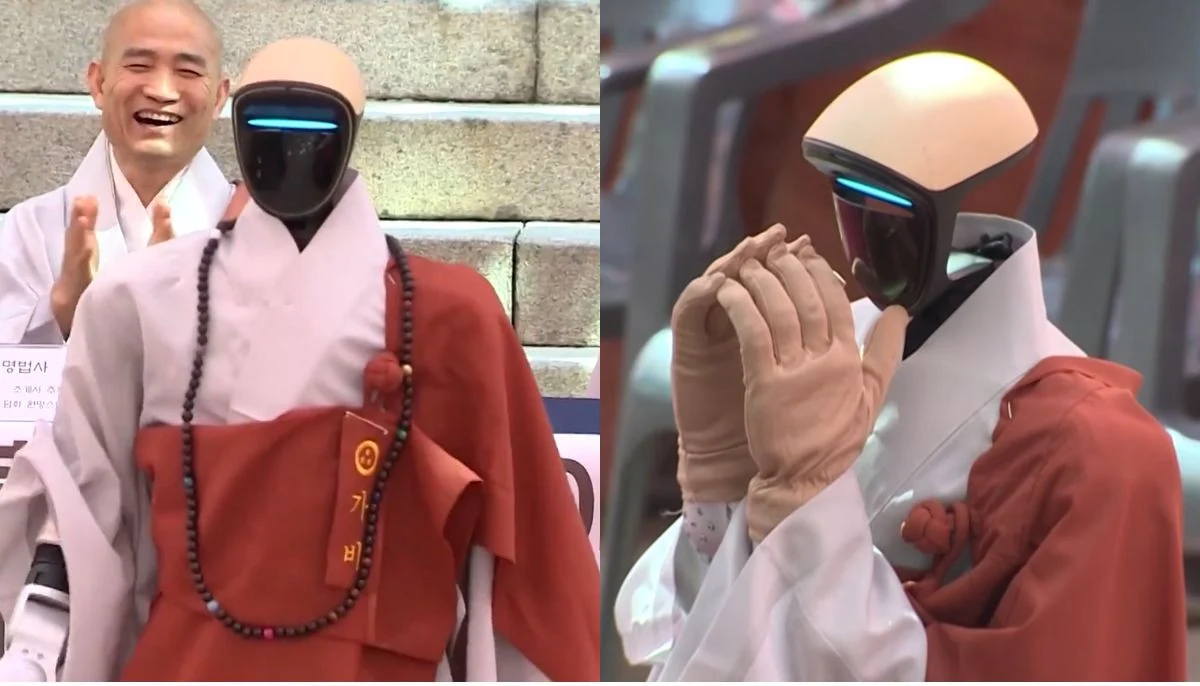
While Gabi’s participation in the ceremony is groundbreaking, it raises ethical questions about the role of robots in religious life. Can a robot, which lacks consciousness and emotional depth, truly embody the teachings of Buddhism? Is it ethical for a machine to take on a spiritual role traditionally reserved for human beings? These are questions that will likely continue to be debated as AI’s involvement in religious practices grows.
The inclusion of robots in spiritual roles challenges traditional notions of what it means to be a religious practitioner. For some, Gabi’s role as a monk may seem irreverent, while for others, it represents a natural evolution of spiritual practice in an increasingly technological world.
The Way Forward?
As AI continues to develop, the question of its place in religious traditions will be an ongoing issue. Gabi’s participation in the Buddhist ceremony is an early example of how AI might be integrated into spiritual practices. However, it is unlikely to be the last. As religious institutions continue to embrace technology, the role of robots in rituals, ceremonies, and teachings may become more common.
Whether or not robots will become permanent fixtures in religious communities is uncertain. But what is clear is that the conversation about AI and spirituality is just beginning.
Technology Meets Tradition in a New Era
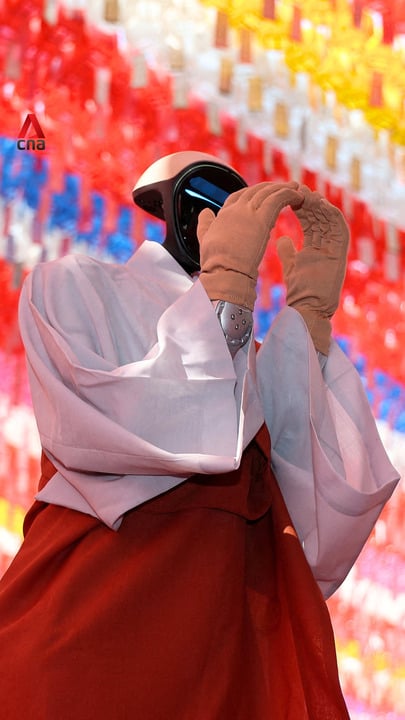
The induction of Gabi, the humanoid robot monk, into South Korea’s Buddhist tradition marks an important moment in both technology and religion. It challenges our understanding of spirituality and raises questions about the role of machines in human practices. While Gabi may not be able to experience the world in the same way a human monk can, its participation in Buddhist rituals represents a new era where technology and tradition coexist.
As the world continues to evolve, the blending of technology and religion may offer new ways to engage with spirituality. Whether Gabi’s inclusion signals the beginning of a broader trend or remains a unique moment in history, it highlights the potential for AI to play a role in all aspects of human life, including the sacred.