
Table of Contents
- A Beach Mystery That Lasted More Than Three Decades
- The Clue That Finally Changed Everything
- What Investigators Found Inside the Cave
- Why the Phones Kept Appearing for So Long
- From Cartoon Curiosity to Pollution Warning
- A Small Mystery Inside a Much Bigger Crisis
- The Danger of Plastic That Never Really Disappears
- Why This Discovery Still Matters Now
- A Solved Mystery With an Unfinished Message
A Beach Mystery That Lasted More Than Three Decades
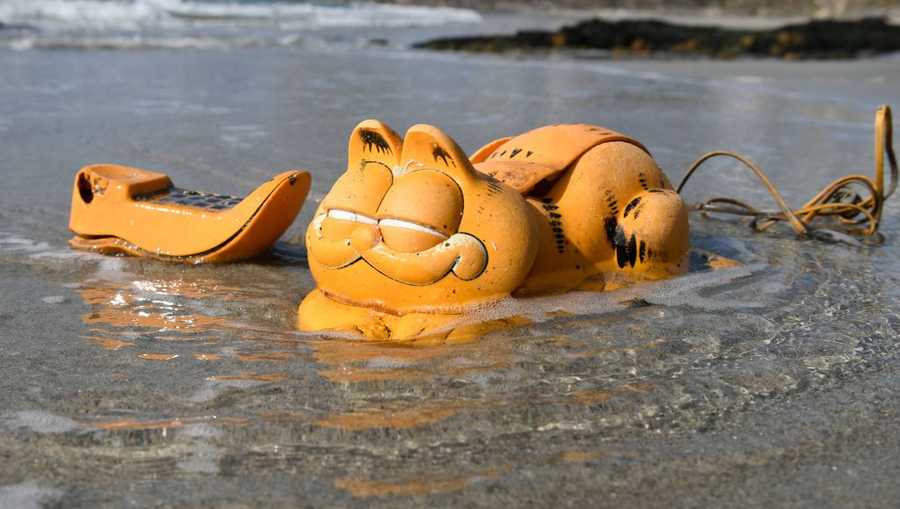
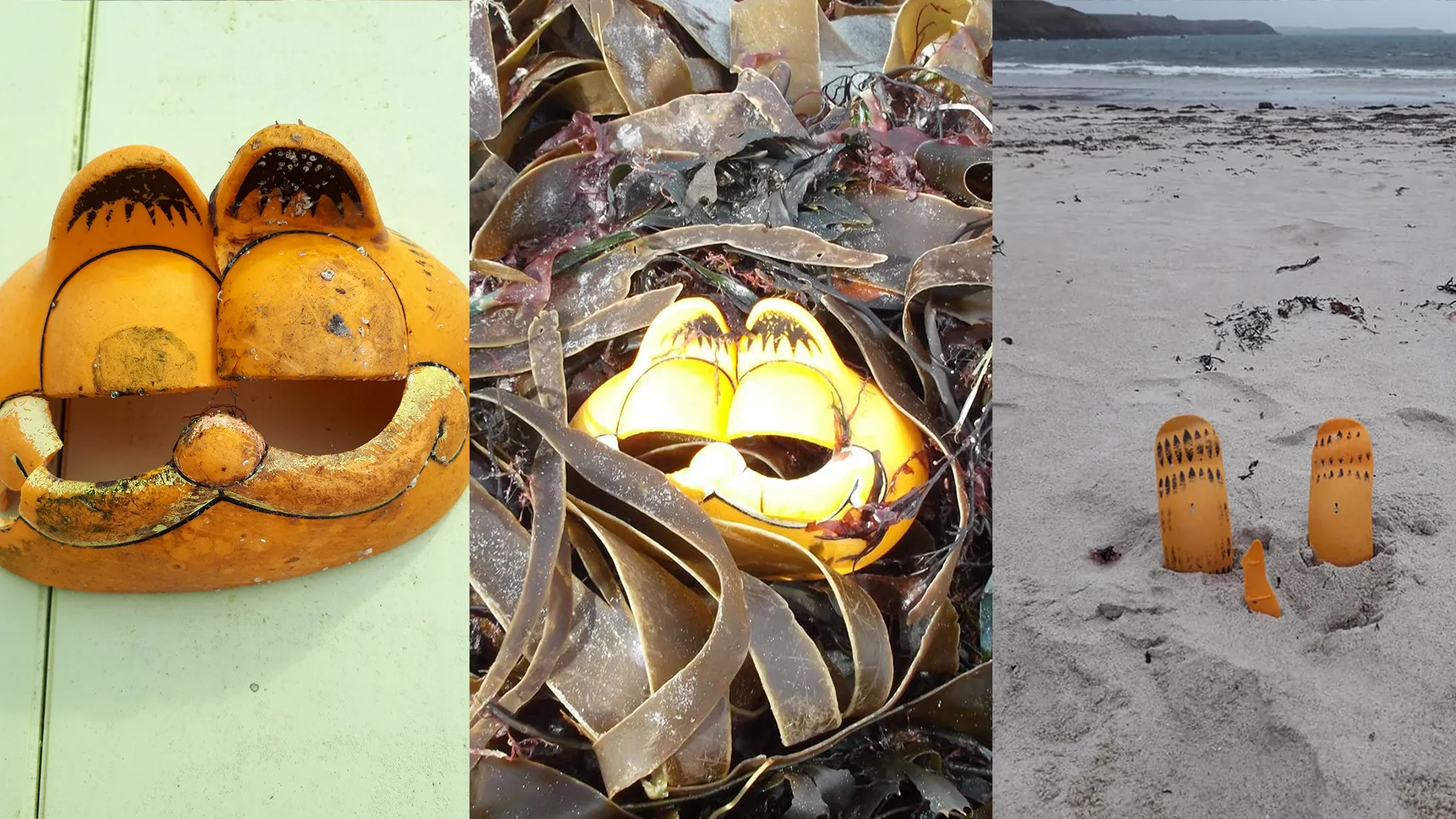
For many people living along the northern coast of Finistere in Brittany, the Garfield phones had become part of local folklore. They were unusual enough to be memorable, yet common enough to be deeply frustrating. Year after year, cleanup volunteers would collect fragments of plastic, wires, and phone parts from the sand and rocks, often still recognizable as pieces of the orange cartoon themed landline phones.
What made the mystery so compelling was its persistence. These were not a handful of objects carried in by one rough storm and then forgotten. The phones kept showing up for decades, long enough to become a recurring feature of beach cleanups and coastal conversations. The fact that they were Garfield phones made the story even stranger. Their bright color and instantly recognizable face gave them an almost surreal quality, as if a forgotten piece of pop culture had somehow fused with the natural landscape of the French coast.
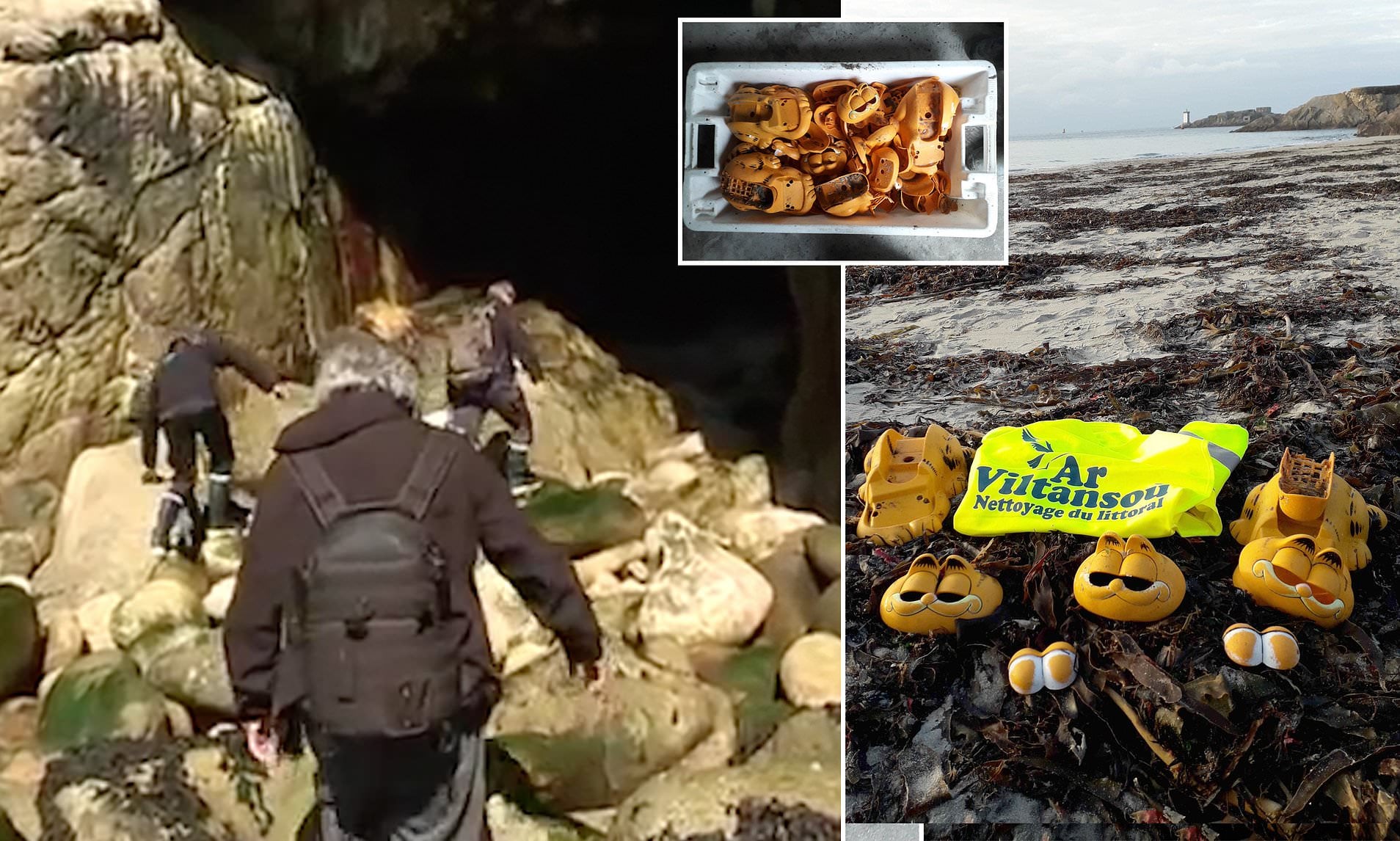
Local volunteers from the beach cleaning group Ar Viltansou had long suspected that a shipping container lost at sea was the most likely explanation. It was a theory that made sense, especially since the phones seemed too numerous and too specific to have entered the ocean one by one. Still, suspicion is not proof, and for years no one could find the source.
The Clue That Finally Changed Everything
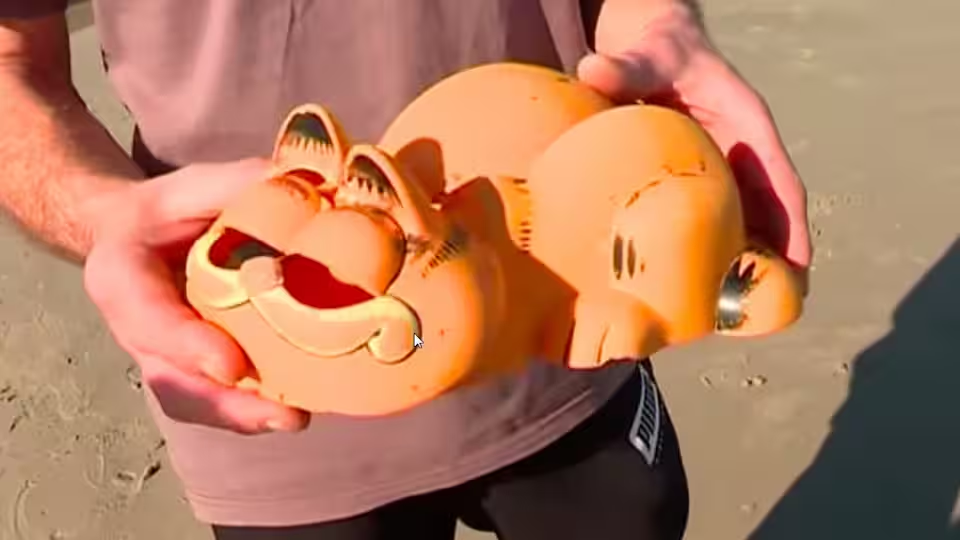
The breakthrough came thanks to a local resident who remembered something crucial. He revealed that after a storm in the 1980s, he had discovered what appeared to be the remains of a shipping container hidden in a cave. That detail changed everything, because it transformed a rumor into a real lead.
Following his information, the beach cleaning group and others were able to investigate a dangerous, partially submerged fissure that is only accessible at low tide. What they found there was astonishing. Deep inside the rocky opening were the remains of a container, trapped in a place difficult enough to reach that it had remained hidden for decades.
The discovery immediately explained why the mystery had lasted so long. A container wedged inside a sea cave would not have been easy to locate from the coast, especially if only parts of it were visible and only at certain tides. At the same time, the sea would have had constant access to its contents, slowly carrying away telephones and fragments year after year. What had looked like a long running oddity now became a much more understandable process of slow release from a trapped source.
What Investigators Found Inside the Cave
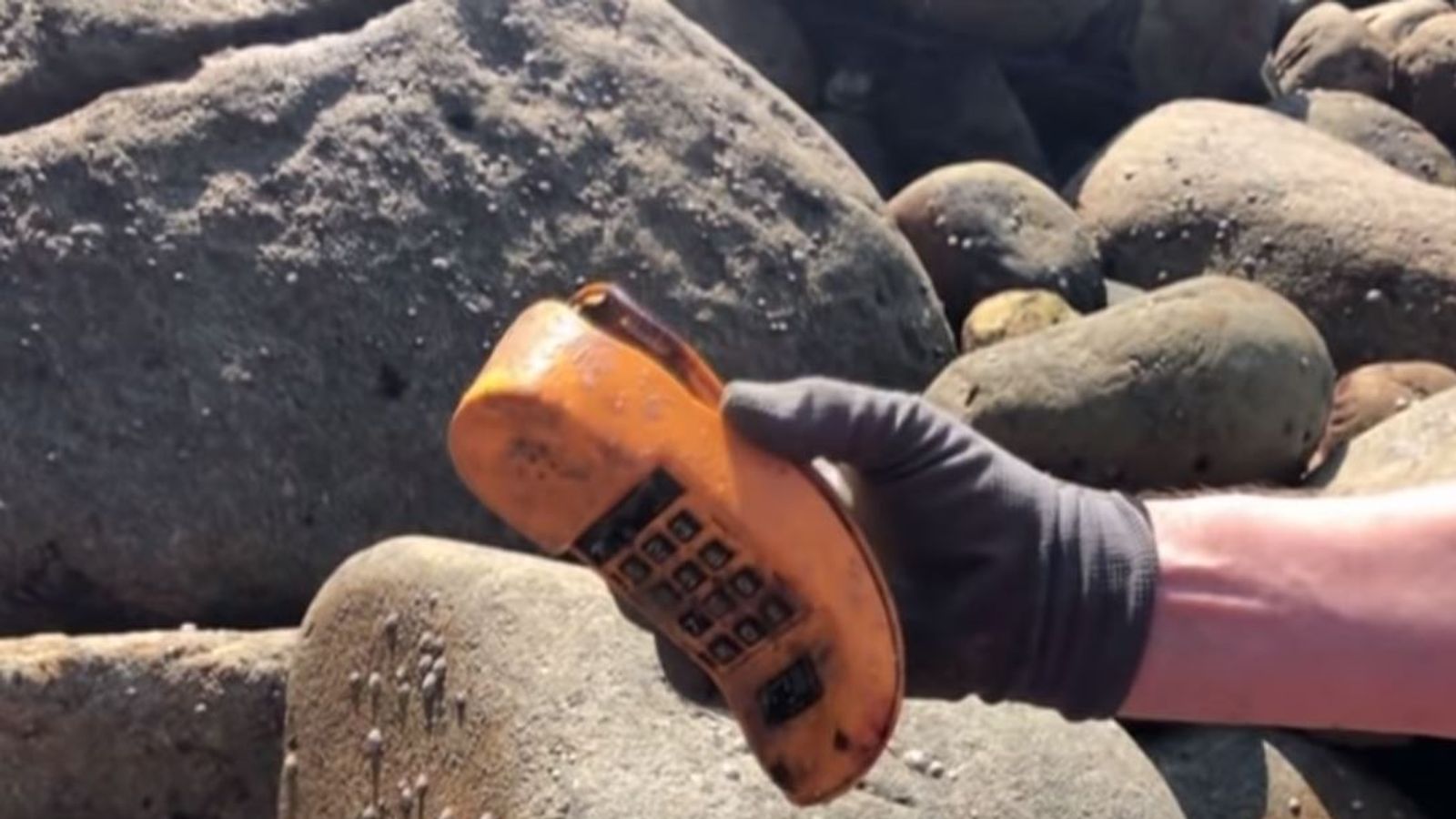
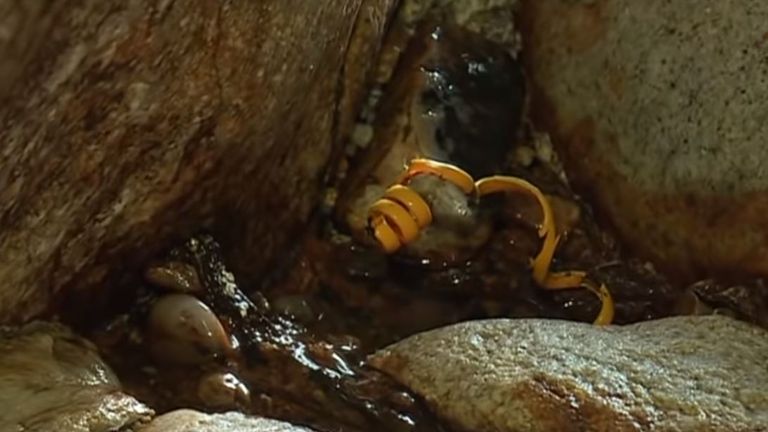
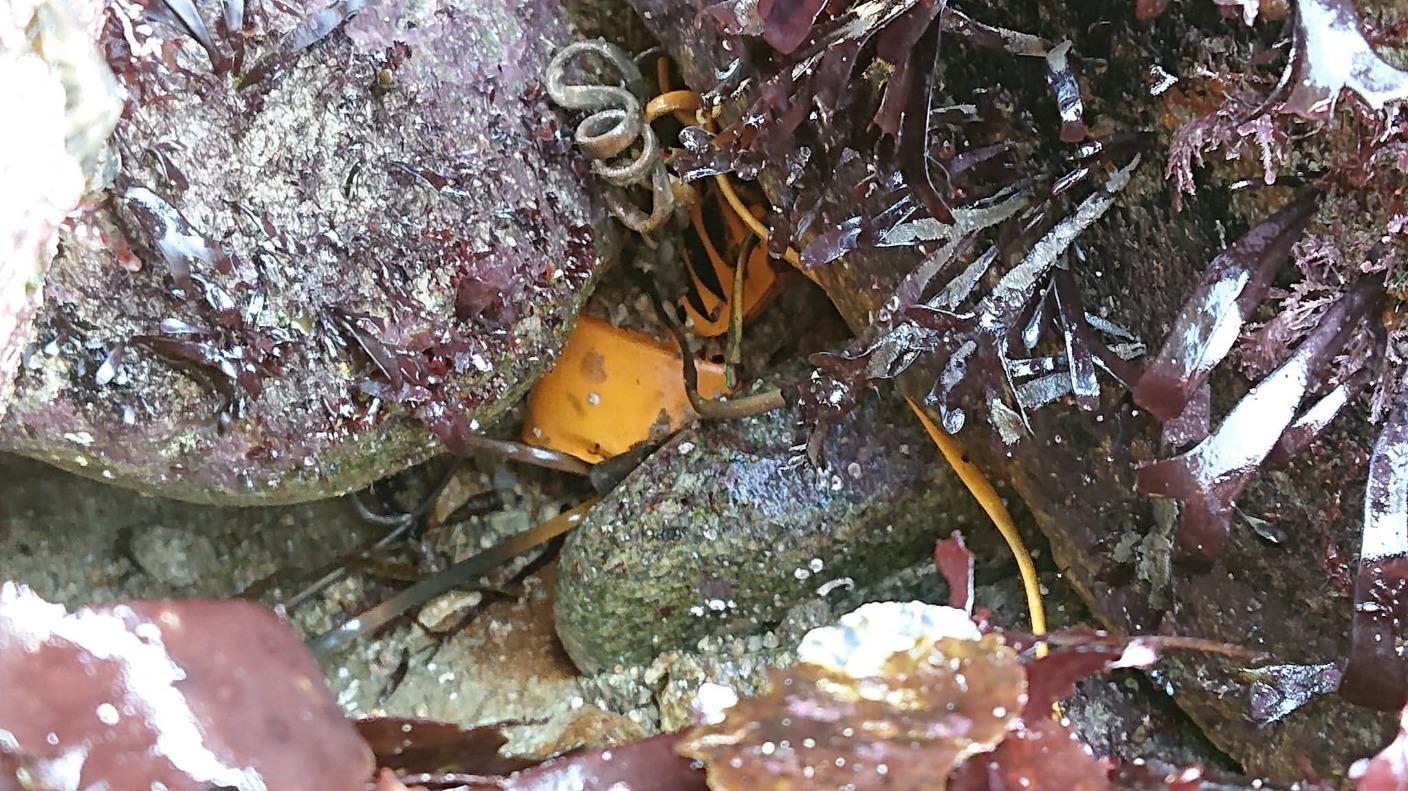
The details of the discovery are as striking as the mystery itself. Volunteers described finding a deep fissure and, at the bottom, the remains of the container. Under boulders near the entrance, they discovered complete Garfield handsets, still with electronics and wires attached. That image alone is enough to explain why the story has captured such wide attention. These were not vague traces or softened scraps that only experts could identify. They were intact relics from another era, hidden underground and preserved by the sea.
The find also confirmed that the phones had not just drifted from some distant, unknown accident in random fashion. They were coming from a concentrated source. For decades, the ocean had effectively been emptying the contents of the trapped cargo piece by piece.
Even so, the mystery is not completely finished. Officials still do not know which ship lost the container or exactly what happened when it entered the water. It remains unclear whether a single container was lost or whether more than one may have gone overboard during the same event. So while the source of the Garfield phones has finally been located, the full story of how the cargo ended up there remains incomplete.
Why the Phones Kept Appearing for So Long
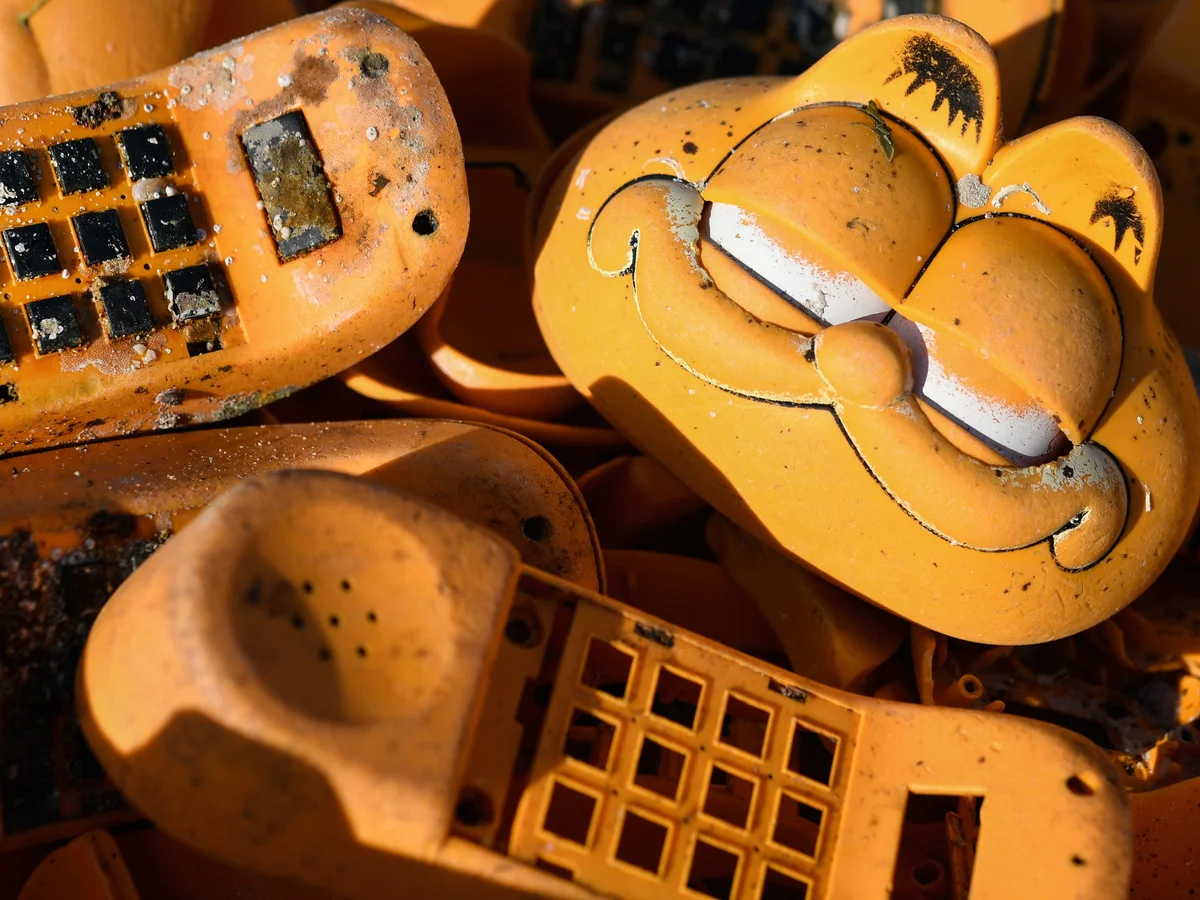
One of the most fascinating aspects of the story is the timeline. How could phones from the 1980s continue washing up on beaches for more than 30 years? The answer lies in the durability of both the plastic and the location of the wreckage.
Because the container was trapped inside a cave rather than lying exposed in open water, its contents were released gradually instead of all at once. Each storm, strong tide, or shift in the rocks could free new pieces, sending them into the sea and eventually onto nearby beaches. The ocean was not delivering one single event. It was replaying the accident over and over again, little by little, across decades.
Then there is the matter of the phones themselves. Plastic is notorious for its long life in marine environments. Unlike organic materials that rot or dissolve relatively quickly, plastic can remain recognizable for decades. Even when it begins to break down, it often does so into smaller fragments rather than disappearing. That is why the Garfield phones remained so identifiable, and why they became such a vivid symbol of persistence.
The story is almost poetic in a dark way. A cheerful commercial product designed to entertain and decorate homes became an accidental marker of environmental endurance. The same durability that once made plastic so useful is what now makes it so troubling in the ocean.
From Cartoon Curiosity to Pollution Warning
At first glance, the Garfield phones seem almost funny. They are unusual, nostalgic, and visually absurd. That novelty is part of what made the mystery so famous. But environmental campaigners have been quick to point out that the real lesson here is not whimsical at all.
The phones highlight the extraordinary persistence of plastic waste in marine environments. After thirty or forty years, large plastic objects can still remain largely intact, especially if sheltered from constant abrasion. And once they do start to degrade, they break into ever smaller fragments that become harder to remove and more dangerous to wildlife.
This is where the story shifts from quirky coastal mystery to environmental cautionary tale. A Garfield phone on the beach may attract cameras and headlines, but it is only one visible example of a far larger problem. The oceans contain enormous quantities of plastic waste, much of it less recognizable and far more widespread than novelty telephones.
Campaigners say that the sight of these phones, still emerging from the sea after so many years, should force people to confront just how long human made materials can remain in the environment. In that sense, the phones are not just debris. They are evidence.
A Small Mystery Inside a Much Bigger Crisis
As strange as the Garfield phone story is, experts note that lost shipping containers represent only a small portion of the ocean plastic crisis. The much larger issue comes from everyday consumer packaging, bottles, wrappers, and disposable plastics that enter waterways on a massive scale.
That distinction matters. A container full of Garfield phones is unusual enough to become news, but far more common are the ordinary bits of plastic that appear on almost every beach in the world. They are less memorable individually, yet far more damaging collectively. A novelty phone is startling because it tells a story. A shampoo bottle or snack wrapper is easy to overlook precisely because it is so familiar.
And that familiarity may be part of the problem. People remember the orange Garfield handsets because they feel absurd and unexpected. But the constant flow of packaging waste into the oceans has become so normalized that it often draws less attention, even though it is the larger environmental threat.
The French beach mystery therefore works on two levels. It solves a local puzzle, but it also shines a light on the broader reality that the sea keeps our waste much longer than we want to imagine.
The Danger of Plastic That Never Really Disappears
Another important lesson from the story is that plastic pollution does not end when an object can no longer be seen. Large pieces become brittle over time, then fragment into smaller and smaller particles. Those particles can attract harmful chemicals and enter marine food chains.
This is where the issue becomes even more alarming. A whole Garfield phone is easy to spot and remove. A cloud of tiny fragments is not. Once plastic breaks apart into microplastics, it can be mistaken for food by marine animals, absorbed into ecosystems, and eventually move through the food chain in ways scientists are still trying to fully understand.
That means the phones on the beach are only the visible stage of a much longer process. The real environmental story is not just that the plastic lasted for decades, but that as it ages, it becomes more diffuse and potentially more dangerous. What begins as litter ends as contamination.
The phones also show that time alone is not enough to solve the problem. Human waste does not simply vanish if left in the ocean long enough. It changes form, spreads, and often becomes harder to deal with.
Why This Discovery Still Matters Now
It might be tempting to see the Garfield phone story as a relic of the 1980s, interesting but distant from today’s concerns. In reality, it feels more relevant than ever. The world continues to produce hundreds of millions of tonnes of plastic each year, and marine pollution remains one of the defining environmental challenges of modern life.
The fact that these phones were still turning up after more than three decades makes one point painfully clear. The environmental consequences of what enters the ocean today may still be with us far into the future. What is discarded now may remain on beaches, in marine habitats, and inside food chains long after the original users, manufacturers, and shipping companies are gone.
Governments have started to respond in some places, especially by targeting single use plastics and trying to reduce waste before it reaches the sea. But stories like this show why prevention matters so much. Once plastic enters the ocean, removing it completely can become nearly impossible.
The Garfield phone mystery is therefore not just about the past. It is a glimpse of what the future looks like when waste is left unresolved.
A Solved Mystery With an Unfinished Message
The mystery of the Garfield phones on the French coast has finally been solved, and the answer is as dramatic as anyone could have hoped. A long hidden shipping container, trapped in a dangerous sea cave since the 1980s, was slowly releasing its contents into the ocean for decades. That discovery closes one chapter of local curiosity, but it opens a much larger reflection on pollution, durability, and memory.
There is something strangely powerful about the image at the heart of this story. A cartoon cat that once symbolized humor and consumer culture became, over time, a warning carried by the sea. Each orange handset washing ashore was not just a leftover from a storm long ago. It was a message from the ocean that plastic does not forget.
In that sense, the solution to the mystery is not really the end. It is the point where the story becomes bigger than Garfield, bigger than Brittany, and bigger than one lost container. It becomes a reminder that the objects people throw away, lose, or ignore often outlast their moment by decades. And when they return, they do not just bring answers. They bring consequences.