
Table of Contents
- A Demonstration That Became Office Legend
- The Day Everything Went Wrong
- The Window Did Not Break The Way People Imagine
- Why The Story Became So Famous
- The Psychology Behind Overconfidence
- Structural Strength Has Limits
- The Legal World Was Deeply Shocked
- Why People Continue Sharing The Story Decades Later
- Workplace Culture And Risk Taking
- The Thin Line Between Confidence And Disaster
- Why The Story Still Resonates Today
A Demonstration That Became Office Legend
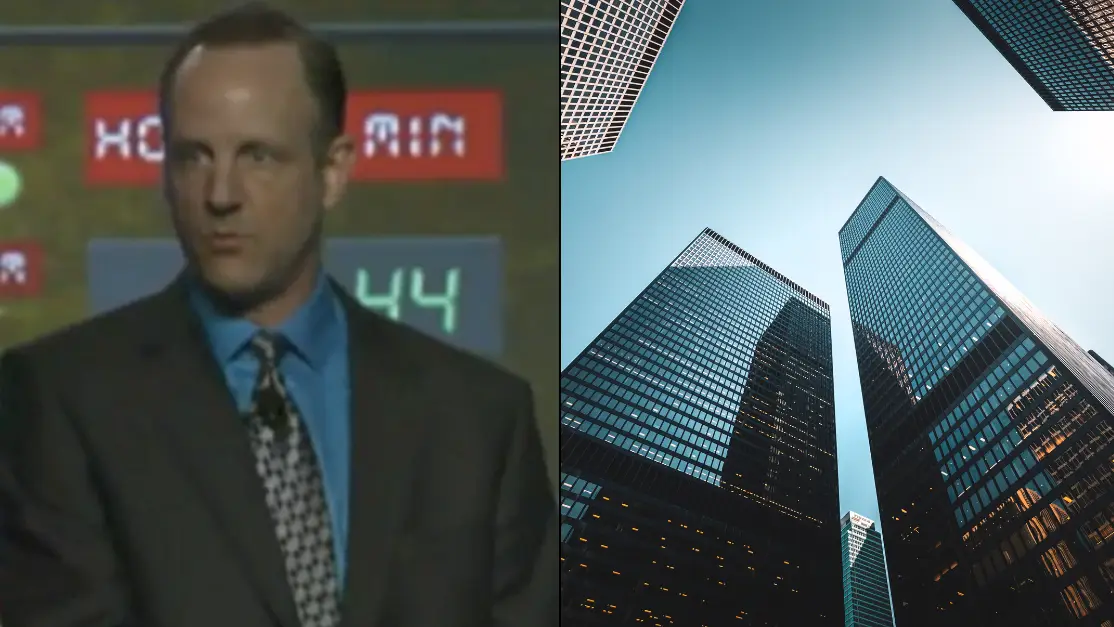
According to reports from the time, Garry Hoy had developed a reputation inside the office for demonstrating the strength of the skyscraper’s windows.
Located in downtown Toronto, the Toronto Dominion Bank Tower was considered a modern high rise structure with durable architectural design. Hoy reportedly enjoyed reassuring visitors about the safety of the building by physically crashing into the windows with his body.
The demonstrations became something of an office spectacle.
Witnesses and colleagues later described how Hoy would run toward the glass and slam his shoulder into it, relying on the strength of the material to absorb the impact. Each time, the window would hold and Hoy would bounce backward unharmed.
Over time, repeated success likely reinforced his confidence.
Psychologists often describe this phenomenon as “normalization of risk,” where repeated exposure to dangerous behavior without immediate consequences creates the illusion that the activity is safe.
For Hoy, each successful demonstration may have made the next one feel even less dangerous.
Until the final attempt.
The Day Everything Went Wrong
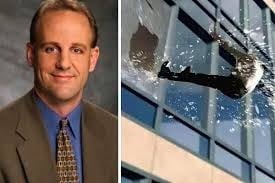
On July 9, 1993, Hoy was reportedly entertaining a group of prospective legal apprentices visiting the office.
As part of the interaction, he once again began demonstrating the strength of the building’s windows.
According to reports, the first impact against the glass appeared to go as expected. Witnesses said Hoy rebounded harmlessly from the window, seemingly proving his point once again.
But moments later, he attempted the stunt a second time.
This time, disaster struck.
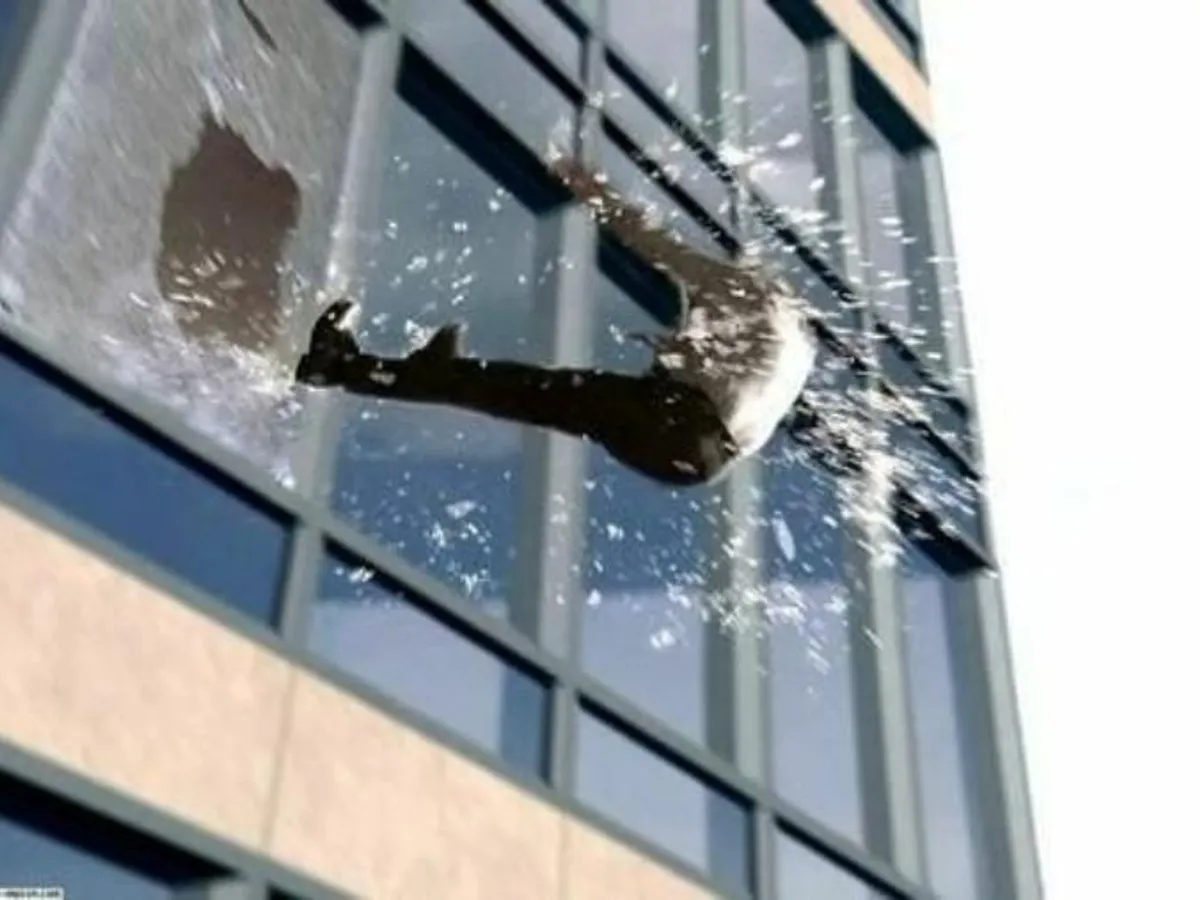
Instead of remaining secured inside its frame, the window reportedly popped outward under the force of the collision. Hoy lost balance and fell through the opening, plunging from the 24th floor into the courtyard below.
Witnesses were left stunned.
The horrifying moment unfolded instantly in front of multiple onlookers who had only seconds earlier believed they were watching a harmless office demonstration.
The Window Did Not Break The Way People Imagine
One of the most misunderstood parts of the story involves the condition of the window itself.
Many people assume the glass shattered dramatically under impact. Reports from the incident, however, suggested something different happened.
The glass itself reportedly remained largely intact.
Instead, the entire window pane appears to have dislodged from its frame, creating an opening large enough for Hoy to fall through.
That distinction became important because it highlighted a critical misunderstanding about structural engineering.
A window can be made from strong glass without being designed to withstand repeated full body impacts from an adult man running into it intentionally.
Structural engineer Bob Greer later reportedly explained that building codes were not intended for this type of human stress test.
In other words, the system was never designed for what Hoy was attempting.
Why The Story Became So Famous
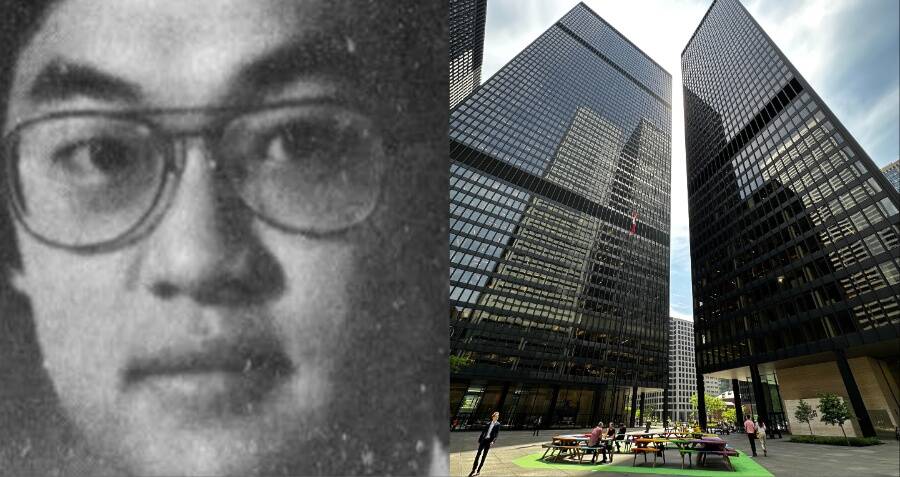
The accident rapidly became internationally known because it combined several deeply unsettling elements at once.
First, there was the extraordinary irony.
Hoy was attempting to prove the safety of the window at the exact moment it failed catastrophically. Stories involving dramatic reversals of confidence often capture public attention because they feel psychologically shocking.
Second, the accident involved a highly educated professional.
People often assume intelligence protects individuals from reckless mistakes. The incident challenged that assumption dramatically.
Third, the story carried the characteristics of an urban legend.
It sounded too strange to be real.
Over the years, many people encountered the story online or through word of mouth and assumed it had been exaggerated or fabricated entirely. That skepticism only made the confirmed truth feel even more disturbing.
The Psychology Behind Overconfidence
Experts studying human behavior often point to accidents like Hoy’s as examples of how confidence can gradually override caution.
Repeated success changes risk perception.
If someone performs a dangerous activity many times without consequences, the brain begins interpreting the activity as safe rather than risky. Familiarity reduces fear.
This phenomenon appears across many areas of life including extreme sports, financial speculation, driving behavior, and workplace safety.
Hoy had reportedly performed the demonstration successfully before. Each successful impact against the window likely strengthened his belief that the stunt was harmless.
But danger does not disappear simply because an accident has not happened yet.
In many cases, repeated survival creates an illusion of control over variables that remain unpredictable.
Structural Strength Has Limits
The tragedy also became a powerful reminder that engineering safety standards involve specific assumptions and limitations.
Modern skyscraper windows are designed to withstand weather, pressure differences, and ordinary environmental stress. Some are engineered to resist powerful impacts under certain conditions.
But that does not mean they are indestructible.
More importantly, systems often depend on multiple components working together.
Even if the glass itself remains strong, surrounding frames, supports, or installation methods may not withstand unusual stress patterns repeatedly applied over time.
Structural systems are designed around expected use.
Hoy’s demonstrations pushed those systems far outside their intended purpose.
The Legal World Was Deeply Shocked
Within Toronto’s legal community, the accident sent shockwaves through the profession.
Colleagues reportedly described Hoy as intelligent, charismatic, and highly respected inside the firm. He was considered one of the rising talents at Holden Day Wilson, a major Toronto law firm at the time.
The emotional impact inside the office was devastating.
Beyond the immediate trauma experienced by witnesses, the incident also reportedly contributed to long term instability within the firm itself.
In the years following Hoy’s death, Holden Day Wilson struggled with internal challenges, departures of partners, and financial controversy. By 1996, the firm ultimately closed.
Observers later suggested the psychological and organizational effects of the tragedy played a role in the firm’s decline.
The accident had become more than a shocking headline. It became part of the firm’s identity and legacy.
Why People Continue Sharing The Story Decades Later

More than three decades later, Garry Hoy’s story continues circulating widely online.
Part of the reason is the sheer disbelief it provokes. The human brain is naturally drawn toward stories that combine irony, danger, intelligence, and sudden reversal.
The incident also functions almost like a cautionary parable.
People interpret it differently depending on their perspective.
Some view it as a warning about arrogance.
Others see it as an example of how even intelligent people can make catastrophic mistakes.
Some focus on the unpredictability of accidents themselves, where one small failure can instantly transform routine behavior into tragedy.
The story survives because it taps into universal anxieties involving confidence, safety, and human error.
Workplace Culture And Risk Taking
The accident also raises questions about workplace culture and performative behavior.
In many professional environments, individuals sometimes develop reputations tied to boldness, humor, or unusual habits. Over time, these behaviors can become normalized socially even when they involve real danger.
Hoy’s window demonstrations may initially have seemed entertaining or impressive to colleagues and visitors.
Because the stunt repeatedly succeeded, it likely became part of office folklore rather than something people viewed as an immediate safety hazard.
This phenomenon is not uncommon.
Organizations sometimes gradually normalize risky behavior when nothing bad happens initially. Only after a serious incident occurs does the danger become obvious in hindsight.
The Thin Line Between Confidence And Disaster

One of the most haunting aspects of the story is how quickly everything changed.
For years, the stunt apparently worked.
Then within seconds, it became fatal.
That sudden transition reflects one of the hardest truths about accidents: risk is often invisible until the exact moment something fails.
People tend to evaluate danger emotionally based on previous outcomes rather than actual probabilities. If something succeeds repeatedly, it feels safe even when underlying risk remains unchanged.
Hoy’s confidence likely came not from ignorance, but from experience.
Ironically, that experience may have made the final accident more likely because repeated success reduced fear and caution over time.
Why The Story Still Resonates Today
Even decades later, Garry Hoy’s death continues fascinating people because it combines tragedy with a deeply human psychological lesson.
The story is not simply about a window.
It is about certainty.
It is about the dangerous comfort people feel after surviving risky behavior repeatedly. It is about how intelligence does not eliminate vulnerability. And it is about how systems people trust completely can still fail unexpectedly under the wrong circumstances.
In many ways, the story has become symbolic far beyond architecture or engineering.
People reference it when discussing overconfidence, workplace safety, financial risk, technological trust, and even human nature itself.
The haunting irony remains impossible to ignore.
A man attempting to prove the strength of a skyscraper window ultimately became a victim not because the glass shattered dramatically, but because confidence exceeded the limits of the system holding it together.
And that may be the most unsettling part of all.