
Table of Contents
- The Project Was Born From a Very Real Threat
- What NASA Actually Confirmed
- Peer Reviewed Studies Show Real Desertification Reversal
- The Success Story Is Not Just About Trees
- The Project Has Limits and Critics
- Climate, Carbon, and Human Management Are Intertwined
- The Economic and Social Dimension Is Huge
- What the World Can Learn From It
The Project Was Born From a Very Real Threat
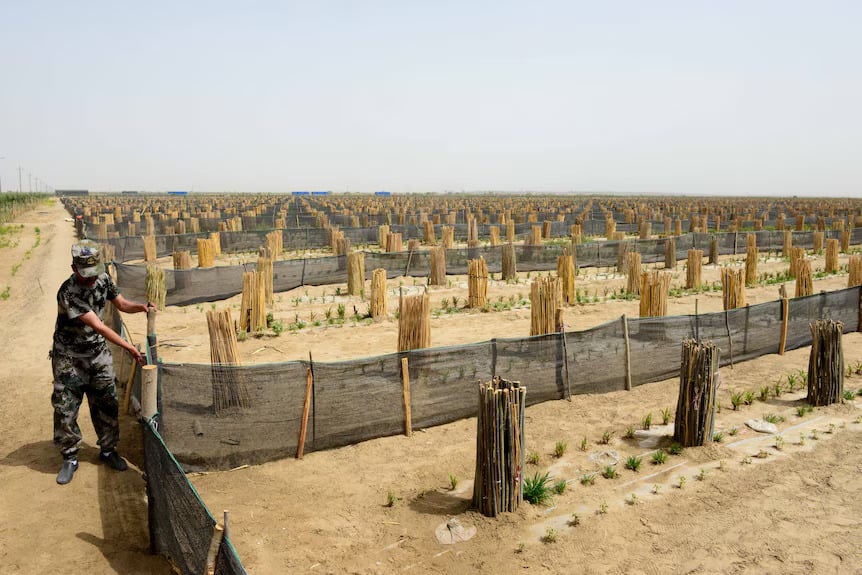
China’s Great Green Wall, formally known as the Three North Shelterbelt Program, was launched in 1978 to reduce wind erosion, protect farmland, slow desertification, and lessen the impact of sand and dust storms across northern China. The “Three North” refers to northern, northeastern, and northwestern China, a huge arc of vulnerable land where expanding deserts, soil loss, and land degradation had become serious ecological and economic threats. According to Reuters, the effort has now been underway for 46 years, and China reported in late 2024 that it had completed a 3,000-kilometer green belt around the Taklamakan Desert as part of the broader program. Reuters also reported that more than 30 million hectares of trees have been planted under the effort.
That scale alone explains why the project has fascinated researchers and policymakers for decades. This is not a local tree-planting campaign or a symbolic environmental pledge. It is a national land-management strategy measured in decades, provinces, and millions of hectares. It also reflects a hard truth about dryland restoration: desertification is not only an environmental issue. It affects agriculture, grazing, rural incomes, dust pollution, and long-term habitability. In northern China, those pressures were never abstract. They were tied to food systems, migration pressures, and the stability of communities living at the edge of expanding drylands.
What NASA Actually Confirmed
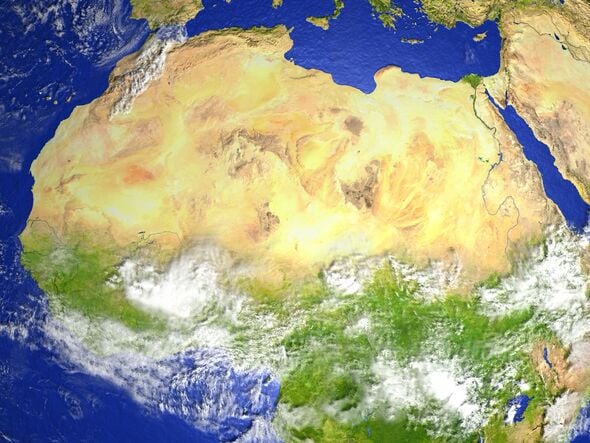
NASA has indeed published widely cited evidence that China is one of the world’s biggest contributors to recent global greening. Using MODIS satellite data, NASA reported in 2019 that China and India were leading the increase in foliage visible on land over the prior two decades, with China’s gains stemming mainly from ambitious tree-planting programs and intensive agriculture. That is a major finding, and it confirms that the land surface in China has changed enough to be clearly visible from space. NASA Earthdata has also highlighted research showing that multiple afforestation programs accelerated greening in China’s Three North region from 1982 to 2013.
But that is not the same as NASA officially declaring a precise 52 percent reduction in desert expansion, or confirming that rainfall rose 9 percent, humidity rose 15 percent, and average temperatures fell 1.5 degrees Celsius because of the Great Green Wall. Those specific claims were not supported in the NASA material surfaced here. What NASA-backed and NASA-highlighted sources do support is the broader point that China has seen major vegetation gains and that large-scale land-use management has been a big part of that greening. In other words, the viral story appears to overstate and oversimplify the official evidence, but the underlying environmental progress is still real.
Peer Reviewed Studies Show Real Desertification Reversal
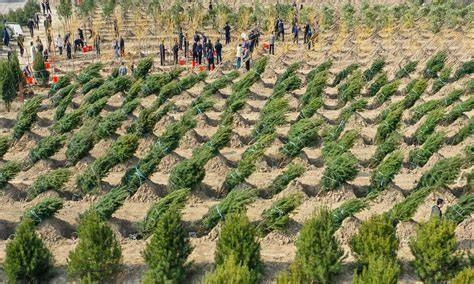
The strongest support for the project’s success comes from recent scientific work on desertification trends in northern China. A 2024 study on desertification in northern China from 2000 to 2020 found that 32.88 percent of the study area experienced significant desertification reversion, while only 5.86 percent underwent expansion. The study also found that population and afforestation were dominant drivers of desertification reversion, while precipitation and temperature contributed more to desertification expansion. That is an important balance. It means human intervention helped reverse desertification in many places, but climate factors still continued pushing degradation elsewhere.
Another major 2023 assessment of the Three North Shelter Forest Program concluded that over 40 years of construction, wind and sand hazards and soil erosion in China’s Three North areas had been effectively controlled, while forest carbon sequestration, grain production, and economic output increased. That is a strong endorsement from the research literature. It suggests that the program has delivered measurable ecosystem services and not merely symbolic planting totals.
Together, those studies support a grounded conclusion that is both defensible and significant: northern China has seen meaningful ecological recovery, satellite observations do show broad greening, and afforestation has been one of the important drivers. The project has not ended desertification everywhere, but it has helped reverse it across large areas. That is a major achievement in any honest accounting.
The Success Story Is Not Just About Trees
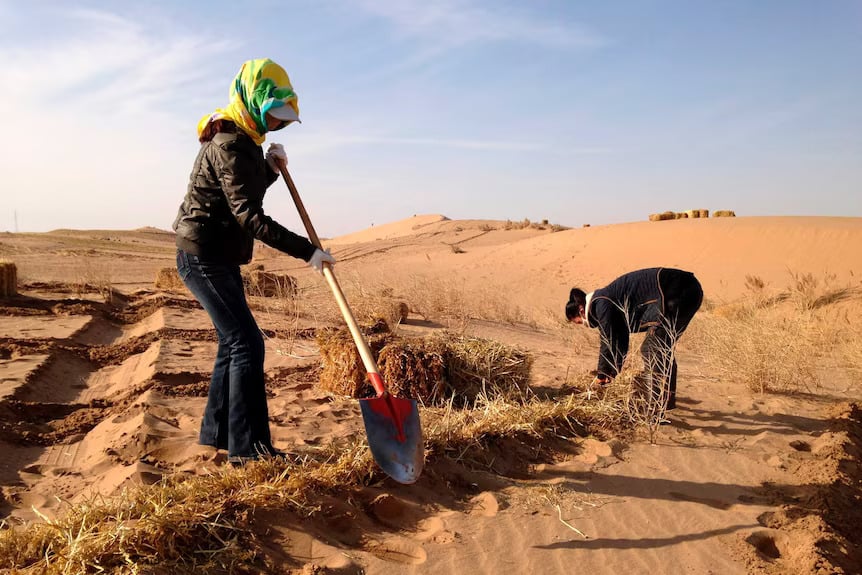
One reason the Great Green Wall attracts so much attention is the imagery of billions of trees pushing back the desert. But the real story is broader than tree counts. China’s anti-desertification work has also involved shrubs, grasses, shelterbelts, farmland protection, and region-specific restoration strategies. Reuters noted that the project involved decades of experimentation with different species to find plants hardy enough for harsh dryland conditions. That detail matters because dryland restoration is not simply a matter of planting as many trees as possible. Survival rates, water use, local soils, and species fit can determine whether restoration helps or fails.
That is why some researchers emphasize “greening” rather than just “forest expansion.” Greening can include shrubs, grassland recovery, and improved vegetation cover across mixed landscapes. In some dry areas, that may be more ecologically appropriate than dense forests. It also helps explain why satellite data are so useful here. Remote sensing does not just count planted saplings. It reveals whether land is actually retaining vegetation over time.
The Project Has Limits and Critics
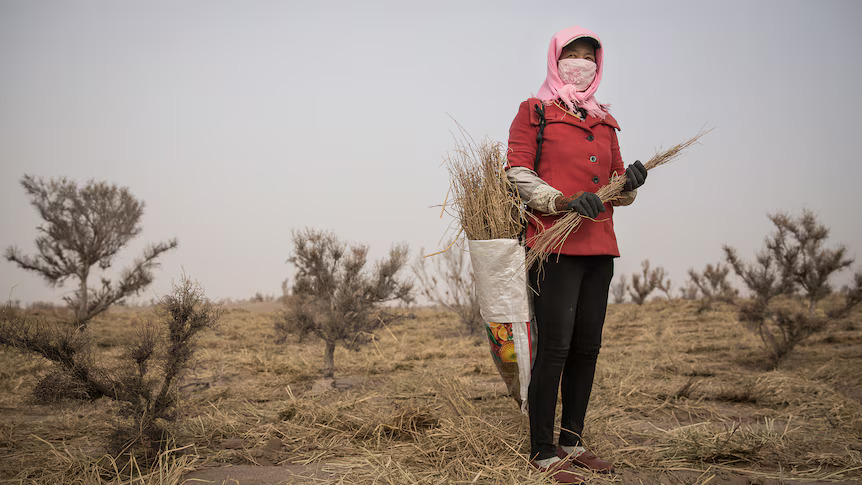
The most credible version of this story has to include the project’s limitations. Reuters reported in 2024 that critics say survival rates have often been low and that the tree-planting effort has not been uniformly effective in reducing sandstorms, which still affect places like Beijing. China’s own official data, as quoted by Reuters, also show that 26.8 percent of the country’s total land remains classified as desertified, only slightly down from 27.2 percent a decade earlier. That suggests important progress, but not a sweeping ecological victory across all desertified land.
Research has raised even sharper concerns. A 2023 Nature Communications paper examining “grain-for-green” and grazing exclusion practices in China’s desertification-prone region found that the joint contribution of those two practices to vegetation restoration was only 13.07 percent, with climate change and atmospheric carbon dioxide fertilization playing a larger role in many areas. The same study argued that some current anti-desertification programs may be suboptimal in certain regions and may carry serious tradeoffs for food production, livestock output, and local incomes.
Those findings do not cancel the broader success of the Great Green Wall, but they do complicate the easy narrative. They suggest that some interventions worked better than others, that natural factors also supported vegetation recovery, and that not every restoration policy should be treated as equally effective. In other words, large-scale restoration is not only about ambition. It is about design, local context, and continuous adjustment.
Climate, Carbon, and Human Management Are Intertwined
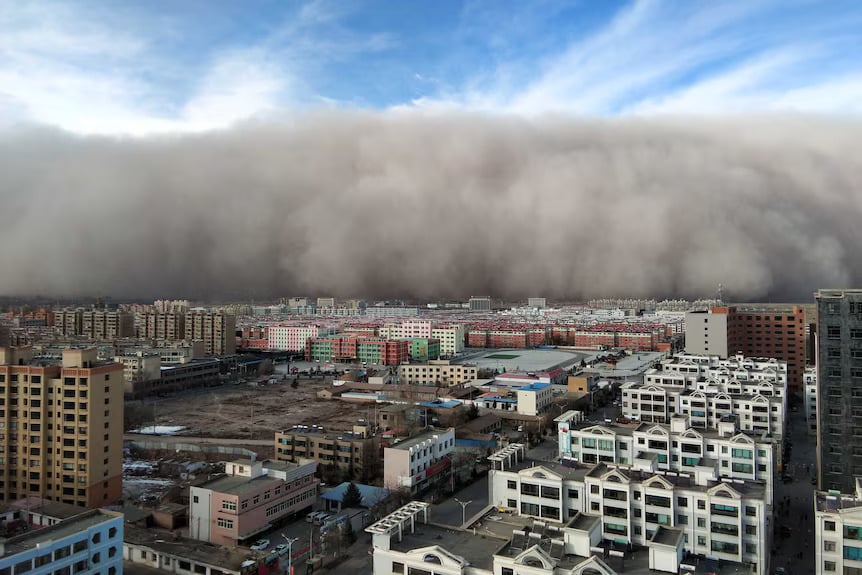
One of the most important lessons from the verified research is that China’s greening cannot be explained by a single cause. NASA’s greening findings point to direct human land-use management as a major driver. The 2024 desertification study found afforestation and human activity were important in desertification reversion. But the Nature Communications study also emphasized that climate variability and CO2 fertilization contributed strongly to vegetation recovery in many places.
That mix matters for two reasons. First, it prevents overclaiming. If greening is partly supported by climate conditions and atmospheric fertilization effects, then not all gains can be attributed neatly to one policy. Second, it shows why restoration outcomes may be fragile. What succeeds under one climate regime may struggle under another, especially in drylands where water stress is severe. That means maintaining progress may be harder than achieving the first visible gains.
The Economic and Social Dimension Is Huge
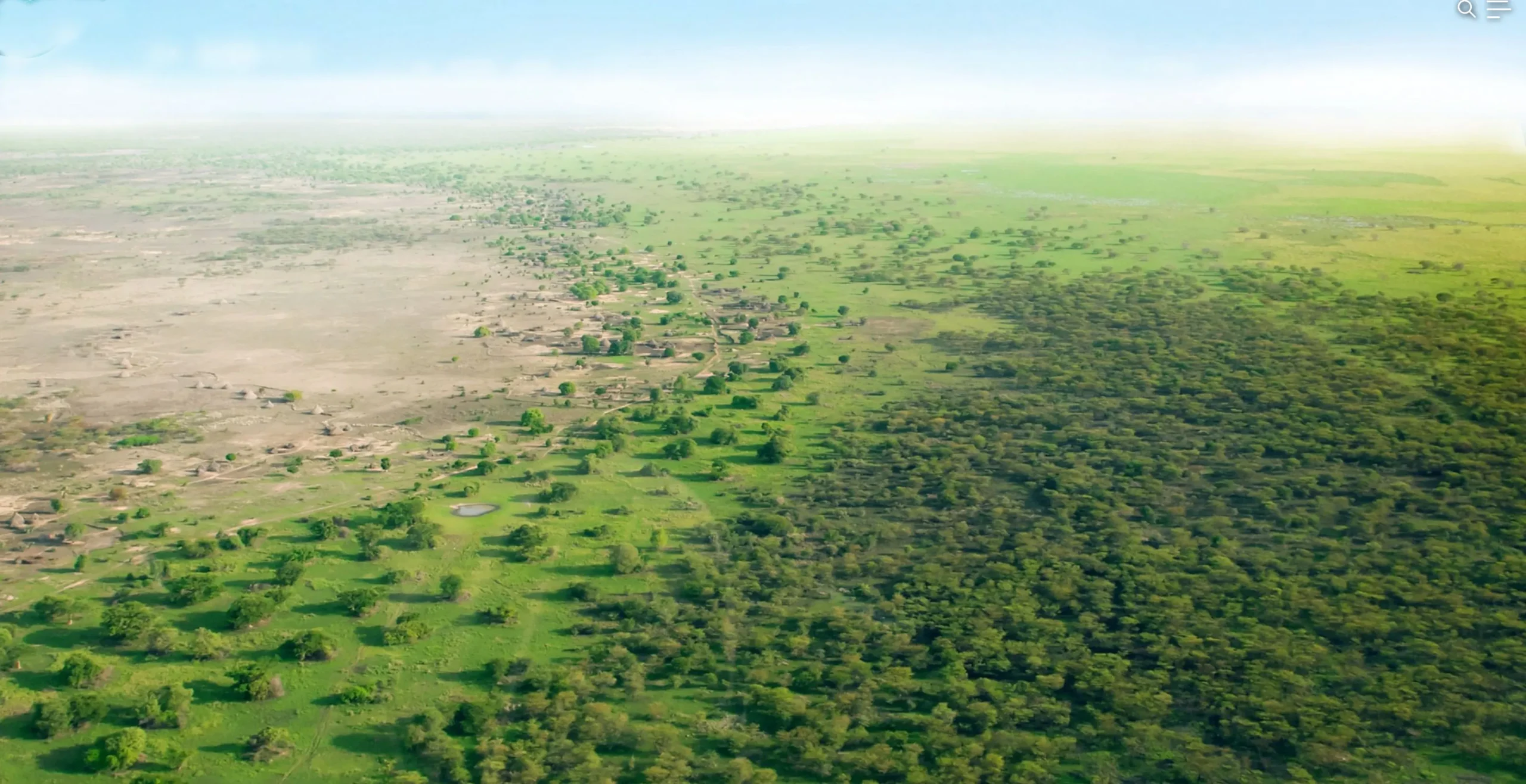
Environmental restoration on this scale inevitably shapes livelihoods. The 2023 four-decade assessment of the Three North Shelter Forest Program found not only ecological gains but also increased grain production and economic output. That supports the idea that anti-desertification efforts can create positive development effects when designed well.
But the same broader restoration landscape has also created tensions. The Nature Communications study found that certain practices reduced available farmland and grazing land and were associated with losses in grain and meat production in some desertification-prone areas, as well as reduced direct incomes for some farmers and herders compared with expected levels. That suggests the social consequences of restoration can vary sharply depending on the policy mechanism. A shelterbelt that protects farmland may help livelihoods, while restrictive land-use measures can also impose burdens if compensation is weak or planning is poorly targeted.
So the Great Green Wall should not be understood as a purely ecological spectacle. It is also a long-running political and economic project, one that has required balancing land restoration with rural survival, agricultural productivity, and public spending. That is part of why it matters globally. Most countries facing desertification will confront the same tension between ecological recovery and immediate human need.
What the World Can Learn From It
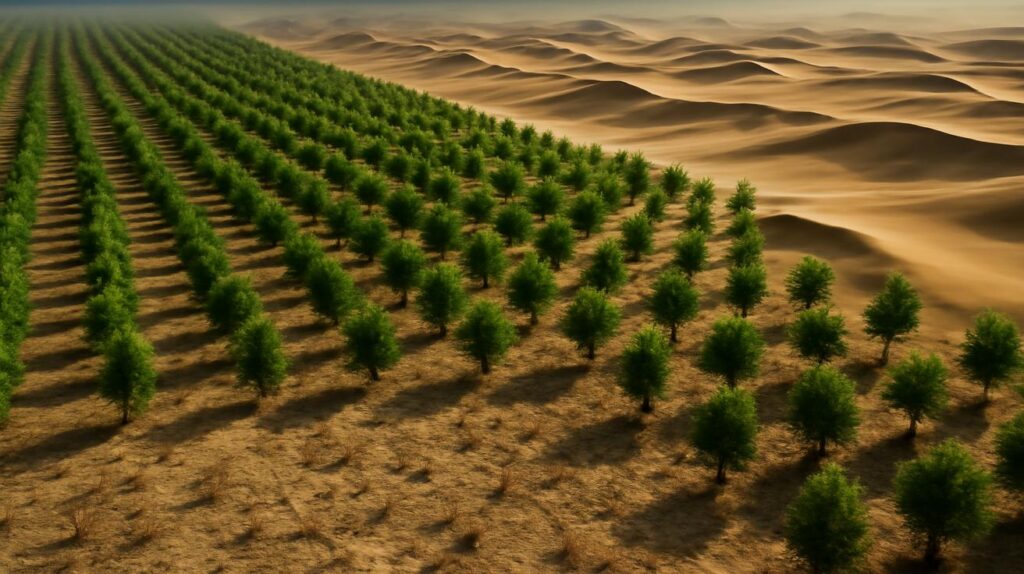
The strongest lesson from China’s Great Green Wall is not that mega-projects always work. It is that long-term restoration can work when backed by sustained state capacity, satellite monitoring, scientific adaptation, and region-specific management. NASA’s satellite-based greening evidence gives the project global visibility. Peer-reviewed studies show that large areas did experience desertification reversion. Reuters’ more recent reporting shows China is still expanding and refining its efforts, including around the Taklamakan Desert.
But the second lesson is just as important: restoration should not be romanticized. Poor species choices, low survival, overuse of water, weak local fit, and blunt land-use restrictions can all undermine good intentions. The best reading of China’s experience is therefore neither triumphalist nor cynical. It is pragmatic. Large-scale ecological repair is possible. It is visible from space. It can slow degradation. But it must be managed as an evolving system, not a one-time planting campaign.
In the end, the verified story is still powerful enough without the inflated numbers. China’s Great Green Wall has helped make the country greener, and recent studies show real desertification reversal across substantial parts of northern China. It has controlled wind and sand hazards in many areas, increased vegetation cover, and demonstrated that damaged landscapes can recover under sustained pressure. At the same time, it has not ended desertification, it has not worked evenly everywhere, and some policies tied to the broader anti-desertification push have carried real ecological and social tradeoffs. That is not a disappointing conclusion. It is a serious one. And for a planet searching for ways to live with land degradation and climate stress, serious may be far more useful than viral.