
Table of Contents
- A Major Second Amendment Ruling Lands
- What Hawaii’s Law Tried To Do
- The Court’s Core Reasoning
- What The Ruling Does Not Decide
- Why Gun Rights Groups Celebrated
- Gun Control Advocates Sound The Alarm
- The Property Rights Debate
- Why The Bruen Decision Still Matters
- The Dissenting Justices Push Back
- What This Means For Other States
- The Public Safety Question
- A Win For Trump Administration Lawyers
- What Happens Next
- A Ruling That Reshapes Everyday Carry
A Major Second Amendment Ruling Lands
When the Supreme Court struck down a Hawaii gun law restricting where licensed gun owners could carry firearms, the decision instantly became one of the biggest Second Amendment rulings of the year. The case, Wolford v. Lopez, centered on whether Hawaii could require people with concealed-carry permits to get express permission before bringing a gun onto private property open to the public, such as stores, hotels, shopping malls, and gas stations.
In a 6 to 3 decision, the court’s conservative majority sided with gun rights challengers and ruled that Hawaii’s default permission rule violated the Second Amendment. Justice Samuel Alito wrote the majority opinion, saying the law restricted what the Constitution protects: the right to carry arms for self-defense in daily life.
The ruling does not erase every gun restriction in Hawaii. It also does not mean property owners lose all control. Businesses and private property owners can still post signs banning firearms. But the decision changes the default rule. Instead of assuming guns are banned unless owners give permission, the court said licensed carriers cannot be blocked by that kind of automatic rule.
What Hawaii’s Law Tried To Do
Hawaii passed the law in 2023 after the Supreme Court’s landmark Bruen decision expanded the constitutional right to carry firearms in public for self-defense. Like several other Democratic-led states, Hawaii responded by trying to define where guns could still be restricted.
One part of the law created a presumption that firearms were not allowed on private property open to the public unless the property owner gave clear permission. Critics nicknamed it the “vampire rule” because, like the old folklore idea that a vampire must be invited in, a gun carrier needed an express invitation to enter with a weapon.
Supporters of the law said it protected property rights and public safety. Their argument was simple: private owners should decide whether firearms are welcome on their property.
Gun rights advocates saw it differently. They argued the law made public carry almost impossible because so many everyday places are privately owned but open to the public. In their view, the rule turned the constitutional right to carry into something that could disappear during ordinary errands.
The Court’s Core Reasoning
Justice Alito’s majority opinion framed the law as a burden on the right to carry firearms for self-defense. The court said Hawaii could not create a broad default ban on carrying guns into privately owned public spaces simply because the state preferred that arrangement.
The decision leaned heavily on the legal test created by New York State Rifle & Pistol Association v. Bruen in 2022. Under that test, modern gun laws must be consistent with the nation’s historical tradition of firearm regulation. Courts are not supposed to approve gun restrictions just because they seem useful or reasonable as public safety measures.
That historical-tradition test has reshaped gun litigation across the country. Instead of asking mainly whether a law advances an important government goal, courts now ask whether the government can point to historical examples that justify the modern restriction.
In Hawaii’s case, the majority was not convinced that the state had enough historical support for a rule that treated private property open to the public as gun-free by default.
What The Ruling Does Not Decide
One important detail is that the Supreme Court did not decide every part of Hawaii’s gun law. The case before the justices focused on the private-property default rule.
Hawaii also has restrictions on carrying firearms in certain places, including some public areas and locations the state considers sensitive. Some of those rules remain tied up in lower court litigation. That means the ruling is major, but not a total rewrite of every gun rule in the state.
This distinction matters because public debate around the case has sometimes described it as a ruling on guns in nearly all public spaces. The decision is more specific than that. It focuses on whether licensed carriers can be automatically barred from private businesses open to the public unless the owner gives express permission.
Still, the practical effect could be broad. Many daily locations, including stores, hotels, gas stations, and shopping centers, are privately owned. That makes the default rule extremely important in real life.
Why Gun Rights Groups Celebrated
Gun rights advocates quickly celebrated the ruling as a major victory. They argued that Hawaii’s law was designed to weaken the right recognized in Bruen by making legal carry difficult almost everywhere people actually go.
For supporters of the challengers, the decision restores the practical meaning of public carry. A right to carry, they argue, means little if the state can make most ordinary destinations off-limits by default.
The lawsuit was brought by Hawaii residents with concealed-carry licenses and the Hawaii Firearms Coalition. The challengers were also supported by the Trump administration at the Supreme Court.
Their argument connected the case to a larger national movement. Since Bruen, gun rights groups have challenged restrictions in several states, especially laws that designate more places as gun-free or set new rules for private property open to the public.
For them, the Hawaii decision sends a clear message: states cannot respond to Bruen by making public carry technically legal but practically unusable.
Gun Control Advocates Sound The Alarm
Gun control advocates reacted with alarm, arguing the decision puts more guns into everyday public life and weakens the ability of states to protect crowded spaces.
Groups such as Brady, Giffords, and Everytown criticized the ruling, with advocates saying the court had placed gun access above public safety and property-owner choice. They argued that Hawaii’s law was not a gun ban, but a rule allowing property owners to control what happens on their own premises.
Their concern is not only about Hawaii. Similar rules were passed or considered in other states after Bruen, including New York, New Jersey, Maryland, and California. The Supreme Court’s ruling now casts doubt on those policies.
For gun control advocates, the decision reflects a larger pattern: the court’s conservative majority continues to interpret the Second Amendment in a way that limits state flexibility after mass shootings and rising anxiety about firearms in public spaces.
The Property Rights Debate
One of the most interesting parts of the case is that both sides claimed to be defending freedom. Gun rights advocates said the case was about the right to armed self-defense. Hawaii and its supporters said it was about the right of property owners to decide what happens on their land.
That made the case more complicated than a simple guns-versus-government dispute.
Hawaii argued that property owners should not have to post signs banning guns if they do not want firearms on their property. The state believed silence should mean no guns allowed unless permission was clearly given.
The Supreme Court rejected that default rule. But the ruling still leaves property owners with a tool: they can post signs or otherwise give notice that firearms are not allowed.
That creates a new reality. The burden now shifts toward owners who do not want guns on their property. They must make that choice visible. Silence, after this ruling, generally cannot be treated as a state-imposed gun ban.
Why The Bruen Decision Still Matters
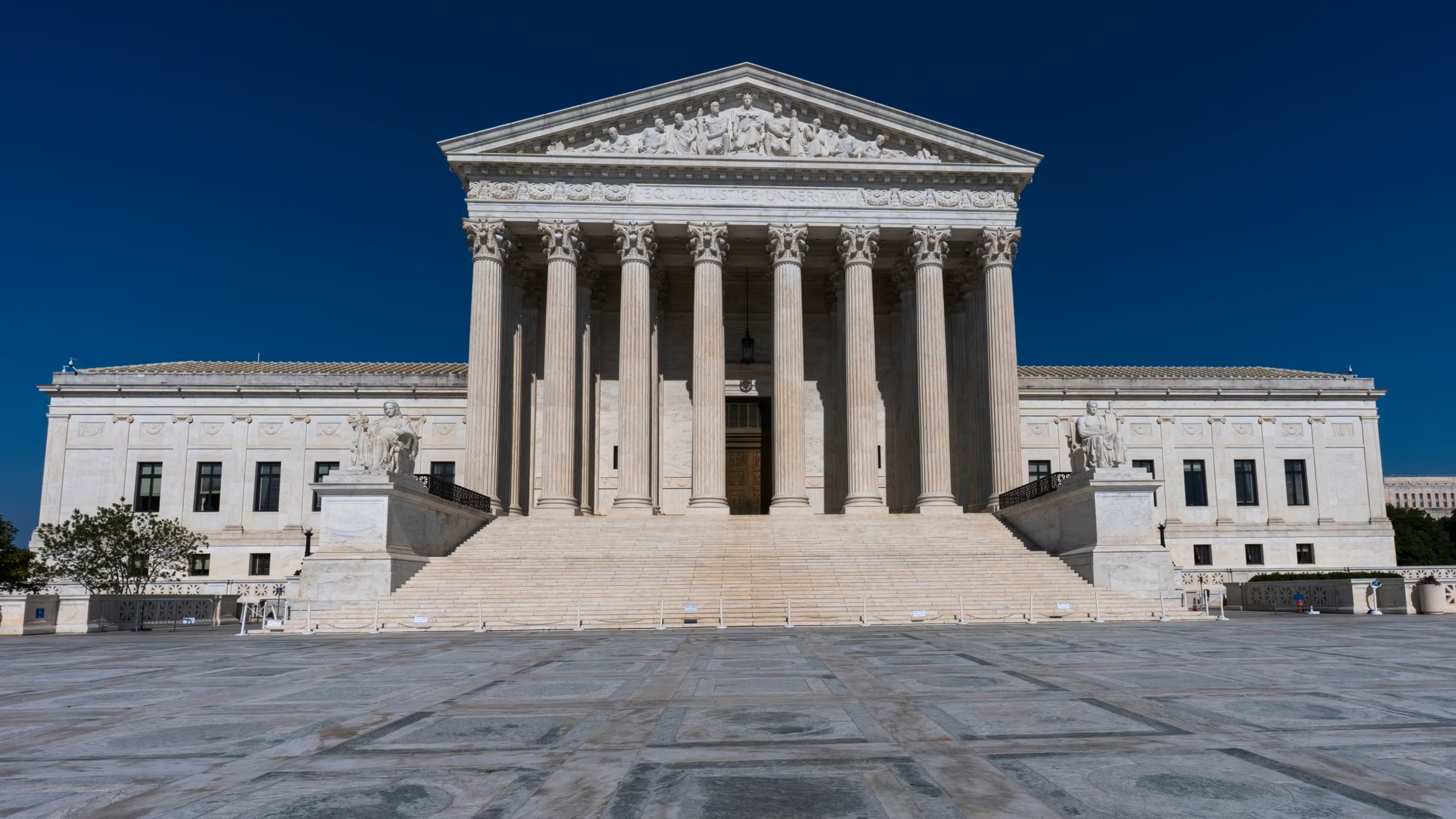
The Hawaii case is another major example of how the 2022 Bruen ruling continues to reshape American gun law. In Bruen, the Supreme Court struck down New York’s strict concealed-carry licensing system and said the Second Amendment protects the right to carry a handgun outside the home for self-defense.
But Bruen did more than decide one licensing case. It created the historical-tradition framework that lower courts now use to judge gun restrictions.
That framework has caused confusion, disagreement, and a flood of lawsuits. Judges must now compare modern gun laws to historical regulations from earlier periods, often dealing with weapons, cities, and social conditions that look very different from today.
Supporters say this protects constitutional rights from modern political overreach. Critics say it traps lawmakers in the past and makes it harder to respond to current gun violence.
The Hawaii ruling shows that Bruen remains one of the most powerful legal tools for gun rights advocates.
The Dissenting Justices Push Back
The court’s liberal justices dissented. Justice Ketanji Brown Jackson wrote strongly against the majority’s approach, criticizing what she saw as an expansive reading of gun rights that limits democratic lawmaking.
The dissenters argued that the majority’s historical method is being used to strike down reasonable modern regulations. In their view, states should have more room to address public safety and property concerns, especially after the Supreme Court itself changed the rules of public carry in Bruen.
The dissent also reflected frustration with how quickly the court’s Second Amendment doctrine has changed. Before recent decades, many firearm regulations survived constitutional challenges. Today, courts are more skeptical of gun restrictions, especially those affecting ordinary public carry.
For the dissenters, the Hawaii law was a legitimate attempt to balance gun rights with private property and community safety. For the majority, it went too far.
What This Means For Other States
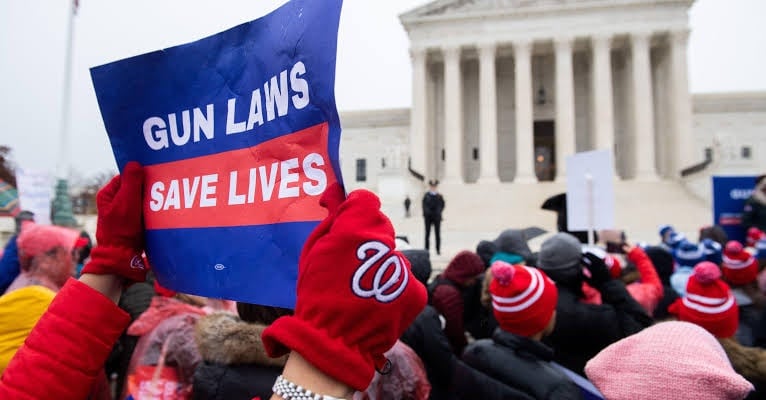
The decision could have immediate effects beyond Hawaii. States that adopted similar private-property default rules after Bruen may now face new legal challenges or have to revise their laws.
New York, New Jersey, Maryland, and California all passed laws attempting to regulate public carry in response to the Supreme Court’s 2022 ruling. Some of those laws included rules similar to Hawaii’s approach, creating a presumption against carrying guns on private property open to the public.
After Wolford v. Lopez, those provisions are on shakier ground. Lawmakers may need to rewrite them to survive constitutional challenge.
However, the ruling does not eliminate every option for states. Governments can still regulate guns in certain sensitive places, although the definition of “sensitive” remains contested. Property owners can also ban firearms by posting notices. The key difference is that the state cannot automatically treat silence as a broad prohibition.
The Public Safety Question
The ruling lands in a country deeply divided over guns. Supporters of gun rights often argue that law-abiding citizens should be able to protect themselves in public. They say restrictions mainly burden responsible permit holders, not criminals.
Gun control supporters argue that more guns in more places increase risk, especially in crowded public settings. They worry about disputes turning deadly, accidental shootings, intimidation, and confusion for police responding to emergencies.
The Supreme Court did not decide which side has the stronger public safety argument. Under the court’s current Second Amendment doctrine, the legal question depends heavily on constitutional history, not simply modern policy debate.
That is why the ruling frustrates many gun control advocates. They believe elected lawmakers should have more authority to respond to modern firearm violence. The court’s majority believes constitutional rights cannot be limited just because lawmakers believe restrictions are safer.
A Win For Trump Administration Lawyers
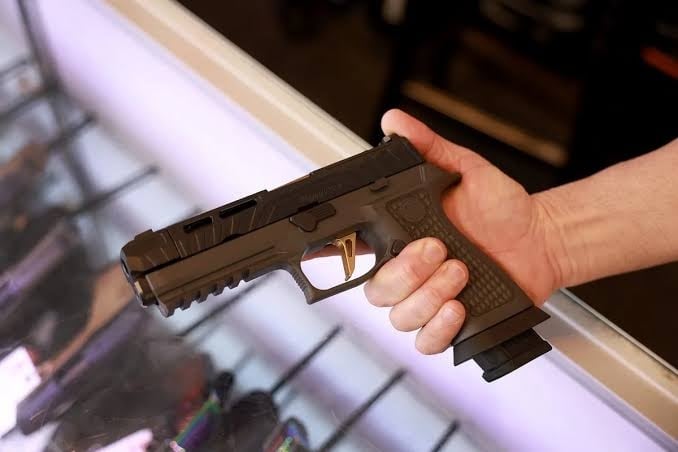
The case was also a win for the Trump administration, which supported the challengers before the Supreme Court. The administration argued that Hawaii’s law violated the Second Amendment and improperly restricted public carry.
That position fits with a broader Republican legal agenda focused on expanding gun rights and challenging state-level restrictions passed after Bruen. The ruling gives the administration and gun rights groups a major victory at the nation’s highest court.
Politically, the decision will likely energize both sides. Gun rights supporters will frame it as another correction to state overreach. Gun control advocates will use it as evidence that the court is making it harder for states to protect public spaces.
Like many Supreme Court gun cases, the ruling is not just legal. It is cultural, political, and emotional.
What Happens Next
The case now returns to lower courts, but the Supreme Court’s ruling sets the controlling principle on the private-property default issue. Hawaii must respect the decision and adjust enforcement accordingly.
Property owners who do not want firearms in their businesses can still post signs or provide notice. State lawmakers may also explore alternative approaches that comply with the ruling while preserving some limits on guns in crowded or sensitive areas.
Meanwhile, lawsuits over other parts of Hawaii’s gun laws and similar laws in other states are likely to continue. The next legal fights may focus on beaches, parks, restaurants serving alcohol, public transit, entertainment venues, churches, and other places states may call sensitive.
The court has not finished defining the outer limits of public carry. This ruling answers one question, but it opens many more.
A Ruling That Reshapes Everyday Carry
The Supreme Court’s decision in Wolford v. Lopez is a major moment in the post-Bruen era. It changes the legal default for carrying guns onto private property open to the public and signals that states must be careful when trying to limit public carry through broad presumptions.
For gun rights advocates, the ruling protects the practical right to carry for self-defense. For gun control supporters, it makes everyday public spaces feel less secure. For business owners, it shifts responsibility toward making firearm policies clear.
The deepest conflict remains unresolved. America is still trying to decide how to balance the constitutional right to bear arms with the desire for safety in stores, hotels, beaches, restaurants, and other shared spaces.
The court has now made clear that Hawaii’s approach crossed a constitutional line. But the national fight over where guns belong is far from over.