
Table of Contents
- When airport security suddenly became a national flashpoint
- A staffing crisis that is rapidly escalating
- The political battle behind the airport lines
- What ICE agents are expected to do at airports
- Concerns about security and public perception
- A crisis shaped by forces beyond airport control
- The broader implications for federal authority
- What travelers can expect in the coming weeks
- A turning point for how crises are managed in public systems
- The deeper question behind the headlines
When airport security suddenly became a national flashpoint
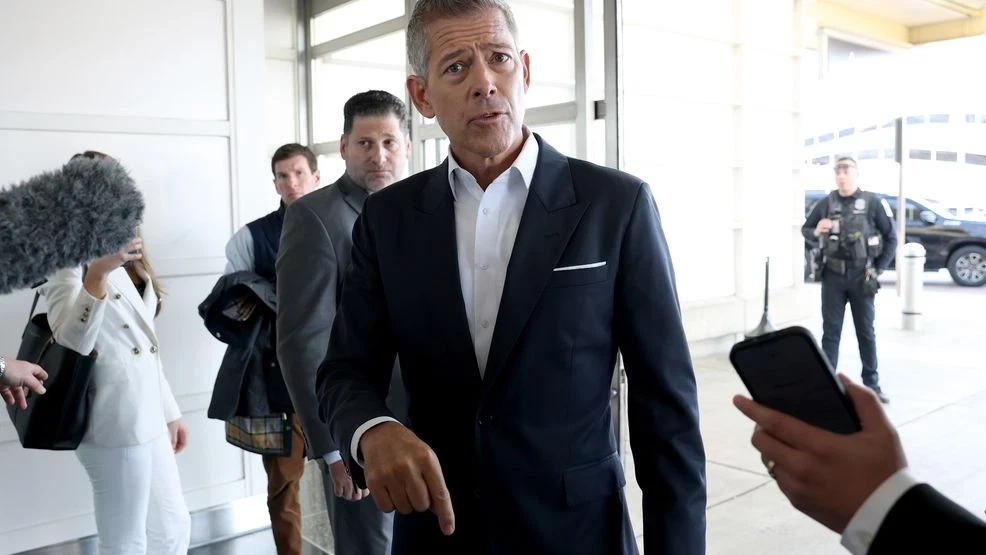
When reports emerged that Immigration and Customs Enforcement agents could be deployed to assist airport security operations across the United States, the announcement did not land as a routine administrative adjustment. It triggered immediate debate about safety, political strategy, and the broader direction of federal authority. Transportation Secretary Sean Duffy confirmed that ICE agents are trained and capable of assisting the Transportation Security Administration, describing the move as both practical and necessary amid growing disruptions. But what might appear on the surface as a staffing solution quickly revealed deeper tensions. This is not just about lines at airports. It is about who controls security, how crises are managed, and whether emergency decisions risk reshaping long-standing norms.
The timing of the announcement is critical. Airports across the country are facing increasing pressure as a result of staffing shortages tied to an ongoing Department of Homeland Security funding impasse. Long lines, delays, and growing frustration among travelers have turned what is usually a logistical inconvenience into a visible symbol of political gridlock. Against this backdrop, the decision to bring in ICE agents takes on added meaning. It becomes both a response to a practical problem and a signal of how the administration intends to navigate conflict with Congress.
A staffing crisis that is rapidly escalating
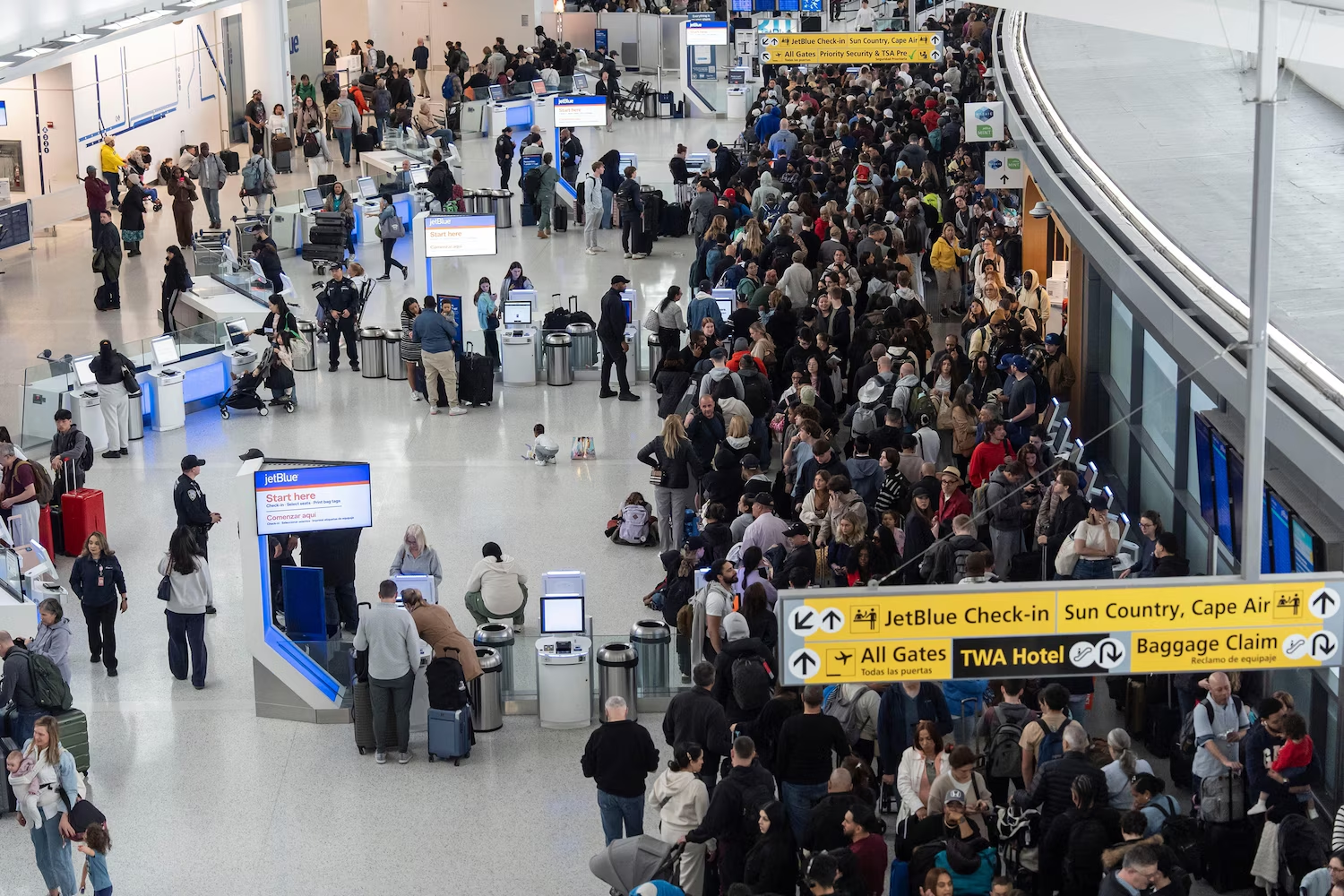
At the heart of the issue is a workforce under strain. Hundreds of TSA officers have reportedly left their positions or failed to report to work as pay disruptions linked to the funding standoff take effect. Security checkpoints that depend on consistent staffing levels are now struggling to maintain normal operations. For travelers, this translates into longer wait times, missed flights, and mounting uncertainty during one of the busiest travel periods of the year.
Duffy has warned that the situation could worsen in the coming days, especially as spring break travel intensifies. His message has been clear. Without immediate intervention, the system risks slipping further into chaos. From his perspective, the use of ICE agents is not an ideological move but a practical one. He argues that trained personnel are available and capable of stepping in where gaps exist.
But even this framing raises questions. TSA officers undergo specialized training tailored to airport security procedures, passenger screening protocols, and aviation safety standards. While ICE agents are law enforcement professionals with their own training and experience, the overlap is not exact. The administration insists that ICE personnel can operate similar equipment and assist with crowd management, but critics question whether this substitution truly maintains the same level of expertise and consistency.
The political battle behind the airport lines
What makes this situation more complex is that it is unfolding within a broader political standoff. Funding for key agencies under the Department of Homeland Security has been blocked amid disagreements between Democrats and Republicans over immigration enforcement policies. Democrats have pushed for reforms requiring ICE agents to follow stricter guidelines, including the use of body cameras, limitations on face coverings, and judicial oversight for certain actions. Republicans have rejected those proposals, leading to a deadlock that has left agencies like TSA in a precarious position.
Duffy has openly blamed Democrats for the disruptions, arguing that the visible consequences at airports are a direct result of their refusal to pass funding without policy changes. He has also suggested that some lawmakers see the chaos as a form of leverage, a way to pressure the administration during negotiations. In that sense, the airport becomes more than a transportation hub. It becomes a stage where political conflict is felt in real time by ordinary citizens.
From the administration’s perspective, deploying ICE agents serves a dual purpose. It addresses immediate staffing needs while also undermining the political leverage that comes from visible disruption. If long lines disappear, the argument goes, the pressure on Congress to act may diminish. But this strategy also risks deepening partisan divisions, as critics interpret it as an expansion of federal enforcement power into new spaces.
What ICE agents are expected to do at airports

According to officials, ICE agents would not replace TSA officers entirely but would assist in specific roles. These could include operating certain types of screening equipment, managing passenger flow, and providing administrative support. The administration has emphasized that ICE personnel are trained in handling high-volume processing environments, citing their work at border facilities where they manage large numbers of people and process materials through security systems.
This comparison is central to the administration’s argument. If ICE agents can handle complex operations at the border, they argue, then assisting in airport environments is a logical extension of their capabilities. Duffy has pointed to similarities in equipment and procedures, suggesting that the transition would not be as disruptive as critics fear.
However, the environments are not identical. Airports operate under strict aviation security protocols that are continuously refined to address evolving threats. TSA officers are trained specifically within this framework. The question is not whether ICE agents are capable professionals, but whether their training aligns closely enough with the unique demands of airport security to ensure seamless integration.
Concerns about security and public perception
Beyond operational questions, the deployment of ICE agents raises concerns about perception and trust. Airports are already high-stress environments where passengers expect a consistent and predictable security process. Introducing a different type of federal agent into that space could create confusion or anxiety, especially among travelers who associate ICE primarily with immigration enforcement rather than transportation safety.
There is also the issue of optics. For some observers, the presence of ICE agents at airports may blur the line between security operations and immigration enforcement. Even if their role is limited to assisting TSA, the symbolism carries weight. It could change how travelers interpret the purpose of security checkpoints and the broader environment of the airport.
Supporters of the move argue that safety and efficiency should take precedence over perception. If ICE agents can help reduce wait times and maintain order, then their presence is justified. Critics counter that security is not just about function but also about trust. Any change that alters public confidence in the system must be carefully considered.
A crisis shaped by forces beyond airport control

While the staffing shortage is a central issue, it is not the only challenge facing the aviation sector. Rising global tensions, particularly the ongoing conflict involving Iran, have disrupted energy markets and driven up oil prices. This has direct implications for airlines, as higher fuel costs translate into increased operational expenses and potentially higher ticket prices for consumers.
Major airlines are already preparing for scenarios where oil prices could climb significantly higher, adding another layer of uncertainty to an already strained system. Duffy has attempted to reassure the public, stating that airlines currently have sufficient fuel supplies and that price spikes may be temporary. He has suggested that once geopolitical tensions ease, energy markets will stabilize and costs will begin to decline.
However, the combination of staffing shortages, political gridlock, and external economic pressures creates a complex environment. Airports are not isolated systems. They are part of a larger network influenced by global events, domestic policy decisions, and consumer demand. Addressing one issue does not automatically resolve the others.
The decision to involve ICE in airport operations also raises broader questions about the scope of federal authority. Traditionally, different agencies have distinct roles. TSA focuses on transportation security, while ICE handles immigration enforcement. Blurring those boundaries, even temporarily, could set precedents for how federal resources are deployed in future crises.
Supporters see flexibility as a strength. In times of disruption, the ability to reassign trained personnel across agencies can help maintain continuity and prevent system breakdowns. Critics worry that such flexibility could lead to overreach, where emergency measures become normalized and agency roles expand beyond their original mandates.
This tension reflects a larger debate about governance. How much adaptability should federal agencies have in responding to crises, and where should limits be drawn to preserve accountability and clarity? The current situation at airports brings these questions into sharp focus.
What travelers can expect in the coming weeks

For travelers, the immediate concern is practical. Will wait times improve, and will the airport experience become more predictable? The answer remains uncertain. While the addition of ICE agents may provide short-term relief, the underlying issues of funding and staffing must still be resolved to achieve long-term stability.
Duffy has indicated that the situation may worsen before it improves, particularly as travel demand peaks. This suggests that passengers should prepare for continued disruptions, even as new measures are introduced. The success of the ICE deployment will depend on how quickly agents can integrate into existing operations and how effectively they can support TSA personnel.
At the same time, airlines and airport authorities will need to adapt to changing conditions, balancing security requirements with the need to keep passengers moving efficiently. The coming weeks will serve as a test of the system’s resilience under pressure.
A turning point for how crises are managed in public systems
In many ways, the current airport situation represents a broader shift in how public systems respond to crises. Instead of waiting for political resolutions, the administration has chosen to act within its available resources, using existing personnel to address immediate needs. This approach prioritizes action over negotiation, but it also carries risks if those actions create new controversies or unintended consequences.
The use of ICE agents at airports may ultimately be remembered as a temporary measure during an unusual period. Or it could become a case study in how federal agencies adapt to overlapping challenges. Either way, it highlights the importance of coordination, communication, and public trust in managing complex systems.
The deeper question behind the headlines

As the debate continues, one question remains at the center of the story. What is the balance between efficiency and principle in times of crisis? For the administration, the priority is clear. Reduce disruption, maintain order, and keep the system functioning. For critics, the concern is equally clear. Ensure that short-term solutions do not undermine long-term standards or blur critical lines of responsibility.
Airports may seem like a narrow focus, but they reflect larger dynamics in governance, policy, and public life. They are places where security, mobility, and trust intersect. Decisions made there ripple outward, shaping how people experience both travel and the institutions that manage it.
In that sense, the deployment of ICE agents is more than a logistical adjustment. It is a moment that reveals how a nation responds when pressure builds, systems strain, and choices must be made quickly. Whether it is seen as a necessary solution or a controversial overstep will depend not only on outcomes, but on how those choices align with the values people expect from the systems designed to serve them.