
Table of Contents
- When a trucking safety push became an immigration flashpoint
- What the new rule set out to do
- Why the administration says the change is necessary
- The data problem that critics keep returning to
- Why the rule triggered charges of discrimination
- The strange split inside the trucking crackdown
- California became the center of the political battle
- What this could mean for the trucking workforce
- The larger question this fight leaves behind
When a trucking safety push became an immigration flashpoint
When the Trump administration announced a tougher trucking safety crackdown, the message sounded simple enough: make American roads safer, crack down on weak driver training, and prevent unqualified drivers from getting behind the wheel of massive commercial trucks. On its surface, it was the kind of policy shift that could appeal to a wide audience. After all, few things are more alarming than a deadly crash involving a semi truck, and few promises sound more urgent than protecting families on highways.
But as the details emerged, one part of the administration’s plan quickly became far more controversial than the rest. A new emergency rule moved to block certain immigrants from obtaining commercial driver’s licenses, even if they had legal authorization to work in the United States under previous policies. What began as a transportation safety measure suddenly turned into a much larger national fight over immigration, labor, discrimination, and whether the government was using road safety as a cover for another immigration crackdown.
That is why the issue has drawn such intense attention. It is not just about truck licenses. It is about who gets access to economic opportunity, what kind of evidence the government must show before changing policy, and how far federal agencies can go when they link immigration status to public safety. What follows is the story behind a rule that landed with extraordinary force and immediately triggered lawsuits, industry concern, and accusations that the administration was targeting immigrant workers without proving they posed a greater danger.
What the new rule set out to do

At the center of the controversy is an emergency rule that bars certain categories of immigrants from obtaining a non domiciled commercial driver’s license. These licenses had previously been available to people who were not permanent residents but were authorized to work in the United States. That included asylum seekers, refugees, and recipients of Deferred Action for Childhood Arrivals, more commonly known as DACA.
Under the older system, these immigrants still had to attend truck driving schools, pass tests, and meet the same general requirements expected of other drivers. The administration’s new rule changed that path. It singled out these groups and moved to block them from obtaining the commercial credentials required to drive large trucks professionally.
The Transportation Department defended the move by pointing to fatal crashes involving immigrant truck drivers and arguing that stronger rules were needed. Officials said the government had identified safety concerns tied to unqualified or insufficiently vetted drivers. Yet critics quickly pushed back, saying the administration had not produced convincing data showing that these immigrant groups were more likely to cause crashes than other truck drivers.
That gap between the administration’s claims and the available evidence became the defining issue in the legal and political battle that followed.
Why the administration says the change is necessary
For the Trump administration, the argument was framed as common sense. Officials said commercial trucking involves enormous responsibility, and any weakness in training, record checks, or licensing procedures can carry deadly consequences. In their view, if the federal government could not adequately verify the backgrounds or driving histories of some noncitizen applicants, then states should not be issuing them commercial licenses that allow them to operate large vehicles on public roads.
The administration also highlighted several fatal crashes involving drivers who held non domiciled commercial licenses. In public statements, officials argued that such tragedies showed why the system needed to be tightened. They pointed especially to cases where immigration status or licensing history later came under scrutiny, suggesting that the government had allowed people onto the roads who never should have qualified in the first place.
Transportation Secretary Sean Duffy also took aim at state licensing operations, particularly in Democratic led states such as California and New York. He said federal audits had revealed unsafe practices and threatened to withhold large amounts of federal money if states did not overhaul how they handled certain commercial licenses.
The administration’s message was unmistakable. This was presented not as a technical licensing adjustment, but as a national safety correction. The problem, according to critics, is that the evidence supporting such a sweeping conclusion remains thin.
The data problem that critics keep returning to
Opponents of the rule do not deny that truck crashes are serious or that licensing standards matter. Their main challenge is much narrower and more damaging: where is the data proving that these immigrants are less safe drivers?
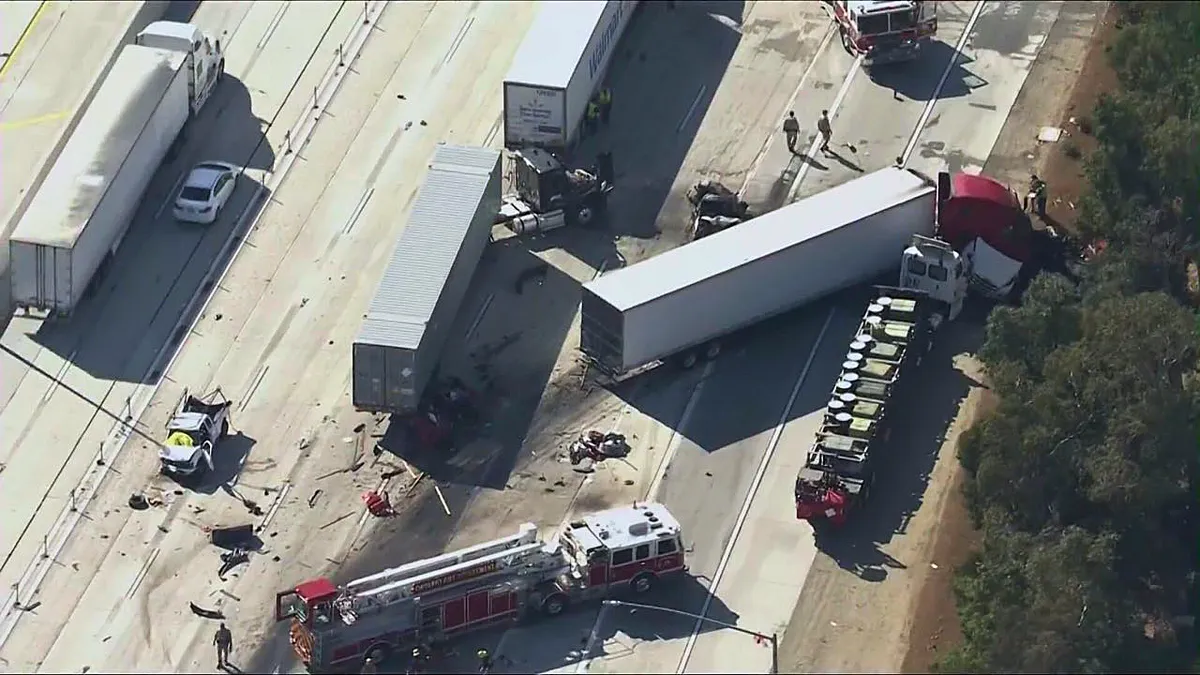
That question has become the weak point in the administration’s case. Fatal crashes involving large trucks had actually declined in recent years, according to federal data cited in the debate. In the 12 months through September of the period described in the original reporting, fatal crashes involving large trucks dropped to 3,632 from 4,292 a year earlier, a decline of about 15 percent. That alone did not disprove the administration’s concerns, but it complicated the urgency of the narrative.
Even more significant, no studies had been conducted showing how many holders of non domiciled commercial licenses were involved in crashes compared with other truck drivers. In other words, the administration was making a major policy argument without a broad body of statistical evidence demonstrating that the targeted population posed a distinct safety threat.
That absence of proof did not go unnoticed in court. A federal appeals court stayed the rule, signaling serious skepticism that the government had shown the regulation would create any net safety benefit. The judges also noted that federal regulators themselves had previously acknowledged insufficient evidence linking the nation of domicile of a commercial driver to safety outcomes in the United States.
That judicial response was a major blow. It suggested that the administration’s central argument, while politically potent, had not been established strongly enough to survive immediate scrutiny.
Why the rule triggered charges of discrimination
Beyond the statistics, the rule also ignited deep anger among immigrant groups and civil rights advocates who saw it as discriminatory. Their concern was not just about commercial licensing. It was about the image of immigrant workers being cast as dangerous without adequate proof.
One especially vocal area of concern came from Sikh advocacy groups. Sikh Americans make up a significant presence in the trucking industry, and opponents argued that the rule would inflame bias against immigrant truck drivers, especially Sikhs, by reinforcing the idea that foreign born drivers are inherently less qualified or less safe.
That criticism hit a raw nerve because trucking has long served as a pathway to stability for immigrants. It is demanding work, often involving long hours and time away from family, but it can provide a relatively quick route to decent earnings. For many immigrant communities, trucking is not just another job sector. It is one of the industries where new arrivals have been able to build a foothold in the American economy.
Critics say the rule threatens that path by attaching suspicion to immigration categories rather than to actual driving records or demonstrated misconduct. In their view, if safety is truly the concern, regulators should focus on measurable performance, school quality, testing standards, and enforcement across the board, not on singling out groups based on immigration status.
The strange split inside the trucking crackdown
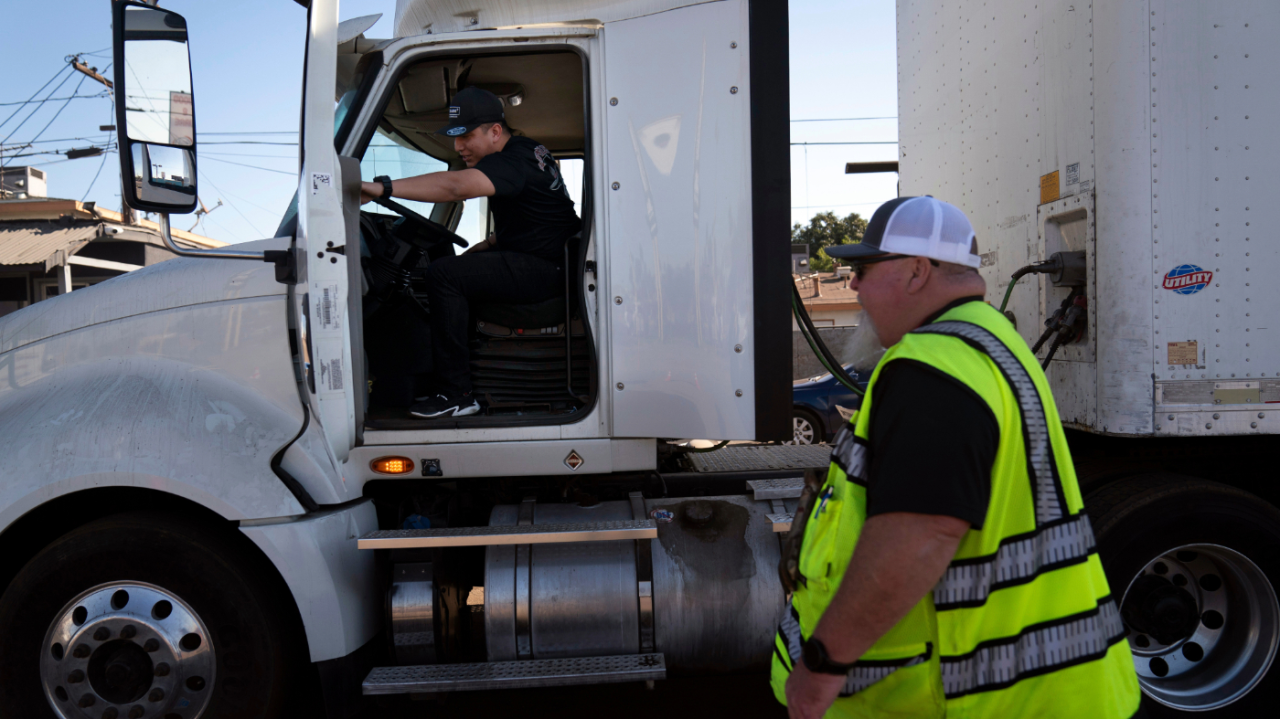
One reason the issue has become so complicated is that not every part of the administration’s trucking push has been rejected by the industry. In fact, some elements have drawn support. The campaign against poorly run truck driving schools has been viewed more favorably by certain industry voices, especially those who say substandard training operations have grown in recent years.
That creates a sharp contrast inside the same policy package. On one hand, the administration’s move against weak training schools was seen by some as a legitimate attempt to raise standards. On the other hand, the rule targeting asylum seekers, refugees, and DACA recipients was seen as a much more ideological measure, one that went beyond training quality and moved directly into immigration restriction.
This split matters because it shows the debate is not simply pro safety versus anti safety. Many critics of the immigrant licensing rule support stricter standards for schools and more serious oversight of training. Their objection is that the administration blended a popular safety initiative with a much more divisive immigration policy and then presented both as equally necessary.
That strategy may have worked politically with some audiences, but it also invited legal trouble because courts tend to ask for evidence, not slogans.
California became the center of the political battle
California emerged as one of the main targets in the administration’s public argument. Federal officials accused the state of issuing commercial licenses and learner permits that did not comply with regulations. California later acknowledged that about 17,000 non domiciled licenses and permits had been issued in ways that were not compliant.
That admission gave the administration a powerful talking point. Yet California pushed back hard on the broader implication that its drivers were unusually unsafe. State officials argued that commercial drivers licensed in California were involved in fatal crashes at a lower rate than those from most other states. According to the figures cited in the reporting, California drivers with commercial licenses were involved in fatal accidents at a rate of 0.84 per 1,000 license holders in 2023.
That number became important because it undercut the administration’s effort to use California as an obvious symbol of danger. Texas, by comparison, had a higher cited rate of 1.21 fatal crashes per 1,000 commercial drivers. Critics seized on that contrast and asked whether the administration was scrutinizing blue states more aggressively than red ones.
Federal officials denied any political imbalance and insisted the audit was nationwide. Still, the spotlight on California showed how transportation policy had become entangled with familiar partisan patterns, where blue states were repeatedly presented as examples of failure even when the broader evidence was more mixed.
What this could mean for the trucking workforce
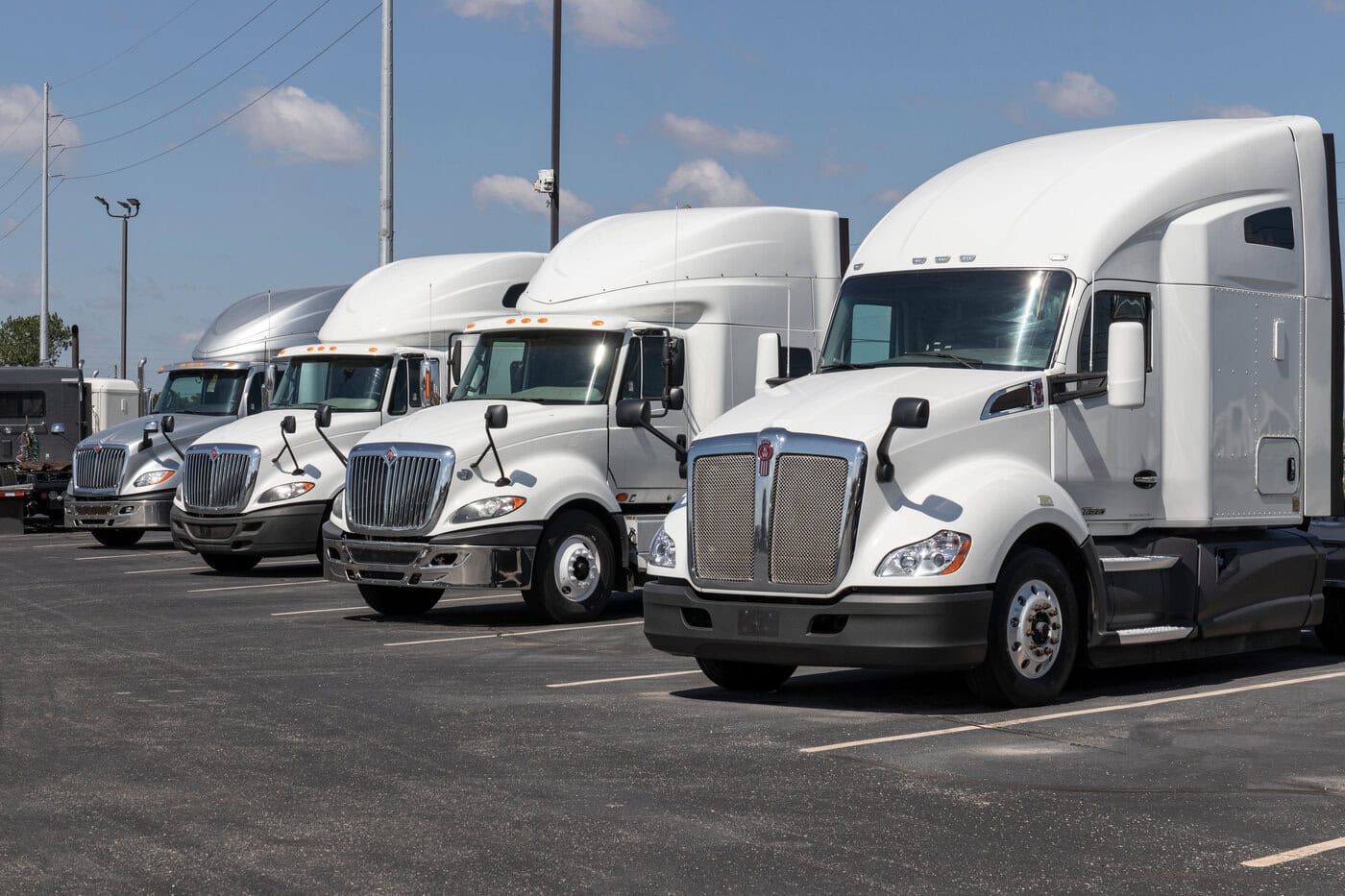
Despite the intensity of the debate, logistics experts suggested that removing some immigrant drivers from the industry would probably not trigger an immediate nationwide supply chain crisis. Trucking companies have been dealing with a market where too many drivers have been chasing too little freight in recent years, which has hurt smaller operators and created financial strain across parts of the sector.
That economic context matters. If thousands of drivers were removed, the effect would depend heavily on where those drivers worked, what freight they hauled, and how the market was performing at the time. Some experts said the impact would likely be limited rather than catastrophic.
Still, that does not mean the rule would be insignificant. For the individual drivers affected, the consequences could be enormous. Losing access to a commercial license could mean losing income, stability, and one of the few professions that offered a viable middle income path relatively soon after arriving in the country. For immigrant communities that have relied on trucking as a source of economic mobility, the policy carried emotional and financial weight far beyond what national market analysis could capture.
So while the industry as a whole may absorb such changes, the burden would not be evenly shared. It would fall hardest on the workers whose status placed them directly in the rule’s crosshairs.
The larger question this fight leaves behind
At its core, the Trump administration’s trucking rule is about more than truck licenses. It raises a larger question that keeps appearing across modern politics: when officials invoke safety, how much evidence should they have before restricting a group’s rights or opportunities?
That question matters because safety is one of the most powerful justifications any government can use. It can persuade the public quickly, especially after tragic accidents. But safety based arguments become far more controversial when they are not clearly supported by broad data and when they fall most heavily on already vulnerable groups.
The administration may yet revise and reissue the rule after reviewing public comments. The legal fight is not necessarily over. But the court’s early skepticism made one thing clear: if the government wants to defend this policy, it will likely need more than a handful of tragic cases and forceful rhetoric. It will need to show that the targeted drivers truly present a measurable risk that existing laws and licensing systems cannot address.
Until then, the rule will remain what it has become in the eyes of many critics: not simply a trucking safety reform, but another chapter in a broader effort to narrow immigrant access to work and to recast immigration policy through the language of danger. That is what makes this fight so volatile. It sits at the intersection of highways, livelihoods, and national identity. And that is exactly why the battle over who gets to drive America’s trucks is no longer just about the road.