

Table of Contents
A Tradition of Faith at In-N-Out
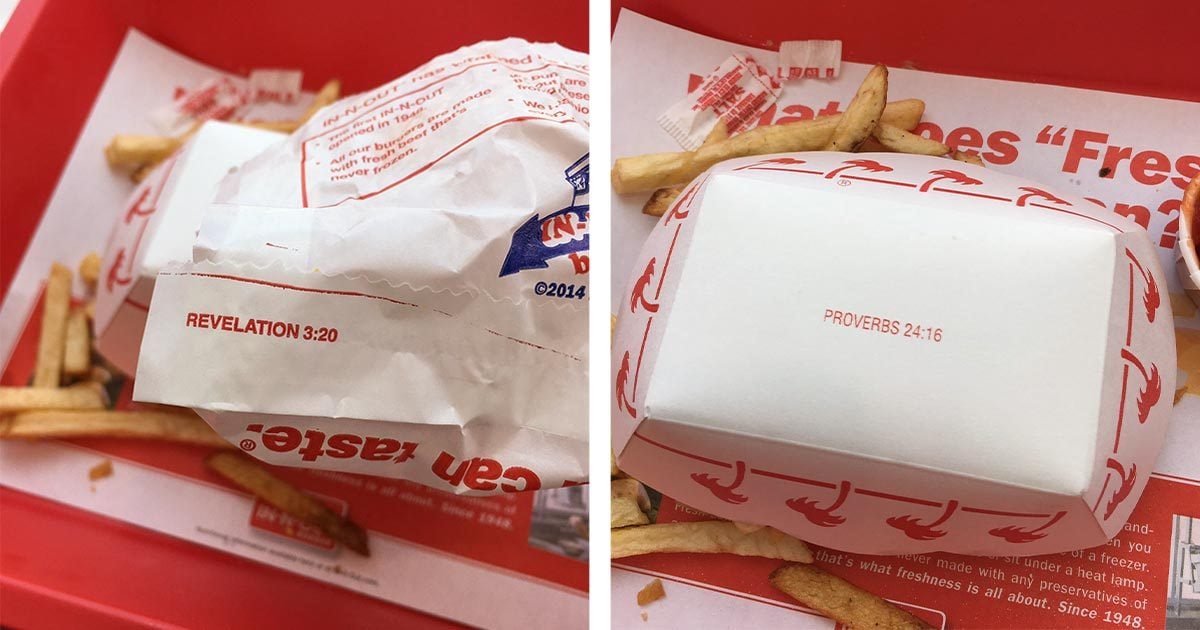
The inclusion of Bible verses on In-N-Out’s packaging is not a new development. In fact, this practice has been in place for decades, dating back to the early days of the company’s founding by Harry Snyder in 1948. The verses, which appear on cups, fries cartons, and burger wrappers, are typically references to Christian scripture, including popular passages like John 3:16 and Revelation 3:20. The Snyder family, which has maintained ownership of the company, has consistently upheld its Christian values as part of its business philosophy.
For In-N-Out, the Bible verses are a reflection of the company’s commitment to its faith and values. Lynsi Snyder, the company’s current president and granddaughter of the founder, has maintained that the Bible verses are a positive and non-controversial message of hope, meant to inspire and encourage customers. Despite the increasing debate over religious messaging in the public sphere, Snyder has made it clear that this practice is part of what makes In-N-Out unique and is unlikely to change in the face of opposition.
The Backlash and Criticism

In recent years, the presence of Bible verses on In-N-Out’s packaging has garnered renewed attention, often accompanied by criticism from those who believe that religion should be kept separate from business practices. Critics argue that the verses, especially those referencing specific Christian doctrines, may alienate customers who do not share the same religious beliefs. This has sparked calls for In-N-Out to remove the Bible verses from its packaging to ensure inclusivity and to avoid potential legal challenges related to religious expression in commercial spaces.
The backlash has not been limited to consumers alone. Some advocacy groups have raised concerns about the intersection of religion and business, particularly when it comes to companies that operate in a diverse, pluralistic society. Legal experts have also weighed in, questioning whether the inclusion of religious messaging could be seen as a violation of the separation of church and state, especially in locations where state and local laws prohibit religious expression in public spaces.
In-N-Out’s Commitment to its Values
Despite the criticism, In-N-Out’s leadership remains steadfast in its decision to keep Bible verses on its packaging. President Lynsi Snyder has emphasized that the company’s faith-based messaging is rooted in tradition and reflects the values of its founders. In an official statement, Snyder reaffirmed the company’s commitment to its Christian principles, stating that In-N-Out is a “family business” that has always adhered to its founders’ vision, including their belief in sharing the message of faith with others.
Lynsi Snyder’s response to the controversy has been one of resilience, emphasizing that the Bible verses are not meant to offend or exclude, but rather to offer inspiration and positivity. “We’ve been doing this for over 70 years, and it’s something we believe in wholeheartedly,” Snyder said in a recent interview. “It’s part of who we are as a company.”
For Snyder and the In-N-Out team, the decision to continue featuring Bible verses on packaging is not about challenging public opinion, but about staying true to their Christian heritage and the values that have guided the company’s success.
The Public’s Response: Praise and Support
While In-N-Out has faced its share of criticism, the company also enjoys a loyal following of customers who appreciate the religious messaging on its packaging. Many patrons have expressed their support for the inclusion of Bible verses, viewing it as a refreshing reminder of faith in an increasingly secular world. For some, In-N-Out’s commitment to its values is one of the reasons they continue to support the brand, despite the controversy.
In-N-Out’s fans have taken to social media to express their admiration for the company’s decision to stand firm on the issue. Supporters argue that businesses should be allowed to express their religious beliefs in the same way that individuals are free to practice their faith. For these customers, the Bible verses on the packaging are a reminder of the company’s integrity and its commitment to ethical principles, both in business and in life.
Legal and Ethical Considerations
The debate over Bible verses on In-N-Out’s packaging touches on broader legal and ethical issues surrounding religious freedom in the workplace and public spaces. While the U.S. Constitution guarantees the freedom of religion, the application of this right in commercial contexts can be complex. Critics argue that businesses that serve a diverse customer base should be mindful of religious diversity and avoid imposing religious views on customers who may not share the same beliefs.
On the other hand, supporters of In-N-Out’s practice point to the company’s right to free speech and religious expression. According to legal experts, private businesses have the right to express their religious beliefs, as long as their actions do not discriminate against others or violate local laws. In-N-Out has stated that it strives to respect all customers, regardless of their faith, and that the Bible verses are meant to inspire, not alienate.
As the debate continues, the role of religion in business practices remains a hotly contested issue. In-N-Out’s decision to keep Bible verses on its packaging will likely serve as a point of reference for future discussions on the intersection of faith, business, and freedom of expression.
A Look at Other Companies with Religious Ties
In-N-Out is not the only company that has integrated religious values into its business practices. Several other companies, particularly those with Christian foundations, have made public statements or taken actions that reflect their faith. For instance, Chick-fil-A, another popular fast-food chain, has been known for its commitment to Christian principles, including closing its stores on Sundays in observance of the Sabbath.
These companies, along with In-N-Out, represent a growing trend of businesses that openly embrace their religious identities. For these companies, religious beliefs are not separate from their business models but are seen as integral to their success and ethical standards. However, this trend has raised questions about the balance between religious expression and inclusivity, particularly as businesses expand into more diverse markets.
The Future of Religious Messaging in Business
As the debate over Bible verses on In-N-Out’s packaging continues to unfold, it is clear that the issue of religious messaging in business will remain relevant for years to come. The growing diversity of the American population, coupled with ongoing discussions about the role of religion in public life, means that businesses will continue to face scrutiny over their practices related to faith.
For In-N-Out, the challenge will be to navigate these complex issues while maintaining its core values and commitment to customer satisfaction. The company’s decision to defend its use of Bible verses on packaging signals its determination to stay true to its heritage, even in the face of controversy. How other companies respond to similar pressures will likely shape the future of religious messaging in business.
Conclusion
In-N-Out’s decision to keep Bible verses on its packaging represents more than just a business choice; it reflects the company’s core values and identity. While the decision has sparked controversy, it also underscores the importance of staying true to one’s principles in the face of external pressures. As In-N-Out continues to navigate the complexities of balancing faith and business, its commitment to religious values serves as both a point of pride and a source of debate.
The future of religious expression in business will likely continue to evolve, but In-N-Out’s unwavering stance demonstrates the power of authenticity and the importance of standing firm in one’s beliefs. Whether this practice remains a part of the company’s identity or evolves with changing societal expectations, In-N-Out’s commitment to its values will continue to influence the conversation about faith in the marketplace.