

Table of Contents
- When Japan Announced a New Longevity Milestone, the World Took Notice
- How Japan’s Centenarian Population Has Steadily Grown
- Why the Diet and Daily Habits Matter So Deeply
- The Social Fabric That Supports Healthy Aging
- The Gender Gap: Why Women Make Up Most Centenarians
- A Mirror of Success and an Emerging Challenge
- Healthcare Systems and Preventive Medicine at Work
- Comparing Aging Across the Globe
- Longevity and Quality of Life: Looking Beyond the Numbers
- What Japan’s Longevity Record Means for the Future
When Japan Announced a New Longevity Milestone, the World Took Notice
When Japan’s Ministry of Health, Labour and Welfare revealed that nearly 100,000 of its citizens are now aged 100 or older, it quickly became a global talking point. In raw numbers — 99,763 centenarians as of September 2025 — this milestone is not only a record for Japan but a rare demographic achievement by any national standard. For the 55th consecutive year, Japan’s tally of people living to 100 and beyond continued to climb, setting a new high in a trend that has both inspired admiration and raised pressing questions about the future of ageing societies around the world.
How Japan’s Centenarian Population Has Steadily Grown
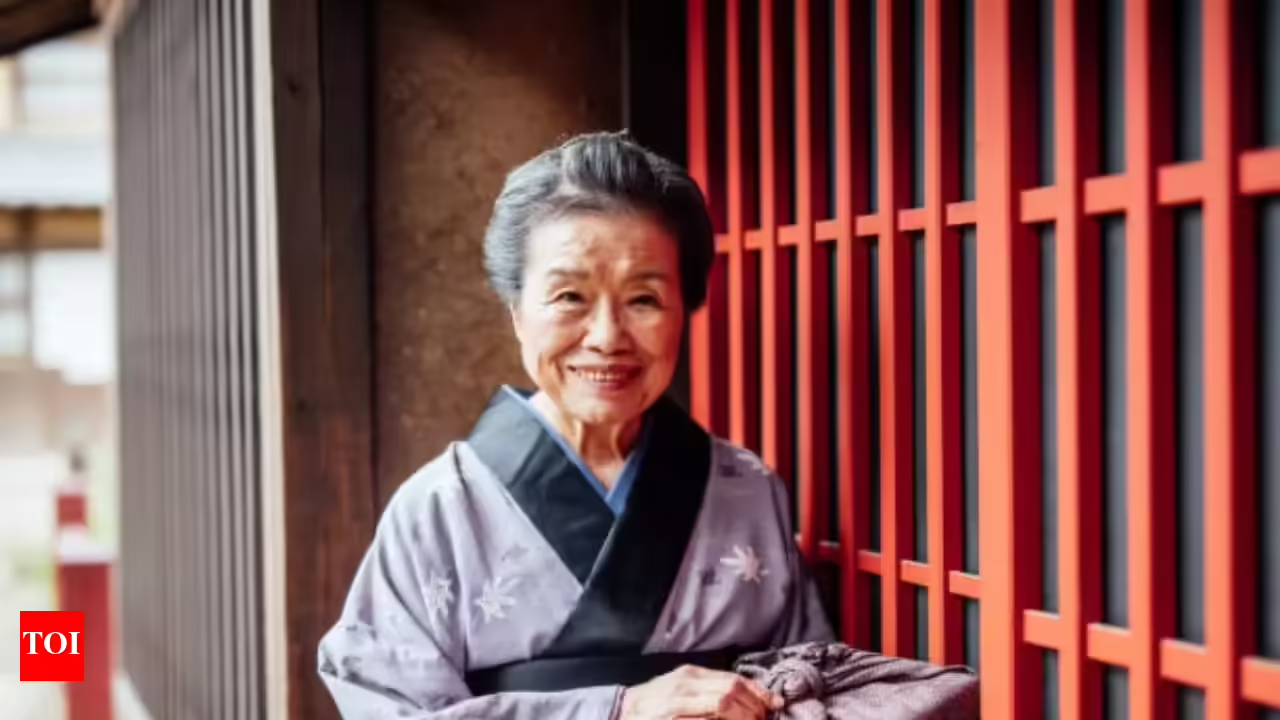
The centenarian count in Japan did not surge overnight. Back in the early 1960s, there were only a few hundred people aged 100 or more documented nationwide. But each decade since has seen that number rise steadily. By 1981, it had passed the 1,000 mark; by the late 1990s it had breached 10,000; and now, more than half a century later, the figure stands on the edge of six digits. This growth tells a broader story about improvements in healthcare, nutrition, and societal support systems that have enabled people to live longer, more active lives than ever before.
At its core, the milestone is a reflection of Japan’s remarkable life expectancy. For much of the post-war period, Japanese people have consistently topped international rankings for longevity, driven by a combination of biological, environmental and cultural factors that together underpin long life. The nearly 100,000 centenarians are not statistical anomalies; they are the culmination of decades of demographic change and public health success.
Why the Diet and Daily Habits Matter So Deeply
One of the first explanations many observers point to when talking about Japanese longevity is diet. Generations of Japanese have grown up eating meals that are rich in fish, vegetables, soy products, seaweed and other whole foods, with minimal reliance on red meat and processed snacks — a dietary pattern associated with lower rates of heart disease, diabetes and many cancers. These dietary habits are not simply fashionable trends, but deeply embedded cultural norms that shape everyday life from childhood onward.
Equally important are daily routines that keep people physically active. Traditional practices like walking, cycling to run errands, tending to gardens and even participating in community exercise programs — such as the widely broadcast “Radio Taiso” warm-up routines — help older adults maintain mobility, balance and cardiovascular health long into later life. Though such activities might seem modest, their cumulative impact over decades can be profound.
The Social Fabric That Supports Healthy Aging

While diet and exercise are essential, Japan’s culture of respect for elders and strong social networks also plays a critical role. Many older Japanese remain deeply integrated into family and community life, providing purpose and connection that researchers increasingly recognize as vital for mental and emotional wellbeing. Unlike societies where ageing can mean isolation, in Japan elders often play active roles within their families, participate in local organizations and retain social engagement that wards off loneliness and cognitive decline.
In addition to this social support, Japan celebrates ageing as a positive milestone rather than a burden. Each year, the country observes “Respect for the Aged Day,” during which newly minted centenarians receive congratulatory letters and gifts from national leaders — symbolic gestures that reinforce the value placed on longevity and community contributions, and that may in turn influence how aging is experienced on a personal level.
The Gender Gap: Why Women Make Up Most Centenarians
One striking demographic detail in Japan’s centenarian population is the overwhelming majority of women among those aged 100 and older. Nearly 88% of the total consists of female elders, reflecting global patterns where women tend to live longer than men. Biological factors such as hormonal differences and genetic resilience, combined with lifestyle factors like lower rates of smoking and risk-taking behaviors historically among women in Japan, contribute to this gender gap.
This imbalance has broader societal implications as well, particularly in shaping healthcare needs, caregiving structures and retirement planning. As more women live well into old age, questions about access to resources, long-term care and gender-specific health strategies have become increasingly important components of public policy dialogue.
A Mirror of Success and an Emerging Challenge
Japan’s longevity achievement is inspiring, but it also highlights one of the most complex dilemmas faced by advanced economies: how to manage an aging population. While having nearly 100,000 centenarians symbolizes public health successes, it also signifies a demographic shift that brings deep economic, social and policy challenges. As the population ages, the demand for healthcare services, eldercare facilities and pension support grows, while the share of working-age citizens shrinks. Under such conditions, government budgets and labor markets are placed under increasing strain.
Japan’s situation exemplifies a paradox that many nations may face in coming decades: longer life does not automatically translate into healthier or more prosperous life for all, and without careful planning, longevity can exert pressure on social support systems that were not designed for sustained demographic imbalances.
Healthcare Systems and Preventive Medicine at Work
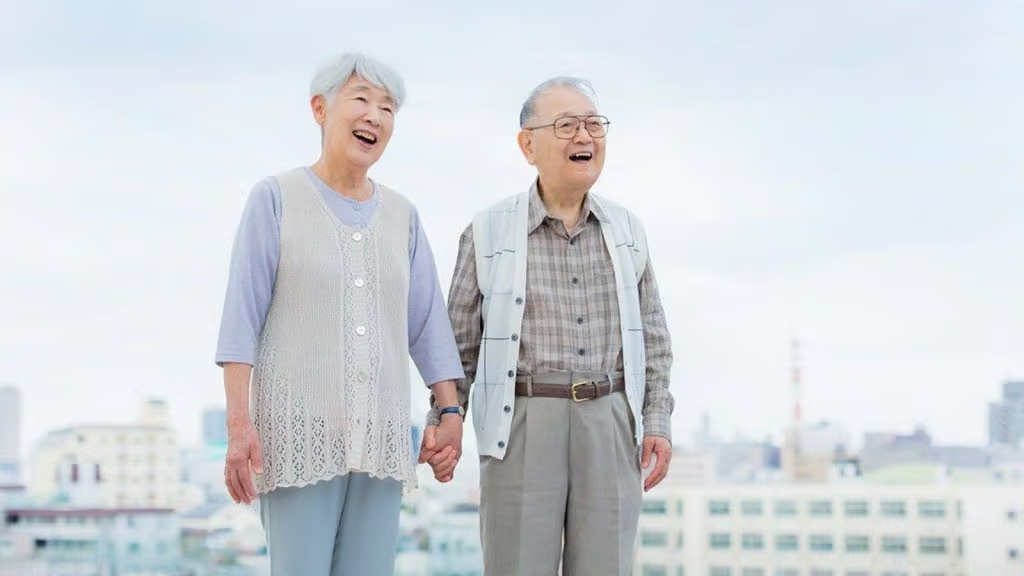
Japan’s healthcare infrastructure is integral to its longevity record. Universal health coverage and regular preventive screenings have helped catch diseases early when they are most treatable. The nation’s emphasis on preventive medicine goes hand-in-hand with lifestyle factors, creating a two-pronged approach that supports long life through both medical intervention and everyday behavior.
For instance, regular check-ups allow for early detection of hypertension, diabetes and other conditions that might otherwise shorten life expectancy. Simultaneously, public health campaigns encourage lifestyles that reduce the risk of developing such diseases in the first place. This combination helps explain why Japanese elders often enjoy not just longer lives but longer spans of life free from debilitating illness.
Comparing Aging Across the Globe
Japan’s record centenarian numbers are unmatched in many parts of the world, but they form part of a broader narrative of global aging. Countries across Europe, North America and East Asia are experiencing their own shifts toward older populations, driven by declining birth rates and improvements in medical care. Even so, few nations have achieved the longevity patterns seen in Japan, where a dense cluster of lifestyle, genetic and social factors converge to produce particularly high life expectancy.
In comparison, some nations struggle with rising chronic diseases linked to obesity, sedentary lifestyles and fragmented social structures — trends that contribute to shorter average lifespans and higher healthcare costs. Japan’s experience, therefore, offers both a model to learn from and a cautionary tale about what happens when ageing becomes the norm rather than the exception.
Longevity and Quality of Life: Looking Beyond the Numbers
The sheer number of people over 100 in Japan naturally draws attention, but longevity is not simply a matter of counting birthdays. Experts increasingly emphasize the importance of “healthspan” — the period of life spent in good health, free from chronic disease and disability. In Japan, many centenarians report living active, engaged lives well into their 90s and beyond, a fact that challenges stereotypes about aging as inevitable decline.
Yet this ideal is not guaranteed. As lifestyles change, younger generations adopt different diets and habits, and social structures evolve, the factors that once supported longevity may shift as well. Sustaining quality of life at extreme ages will require ongoing adaptation of healthcare services, community supports and cultural values.
What Japan’s Longevity Record Means for the Future
Japan’s record of nearly 100,000 centenarians stands as both a triumph of human health and a signal of future demographic trends that will shape societies worldwide. It highlights how a combination of diet, lifestyle, social connection and healthcare policy can interact to extend life beyond what many would have thought possible just generations ago. At the same time, it exposes the challenges inherent in supporting large elder populations in ways that ensure dignity, purpose and sustainability.
As other nations grapple with aging populations, Japan’s experience will undoubtedly inform future strategies in healthcare, labor, retirement and community planning. Whether longevity becomes a universal achievement or continues to be concentrated in a few countries will depend on how societies respond to the intertwined challenges of aging, health and social cohesion.