

In a world driven by artificial intelligence, one name consistently emerges as a leader in both the technology and business landscapes: Jensen Huang. As the CEO of Nvidia, the company at the forefront of AI innovation, Huang has revolutionized industries with his forward-thinking approach and groundbreaking contributions to the tech world. But while most see Huang as the mastermind behind Nvidia’s success, he sees the future in a different light.
Huang’s perspective on the next wave of AI isn’t just about coding and technology; it’s about mastering the real world in ways that most AI pioneers have yet to fully explore. What if we could use AI to understand not just data, but the entire universe of physical laws around us? What if AI could predict, simulate, and innovate by learning how the real world works?
In a recent interview, Huang urged young technologists to focus on mastering physics and understanding the world beyond the digital screen. If AI is to move forward, it must bridge the gap between digital and physical realms, he argues. Here’s why mastering the real world could be the next big frontier for AI—and how Nvidia plans to be the driving force behind this transformation.
Table of Contents
- The Rise of AI: From Code to Understanding the Universe
- The Real World: The Next Challenge for AI
- The Physics Connection: Why Understanding the World Matters
- AI’s Role in Solving Global Challenges: A New Perspective
- The Next Generation of AI: What Technologists Need to Know
- How Nvidia is Leading the Charge
- Looking Ahead: The Future of AI and the Real World
The Rise of AI: From Code to Understanding the Universe
AI’s journey began with the simple premise of making machines think like humans. But as Jensen Huang explains, we are now at a critical juncture where the next phase of AI development must include an understanding of the real world—beyond just algorithms and programming languages.
Over the past few decades, we’ve seen AI go from theoretical models to transformative systems. Nvidia, under Huang’s leadership, has spearheaded some of the most revolutionary advancements in the field, particularly with graphics processing units (GPUs) that have empowered AI systems to learn and think faster than ever before.
Yet, as Huang points out, this next phase isn’t just about writing code or building faster machines. It’s about creating AI that can not only simulate but also understand and predict the real world in ways that make the impossible, possible. He sees AI as the key to unlocking solutions for pressing global challenges, from climate change to medical advancements.
The Real World: The Next Challenge for AI

For AI to truly reach its potential, Huang believes that we must start by mastering how the real world works. While AI has made strides in areas like data analysis, robotics, and even healthcare, there is one critical area that remains largely untapped: the ability to understand the laws of nature and apply them in a way that transforms human experience.
This is where Huang’s vision diverges from the conventional view of AI. Instead of focusing on AI as a purely abstract construct, Huang advocates for grounding it in the real world, where it can interact with and understand the laws of physics, biology, and chemistry.
This shift in perspective has the potential to revolutionize industries such as energy, healthcare, and even transportation. Imagine AI systems that not only process data but also adapt to and manipulate the physical environment in real-time. This is the kind of AI Huang envisions for the next generation—AI that understands and interacts with the world in ways that human minds have yet to fully grasp.
The Physics Connection: Why Understanding the World Matters
One of the core elements of Huang’s philosophy is the importance of physics in the future of AI. Physics, according to Huang, is the foundational knowledge that can power the next leap in AI technology. Understanding the laws that govern the universe—whether it’s how molecules interact or how energy flows—is essential for developing AI that can predict, simulate, and even control physical phenomena.
This is where Nvidia’s technology becomes even more powerful. The company’s GPUs, which were initially designed for rendering graphics, are now being harnessed to simulate complex systems in physics, chemistry, and biology. Nvidia’s technology has the capability to model real-world phenomena, enabling AI to learn how to interact with and manipulate the environment more effectively.
But Huang’s message is clear: for AI to achieve its full potential, technologists must deepen their understanding of the real world. It’s not enough to just learn to code; to be a part of the AI revolution, you must understand the physical laws that shape everything around us.
AI’s Role in Solving Global Challenges: A New Perspective
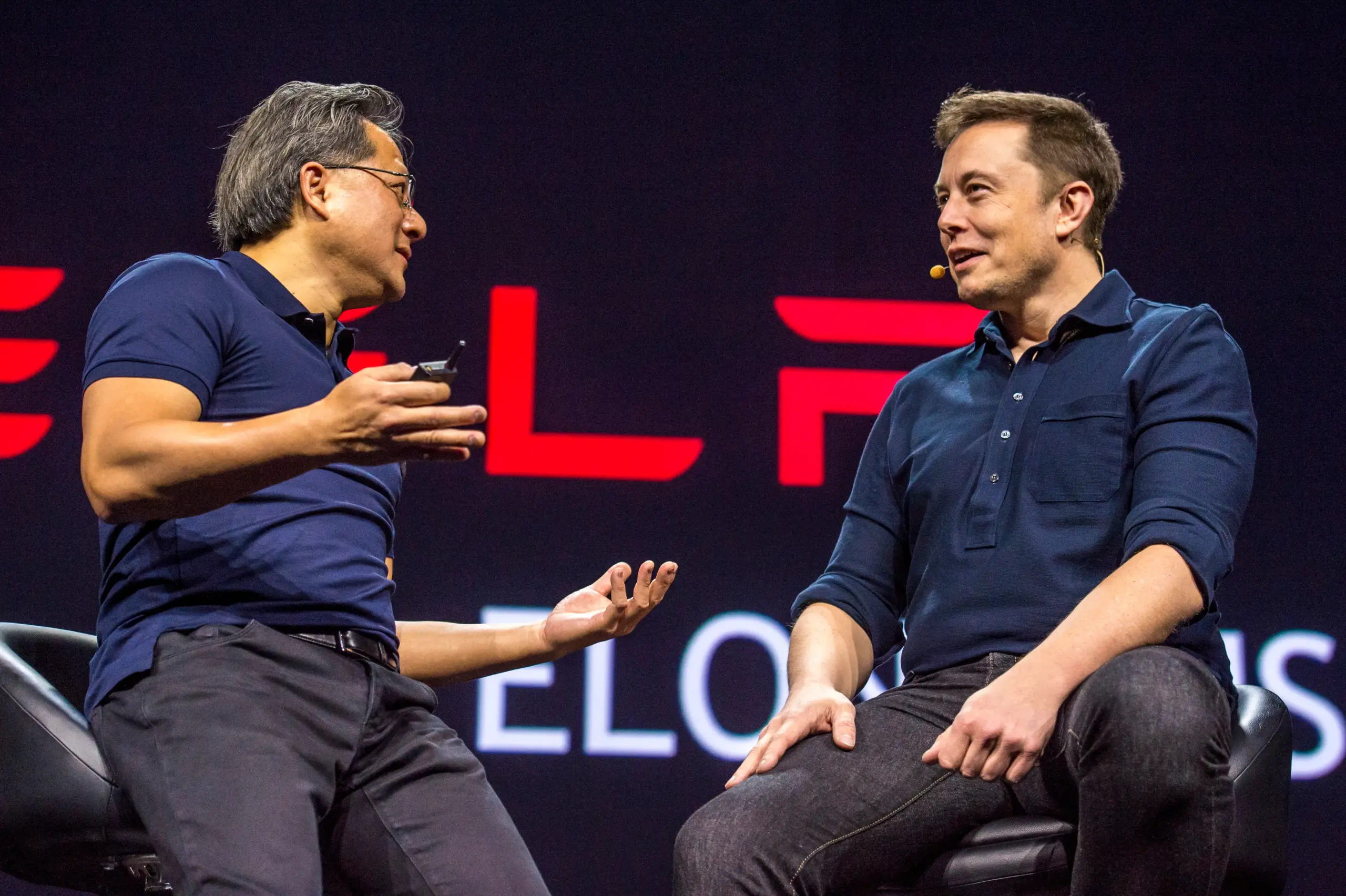
With AI poised to revolutionize multiple industries, Huang sees the potential for AI to tackle some of the world’s most pressing issues. From climate change to the global health crisis, AI could provide the insights and solutions needed to address these challenges in new and innovative ways.
Take climate change, for example. AI can be used to model the Earth’s climate systems, predict future environmental changes, and develop strategies for mitigating the damage caused by global warming. By simulating complex environmental factors, AI can provide actionable insights for governments, organizations, and individuals alike. Huang believes that AI, when powered by a deep understanding of the real world, can be the key to reversing the effects of climate change.
In healthcare, AI could be used to simulate biological systems, predict the onset of diseases, and develop personalized treatments. By simulating how diseases spread and interact with the human body, AI could help doctors make more accurate diagnoses and offer more effective treatments. Huang’s vision is to create AI that understands biology at a fundamental level, giving it the ability to solve problems that were once considered insurmountable.
The Next Generation of AI: What Technologists Need to Know
So, what does this mean for the next generation of technologists? According to Huang, the key to success in the world of AI isn’t just technical skills—it’s an understanding of the real world. The ability to blend coding with real-world knowledge will set the next wave of AI innovators apart.
Huang urges aspiring technologists to focus on subjects like physics, engineering, and biology. Understanding how the universe works is the foundation upon which AI will be built in the future. Huang’s advice is clear: the next wave of AI development will be led by those who can apply their knowledge of the physical world to create transformative technologies.
If you’re thinking about entering the AI field, this advice is essential. Coding skills are important, but Huang emphasizes that the future of AI lies in understanding how to apply those skills to real-world challenges. Whether you’re interested in healthcare, transportation, or energy, a deep understanding of the world’s physical laws will be the key to creating AI that changes the world.
How Nvidia is Leading the Charge

As the CEO of Nvidia, Huang is uniquely positioned to drive this vision forward. The company is already at the forefront of AI development, providing the tools and technologies that are enabling researchers and technologists to build the next generation of AI. Nvidia’s GPUs have become the standard for training AI models, and the company’s software and hardware are being used to simulate complex systems across a wide range of industries.
But Huang isn’t content to rest on Nvidia’s success. He’s actively pushing the company to focus on real-world applications of AI, emphasizing the need for collaboration between AI researchers, scientists, and industry leaders to bring this vision to life.
As Nvidia continues to push the boundaries of AI technology, Huang’s message remains clear: the future of AI is about more than just writing code. It’s about understanding the real world and using AI to solve the most pressing challenges of our time.
Looking Ahead: The Future of AI and the Real World
The future of AI is bright, but it’s not just about better algorithms and faster computers. As Jensen Huang so aptly points out, the next wave of AI will be defined by its ability to understand and interact with the real world. By grounding AI in the laws of nature, we can unlock solutions to some of the world’s most complex problems.
For technologists, entrepreneurs, and innovators, this is the moment to shift focus. It’s not just about mastering the digital world; it’s about mastering the physical one, too. Huang’s message is a wake-up call to all those working in AI: if you want to be at the forefront of the next big revolution, start by mastering the world around you.
The next wave of AI is coming—and it’s going to change everything.