

Imagine a world where aging isn’t inevitable—a world where biological time can be slowed down, at least temporarily. While humans are still searching for the secret to longevity, scientists have uncovered a surprising natural phenomenon that could inspire the next breakthrough in anti-aging research: jewel wasp larvae.
These tiny insects have evolved a bizarre survival strategy that literally slows the aging of their hosts. In a discovery that reads like science fiction, researchers have observed that these larvae release special chemicals that extend their host’s lifespan by nearly 30%. Essentially, the larvae are pressing “pause” on the aging process, ensuring that their living quarters remain fresh and hospitable while they grow.
But beyond the gruesome elegance of parasitic survival lies a potential treasure trove of knowledge for human medicine, longevity research, and the future of anti-aging biotechnology. Could these minuscule insects teach us how to extend life?
Table of Contents
How Jewel Wasps Outsmart Time
The jewel wasp (Ampulex compressa) has a reputation in nature as a master manipulator. Its larvae are born with a single mission: survive. To achieve this, they hijack the biology of their host, typically cockroaches, using chemicals that suppress the host’s aging mechanisms.
When a jewel wasp larva invades its host, it doesn’t just feed passively. It actively manipulates the host’s biology, secreting compounds that slow down cellular deterioration. This keeps the host alive and functioning far beyond its normal lifespan, creating a stable environment for the larva to develop safely.
In other words, the wasp turns its host into a living, well-preserved nursery—a chilling but brilliant adaptation in evolutionary terms.
Think about it: if an insect can find a way to slow biological aging naturally, what does that mean for humans? Could similar pathways or compounds be harnessed to preserve human cells, organs, or even extend lifespan?
The Science Behind the Pause
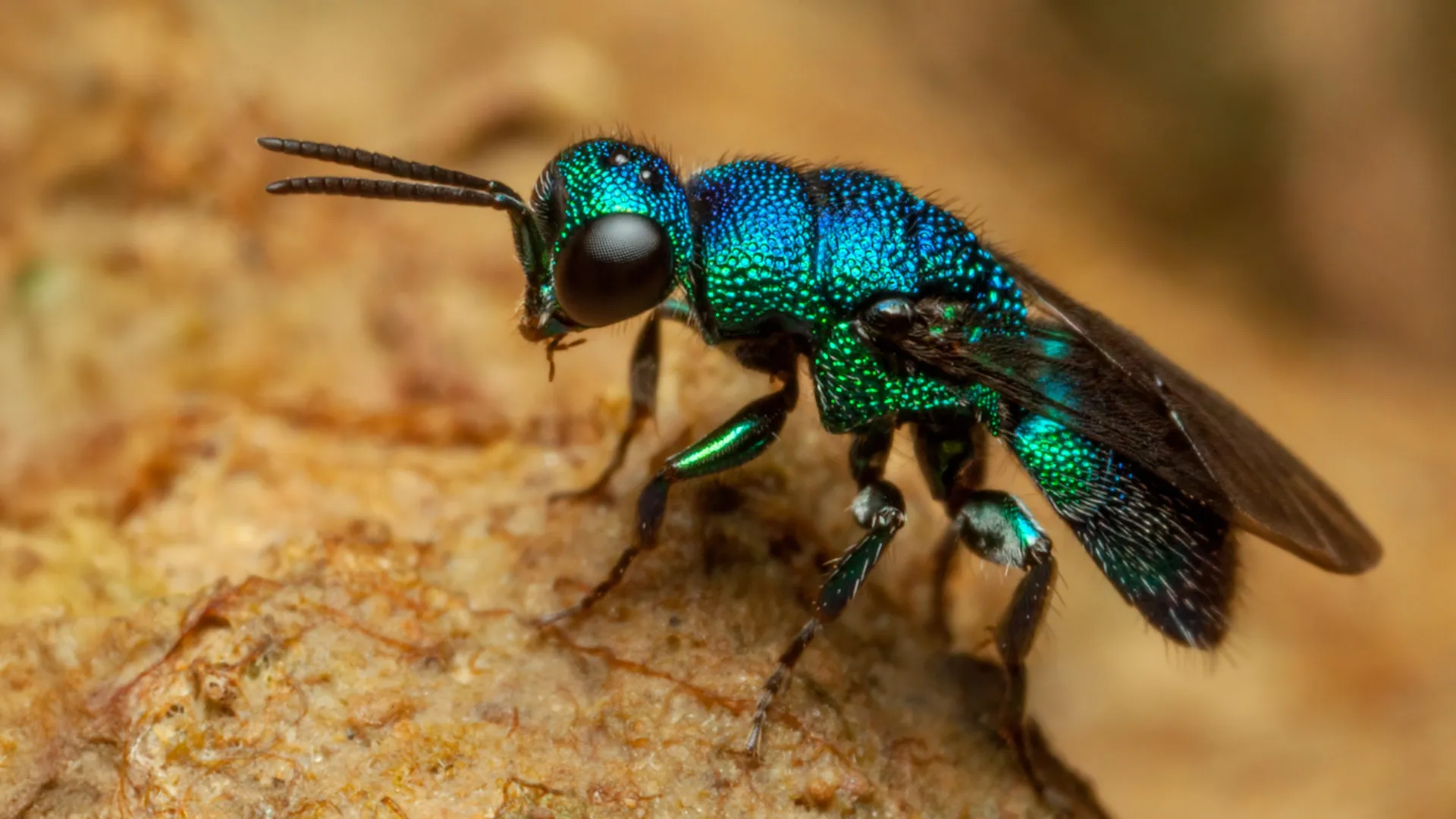
Researchers studying the jewel wasp’s parasitic strategy discovered that the larvae release specific biochemicals that interact with the host’s endocrine system. These chemicals influence hormonal regulation, metabolism, and cellular maintenance—all of which are central to aging processes.
It’s as if the larva has a remote control for the host’s biological clock, slowing it down just enough to keep its environment optimal. In some cases, hosts live almost a third longer than normal, a remarkable feat in the animal kingdom.
For scientists in the fields of biotechnology, longevity, and regenerative medicine, this is a goldmine. While humans obviously have vastly more complex systems than insects, the principle remains: aging can be slowed at a cellular level by manipulating chemical pathways.
Could we one day develop drugs or therapies inspired by the jewel wasp, targeting human cells to extend healthy lifespan? Researchers are cautiously optimistic. The wasp’s strategy provides a living model of what biologists call “chemical longevity modulation.”
Lessons from Nature: Anti-Aging Without Science Fiction
The jewel wasp’s method isn’t just a fascinating footnote in entomology—it’s a blueprint for thinking differently about aging. Most anti-aging research today focuses on reactive approaches: antioxidants, telomere therapies, and organ replacement. The jewel wasp demonstrates a proactive approach: extend the environment’s lifespan before damage occurs.
In practical terms for humans, this might mean therapies that:
- Reduce cellular stress before damage accumulates
- Optimize hormonal balance to slow tissue deterioration
- Preserve neurological health before cognitive decline begins
Every day, scientists are racing to decode the chemical “language” that allows the jewel wasp to manipulate its host. Some compounds could be synthesized in labs, potentially opening doors to novel longevity treatments.
If nature has already figured out how to slow aging, are we missing opportunities by looking only to synthetic solutions?
Beyond Insects: Implications for Human Health and Longevity
Anti-aging isn’t just about living longer—it’s about living healthier. The jewel wasp provides a model of how targeted biological intervention can extend life without compromising quality.
In humans, age-related diseases—heart failure, neurodegeneration, metabolic disorders—often stem from gradual cellular decline. By understanding how these larvae stabilize cellular systems in their hosts, researchers hope to:
- Develop therapies that prevent cellular decay
- Enhance tissue regeneration
- Reduce the onset of age-related diseases
The potential economic and personal impact is staggering. With aging populations worldwide, even modest increases in healthy lifespan could save billions in healthcare costs and improve the quality of life for millions.
Ethical and Practical Considerations

Of course, translating a parasitic insect’s biology to humans isn’t straightforward—or entirely risk-free. Ethical considerations abound: should we manipulate human biology in ways inspired by parasitic survival? How do we balance longevity with natural life cycles?
Furthermore, what works in a simple insect host might not translate directly to complex human systems. Humans are more than the sum of their cells; aging involves psychological, environmental, and social factors as well.
Yet, even if direct application proves impossible, the jewel wasp offers inspiration. Understanding how biological clocks can be chemically modulated opens avenues for safer, more natural interventions.
Nature as a Laboratory
This discovery reinforces a simple truth: nature is the ultimate laboratory. While humans have spent centuries experimenting with potions, diets, and chemicals to slow aging, jewel wasp larvae have been refining their strategy for millennia.
By observing and decoding these natural mechanisms, scientists can find clues that accelerate biomedical innovation. Imagine therapies derived not from chemicals invented in labs, but from compounds perfected by evolution itself.
Could the next major breakthrough in anti-aging medicine come not from a pharmaceutical company, but from an insect smaller than your fingertip? The idea is no longer just speculative.
The Future of Anti-Aging Research

The jewel wasp discovery is already shaping research priorities in longevity science. Pharmaceutical companies, biotech startups, and university labs are exploring:
- Biochemical pathways for aging control
- Hormone modulation inspired by parasitic survival
- Regenerative compounds for cellular preservation
As more is learned about these larvae, the potential for human applications increases. It might still be decades before practical therapies are developed, but the concept of chemically slowing aging is now backed by living evidence.
And here’s the kicker: this isn’t just about life extension—it’s about quality of life, mental sharpness, and physical health well into old age.
A Glimpse Into Tomorrow
As scientists continue to decode the jewel wasp’s secrets, one thing is clear: the natural world holds solutions we’re only beginning to understand.
If jewel wasp larvae can press pause on aging in their hosts, could similar strategies be adapted to human medicine? Could anti-aging therapies one day emerge not from futuristic labs, but from insects, plants, or microorganisms that have already perfected the art of survival?
The answers remain just beyond reach—but the potential is exhilarating. Imagine a world where aging doesn’t control us, but we learn to control it, guided by the lessons hidden in nature’s smallest creatures.