
Table of Contents
- How The Kennedy Center Became A Political Battleground
- Why Trump Wanted To Reshape The Kennedy Center
- The Federal Judge Who Blocked The Renaming
- The Lawsuit That Triggered The Court Battle
- Why The Case Became National News
- Trump’s Broader Push To Leave A Personal Mark On America
- Why Cultural Institutions Are Becoming Political Flashpoints
- The Embarrassment Factor For The White House
- What Happens Next For The Kennedy Center
- What The Controversy Says About America Right Now
How The Kennedy Center Became A Political Battleground
The Kennedy Center has long stood as one of the most recognizable cultural landmarks in the United States.
Located along the Potomac River in Washington, D.C., the venue hosts concerts, theater productions, ballets, symphonies, operas, and nationally televised arts events attended by millions over the decades.
Originally established as a living memorial to President John F. Kennedy, the institution carries deep symbolic importance within American political and cultural history.
That symbolism is precisely why the recent dispute exploded into national controversy.
According to court filings, Trump had pushed aggressively to attach his name to the institution after returning to the White House.
The move reportedly became part of a larger effort by the president to reshape cultural and historical landmarks throughout the nation’s capital.
Critics accused him of politicizing a nonpartisan cultural institution traditionally associated with the arts rather than personal political branding.
Supporters argued Trump was simply modernizing leadership and challenging what they viewed as politically biased cultural institutions dominated by liberal elites.
The debate quickly escalated far beyond a simple naming dispute.
Why Trump Wanted To Reshape The Kennedy Center
The controversy intensified throughout 2025 after Trump reportedly removed several board members connected to the Kennedy Center and installed allies into leadership positions.
He later became chairman of the institution himself, sparking immediate backlash from political opponents and arts organizations.
The president publicly criticized some of the venue’s previous productions, describing them as “woke” and disconnected from mainstream American values.
Trump argued the institution required dramatic reform and stronger leadership.
His supporters claimed the arts center had become politically one sided and out of touch with ordinary Americans.
Opponents, however, viewed the purge of board members as an unprecedented attempt to politicize one of the country’s most respected cultural institutions.
The naming issue soon became central to that battle.
Critics accused Trump of attempting to transform a historic national memorial into a monument to himself.
As tensions escalated, lawsuits followed.
The Federal Judge Who Blocked The Renaming
The legal challenge eventually reached federal court, where Judge Christopher Cooper issued a ruling against the president on May 29.
According to the decision, the law establishing the Kennedy Center made it unmistakably clear that the institution existed specifically as a memorial to President John F. Kennedy.
“Congress gave the Kennedy Center its name, and only Congress can change it,” Cooper reportedly stated in the ruling.
That sentence instantly became one of the most widely quoted lines surrounding the controversy.
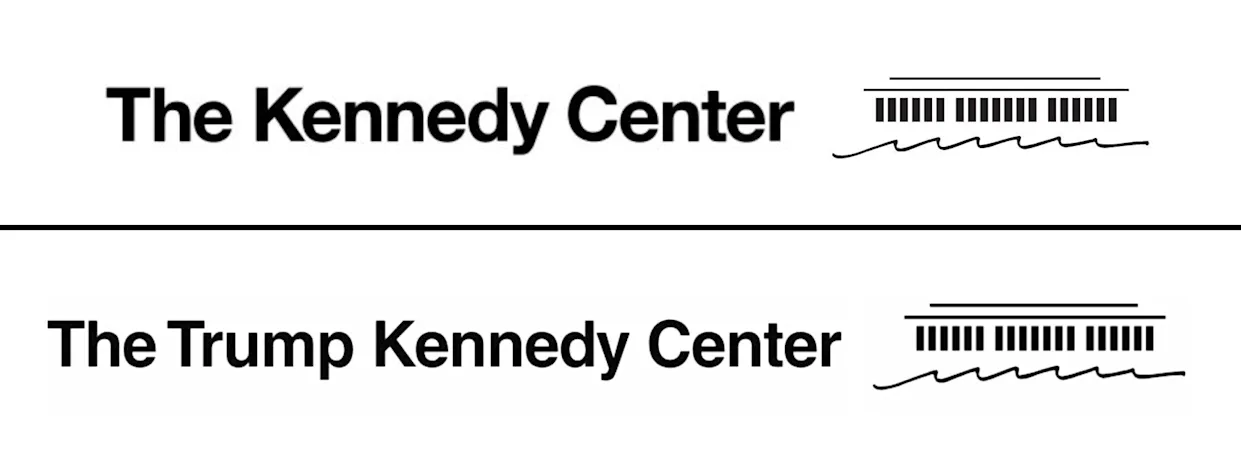
The ruling forced the institution to remove Trump’s name from its online branding and official website.
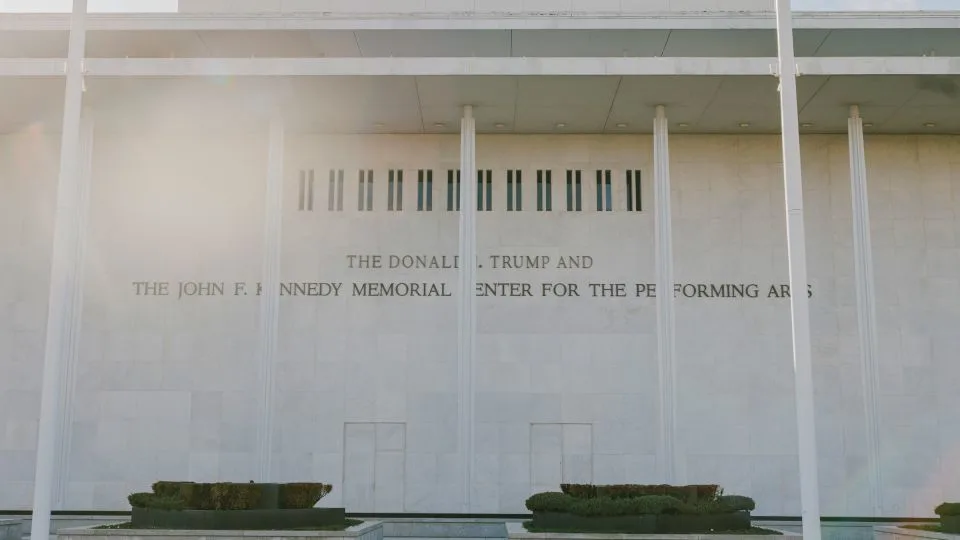
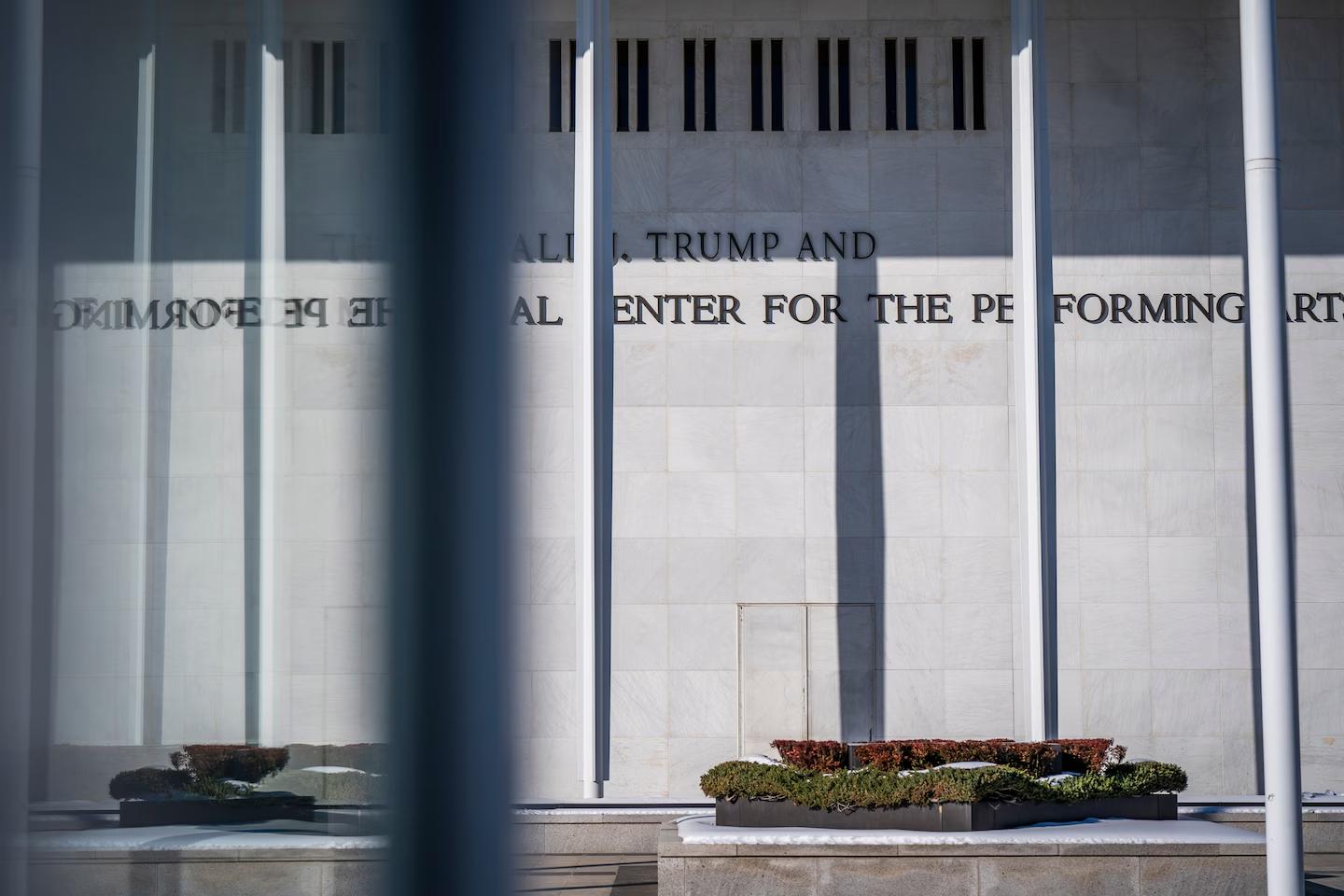
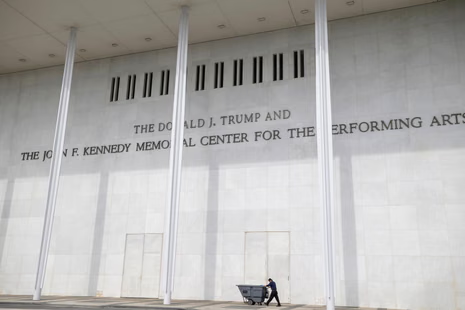
However, the judge’s order did not immediately result in changes to the physical signage outside the venue.
As of this week, visitors still reportedly see signage displaying “The Donald J Trump and The John F Kennedy Memorial Center for the Performing Arts.”
That contradiction between the digital branding and physical building itself has only fueled additional public attention.
The Lawsuit That Triggered The Court Battle
The lawsuit was reportedly brought by Representative Joyce Beatty, a Democrat and former Kennedy Center board member.
Beatty claimed she had been muted during a virtual board meeting while attempting to oppose efforts tied to renaming the institution.
Her legal challenge argued that the president lacked authority to alter the name of a congressionally established national memorial.
The lawsuit quickly evolved into a broader constitutional and political fight over executive power.
Legal experts noted that the case centered less on artistic policy and more on the separation of powers between Congress and the presidency.
Because Congress originally established and named the Kennedy Center, the court ultimately concluded that a president could not unilaterally rewrite its identity.
That legal distinction became central to the ruling.
For constitutional scholars, the case highlighted how even symbolic naming disputes can raise major questions about executive authority.
Why The Case Became National News
The story exploded across national media because it touched multiple politically explosive subjects simultaneously.
It involved Donald Trump.
It involved presidential branding.
It involved arts and culture.
And it involved questions surrounding executive power.
Trump has long maintained a highly visible relationship with branding and public image, making the Kennedy Center dispute especially symbolic.
Critics argued the controversy reflected an obsession with legacy and personal glorification.
Supporters countered that opponents were overreacting to symbolic changes while ignoring broader institutional reforms.
The story also attracted attention because it fit into a larger pattern of highly public cultural battles in America.
Increasingly, museums, universities, historical monuments, entertainment institutions, and educational systems have become central battlegrounds in national political conflicts.
The Kennedy Center dispute therefore became about much more than one building name.
It became another chapter in America’s ongoing culture war.
Trump’s Broader Push To Leave A Personal Mark On America
The Kennedy Center controversy did not emerge in isolation.
Since returning to office, Trump has reportedly pursued multiple symbolic projects aimed at reshaping national landmarks and public imagery.
Among the most discussed proposals was a push to rename Palm Beach International Airport after himself.
The airport serves the area surrounding Mar a Lago, Trump’s Florida resort and political headquarters.
Reports also surfaced regarding plans for a massive 250 foot triumphal arch commemorating America’s 250th anniversary, informally nicknamed the “Arc de Trump” by critics and media commentators.
Meanwhile, Trump’s likeness and name have reportedly appeared on commemorative coins, limited edition passports, children’s investment accounts, and special government themed merchandise initiatives.
According to reports from multiple outlets, discussions even emerged surrounding proposals to place Trump’s image on a future $250 banknote, despite longstanding laws prohibiting living individuals from appearing on U.S. currency.
Supporters view these efforts as patriotic branding celebrating American success and leadership.
Critics describe them as extraordinary examples of personal political glorification.
Why Cultural Institutions Are Becoming Political Flashpoints
The Kennedy Center dispute reflects a much larger transformation happening across the United States.
Cultural institutions once viewed as relatively neutral spaces increasingly find themselves pulled into national political battles.
Museums, universities, libraries, schools, theaters, and performing arts centers now frequently become arenas for debates over identity, patriotism, ideology, history, and representation.
Conservatives often argue many cultural institutions became dominated by progressive political values over recent decades.
Liberals frequently respond that political interference threatens artistic independence and freedom of expression.
The result is growing polarization surrounding institutions that once existed largely outside direct partisan conflict.
The Kennedy Center controversy therefore symbolized something deeper than signage.
It represented competing visions for who defines American culture itself.
The Embarrassment Factor For The White House
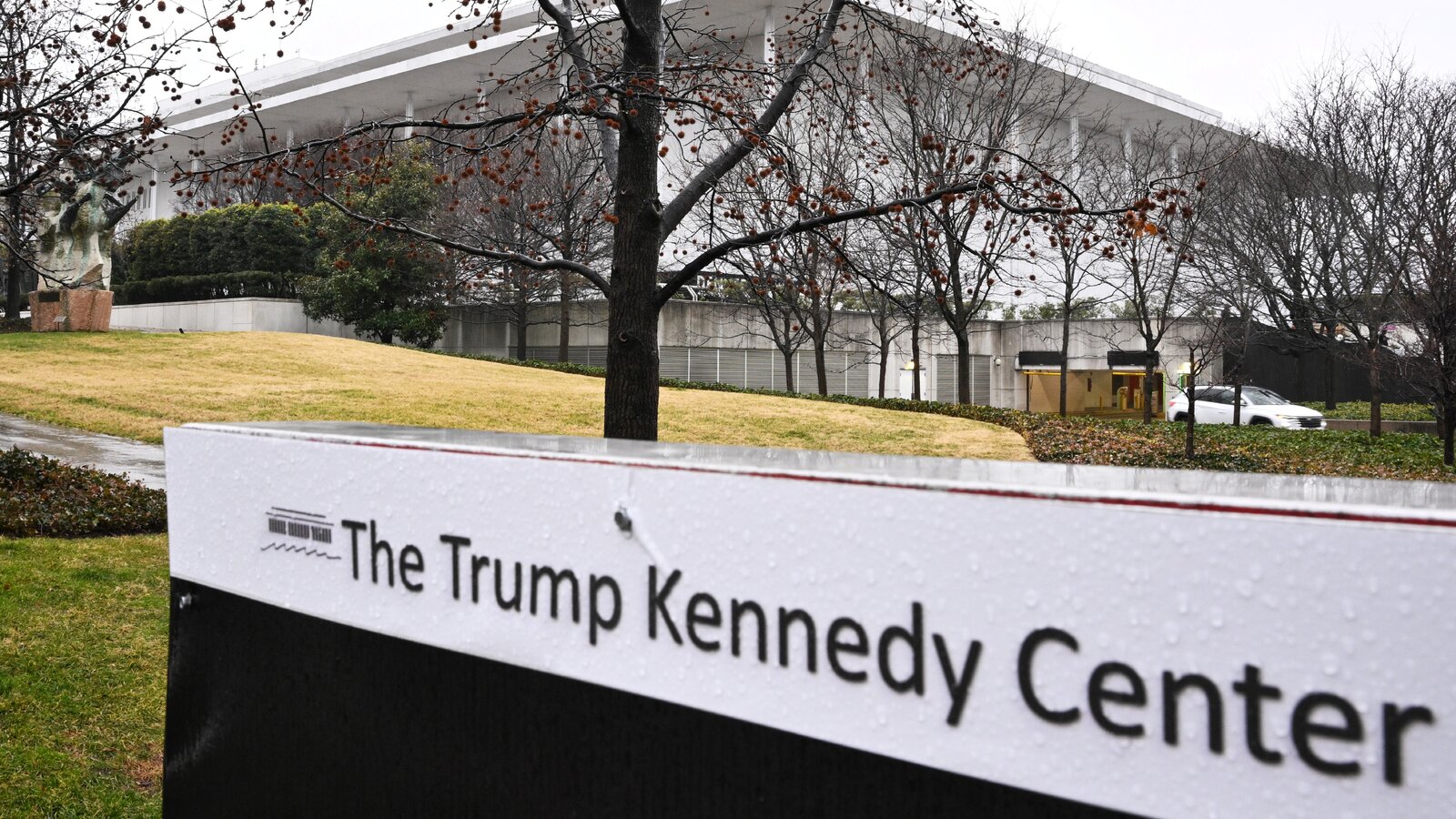
Political analysts say the removal of Trump’s name from the Kennedy Center website represents a symbolic embarrassment for the administration.
Trump has consistently emphasized strength, branding, image, and public dominance throughout his political career.
A federal judge publicly ordering removal of his name from a prestigious national institution therefore carries significant symbolic weight.
Critics immediately celebrated the ruling online, portraying it as a rejection of presidential overreach.
Supporters, meanwhile, accused the judiciary of politically targeting the president.
The administration has not fully backed away from the issue, especially given that physical signage outside the building reportedly still displays Trump’s name.
That ongoing contradiction may continue fueling legal and political tensions in the weeks ahead.
What Happens Next For The Kennedy Center
Although Trump’s name disappeared from the Kennedy Center website, the larger political fight surrounding the institution appears far from over.
Judge Cooper also blocked efforts by the administration to temporarily shut down the venue for major renovations this summer.
That decision further intensified tensions between the White House and critics concerned about political control over cultural spaces.
Questions now remain about whether Congress could eventually become involved more directly.
Some lawmakers may push legislation reinforcing protections surrounding the institution’s original mission and identity.
Others may support broader reforms aligned with Trump’s cultural agenda.
Meanwhile, the Kennedy Center itself remains caught between political factions while attempting to continue normal arts programming.
What The Controversy Says About America Right Now
In many ways, the Kennedy Center dispute reflects the broader emotional and political climate inside modern America.
Even institutions dedicated to music, theater, and performance are no longer insulated from ideological conflict.
Questions about power, branding, identity, and symbolism now shape nearly every corner of public life.
To some Americans, the removal of Trump’s name represented a necessary defense of historical integrity and constitutional boundaries.
To others, it symbolized resistance from political and cultural elites unwilling to accept change.
Regardless of perspective, the controversy demonstrated how deeply politics now influences even the nation’s most respected cultural institutions.
And perhaps that is why the story captured such intense attention.
It was never really just about a website name.
It was about who gets to shape America’s symbols, its institutions, and ultimately its national identity in one of the most politically divided periods in modern U.S. history.