

Table of Contents
- Labubu Figures as Emotional Anchors
- A Response to Burnout
- The Role of Social Media in Labubu’s Popularity
- Nostalgia and the Healing Power of Inner Child Work
- Symbolism, Identity, and Belonging
- Labubu as a Symbol of Soft Resistance
- Labubu and the Search for Emotional Fulfillment
- The Quiet Revolution of Labubu
Labubu Figures as Emotional Anchors
Labubu’s rise in popularity, particularly among Gen Z, can be attributed to something deeper than just aesthetics. Tracy King, a chartered clinical psychologist, argues that Labubu and similar trinkets are “deeply symbolic,” playing an essential role in managing emotions in what she calls an “unpredictable world.” Unlike previous generations who could rely on more structured paths to stability, such as career progression or homeownership, today’s youth face a world full of uncertainty. In this environment, small tactile objects like Labubu provide a rare sense of agency and control.
“These playful objects evoke feelings of safety, care, and nostalgia—things that might’ve been missing or cut short in early life,” King explains. For many, Labubu figures serve as a form of inner child work—revisiting and nurturing unmet emotional needs from childhood. The figures represent more than just toys; they are emotional artifacts that offer comfort, reminding their owners of simpler, more secure times.
A Response to Burnout

Labubu is part of a larger cultural shift toward “trinket culture.” While the term may sound frivolous, psychologist Tracy King highlights that the popularity of small collectible figures is actually a response to emotional exhaustion. In a world that demands constant productivity and connection, trinkets provide a moment of respite. They allow individuals, particularly young adults, to reclaim some emotional stability in the face of overwhelming societal pressures. These toys, though outwardly playful and childlike, provide symbolic relief—reminders that even in the chaos of modern life, there is room for small pleasures and emotional care.
King also emphasizes that this cultural phenomenon is not simply about collecting. These figures symbolize a form of self-care that is personal, tangible, and accessible. Unlike other performative self-care trends that often feel commodified, trinkets like Labubu offer quiet emotional support. They help regulate emotions, ground the mind, and provide a moment of stillness in an overstimulating environment.
The Role of Social Media in Labubu’s Popularity
The rise of Labubu can also be attributed to the visual culture of social media. Platforms like Instagram and TikTok have made it easier for people to express their identities through curated images, and objects like Labubu figures have become symbolic tools in this process. Displaying these toys online is not just about owning them—it’s about what they represent. By showcasing Labubu, individuals signal a connection to softness, nostalgia, or a particular aesthetic that resonates with others who share similar emotional experiences.
This dynamic shifts the role of these figures from being merely personal objects to something shared publicly, creating a sense of community and belonging among those who relate to the same values. Labubu figures, in essence, have become a form of self-expression—visually representing emotions, identity, and the desire for comfort in a turbulent world.
Nostalgia and the Healing Power of Inner Child Work

At the core of Labubu’s appeal lies nostalgia, a powerful psychological tool that connects individuals to their past. For many adults, especially those navigating the difficulties of early adulthood, Labubu figures evoke a sense of safety and care, emotions often linked to childhood. Psychologist Tracy King explains that these toys allow people to reconnect with a more innocent time in their lives, when the world felt simpler and less demanding. This process is closely tied to the concept of inner child work, a therapeutic practice that encourages people to nurture the unmet emotional needs of their younger selves.
The act of purchasing or displaying a Labubu figure becomes a form of healing. It offers an opportunity to reclaim aspects of childhood that may have been interrupted or overlooked due to stress, family issues, or societal pressures. By engaging with these toys, individuals are not retreating into childhood—they are bringing comfort and gentleness into their adult lives, allowing space for vulnerability and emotional fulfillment.
Symbolism, Identity, and Belonging

Labubu figures also play an important role in helping people navigate their identity in an increasingly fragmented world. Gen Z, in particular, has grown up in a world where identity is often curated rather than assumed. With social media platforms acting as digital stages for self-presentation, personal identity is constantly shaped and reshaped by online interactions and external expectations. As psychologist Tracy King notes, “Gen Z was raised in a digital world where identity is curated, not assumed.” In this environment, objects like Labubu provide a way for people to assert their identity, signaling to others who they are and what they value.
These figures are not just items to collect; they are tools of self-expression. A photo of Labubu on a nightstand or tucked into a bag can communicate vulnerability, emotional depth, or a sense of belonging to a particular community. Labubu becomes a visual shorthand for what someone is feeling, a way to express identity that goes beyond words. It’s a form of symbolic resistance against the hyperproductive, hyperconnected world that demands constant output. Labubu provides a small but meaningful reminder that softness, complexity, and emotional expression are valid and worthy of attention.
Labubu as a Symbol of Soft Resistance

In a society that often prizes strength, productivity, and resilience, Labubu represents something different: softness. These figures invite individuals to embrace vulnerability and emotional authenticity in a world that frequently prioritizes toughness and stoicism. They offer a space where people can engage with their feelings without fear of judgment or expectation. In choosing to surround themselves with comforting symbols like Labubu, people are not retreating from reality; they are taking a small, intentional stand for emotional well-being.
Psychologist Tracy King suggests that trinket culture, and by extension, Labubu figures, are not mere escapism. They are a meaningful response to the burnout, disconnection, and emotional fatigue of modern adulthood. In a world that often rewards denial and emotional detachment, the act of cherishing something whimsical and deeply personal becomes a radical act of self-care. It tells us that even in the face of an uncertain future, we can find grounding and comfort in the small things that make us feel seen and understood.
Labubu and the Search for Emotional Fulfillment

In the context of the broader culture of emotional exhaustion, Labubu figures provide more than just a brief escape. They help people manage the emotional strain of modern life by offering a small, tangible symbol of self-soothing and identity expression. This phenomenon is especially relevant for those who feel disconnected from the traditional pillars of identity, such as stable careers, homeownership, or community. Labubu, in this sense, serves as a psychological anchor in a world that feels increasingly uncertain.
For Gen Z and other young adults, Labubu represents an opportunity to cultivate emotional fulfillment amid the pressures of contemporary life. These figures allow individuals to connect with themselves and their emotions in a way that is both private and publicly recognizable. Through Labubu, people are creating a space for emotional resilience, one small toy at a time.
The Quiet Revolution of Labubu
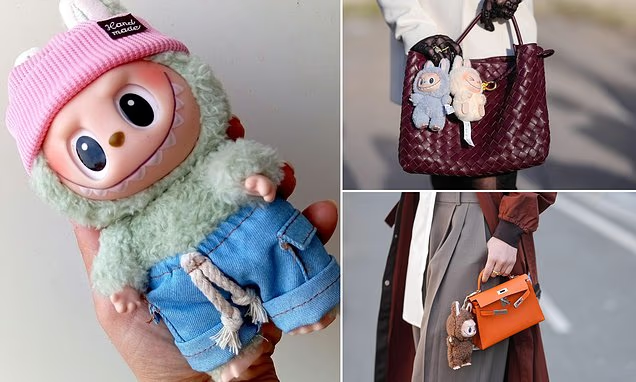
Labubu may seem like a simple collectible toy, but it carries with it profound cultural and psychological significance. These small, playful figures represent much more than just an aesthetic choice; they are tools of emotional self-regulation and identity expression in a world that often demands emotional resilience at the cost of vulnerability. As the popularity of Labubu grows, it reflects a deeper societal shift—a growing recognition that self-care, comfort, and emotional well-being are essential for survival in a world filled with constant pressures. Labubu is not just a toy; it is a quiet revolution in the way we relate to our emotions, our identities, and each other.