
Table of Contents
- Declining Support for Same-Sex Marriage
- Morality Perceptions of LGBTQ+ Relationships
- Gender Transition Morality and Political Divide
- Republican Voters Driving the Decline
- Demographic Patterns in Acceptance
- Survey Methodology
- Media and Political Influences
- Implications for LGBTQ+ Communities
- Reflections on Trends and Future Outlook
- Broader Implications for U.S. Society
Declining Support for Same-Sex Marriage
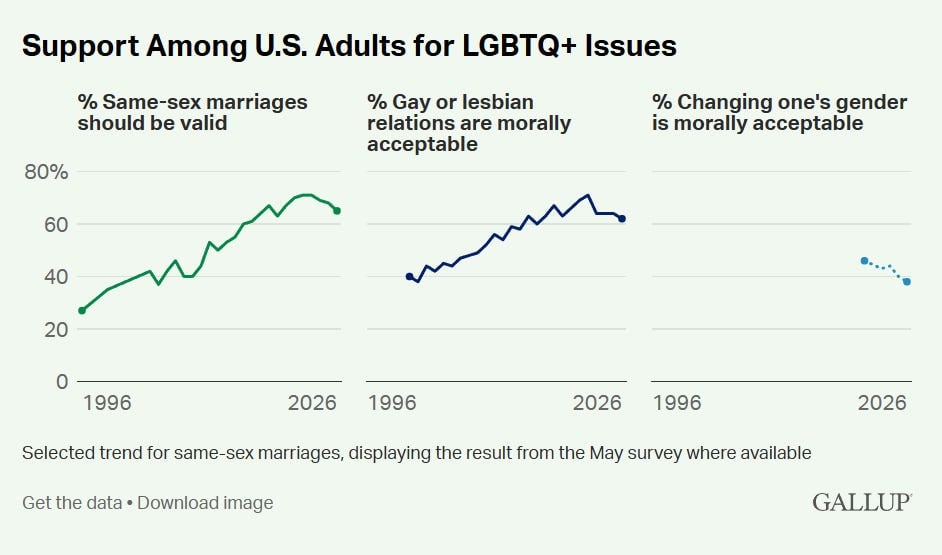
The Gallup poll shows that support for same-sex marriage, which rose steadily from 27 percent in 1996 to 71 percent in 2022, has now declined to 65 percent. This gradual drop reflects an ongoing trend of marginal declines since 2022. Experts suggest that several sociopolitical factors have contributed, including the spread of anti-LGBTQ+ rhetoric online and the passage of state-level legislation restricting discussions of sexual orientation and gender identity in schools.
Notably, the decline coincides with the 2022 proliferation of the “groomer” slur in political discourse and the enactment of Florida’s “Don’t Say Gay” law, along with similar bills introduced in multiple states. These measures, coupled with media narratives framing LGBTQ+ identities as controversial, appear to influence public attitudes.
Morality Perceptions of LGBTQ+ Relationships
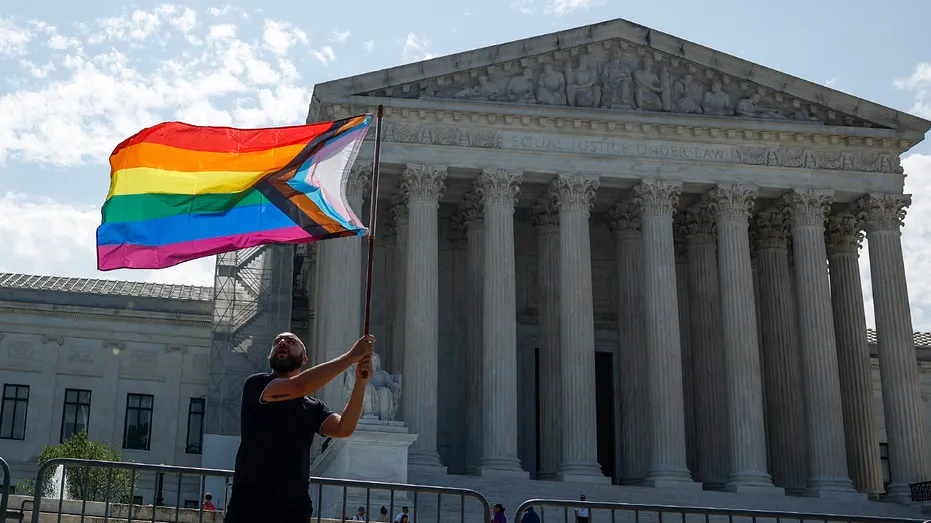
Gallup also tracked perceptions of the morality of same-sex relationships. Public opinion on this measure increased steadily since the organization first asked the question in 2001, peaking in 2022 at 71 percent. That number has since fallen to 64 percent, suggesting a broader trend of declining acceptance beyond marriage rights.
These figures reflect both societal attitudes and cultural narratives. While younger Americans and more progressive communities continue to show strong support, older generations and socially conservative areas exhibit declines, highlighting the uneven distribution of public acceptance across the country.
Gender Transition Morality and Political Divide
The Gallup poll also examined attitudes toward gender transition. First queried in 2021, the percentage of Americans who consider gender transition morally acceptable has dropped from 46 percent to 38 percent. Opposition rose from 51 percent in 2021 to 57 percent in 2026, reflecting increasing polarization on the issue.
Political affiliation plays a significant role. Only five percent of Republicans now consider gender transition morally acceptable, compared with 60 percent of Democrats. In 2021, 22 percent of Republicans supported transition, demonstrating a steep decline. Analysts suggest this trend aligns with heightened political and media targeting of trans youth and the amplification of false narratives connecting trans identities to societal risks, including unfounded claims about violent behavior.
Republican Voters Driving the Decline
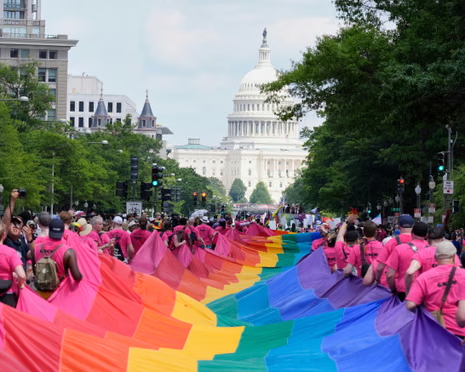
Gallup’s data indicate that the overall decline in acceptance is largely driven by Republican voters. Several issues, including political discourse and targeted legislation, have contributed to double-digit drops in acceptance among self-identified Republicans. Independents show minor declines, while Democratic support remains relatively stable.
Republican views on the morality of same-sex relationships now resemble levels seen in 2005, reflecting a retrograde shift in some segments of the population. The influence of conservative media, social movements, and legislative debates appears to be significant in shaping these opinions.
Demographic Patterns in Acceptance
Age, gender, and religious affiliation also correlate with acceptance levels. Younger Americans aged 18 to 39 remain more supportive of LGBTQ+ rights than those over 40. Men are less accepting than women, and religious individuals report lower support compared with non-religious counterparts.
These demographic patterns suggest that while societal attitudes are shifting, generational and cultural differences create persistent gaps in public acceptance. Policymakers, educators, and advocacy groups may need to tailor messaging and programs to address these disparities effectively.
Survey Methodology
The Gallup poll surveyed over 1,000 adults across all 50 states and Washington, D.C., using telephone interviews with 20 percent of responses from landlines and the remainder from random digit dialing. The methodology provides a representative snapshot of national attitudes while capturing shifts across political, demographic, and geographic categories.
The survey results are consistent with other studies documenting declining LGBTQ+ acceptance. For example, Pew Research Center found that 39 percent of Americans in March 2026 considered same-sex relationships morally wrong, a slight increase from 37 percent in 2013. These findings reinforce the trend of backsliding in support, particularly among conservative groups.
Media and Political Influences
Political and media narratives significantly influence public attitudes toward LGBTQ+ issues. In recent years, trans youth have become focal points in legislative and media campaigns, often framed as contentious or dangerous. Such framing contributes to heightened polarization, particularly among Republican voters, and may account for the sharp declines observed in Gallup’s data.
Social media amplifies these narratives, enabling rapid dissemination of both accurate and misleading information. This dynamic creates feedback loops where politically motivated messaging can reinforce cultural attitudes and influence polling results.
Implications for LGBTQ+ Communities
Declining support for LGBTQ+ rights has tangible implications for affected communities. Reduced public acceptance can impact mental health, social inclusion, and policy protections. It may also influence legislative decisions, school policies, and workplace environments, shaping the lived experiences of LGBTQ+ individuals nationwide.
Advocacy groups argue that understanding these trends is crucial for developing targeted education campaigns, promoting inclusivity, and countering misinformation. Effective public engagement strategies can help mitigate the negative effects of declining societal support.
Reflections on Trends and Future Outlook
The Gallup poll underscores the fragility of social progress. While acceptance of LGBTQ+ rights increased dramatically over the past three decades, recent data reveal that political, legislative, and cultural shifts can reverse gains. Republicans are the primary driver of the current decline, though societal factors, generational differences, and media framing all play a role.
Experts suggest that sustained education, inclusive representation, and proactive policymaking are essential to maintaining long-term support. Monitoring trends through longitudinal surveys like Gallup’s can help stakeholders identify areas of concern and prioritize interventions that foster acceptance.
Broader Implications for U.S. Society
The decline in LGBTQ+ acceptance in the United States highlights ongoing cultural tensions, political polarization, and the influence of media narratives on public opinion. As societal attitudes evolve, policymakers, advocates, and educators must remain vigilant in promoting inclusion and protecting the rights of marginalized communities.
While the overall U.S. population remains supportive of many LGBTQ+ rights, the notable retreat among Republicans and the persistence of generational and religious divides demonstrate the need for continued engagement and advocacy. The findings serve as a reminder that social progress is neither linear nor guaranteed, and that public opinion is shaped by complex, intersecting forces that require careful attention and thoughtful response.