

Table of Contents
- NASA Artemis II Crew Returns After Record-Breaking Lunar Mission
- An Unprecedented Journey
- The Mission’s Key Milestones
- Stunning Images and Scientific Research
- Human Exploration of the Moon
- Returning to Earth
- A New Era of Space Exploration
- What’s Next for the Artemis Program?
- Preparing for the Future of Space Exploration
- Conclusion
NASA Artemis II Crew Returns After Record-Breaking Lunar Mission
In a historic moment for space exploration, NASA’s Artemis II mission has concluded with the safe return of its crew after completing a groundbreaking mission around the Moon. The crew, which included NASA astronauts Reid Wiseman, Victor Glover, Christina Koch, and Canadian Space Agency astronaut Jeremy Hansen, embarked on a ten-day mission that pushed the boundaries of human space travel. Their journey not only marked the first crewed mission to orbit the Moon in over 50 years, but it also set a new record for the farthest distance from Earth ever achieved by humans. The mission successfully tested NASA’s Orion spacecraft and the Space Launch System (SLS) rocket, key components of the Artemis program that aims to return humanity to the Moon and eventually to Mars.
An Unprecedented Journey

The Artemis II mission marked a significant step forward in the United States’ efforts to return to the Moon and establish a permanent presence there. The journey began on April 1, 2026, when the crew was launched into space aboard the SLS rocket, the most powerful rocket ever built by NASA. With 8.8 million pounds of thrust at liftoff, the rocket propelled the crew inside the Orion spacecraft into orbit with pinpoint accuracy. The crew’s mission was to loop around the Moon, test the spacecraft’s systems, and perform critical evaluations to ensure the safety of future astronauts who will land on the lunar surface.
As they traveled over 694,000 miles in total, the crew achieved an unprecedented milestone by surpassing the Apollo 13 astronauts’ record for the farthest distance from Earth. Their lunar flyby took them to a point 252,756 miles away from Earth, a feat that hadn’t been accomplished since the Apollo missions in the 1960s and 1970s. This milestone is a testament to the advancements in technology and international collaboration that have shaped the Artemis program.
The Mission’s Key Milestones
Throughout the mission, the Artemis II crew faced a series of significant milestones. From the initial launch, to the firing of the Orion spacecraft’s main engine, and finally, the dramatic flyby of the Moon, the mission was filled with thrilling moments of achievement. The crew was tasked with testing the spacecraft’s life support systems, validating its handling and performance in deep space, and collecting data that will guide future lunar operations.
One of the most notable achievements of the mission was the spacecraft’s successful entry into the lunar sphere of influence. This occurred when the Moon’s gravitational pull overtook that of Earth’s, allowing the spacecraft to orbit the Moon before heading back toward Earth. The spacecraft’s precise handling during this phase demonstrated the capabilities of the Orion spacecraft, which is designed to carry astronauts to the Moon and beyond in the coming years.
Stunning Images and Scientific Research

Throughout their mission, the astronauts captured more than 7,000 stunning images of the Moon and Earth, which have since been released to the public. These images included breathtaking views of Earthset and Earthrise, the boundary between the lunar day and night, and various lunar features such as impact craters, ancient lava flows, and fractures on the surface. The crew also documented the solar eclipse they witnessed, during which the Moon blocked the Sun from Orion’s vantage point.
In addition to their photographic documentation, the Artemis II crew conducted scientific investigations that will help NASA prepare astronauts for long-duration missions on the Moon and beyond. These experiments included the AVATAR study, which explores how human tissue responds to microgravity and deep space radiation, as well as research into the effects of space travel on human performance. The data gathered during these experiments will be crucial in ensuring the health and safety of astronauts during future missions to the Moon and Mars.
Human Exploration of the Moon
The Artemis II mission is a critical step in NASA’s broader goal of establishing a permanent human presence on the Moon. In the coming years, NASA plans to send additional missions to the lunar surface, where astronauts will build a sustainable base that will serve as a launching point for future deep space exploration. The Artemis program also aims to land the first woman and the next man on the Moon by 2028, furthering the goal of advancing human exploration beyond Earth.
NASA Administrator Jared Isaacman praised the crew’s accomplishments, calling their journey a “truly historic achievement.” He acknowledged the immense risks that the crew took by flying the first crewed mission aboard the Orion spacecraft, and emphasized the importance of the data collected for the future of space exploration. Isaacman also expressed gratitude to President Donald Trump and Congress for providing the necessary resources to make the Artemis missions possible.
Returning to Earth
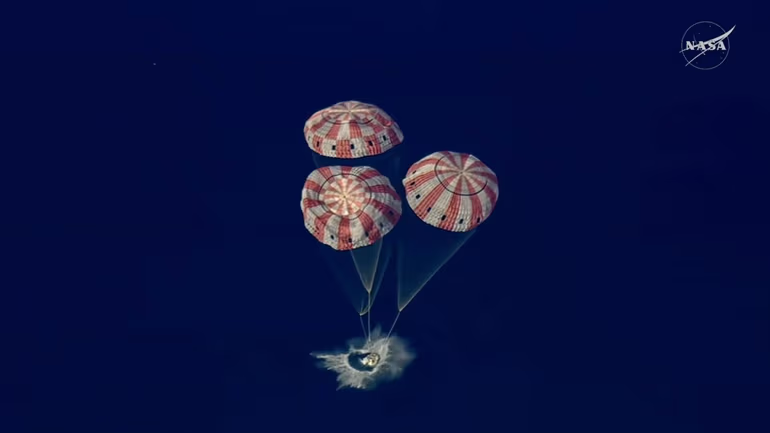
After their historic journey, the Artemis II crew safely splashed down in the Pacific Ocean off the coast of San Diego on April 10, 2026, at 5:07 p.m. PDT. A combined NASA and U.S. military team greeted the astronauts, assisting them out of the spacecraft and transporting them via helicopter to the USS John P. Murtha for initial medical checkups. The crew members are expected to return to NASA’s Johnson Space Center in Houston for further evaluations and to begin their debriefings.
NASA’s Associate Administrator Amit Kshatriya remarked on the success of the mission, noting that the data gathered from this flight will inform future missions, particularly in terms of spacecraft systems and the training required for astronauts. The Artemis II mission was also a key test for the SLS rocket and the Orion spacecraft, both of which are central to NASA’s long-term plans for deep space exploration.
A New Era of Space Exploration
The Artemis II mission is just the beginning of what is shaping up to be a new era of space exploration. NASA’s plans to establish a sustainable presence on the Moon are ambitious, but with each successful mission, the agency moves closer to achieving its goals. As NASA works toward the return of humans to the lunar surface, the Artemis II crew’s achievement will be remembered as a key milestone in the journey to Mars.
The Artemis program, which has garnered international support, will continue to grow as NASA builds partnerships with other space agencies and private sector companies. With the successful completion of Artemis II, NASA is now focused on the upcoming Artemis III mission, which will see astronauts land on the Moon and begin the work of establishing a permanent lunar base. The mission will also include testing integrated operations with Moon landers built by commercial partners.
What’s Next for the Artemis Program?

Following the success of Artemis II, NASA’s focus now shifts to preparing for the next phase of human space exploration. Artemis III, scheduled for 2027, will be the next major milestone, as it will involve astronauts landing on the Moon and conducting scientific research on the surface. The mission will also provide valuable data on how to operate a long-term human presence on the Moon, which will serve as a stepping stone for the eventual journey to Mars.
In the coming years, NASA’s Artemis program will continue to push the boundaries of space exploration, sending astronauts farther into space than ever before. The lessons learned from Artemis II, including the operation of the Orion spacecraft and the performance of its systems, will be crucial in shaping future missions and ensuring that humanity is ready for the challenges of deep space travel.
Preparing for the Future of Space Exploration
The Artemis II mission has demonstrated the capabilities of NASA’s spacecraft, rockets, and international partnerships. As the space agency continues its journey to return humans to the Moon and beyond, the data and experiences gained from this mission will be essential in shaping future missions. The Artemis program represents a bold vision for humanity’s future in space, and the success of Artemis II is a testament to the dedication, innovation, and collaboration that will drive the next phase of human space exploration.
As we look ahead, the future of space exploration is bright, with the Moon serving as a stepping stone for missions to Mars and beyond. NASA’s Artemis program will continue to inspire the next generation of astronauts, engineers, and scientists, as humanity takes its next giant leap into the cosmos.
Conclusion
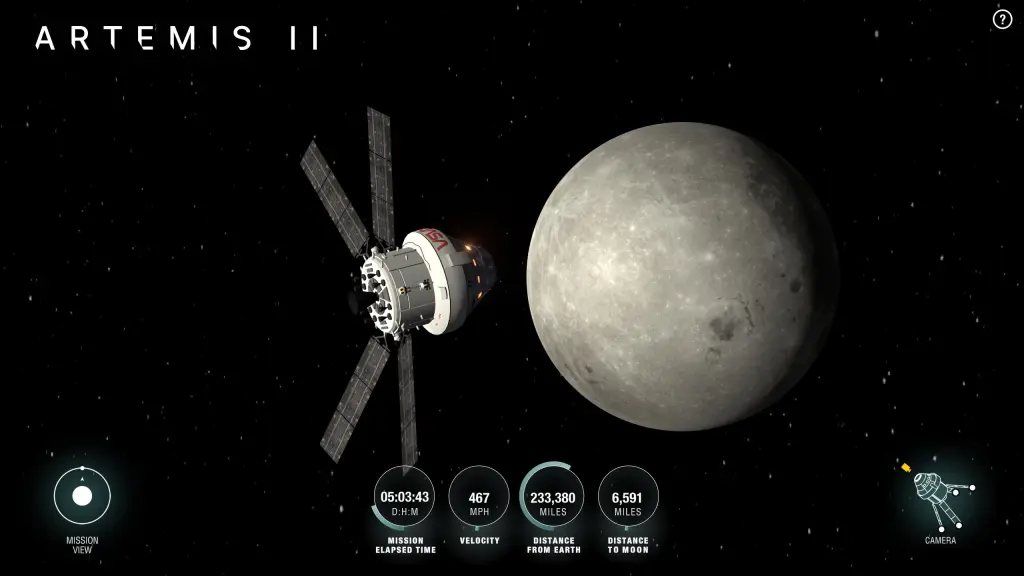
The return of the Artemis II crew after their historic mission is a momentous occasion for space exploration. Their achievement has set a new record for human distance from Earth and has paved the way for future lunar missions. As NASA moves forward with its Artemis program, the lessons learned from Artemis II will be crucial in ensuring the success of upcoming missions and the establishment of a sustainable human presence on the Moon. With the upcoming Artemis III mission on the horizon, NASA is well on its way to achieving its vision for deep space exploration, laying the groundwork for future missions to Mars and beyond.