

Table of Contents
- Artemis II’s Historic Lunar Flyby
- The Use of Eclipse Glasses During the Solar Eclipse
- The Rings of the Orientale Basin
- Earthrise Captured from Orion’s Window
- The Importance of Lunar Observation for Science
- The Role of the Artemis II Crew in Scientific Discovery
- The Moon’s Rugged Terrain Revealed
- A Legacy of Exploration and Discovery
- A New Chapter in Space Exploration
Artemis II’s Historic Lunar Flyby
On April 6, 2026, at 6:41 p.m. EDT, the Artemis II crew captured a breathtaking image just three minutes before Orion passed behind the Moon and lost contact with Earth for 40 minutes. The photograph revealed the sharp lunar surface in incredible detail, with the Earth visible in the distance, its nighttime side covered in darkness while the Australia and Oceania regions were bathed in daylight. The image captured the beautiful and haunting sight of the Moon’s surface as well as the blue glow of Earth, providing a rare glimpse into our planet’s distant view from space.
In the foreground, the Ohm crater stood out with its terraced edges and a relatively flat floor marked by central peaks, formed by the rebounding of the surface after an ancient impact. This image serves as not just a stunning visual but also a contribution to lunar geology, helping scientists study the impacts that shaped the Moon’s surface over billions of years.
The Use of Eclipse Glasses During the Solar Eclipse

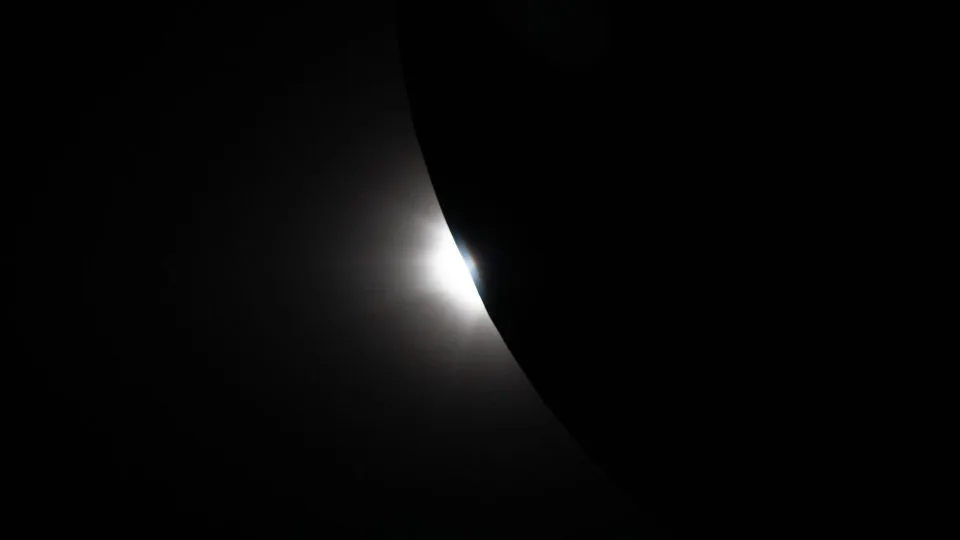
During their lunar flyby, the Artemis II crew experienced a solar eclipse, a rare event that allowed them to view the Sun’s rays as they passed behind the Moon. To protect their eyes during this brief moment of direct sunlight exposure, the astronauts used eclipse viewers. These viewers were identical to those developed by NASA for the 2023 annular eclipse and the 2024 total solar eclipse. Notably, this was the first time eclipse glasses were used on the Moon to safely view a solar eclipse, adding an extra layer of historical significance to the mission.
Mission specialists Christina Koch, Jeremy Hansen, and pilot Victor Glover joined Commander Reid Wiseman in the observations, each astronaut taking turns with the camera equipment to document this historic event. As they gazed at the solar eclipse from the far side of the Moon, the crew was able to capture the event in stunning detail, reinforcing the mission’s scientific and exploratory objectives.
The Rings of the Orientale Basin

One of the most significant images taken during the Artemis II flyby was of the Orientale basin, one of the Moon’s largest and youngest impact craters. Located on the Moon’s far side, this 600-mile-wide crater is a crucial feature for lunar scientists, as it offers a window into the processes of large-scale impacts and how they shape planetary surfaces. The concentric rings around the crater, along with the black patch of ancient lava at its center, offer vital clues about the Moon’s geologic history.
The Artemis II crew captured this image at 3:41 p.m. EDT, providing a rare opportunity to observe the rings of the Orientale basin in high detail. This image will help scientists refine models of crater formation, enhancing our understanding of the forces that shaped the Moon and other planetary bodies.
At the 10 o’clock position of the Orientale basin, two smaller craters were visible. The Artemis II crew has suggested that these craters be named “Integrity” and “Carroll” in honor of their mission, marking a unique way in which crew observations can directly support the identification of surface features in real-time lunar science.
Earthrise Captured from Orion’s Window
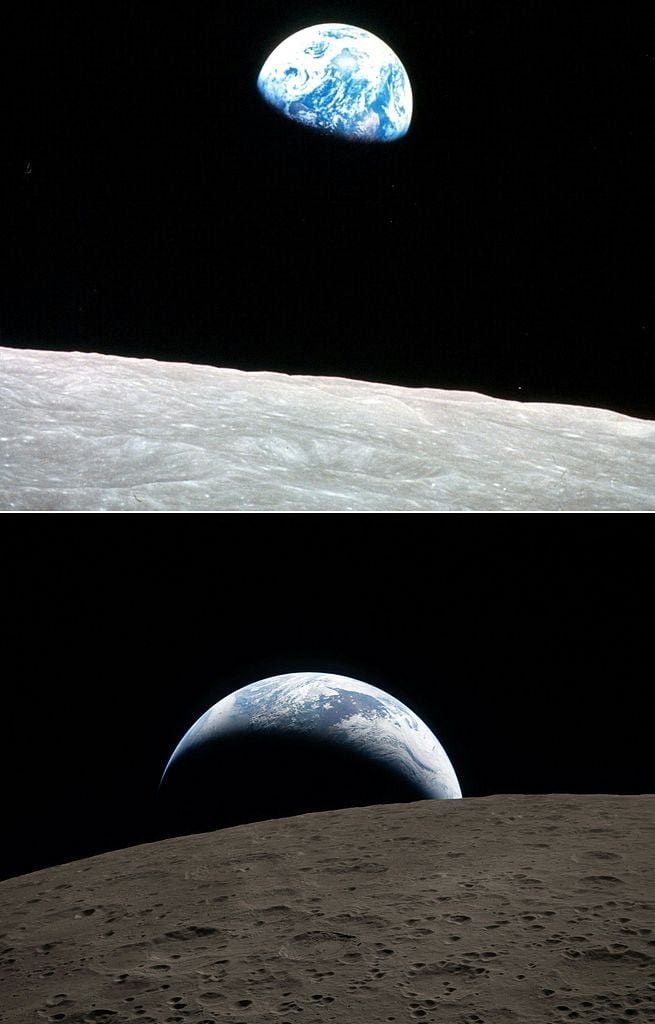
Perhaps one of the most iconic images captured during the mission was of Earthrise, taken from Orion’s window at 7:22 p.m. EDT. This photo showed Earth as a delicate crescent, with only its upper edge illuminated by sunlight. The contrast between the bright, soft blue of Earth and the deep blackness of space offered a striking visual of our home planet from deep space.
Captured through a 400mm lens, the Earthrise photo highlighted the alignment of Earth and the Moon, with the Moon’s rugged terrain silhouetted against the illuminated Earth. The positioning of both bodies, with their north and south poles oriented in a unique way, provided a new perspective on the beauty of our planet from space. The image was later rotated 90 degrees for standard viewing, offering a classic view of Earthrise for audiences around the world.
The Importance of Lunar Observation for Science
While the images from Artemis II are visually stunning, they also provide critical data for lunar science. The crew’s observations of craters like Orientale, Byrgius, and Grimaldi are not just artistic; they are integral to understanding the Moon’s geologic history. These features offer clues about the early impacts that helped form the Moon’s surface and how it has evolved over billions of years.
The data gathered from the Artemis II mission will help scientists refine models of lunar geology, furthering our knowledge of the Moon’s formation and its potential for future exploration. By studying these impacts and the structures they created, researchers can better understand not just the Moon but other planetary bodies, including Earth’s neighbors like Mars.
The Role of the Artemis II Crew in Scientific Discovery
The Artemis II crew is not just made up of astronauts on a historic mission. They are active participants in the scientific exploration of the Moon. During their observation period, each astronaut took turns at the windows of the Orion spacecraft, documenting key moments and capturing images of the lunar surface. Their role goes beyond that of traditional space explorers—they are scientists contributing to one of the most important missions in lunar exploration.
Commander Reid Wiseman, along with his team of mission specialists, has spent their days on the mission gathering important visual data, sharing their findings with NASA’s scientific teams, and participating in the ongoing study of the Moon. Their observations are critical to refining future lunar missions, including those aimed at establishing a sustainable human presence on the Moon and beyond.
The Moon’s Rugged Terrain Revealed

One of the most fascinating parts of the Artemis II mission was the crew’s observations of the Moon’s rugged terrain along the terminator, the boundary between lunar day and night. This region, where low-angle sunlight casts long, dramatic shadows, provides a detailed look at the Moon’s topography. Features like Jule Crater, Birkhoff Crater, and Stebbins Crater stood out in the photographs taken during this period, showing how the interplay of light and shadow reveals the complexities of the lunar surface.
The images captured during the flyby offer some of the best views of these features, showing craters, ridges, and basin structures that are otherwise hidden under full illumination. The Moon’s landscape, so often seen as smooth and desolate, is actually full of complex geological features that tell the story of its violent history.
A Legacy of Exploration and Discovery

The Artemis II mission is not just a milestone for NASA; it is part of a larger effort to return humans to the Moon and establish a sustainable presence there. The mission is designed to pave the way for future lunar exploration, including the Artemis III mission, which will land astronauts on the Moon for the first time since 1972. The data gathered by Artemis II, along with the breathtaking images captured by the crew, will provide the foundation for this next phase of exploration.
As the crew continues their journey, their observations and data will shape the future of lunar science, offering a clearer picture of the Moon’s surface and the potential for future missions to study and utilize its resources.
A New Chapter in Space Exploration
In conclusion, the Artemis II mission is not just about landing on the Moon; it is about advancing our understanding of our nearest neighbor and setting the stage for the next era of space exploration. The stunning images captured during the flyby offer a unique perspective on the Moon and Earth, helping scientists refine models of lunar geology while providing the public with a glimpse of the beauty and mystery of deep space.
As NASA continues its journey to the Moon and beyond, the data gathered by Artemis II will play a pivotal role in shaping future missions, including the goal of establishing a sustainable human presence on the Moon. The crew’s dedication to capturing these breathtaking images ensures that humanity’s exploration of space will continue to inspire future generations.