
Table of Contents
A Chaotic Mating Season
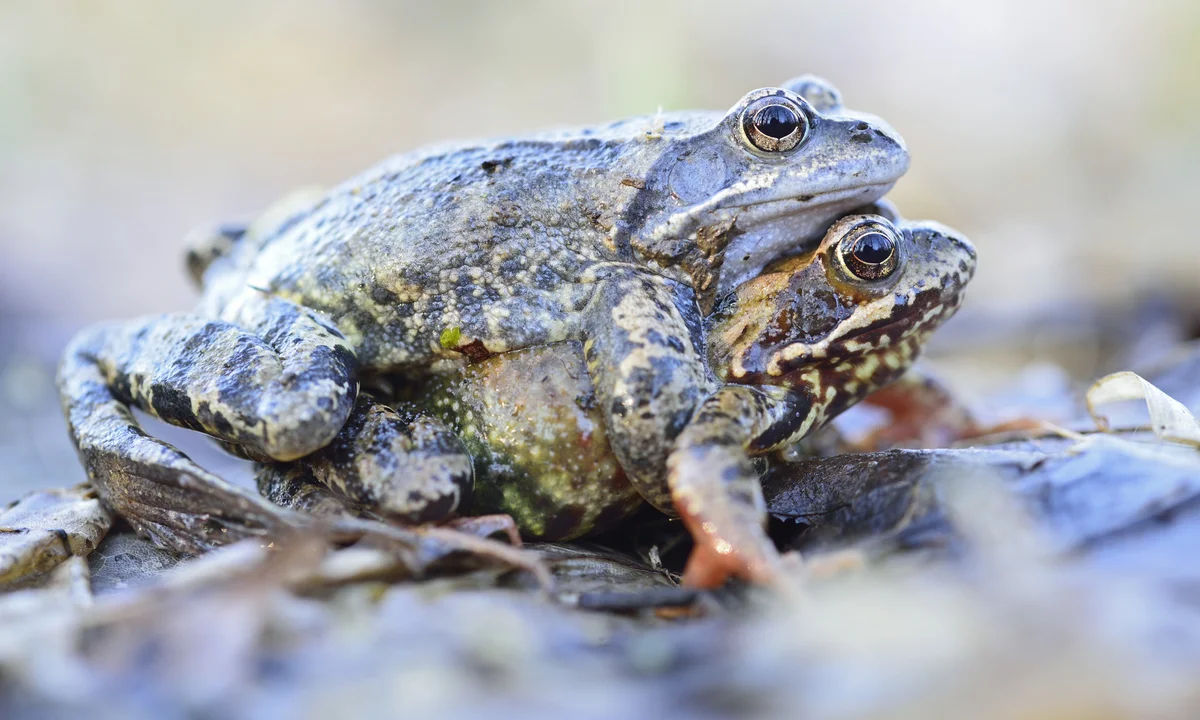
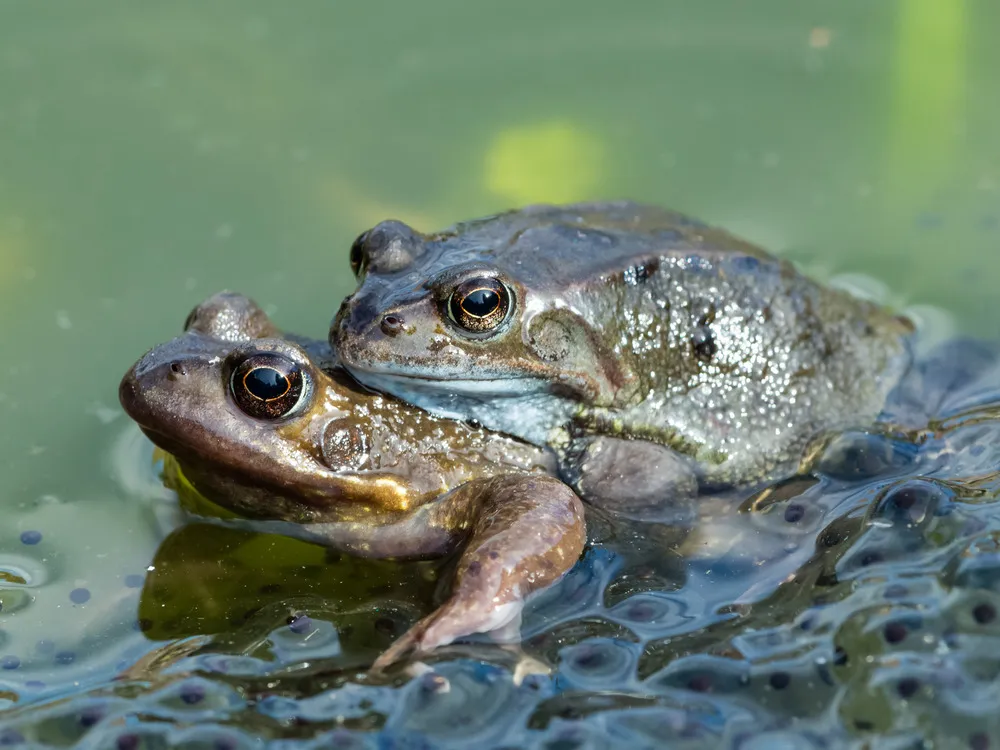
For the European common frog (Rana temporaria), the mating season is far from a leisurely affair. Known as “explosive breeding,” the event typically happens over a narrow window of time in early spring, often as the ice retreats from ponds. The entire reproductive cycle can occur in as little as two weeks, and during this period, hundreds of frogs converge on the same water source. For males, the competition is fierce; they try to latch onto as many females as possible, often grabbing hold of anything that moves in the water, even other males or different species.
For females, this aggressive approach creates a life-threatening situation. Multiple males can pile onto a single female in what biologists call a “mating ball”—a suffocating and potentially dangerous tangle of bodies. In these conditions, the females are at risk of being crushed or drowned by the weight and pressure of the males clinging to them. Historically, biologists assumed that females were largely passive in these situations, forced to endure until the males disengaged. However, recent research has challenged this notion, revealing that female frogs have developed several clever tactics to escape the chaos and protect themselves.
A Surprising Strategy: Playing Dead
The most dramatic and surprising tactic observed by scientists is the female frog’s ability to simulate death. When a female is caught in a mating ball and is unable to escape, she has been known to go completely limp, stiffening her limbs and drifting motionless through the water, mimicking a lifeless state. This behavior, known as “tonic immobility,” is not just a passive response; it’s a clever defense mechanism that allows the female to slip free from the male’s grip.
The strategy is effective because the male, confused by the apparent death of the female, releases her. The frog then “revives,” swimming away unharmed and free from the unwanted mating attempt. This behavior is rare but highly effective, allowing female frogs to avoid the physical strain and potential danger of prolonged engagement in the mating ball.
The Discovery: A Study of Resistance Behaviors
The discovery of this death-feigning tactic came about as part of a study conducted by ecologist Carolin Dittrich and herpetologist Mark-Oliver Rödel from the Leibniz Institute for Evolution and Biodiversity Science in Germany. Their original goal was to explore whether male frogs have a preference for larger females, since larger females typically produce more eggs. To test this, they placed two females of different sizes into a water tank with a single male and observed their interactions.
What they didn’t expect to find was a catalog of female resistance behaviors that included body rotations, vocal release calls, and the extraordinary death-feigning tactic. This behavior was observed in 33% of the instances where females were caught by males. These findings, published in Royal Society Open Science, challenge the assumption that female frogs are passive participants in the reproductive frenzy. Instead, they show that females actively defend themselves against unwanted advances.
The Tactics: Three Key Escape Strategies
Through their observations, Dittrich and Rödel identified three distinct strategies that female frogs use to avoid mating or to escape a male’s grip. These tactics highlight the frogs’ adaptability and provide a glimpse into the strategies animals employ to survive in high-stress environments like the chaotic breeding ponds.
1. Body Rotation: The Twist of Freedom
The most common tactic, used by over 80% of clasped females, involves a deliberate body rotation. By twisting along her own axis, the female can force the male to lose his grip or shift his position. This not only helps the female slip free, but it can also maneuver the male into a position where he risks drowning due to the lack of oxygen in the dense, competitive environment. In this way, the female’s movements directly influence the male’s survival instincts, prompting him to release her to avoid suffocating.
2. Release Calls: Deceptive Signals
Another strategy employed by nearly half of the observed females was the use of release calls. These low-frequency vocalizations mimic the signals that males emit when they have mistakenly grabbed another male. In the frenzied environment of the breeding pond, these calls confuse the male and trigger an automatic release response. This behavior is a perfect example of the frogs using deception to their advantage—by mimicking the male’s own signals, the female disrupts the mating attempt without physical struggle.
3. Tonic Immobility: Playing Dead
The most extreme tactic, and the rarest, is tonic immobility—essentially playing dead. About one-third of the females in the study used this tactic to escape the mating ball. The female frog goes completely limp, simulating rigor mortis. This dramatic response can last for minutes, even as the male drags the lifeless female through the water. When the male eventually releases her, the frog “revives” and swims away. This strategy is risky, as the male could drag her for longer than expected, but it’s effective in certain situations.
Why These Tactics Evolved

The evolution of these behaviors can be understood through the lens of survival. For male frogs, mating as often as possible increases their chances of reproduction. However, for females, the situation is different. Reproducing multiple times during the season offers no advantage, as they typically only reproduce once per year. The intense competition and the risk of injury or death from being trapped in a mating ball outweigh the benefits of mating at all.
This mismatch in reproductive priorities—where males compete for quantity and females focus on quality and survival—illustrates the concept of sexual conflict. For males, quickly grabbing and assessing the female is advantageous, but for females, it’s a potential death sentence. In this environment, survival tactics like body rotation, release calls, and tonic immobility allow females to escape potentially fatal encounters and regain control over their reproductive outcomes.
Similar Behaviors in the Animal Kingdom

The use of extreme tactics to avoid unwanted mating is not unique to frogs. In the insect world, for example, certain species of dragonflies exhibit similar behavior, playing dead to escape mating attempts from males. In some spider species, females are known to cannibalize males after mating to avoid further advances. Similarly, female mallard ducks have evolved complex reproductive tracts to prevent forced copulations from unpaired males.
This parallel behavior across species highlights the broader theme of sexual conflict and how animals—especially females—have evolved strategies to navigate coercive or dangerous mating situations. The European common frog’s use of these tactics adds another fascinating layer to our understanding of animal behavior and evolution.
Implications for Conservation
The discovery of these complex mating behaviors also has important implications for conservation. Many amphibian species, including the European common frog, are facing threats from habitat loss, climate change, and disease. The pressures of mating season, combined with environmental stressors, could make these species even more vulnerable. Understanding the nuances of their behavior—such as the use of survival tactics—can help conservationists develop more effective strategies for protecting these animals.
By preserving suitable breeding environments and ensuring that frogs have access to safe, low-stress ponds, conservationists can help mitigate the risks associated with overcrowded and fragmented habitats. This knowledge could lead to better strategies for managing frog populations and ensuring their long-term survival.
A Lesson in Adaptability and Survival

In the chaotic, high-stakes world of explosive breeding, the female European common frog’s ability to adapt and use various strategies to survive is a powerful example of the resilience of nature. By using body rotation, release calls, and even playing dead, these frogs defy the assumption that vulnerability equals passivity. Instead, they demonstrate that survival often hinges on adaptability and timing—traits that are essential for thriving in the unpredictable and competitive environment of the breeding pond.
For humans, this story offers a reflection of our own struggles to navigate challenging environments. The female frogs’ tactics remind us that resistance can take many forms—whether it’s through direct action, clever deception, or simply by choosing the right moment to step back. In the end, it’s not size or strength that ensures survival, but the ability to adapt when it matters most.