
Table of Contents
- Nvidia’s AI Training Models for Robotics
- Revolutionizing the Gaming Experience: Nvidia’s RTX 50 Series
- The Launch of Nvidia’s First Desktop Computer
- Nvidia Partners with Toyota for Automotive Advancements
- Nvidia’s Stock and Market Impact
- What’s Next for Nvidia: A Vision for the Future
- Nvidia’s Expanding Influence
- Conclusion
Nvidia’s AI Training Models for Robotics
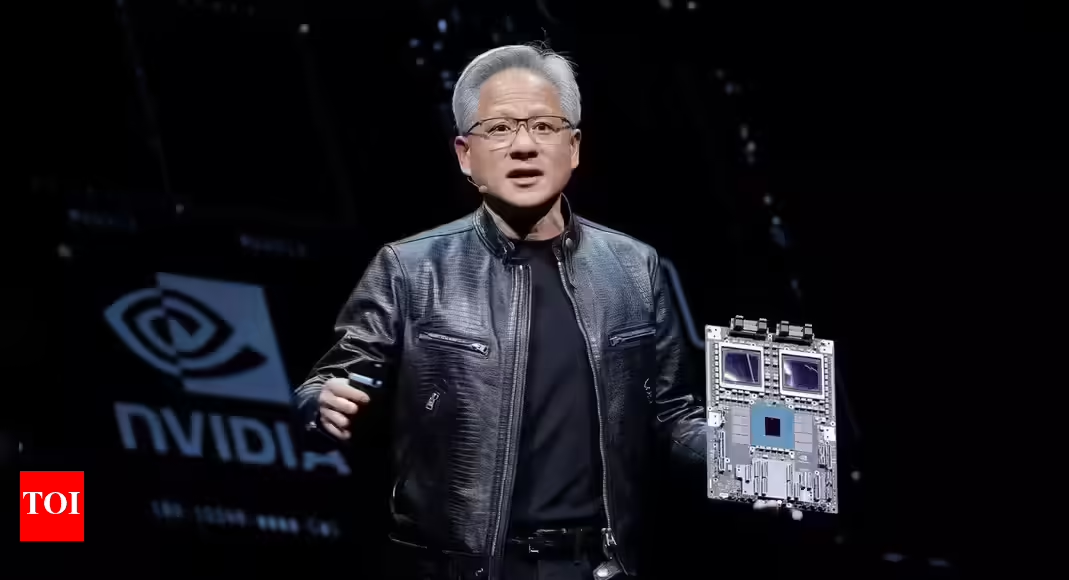
At the heart of Nvidia’s groundbreaking announcements was the unveiling of its Cosmos foundation models. These advanced AI models are designed to generate photo-realistic video, which can be used for training robots and self-driving cars. One of the biggest challenges in robotics and autonomous vehicle development is the cost and time associated with gathering real-world training data. Traditionally, this involved costly processes like putting cars on the road or having robots perform repetitive tasks to learn from human actions. However, Nvidia’s Cosmos models offer a solution by generating synthetic data that mirrors the physical world, which allows robots to learn faster and more affordably.
The Cosmos models leverage Nvidia’s expertise in AI and machine learning, using text descriptions to generate videos of environments that obey the laws of physics. This approach not only reduces the cost of training robots but also eliminates the need for cumbersome data collection processes that can be both time-consuming and inefficient. With the help of these models, robots can now be trained to understand and interact with their surroundings in a way that mimics real-life scenarios, giving them the ability to adapt and perform in complex, unpredictable environments.
Revolutionizing the Gaming Experience: Nvidia’s RTX 50 Series

In addition to AI innovations, Nvidia also showcased its latest advancements in gaming technology. The company introduced its new RTX 50 series graphics chips, powered by Nvidia’s cutting-edge ‘Blackwell’ AI technology. These chips aim to give video games a level of realism that was previously unimaginable. The new technology can add intricate details to virtual environments, such as adding imperfections to surfaces like teapots or accurately rendering human faces with a level of detail that enhances immersion.
Nvidia’s new gaming chips come with a wide range of features that are designed to bring cinematic quality to video games. With improved shaders and advanced graphics rendering capabilities, the RTX 50 series promises to transform the gaming experience by offering more lifelike visuals and more accurate depictions of human characters. The chips will be available in several configurations, ranging from $549 to $1,999, with the higher-end models launching on January 30 and the lower-tier models following in February. This release is expected to significantly boost Nvidia’s sales in the short term, as gamers and developers alike look forward to the enhanced graphical capabilities these chips offer.
The Launch of Nvidia’s First Desktop Computer
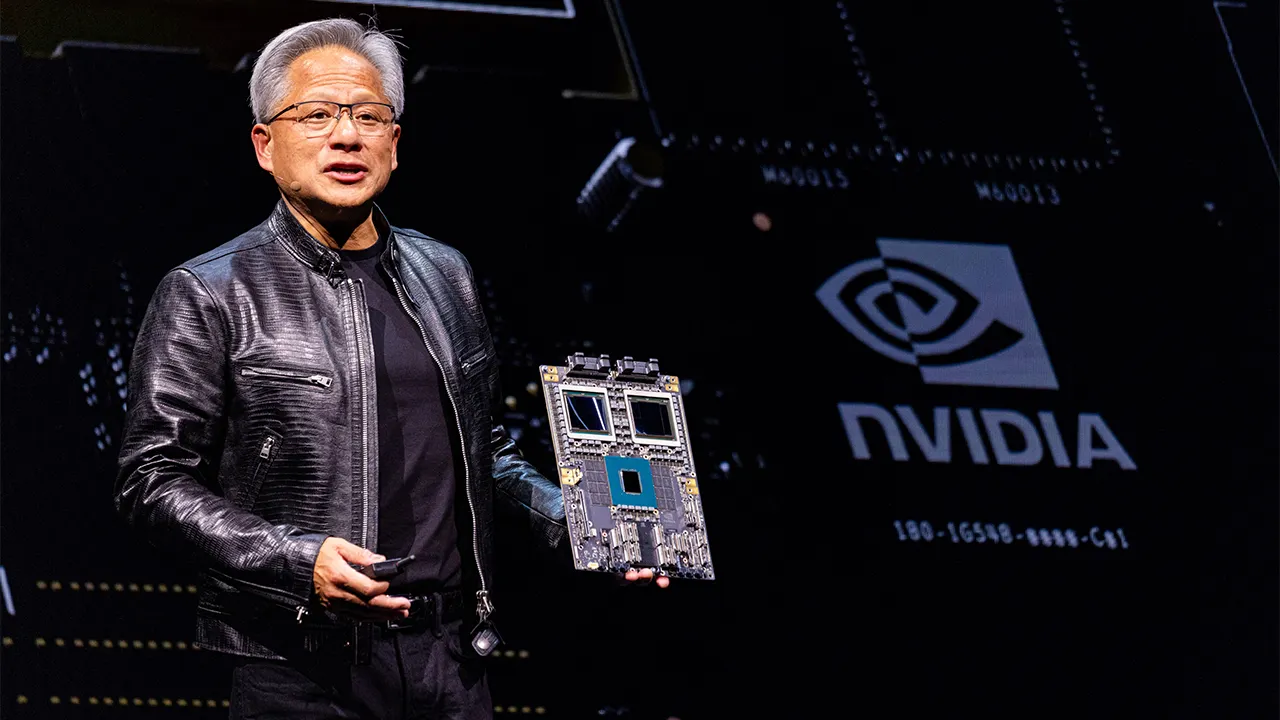
Another major announcement from Nvidia was the reveal of its first desktop computer, dubbed Project DIGITS. This new system, designed primarily for software developers and AI researchers, offers a compact yet powerful solution for testing and developing AI applications. The desktop will cost $3,000 and run on an Nvidia-based operating system that is built around Linux. It features the same chip at the heart of Nvidia’s data center offerings, combined with a custom-built processor developed in collaboration with Taiwan’s MediaTek.
Project DIGITS is a game-changer for developers working on AI systems. It allows them to quickly test their models and iterate on their projects with unprecedented efficiency. While the system is aimed at professional developers and researchers rather than consumers, its release signals Nvidia’s increasing push into the realm of high-performance computing, which extends beyond just gaming and into the broader world of AI and robotics.
Nvidia Partners with Toyota for Automotive Advancements
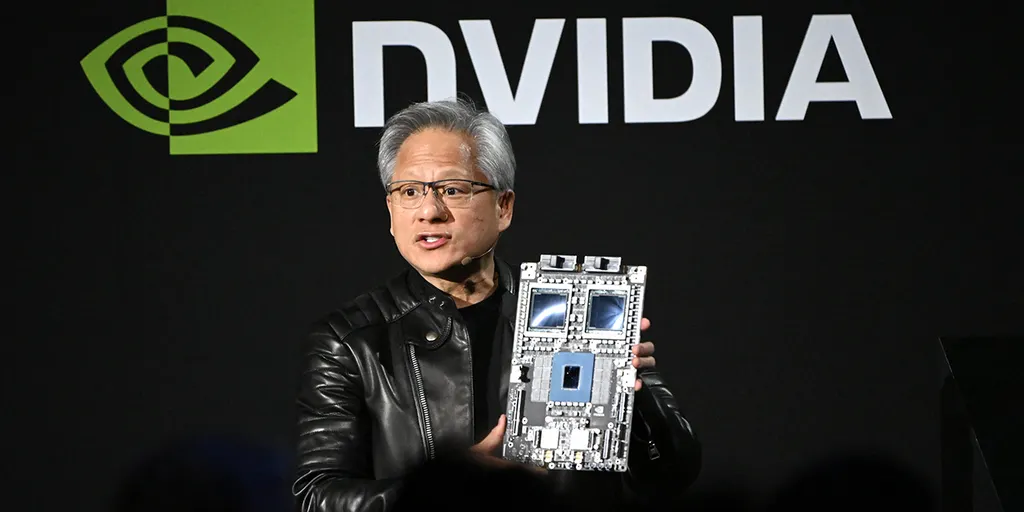
Perhaps the most surprising announcement at CES 2025 was Nvidia’s new partnership with Toyota. Under the deal, Toyota will use Nvidia’s Orin chips and automotive operating system to power advanced driver-assistance systems (ADAS) in several of its models. The Orin chips, known for their powerful AI processing capabilities, will enable Toyota’s vehicles to enhance safety features and improve the driving experience.
Nvidia has been making inroads into the automotive sector for years, and this partnership represents a significant step forward in its efforts to become a major player in the automotive technology space. While specifics about which Toyota models will feature Nvidia’s technology were not disclosed, the partnership highlights the growing importance of AI in the development of autonomous and semi-autonomous vehicles. Nvidia expects its automotive hardware and software revenue to reach $5 billion by fiscal 2026, up from an expected $4 billion in the current year, further cementing the company’s position as a leader in the automotive tech space.
Nvidia’s Stock and Market Impact
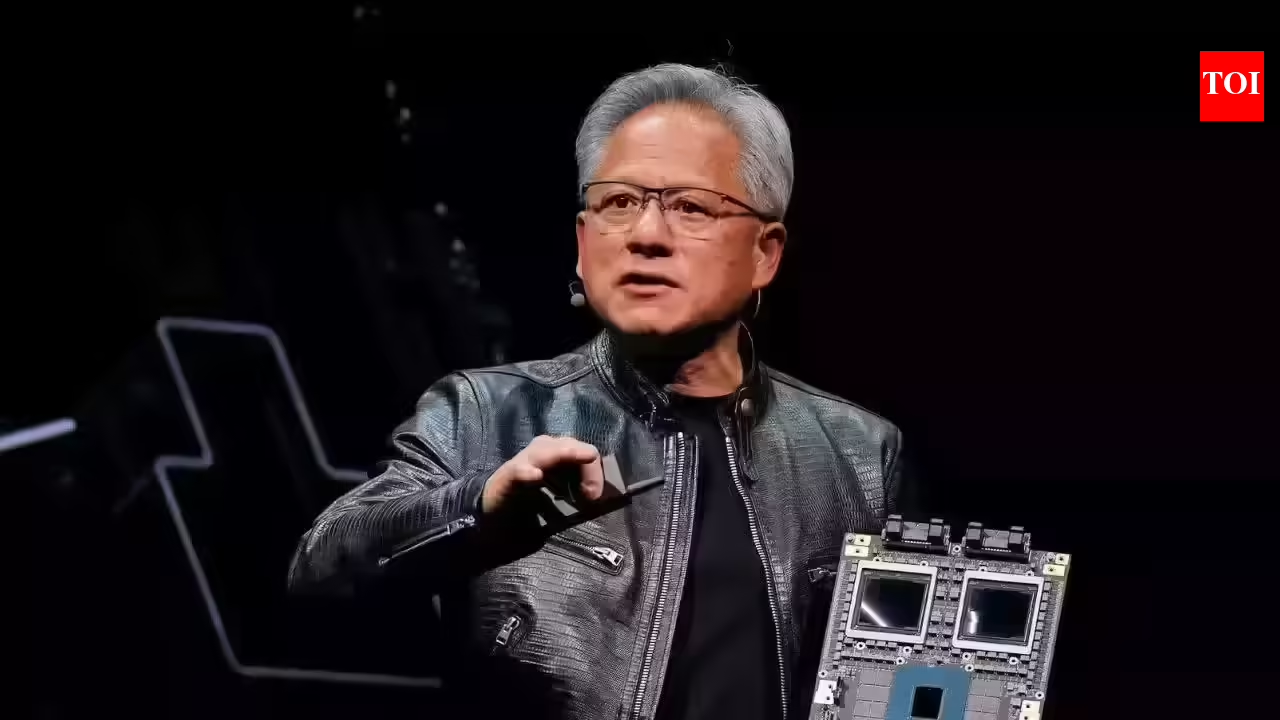
The announcements at CES 2025 are not just significant for the tech industry but also for Nvidia’s financial performance. The company’s stock closed at a record high of $149.43 on January 6, 2025, bringing its market valuation to $3.66 trillion. This makes Nvidia the world’s second-most valuable listed company, just behind Apple. The growth in Nvidia’s stock price is a direct result of its ongoing innovation and its strategic moves to diversify its business beyond gaming and into industries like automotive and robotics.
As Nvidia continues to expand its portfolio of products and services, investors are bullish on the company’s prospects. The gaming chips, AI models, desktop computers, and automotive partnerships are all expected to contribute to Nvidia’s revenue growth in the coming years. This expansion into new markets, combined with the company’s continued dominance in the AI and gaming sectors, positions Nvidia for long-term success.
What’s Next for Nvidia: A Vision for the Future
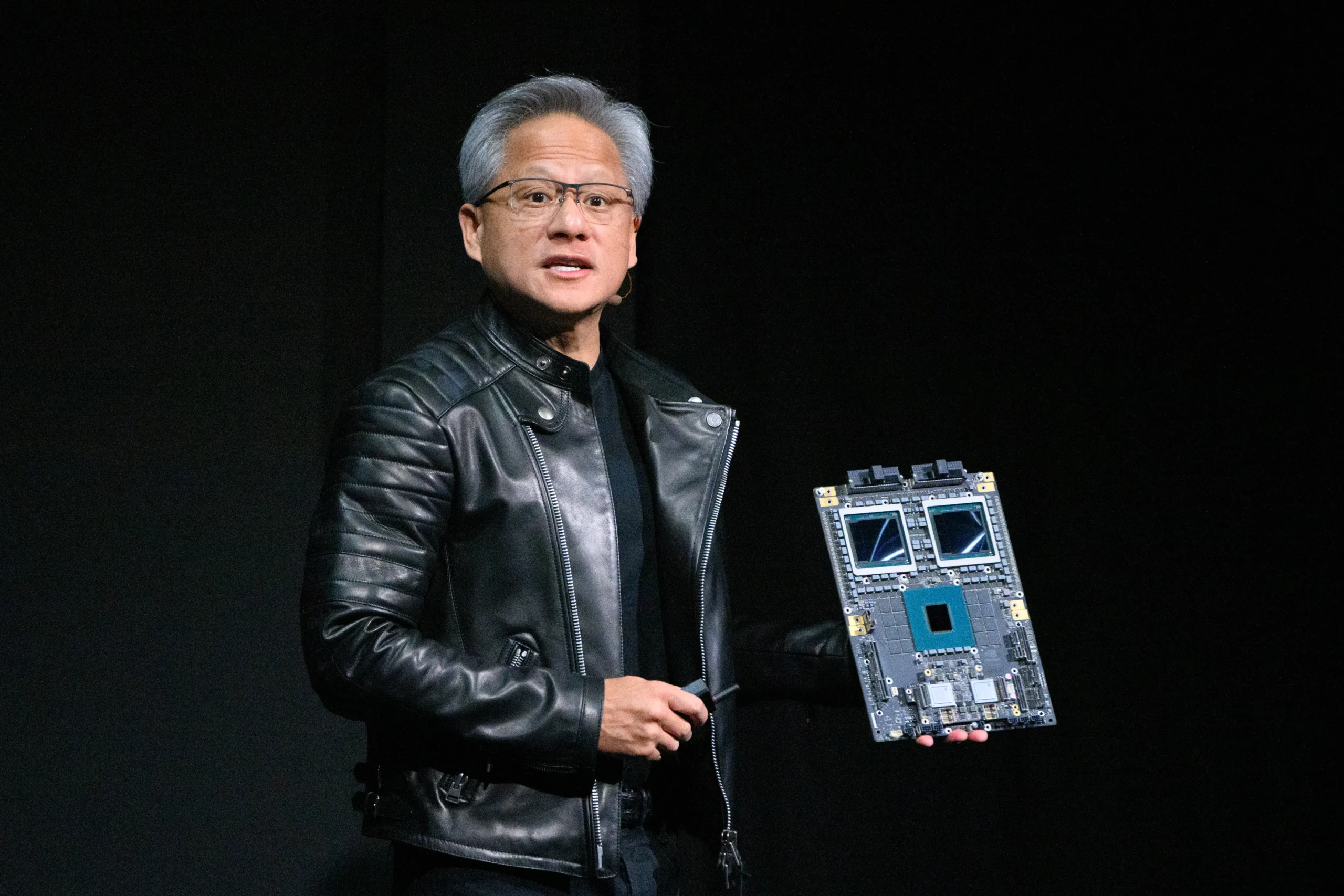
Nvidia’s announcements at CES 2025 showcase the company’s relentless drive to innovate and diversify. The introduction of the Cosmos AI models, new gaming chips, and the Project DIGITS desktop system marks a new era of technological advancements for Nvidia. The company’s push into robotics and automotive technology represents an exciting new frontier for AI and machine learning applications.
However, the road ahead is not without its challenges. While Nvidia’s gaming chips are expected to boost sales in the short term, the long-term success of its AI and robotics initiatives will depend on how well the company can scale its technologies and make them accessible to a wider range of industries. Nvidia will also need to navigate the competitive landscape, where companies like AMD and Intel are working hard to develop their own AI and gaming solutions.
Despite these challenges, Nvidia’s recent innovations have positioned the company as a leader in multiple industries. The partnerships with Toyota and the focus on AI-powered solutions for robotics and gaming demonstrate Nvidia’s potential to shape the future of technology. As the company continues to evolve and expand its reach, it will be exciting to see what new breakthroughs it will bring to the table in the coming years.
Nvidia’s Expanding Influence
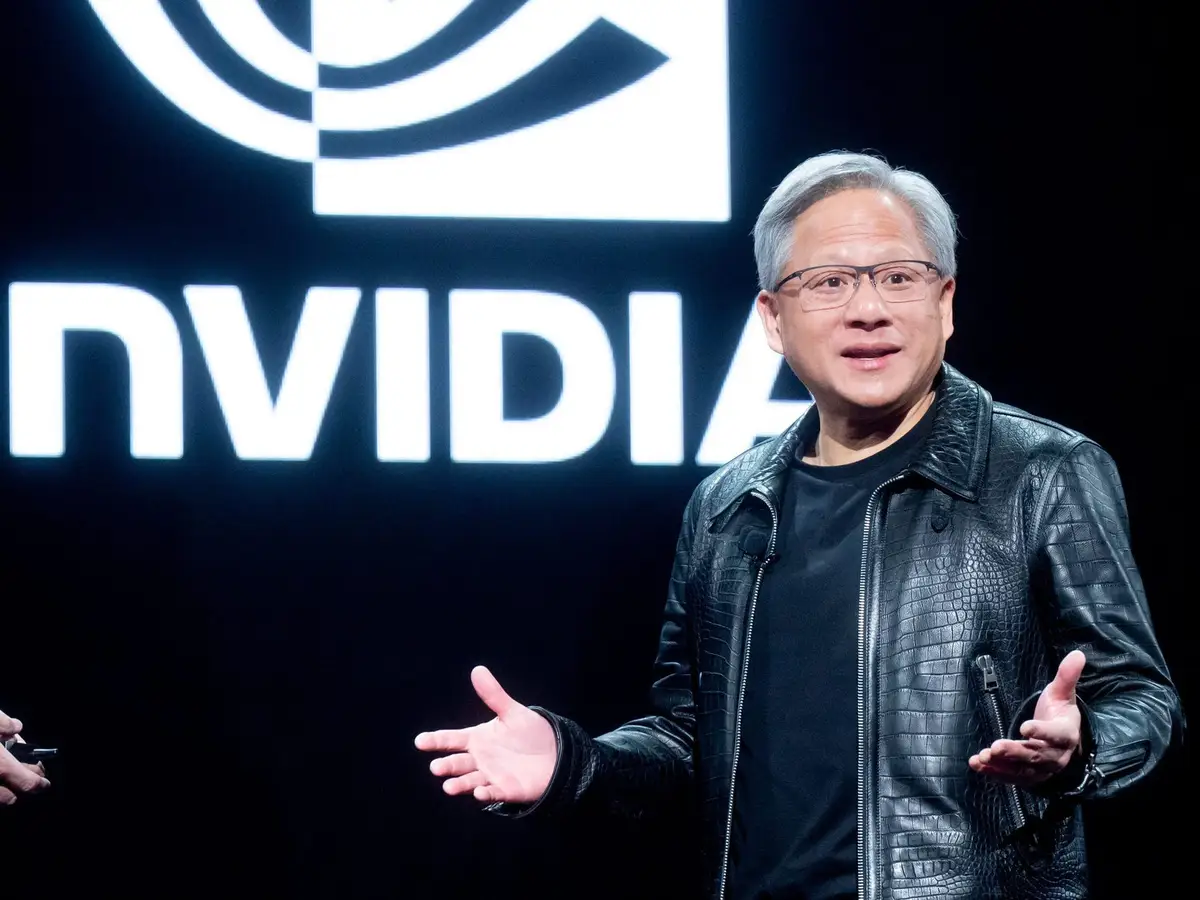
Nvidia’s presence at CES 2025 reinforced the company’s status as a major force in the tech world. By unveiling new gaming chips, AI models for robot training, and a groundbreaking partnership with Toyota, Nvidia demonstrated its ability to push the boundaries of what’s possible in AI, gaming, and automotive technologies. As the company continues to innovate and expand, its impact on industries ranging from entertainment to transportation will likely grow, cementing Nvidia’s place at the forefront of technological advancement.
Conclusion
Nvidia’s announcement at CES 2025 not only highlighted their impressive product lineup but also underlined the company’s role as a leader in AI and gaming technologies. By diversifying into sectors like automotive and robotics, Nvidia has positioned itself for long-term success, and its stock growth reflects investor confidence. As the company continues to innovate and collaborate with global giants like Toyota, its influence on various industries is set to expand.