
Table of Contents
- When Paris Drew the Line, the Debate Stopped Feeling Hypothetical
- The Mechanics of a Ban Often Look Boring
- Why Animal Rights Groups Say the Core Issue Isn’t the Show
- The National Shift in France Turned a City Fight Into a Countrywide Timeline
- The Hardest Question Was Never “Should It End?”
- Tradition Was the Defense
- Why “Animal Rights” Language Intensified After Paris
- The Industry Argument
- The Enforcement Problem Nobody Likes Talking About
- What Paris’s Decision Signals About the Future of Entertainment
- The Ending That Doesn’t Feel Like an Ending
When Paris Drew the Line, the Debate Stopped Feeling Hypothetical
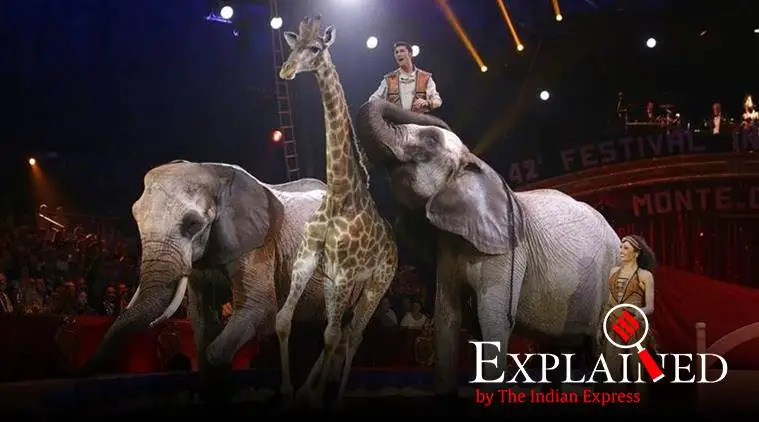
When Paris began moving toward blocking circuses that used wild animals, it didn’t land like a small administrative tweak. It landed like a moral statement—one big enough to make other cities, lawmakers, and audiences ask whether the circus tradition they grew up with had been quietly relying on something society no longer wanted to tolerate. In practical terms, Paris pushed to restrict permits for circuses that brought wild animals into the city, signaling a shift in how the capital viewed public entertainment and animal welfare.
The reaction revealed something important: people weren’t only debating policy. They were debating identity. For supporters, the change looked like overdue progress—an admission that captivity, transport, and performance demands are not neutral experiences for animals. For critics, it felt like cultural erasure, a judgment delivered from modern urban values onto a working tradition. And in that friction, Paris became more than a city making a rule. It became a symbol of a broader European argument about what “acceptable” looks like when the subject can’t consent.
The Mechanics of a Ban Often Look Boring

What makes these policies so powerful is that they don’t always arrive with dramatic courtroom scenes. In Paris, much of the leverage came through permissions tied to operating in public space—whether a circus can legally set up, occupy land, and run shows under the city’s rules. When a city controls permits, it can effectively decide which forms of entertainment get to exist inside its boundaries.
That matters because it shifts the debate from “Do you like circuses?” to “Should the state enable animal performance?” Once the question is framed that way, the focus becomes welfare standards, enforcement, and what modern cities want to endorse with public permission. Even people who feel nostalgic about circuses can still hesitate when the cost becomes clearer: confinement, repeated travel, unnatural social grouping, and training methods that are hard to audit from the audience seats.
Why Animal Rights Groups Say the Core Issue Isn’t the Show
Animal welfare advocates often argue that the harm isn’t limited to the performance moment. It’s the full system around it: transport conditions, enclosure size, the stress of constant movement, restricted expression of natural behaviors, and the mismatch between wild-animal biology and touring logistics. Paris’s stance echoed this welfare-centered framing—less about demonizing a profession, more about acknowledging that certain animals pay an invisible price so that humans can be briefly amazed.
This is also why the debate tends to intensify around specific animals—big cats, elephants, bears, primates—species whose needs are complex and whose captivity stress signals can be profound. For many advocates, the moral argument is simple: if the animal’s well-being depends on a lifetime of controlled movement for human entertainment, that is not a fair trade. The “rights” language enters because welfare alone can sound negotiable—bigger cages, more inspections—while rights implies a boundary that shouldn’t be crossed in the first place.
The National Shift in France Turned a City Fight Into a Countrywide Timeline
Paris didn’t operate in a vacuum. France later moved at the national level with legislation that phases out wild animals in traveling circuses on a timeline, including a ban on performances with wild animals after a transition period and broader restrictions that tighten over time. In 2021, reports on France’s animal welfare law described a step-by-step approach: wild animal performances prohibited within a few years, and the keeping/ownership framework shifting further out on a longer horizon.
What this did was change the psychological temperature. A city-level restriction can be portrayed as local politics. A national law turns it into national values. It forces industries to plan, forces sanctuaries and animal welfare systems to prepare, and forces the public to reckon with what happens to the animals who have already spent years—or decades—in captivity for entertainment.
The Hardest Question Was Never “Should It End?”
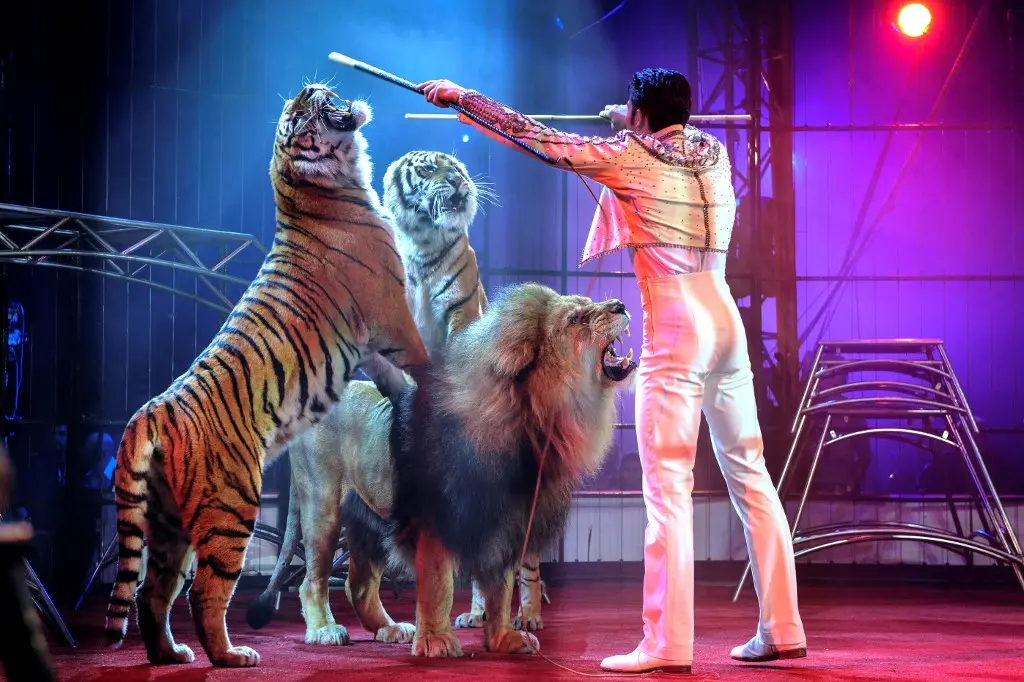
Even people who support bans often pause when they reach the logistical reality. If wild animals are removed from circuses, they don’t magically return to the wild. Many were born in captivity. Many cannot survive outside managed care. The ethical pressure shifts from “stop the shows” to “build the transition.” That transition requires specialized sanctuaries, veterinary support, long-term funding, and case-by-case placement decisions—because an elephant’s needs are not a tiger’s needs, and neither is comparable to a small primate’s social complexity.
This is where bans become morally serious. It’s easy to oppose cruelty in principle. It’s harder to commit to the aftermath responsibly. Advocates argue that if a society is confident enough to end an exploitative system, it must be mature enough to fund humane alternatives. Otherwise, the ban risks becoming symbolic—satisfying emotionally, but unstable in practice.
Tradition Was the Defense
Circus history has deep roots in Europe, and defenders often frame animal acts as cultural heritage and family livelihood. But the Paris debate exposed a generational change in what people consider “normal.” Polling and public commentary in various countries have increasingly suggested discomfort with wild animals performing for entertainment, and cities began acting on that shift. Articles describing Paris’s direction emphasized how local restrictions were part of a larger trend where towns and cities imposed limits on traveling circuses using wild animals.
Once public sentiment moves, “tradition” starts sounding less like a reason and more like a question: tradition for whom, and at whose expense? The cultural nostalgia remains real. But so does the growing belief that wonder should not require captivity. That belief turns the old argument upside down: maybe the circus can survive, but only if it evolves away from the parts society now finds ethically indefensible.
Why “Animal Rights” Language Intensified After Paris
The phrase “animal welfare” can imply better conditions within the same system. “Animal rights” implies the system itself is the problem. Paris’s ban momentum helped accelerate that rhetorical shift, because it suggested a city wasn’t merely asking for improved standards; it was withdrawing permission altogether. That move resonates with the rights framework: some uses of animals are not acceptable regardless of how well-intentioned the humans are.
At this point, the conversation expands beyond circuses. It touches marine parks, exotic pet trade, breeding, and captivity-based tourism. France’s broader animal welfare measures, discussed alongside circus restrictions, reflected this wider re-evaluation of animals used for entertainment and profit.
The Industry Argument

Circus operators and workers often argue that bans threaten livelihoods built over generations, especially for traveling shows that are already under financial pressure. When governments introduce phase-out policies, they sometimes include transition funding or support programs for affected workers, recognizing that ethical change still creates human consequences. Reporting on France’s broader policy direction has noted transition periods and the idea of helping workers adapt, because the shift is not purely symbolic—it changes how people make a living.
This is where the debate becomes emotionally complicated. It’s possible to believe animals should not perform and still feel empathy for people whose identity and income are tied to the practice. The most persuasive policies tend to acknowledge that complexity instead of dismissing it. They don’t pretend the change is painless; they argue the pain is still worth it, and then attempt to reduce harm through structured transitions.
The Enforcement Problem Nobody Likes Talking About
A ban is only as real as its enforcement. City-level permit restrictions work when authorities consistently deny permissions and monitor compliance. National laws work when there are clear definitions, inspection capacity, and penalties that actually deter violations. Animal advocates sometimes point to cases where births or acquisitions occur despite restrictions, suggesting gaps between law and reality and raising questions about how quickly systems can truly change.
This matters because enforcement failures can fuel cynicism on both sides. Supporters get frustrated and call the policy performative. Opponents point to inconsistencies as proof the policy is impractical. The success of Paris-style restrictions and France’s national phase-out depends not just on moral clarity but on administrative discipline—something far less glamorous than the headline, but far more decisive.
What Paris’s Decision Signals About the Future of Entertainment
Paris’s stance wasn’t just about circuses. It was an early indicator that major cities are beginning to treat animal ethics as a public policy category, not merely a private preference. When a capital city changes how it grants permits and aligns those decisions with welfare concerns, it suggests that “what we allow in our streets” is also a declaration of values.
The likely future is not a world without circuses, but a world where circuses increasingly rely on human performance, storytelling, technology, acrobatics, and artistry rather than animal acts. In that model, wonder survives—just not at the expense of wildlife forced into unnatural roles. And that is why Paris’s ban, even years later, still matters: it helped normalize the idea that entertainment can be beautiful without being extractive, and that modern animal rights debates are no longer fringe arguments—they are shaping law, culture, and what the next generation considers “normal.”
The Ending That Doesn’t Feel Like an Ending
The circus animal debate rarely ends cleanly because it sits at the intersection of compassion and control. Paris pushed the conversation forward by treating wild animal performance not as a quaint relic but as a serious ethical issue worthy of policy action. France’s broader legal timeline reinforced that direction with phased restrictions and future cutoffs.
What happens next won’t be decided by a single vote or one law. It will be decided in sanctuaries and courtrooms, in permit offices and public opinion, in the quiet question parents ask when their child points at an elephant under a tent: is this wonder, or is this captivity dressed up as wonder? Paris forced that question into the open—and once a society starts asking it, it becomes very hard to go back to pretending it wasn’t there.