

On an ordinary afternoon, a woman walking through a quiet parking lot noticed something strange near the curb — a small, dark shape that looked like trash.
But then it moved.
In that moment, her day — and the life of a tiny creature — changed forever.
This is the kind of story that grabs your chest, squeezes your heart, and reminds you why compassion still matters in a world moving too fast.
And what happened next?
You’ll think about it long after you finish reading.
Table of Contents
- A Strange Shape on the Ground — And a Feeling She Couldn’t Ignore
- A Closer Look Reveals the Terrifying Truth
- A Race Against Time: The First Rule of Emergency Animal Rescue
- Finding a Lifeline: When Strangers Become Heroes
- Slowly, the Kitten Begins to Fight Back
- From Parking Lot to Forever Home: A Transformation You Won’t Believe
- A Story Bigger Than One Rescue: What This Moment Teaches Us
- The Financial Side: How Rescues Affect Your Wallet — and Why It’s Still Worth It
- Travel, Home, and Lifestyle: How Rescue Stories Inspire Everyday Choices
- Why People Can’t Stop Sharing Stories Like This
- Final Thoughts: A Life Saved — And a World Reminded
A Strange Shape on the Ground — And a Feeling She Couldn’t Ignore
Most people would’ve walked past without a second glance. Parking lots are full of things we ignore: wrappers, leaves, plastic bags.
But something about this “trash” didn’t feel right.
As the woman came closer, she noticed it wasn’t trash at all.
It was tiny.
It was trembling.
And it was alive.
A baby animal — alone, cold, and barely breathing.
Imagine it for a moment:
You’re on your way to work, or to buy groceries, and suddenly life drops a life-or-death decision at your feet.
Would you stop?
A Closer Look Reveals the Terrifying Truth
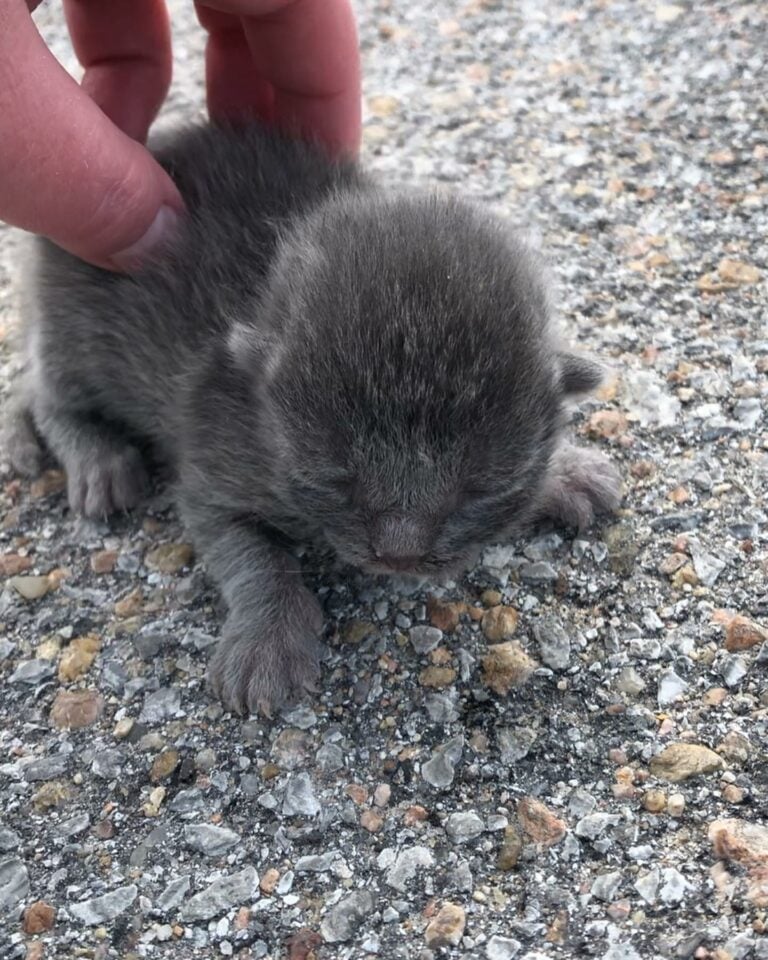
When she knelt beside the small shape, she realized the truth instantly — it was a newborn kitten, no more than a few days old. Its eyes were sealed shut. Its body was covered in dirt. And without warmth, it was only minutes away from dying.
There was no mother cat.
No siblings.
No nest.
Only a helpless life fading quietly on cold concrete.
This wasn’t just an abandoned animal — this was an emergency. One that required action right now.
But the woman had never rescued an animal before. No kitten formula, no vet contacts, no experience.
So what would someone like you do in this situation — fight or freeze?
She chose to fight.
A Race Against Time: The First Rule of Emergency Animal Rescue
Instinct took over.
She scooped the fragile kitten into her hands and felt its tiny body shaking uncontrollably. Anyone who has ever picked up a cold newborn animal knows that chilling is the number-one killer.
Without warmth, the heart slows.
Breathing weakens.
Organs begin to shut down.
The woman placed the kitten inside her shirt to warm it with her own body heat — a powerful emergency technique often used by rescuers and even veterinarians.
This simple act may have saved its life.
But the clock was still ticking.
Finding a Lifeline: When Strangers Become Heroes
She rushed to the nearest veterinary clinic, praying the kitten had enough strength to hold on. The clinic staff immediately took over — providing heat support, fluids, and treatment for dehydration.
Then came the heartbreaking news:
The kitten was severely underweight, dangerously cold, and would require 24/7 care to survive.
Most people would’ve handed the kitten over and walked away.
But she didn’t.
Something inside her refused to let go.
The First 24 Hours: The Most Dangerous Window
A newborn animal’s survival depends on:
- Constant warmth
- Frequent feedings
- Strict sanitation
- Emergency monitoring
- Luck — the kind you can’t control
The woman learned quickly that this wasn’t just a rescue — it was a commitment.
The kind that rewrites your schedule, drains your energy, and tests your patience.
But she stayed. Hour after hour. Feeding. Warming. Watching. Hoping.
Because once you save a life, you don’t quit halfway.
Slowly, the Kitten Begins to Fight Back
At first, there wasn’t much improvement. Newborn rescues take time.
But then —
A tiny purr.
A small stretch.
A louder cry than before.
Signs of life… and signs of hope.
Within days, the kitten began gaining weight.
Its eyes opened.
It recognized her voice.
It learned that her hands meant safety, not danger.
It’s incredible how fast animals bond with the person who saved them — and how deeply that bond can change someone’s life.
From Parking Lot to Forever Home: A Transformation You Won’t Believe
Weeks later, the tiny creature that once lay helpless on concrete was:
- Eating regularly
- Exploring curiously
- Cuddling fearlessly
- Growing stronger each day
The woman — who didn’t plan to adopt a pet, who didn’t think she was ready, who didn’t expect her life to shift — realized something profound:
She wasn’t rescuing the kitten anymore.
The kitten was rescuing her.
A Story Bigger Than One Rescue: What This Moment Teaches Us
This story isn’t just about a kitten.
It’s about paying attention.
Most of us rush through life — deadlines, errands, stress, travel plans, bills, home repairs. We barely notice what’s around us.
But sometimes, slowing down for 10 seconds can change everything.
Here’s what this rescue teaches us:
1. Small acts can have massive impact
Saving a life begins with noticing one.
2. Compassion is a skill — and it grows when used
You never know when you’ll become someone’s only hope.
3. We are surrounded by chances to do good
Animal rescues often happen in ordinary places — sidewalks, gas stations, backyards, parking lots.
4. Helping an animal helps your mental health too
Studies show that caring for animals reduces anxiety, lowers stress, and boosts emotional resilience.
Ask yourself:
If you saw something unusual on the ground — would you stop?
The Financial Side: How Rescues Affect Your Wallet — and Why It’s Still Worth It
Rescuing an animal involves real costs:
- Vet visits
- Emergency treatments
- Starter supplies
- Food and formula
- Long-term care
But here’s the twist:
Helping animals often leads to financial benefits in unexpected ways.
Pet owners report:
- Lower stress-related medical expenses
- Higher work productivity
- Less spending on entertainment
- Improved home life and wellbeing
Saving a life is priceless — but it can also improve your quality of life in ways no subscription or service ever could.
Travel, Home, and Lifestyle: How Rescue Stories Inspire Everyday Choices
Many readers find that rescue stories like this push them to:
- Drive slower and watch for animals
- Reduce clutter in backyards and garages to keep strays safe
- Create warmer, safer home environments
- Travel with emergency pet supplies
- Support local shelters through donations
A single act of kindness can ripple into everyday decisions.
Why People Can’t Stop Sharing Stories Like This
Because this story hits every human emotion:
✔️ Suspense
✔️ Fear
✔️ Hope
✔️ Transformation
✔️ Love
It reminds us that even in chaotic parking lots and busy modern lives, magic still exists.
Compassion still wins.
And one person can make a difference.
Would you have stopped?
Would you have picked up the tiny creature?
Would you fight for a life so fragile?
These are questions that stay with you.
Final Thoughts: A Life Saved — And a World Reminded

That woman didn’t plan to be a hero that day.
She didn’t wake up expecting to save a life.
But she did — simply because she paid attention.
The kitten that was once minutes from death now sleeps in a warm bed, eats from a clean bowl, and purrs happily in the arms of the person who refused to walk away.
Sometimes, the universe puts tiny miracles in front of us — wrapped in dirt, weakness, and fear — and waits to see what we’ll do.
The next time you see something strange on the ground…
Look closer.
A life might be waiting.