
Table of Contents
- When Zoo Staff Realized the Penguins Had Other Plans
- Meet the Penguins Who Sparked an Unexpected Adventure
- How the Escape Attempt Unfolded
- Why Penguins Are More Curious Than We Often Assume
- The Role of Intelligence in Animal Exploration
- Why Zoo Enclosures Can Never Be Fully Predictable
- The Balance Between Safety and Stimulation
- How Zoo Staff Responded to the Situation
- Public Reaction and Why the Story Resonated
- What the Incident Reveals About Captivity
- Why Escape Attempts Are Not Always Signs of Distress
- Lessons for Zoo Design and Animal Care
- Why Penguins Continue to Fascinate Humans
- The Difference Between the Wild and the Zoo
- What This Moment Teaches Us About Animal Agency
- A Lighthearted Story With Deeper Meaning
- Why Stories Like This Matter
- A Gentle Reminder From a Group of Penguins
- What This Means for the Future of Animal Care
- A Small Escape That Left a Lasting Impression
When Zoo Staff Realized the Penguins Had Other Plans
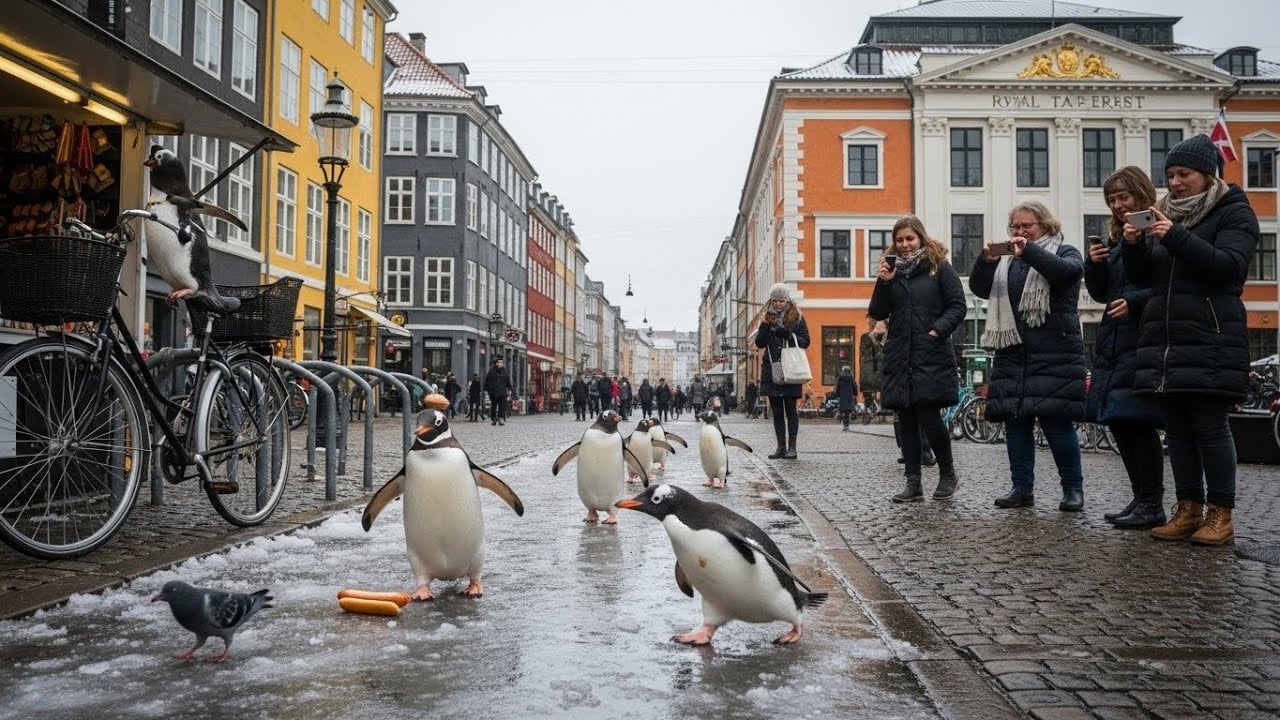
When news broke that a group of penguins at a zoo in Denmark had attempted a daring escape from their enclosure, the story spread quickly, not because of danger or damage, but because of what it revealed about animal behavior. Visitors and staff alike were startled to discover that the penguins had been quietly testing the boundaries of their carefully designed habitat, inching closer to freedom with a determination that seemed almost comical at first glance.
Yet behind the humor was something deeper. The escape attempt was not random chaos or mischief. It was a reminder that even animals living in protected, enriched environments retain instincts, curiosity, and a drive to explore. What follows is an exploration of how the escape unfolded, why penguins behave this way, and what the incident reveals about the complex relationship between animals, captivity, and care.
Meet the Penguins Who Sparked an Unexpected Adventure

The penguins involved were part of a well-maintained zoo exhibit designed to mimic their natural environment as closely as possible. With access to water, ice-like surfaces, and carefully managed temperatures, the enclosure provided safety, food, and medical care. By all accounts, the penguins were healthy and well cared for.
And yet, like many intelligent animals, penguins are naturally curious. They observe patterns, notice changes, and explore opportunities. Zoo staff later explained that the birds had discovered a temporary vulnerability in their enclosure, one that allowed them to move farther than usual toward restricted areas.
How the Escape Attempt Unfolded
According to zoo officials, the penguins began venturing beyond their typical swimming and resting zones, moving along pathways that were never intended for penguin traffic. Their progress was slow but deliberate, marked by careful waddles and coordinated movement.
Staff quickly intervened once the situation became clear. The penguins were guided safely back to their enclosure without injury or distress. While the incident was resolved quickly, it raised questions about how the birds identified the opportunity and what motivated them to pursue it.
Why Penguins Are More Curious Than We Often Assume

Penguins are frequently portrayed as cute, clumsy, and simple, but research suggests they are far more perceptive than popular culture implies. In the wild, penguins must constantly assess their environment to avoid predators, locate food, and navigate vast ocean distances.
This environmental awareness does not disappear in captivity. Instead, it adapts. Penguins observe their surroundings, notice human routines, and respond to changes. When a new pathway or opening appears, investigation is a natural response rather than rebellion.
The Role of Intelligence in Animal Exploration
Animal behavior experts note that intelligence often manifests as curiosity. Animals capable of learning patterns and cause-and-effect relationships are more likely to test boundaries. In penguins, this can include exploring new surfaces, following human movement, or investigating unfamiliar objects.
The Danish penguins’ actions reflected this cognitive engagement. Rather than acting impulsively, they appeared to move with purpose, suggesting a calculated response to a perceived opportunity rather than random wandering.
Why Zoo Enclosures Can Never Be Fully Predictable
Modern zoos invest heavily in enclosure design, focusing on safety, enrichment, and naturalistic features. However, living systems are inherently dynamic. Weather, maintenance work, and animal behavior itself can introduce variables that designers cannot fully anticipate.
In this case, a minor structural or procedural change may have created an unexpected route. The penguins’ ability to identify and exploit it highlights the challenge of managing intelligent animals within controlled spaces.
The Balance Between Safety and Stimulation

Zoos face a constant balancing act. Enclosures must prevent escape and injury while also offering stimulation that prevents boredom and stress. Too little stimulation can lead to lethargy or repetitive behaviors, while too much complexity can increase the risk of unforeseen interactions.
The penguin escape attempt sits at this intersection. It suggests that the animals were engaged with their environment, alert and curious, even if that engagement briefly exceeded the intended limits of their habitat.
How Zoo Staff Responded to the Situation
Zoo officials emphasized that the situation was handled calmly and professionally. Staff members trained in animal behavior recognized the early signs of unusual movement and acted quickly to guide the penguins back to safety.
There was no panic, no force, and no harm done. The response itself demonstrated the importance of experienced caretakers who understand animal cues and can intervene without escalating stress.
Public Reaction and Why the Story Resonated
The story captured public attention because it humanized the penguins in a way that felt familiar. Many people related to the idea of testing boundaries or seeking something beyond the routine. Social media reactions ranged from amusement to admiration, with many praising the penguins’ apparent teamwork and determination.
This reaction reflects a broader cultural shift in how people view animals—not merely as exhibits, but as individuals with personalities, preferences, and agency.
What the Incident Reveals About Captivity

The escape attempt does not suggest neglect or poor conditions. Instead, it underscores the reality that captivity, even when humane and enriched, cannot fully replicate the complexity of the wild. Animals retain instincts shaped by evolution, and those instincts sometimes surface in unexpected ways.
For penguins, movement and exploration are fundamental behaviors. When opportunities arise, even in controlled environments, those behaviors naturally express themselves.
Why Escape Attempts Are Not Always Signs of Distress
Animal behaviorists caution against interpreting every escape attempt as a sign of unhappiness. In many cases, exploration is a neutral or even positive indicator of cognitive engagement. Animals that are alert, curious, and responsive are often healthier than those that remain passive.
In the Danish penguins’ case, there was no evidence of agitation or distress. The birds appeared calm and coordinated, suggesting curiosity rather than desperation.
Lessons for Zoo Design and Animal Care
Incidents like this offer valuable learning opportunities. Zoo designers and caretakers continuously refine enclosures based on animal behavior, adapting structures to reduce risk while maintaining enrichment.
The penguin escape attempt may lead to minor design adjustments, improved monitoring, or changes in daily routines. These refinements are part of an ongoing process rather than a response to failure.
Why Penguins Continue to Fascinate Humans
Penguins occupy a unique place in the human imagination. Their upright posture, social behavior, and expressive movements make them relatable in ways many animals are not. Stories like this reinforce that connection, revealing intelligence and personality beneath the feathers.
The fascination is not just emotional; it drives conservation interest. When people feel connected to animals, they are more likely to support efforts to protect them in the wild.
The Difference Between the Wild and the Zoo
In the wild, penguins face constant danger from predators, harsh weather, and food scarcity. In zoos, those threats are removed, replaced by predictability and care. While this improves survival and longevity, it also changes how animals interact with their environment.
The escape attempt highlights this contrast. In the wild, exploration is survival. In captivity, it becomes expression—a way for animals to engage with a world that is safe but limited.
What This Moment Teaches Us About Animal Agency
One of the most important takeaways from the incident is the concept of animal agency. Penguins are not passive occupants of their enclosures. They observe, decide, and act within the constraints of their environment.
Recognizing this agency encourages more thoughtful approaches to animal care, emphasizing respect, observation, and adaptation rather than strict control alone.
A Lighthearted Story With Deeper Meaning
While the image of penguins attempting an escape may seem humorous, the story carries deeper implications. It reminds us that animals remain driven by instincts shaped long before human institutions existed. No enclosure, no matter how well designed, can fully suppress that drive.
Instead of viewing such moments as failures, they can be seen as evidence of life asserting itself—curious, adaptive, and resilient.
Why Stories Like This Matter
In a world filled with heavy news, stories like this offer a pause without triviality. They invite reflection on intelligence, freedom, and coexistence. They also encourage empathy, reminding us that animals experience the world actively, not passively.
For zoos, such moments reinforce the importance of continuous learning. For the public, they deepen appreciation for the complexity of animal life.
A Gentle Reminder From a Group of Penguins
The Danish penguins did not escape into the wild or cause harm. They simply explored, tested, and were gently guided back. Yet in that brief moment, they reminded humans of something essential: curiosity does not disappear when safety is provided.
It adapts, waits, and occasionally waddles toward the unknown.
What This Means for the Future of Animal Care
As understanding of animal cognition grows, zoos and sanctuaries continue evolving. Incidents like this shape future practices, encouraging designs that respect intelligence while ensuring safety.
The goal is not to eliminate curiosity, but to channel it—allowing animals to express natural behaviors within environments that protect both them and the people who care for them.
A Small Escape That Left a Lasting Impression
The attempted escape of Denmark’s zoo penguins may have lasted only a short time, but its impact lingers. It sparked smiles, conversations, and reflection about how animals perceive the world around them.
In the end, the penguins returned to their habitat, but the story traveled far beyond it—carrying a quiet message about curiosity, instinct, and the living complexity that persists even in the most carefully managed spaces.